KintamaniCharacteristics, history, training and care
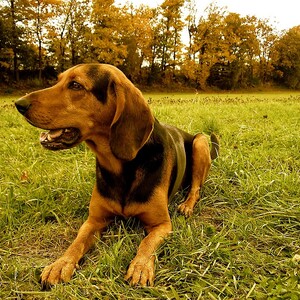
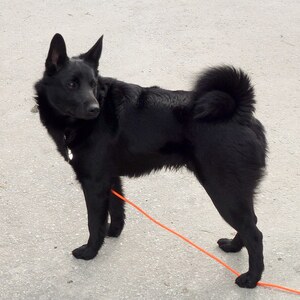
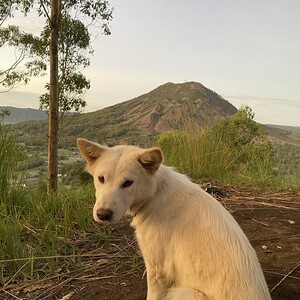
Kintamani. · Eka343 / Wikimedia Commons, CC BY-SA 4.0. Cropped and resized.
The Kintamani is a medium-sized spitz-type dog from the island of Bali, with a double coat, erect ears and a sickle tail. It comes from the village of Sukawana, in the Kintamani district, an area of mountains, volcanoes and forests. It is the national breed of Indonesia, and the standard describes it as alert, intelligent, gentle, loyal and easy to train.
Quick facts
| Common name | Kintamani (Anjing Kintamani-Bali) |
| Scientific name | Canis lupus familiaris |
| Country of origin | Indonesia (Bali) |
| Official recognition | FCI, provisionally accepted (group 5, Asian spitz; standard no. 362, since 2019) |
| Lifespan | No published data for the breed; medium-sized breeds usually live 10–13 years |
| Size (males) | 49–57 cm at the withers (ideally 53 cm); 15–18 kg |
| Size (females) | 44–52 cm at the withers (ideally 48 cm); 13–16 kg |
| Coat type | Double: soft undercoat, harsh topcoat, with a collar on the neck |
| Common colours | White, black, fawn, brindle |
| Energy level | Moderate |
| Suited to an apartment? | Not really |
| Temperament | Alert, intelligent, gentle, loyal, easy to train |
| Tendency to aggression | Low; a watchful guard dog, but not vicious |
| Good with children | No specific data |
| Good with other animals | No specific data |
| Genetic predispositions | No breed-specific diseases are known |
- Primary category:Dog breeds
- Explore this animal's categories:
History and origin
The FCI standard says the Kintamani comes from the village of Sukawana, in the Kintamani district of Bali. The beginnings of the breed are unknown. Old Balinese documents written on palm leaves (Lontar) mention a “Kuluk Gembrong”, considered the ancestor of the breed.
Wikipedia says the breed was created from local free-living dogs on the island, whose ancestors reached Bali about 3,000 years ago. In 1985, the breed club in Bali, together with the Faculty of Veterinary Medicine of Udayana University, held the first show. Today it is the national breed of Indonesia and has spread throughout the country.
How the breed developed
- About 3,000 years ago – The ancestors of the Bali dogs reach the island.
- Ancient times – The Lontar documents mention the “Kuluk Gembrong”.
- 1985 – The first show of the breed is held in Bali.
- 2019 – The FCI provisionally accepts the breed.
Breed rating
| Feature | Stars |
|---|---|
| Training and intelligence | ★★★★☆ |
| Easy to train | ★★★★☆ |
| Intelligence | ★★★★☆ |
| Independence | ★★★★☆ |
| Stubbornness | ★★★☆☆ |
| Behaviour and temperament | ★★★★☆ |
| Affectionate with family | ★★★★☆ |
| Friendly with children | ★★★☆☆ |
| Good with other dogs | ★★★☆☆ |
| Good with cats and other animals | ★★☆☆☆ |
| Loyalty | ★★★★★ |
| Tendency to be aggressive | ★★☆☆☆ |
| Tendency to bark | ★★★☆☆ |
| Needs and care | ★★★☆☆ |
| Shedding | ★★★☆☆ |
| Needs frequent grooming | ★★☆☆☆ |
| Activity and lifestyle | ★★★☆☆ |
| Energy level | ★★★☆☆ |
| Daily exercise needs | ★★★☆☆ |
| Suited to apartment life | ★★☆☆☆ |
| Health and longevity | ★★★☆☆ |
| Life expectancy | ★★★★☆ |
| Predisposition to genetic diseases | ★★☆☆☆ |
| Working abilities and uses | ★★★☆☆ |
| Good guard dog | ★★★★☆ |
| Good companion dog | ★★★★☆ |
Indicative rating: 5 stars means the highest level. The breed has no AKC profile, so the rating is based on the FCI standard.
Physical characteristics
The standard describes it as a well-balanced dog with a rectangular body, a wedge-shaped head, erect ears and a sickle tail. The coat is double, with a harsh topcoat that is medium length on the body and shorter on the face.
General appearance
The longer hair on the neck forms a collar called the “badong”, while the hair on the withers, which extends along the back, is called the “bulu gumba”. Both are more visible in males. The tail is richly feathered.
| Feature | Kintamani |
|---|---|
| Size | Medium |
| Height at the withers | males: 49–57 cm; females: 44–52 cm |
| Weight | males: 15–18 kg; females: 13–16 kg |
| Coat | Double, with a collar (“badong”) |
| Ears | Erect |
| Tail | Sickle-shaped, bushy |
The accepted colours are white, black, fawn and brindle. In white dogs, biscuit-coloured ear edges are preferred. Fawn ranges from light to deep red and is preferred with a black mask.
Training and socialisation
The standard describes it as alert, intelligent, watchful, gentle, loyal and easy to train.
Wikipedia says it is gentle with people but keeps enough determination to be a good guard dog without being vicious. It is also a very independent dog.
Tips for effective training
- Use rewards. It learns easily.
- Be patient. It has an independent nature.
- Socialise it from an early age. It is a watchful guard dog.
- Give it space outdoors. It likes spending time in the open air.
Activity needs and lifestyle
A medium-sized dog from the mountains, it needs daily walks and time outside in a fenced yard.
| Activity | How often | Why it matters |
|---|---|---|
| Walks | daily | Exercise and exploring |
| Time in a fenced yard | daily | It likes being outside |
| Training games | several times a week | It learns easily |
Tips for a balanced life
- It needs a fenced yard.
- In summer, give it shade.
- Spend time with it every day.
Care and health
Coat and skin care
The double coat should be brushed once a week, and more often during moulting periods.
Common health problems
No health studies have been published for the breed and no specific diseases are known. The breed comes from local free-living dogs, and Wikipedia says it is genetically related to the island's dogs.
Other care
- Check regularly for ticks and fleas.
- Trim the nails if they do not wear down on their own.
- Go for regular check-ups and parasite treatments.
Diet and nutrition
An active, medium-sized dog needs good-quality food suited to its age.
Tips for a healthy diet
The table gives a starting estimate, calculated with the formula from the Merck Veterinary Manual. The first two calorie columns show the calories per day for a healthy adult dog. The last column shows what this means in dry food with 3,500–4,000 kcal per kilogram.
| Dog's weight | Calories per day (neutered) | Calories per day (not neutered) | Dry food per day (approximate) |
|---|---|---|---|
| 13 kg | 770 kcal | 860 kcal | 190–250 g |
| 15 kg | 850 kcal | 960 kcal | 210–270 g |
| 18 kg | 980 kcal | 1,100 kcal | 240–310 g |
- Split the food into two meals a day.
- Fresh water should always be available.
- A dog is at the right weight when you can feel its ribs under the coat without pressing hard.
Foods to avoid
Some human foods are dangerous for dogs: chocolate, coffee, grapes and raisins, onions, garlic, xylitol (a sweetener used in chewing gum), macadamia nuts and alcohol.
Reproduction and development
Physical and emotional maturity
In dogs, sexual maturity usually comes between 6 and 12 months. Most breeds become adults at around 13–15 months.
Mating and pregnancy
Pregnancy lasts about 63 days, counted from ovulation. Mating a female on her first heat is not recommended. The FCI standard requires that only healthy dogs of typical breed appearance are used for breeding.
Caring for the puppies
In dogs, a litter has 5–6 puppies on average, and the number rises with the size of the breed. Socialisation starts in the first weeks: gentle handling, everyday noises and new people.
Interesting facts
- The national breed of Indonesia. The standard calls it the country's national breed.
- A home village. It comes from the village of Sukawana, in the Kintamani district.
- A name for the collar. The collar of hair on the neck is called the “badong”.
- Born in dens. Wikipedia says the females still give birth in dens dug in the ground.
- Biscuit ears. In white dogs, biscuit-coloured ear edges are preferred.
Frequently asked questions
Where does the name Kintamani come from?
From the Kintamani district of Bali, where the breed originated.
How big does it get?
Males measure 49–57 cm and weigh 15–18 kg; females measure 44–52 cm and weigh 13–16 kg.
What colours does it come in?
White, black, fawn and brindle; white is the best known.
Is it recognised by the FCI?
Yes, it is provisionally accepted.