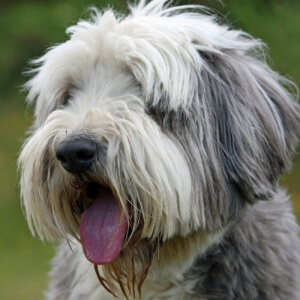
Bearded CollieCharacteristics, history, training and care
The Bearded Collie is a Scottish herding dog with a long, shaggy coat. It is an active breed that needs exercise and mental stimulation, while its coat requires regular care.
Quick facts
| Common name | Bearded Collie |
| Scientific name | Canis lupus familiaris |
| Country of origin | Scotland |
| Official Recognition | Recognized by FCI and AKC |
| Typical lifespan | About 12-14 years |
| Dimensions (Male) | About 53-56 cm / 20-27 kg |
| Dimensions (Female) | About 51-53 cm / 18-23 kg |
| Coat type | Long, thick, double layered |
| Common colours | Black, blue, brown or fawn, with or without white markings |
| Energy Level | Very high |
| Suitable for an apartment? | Depends on exercise, training, health and the individual dog |
| Temperament | Smart, affectionate, playful |
| Behaviour towards unfamiliar people and dogs | Individual behaviour varies; socialisation, training and management matter |
| Compatibility with children | Depends on the individual; adult supervision and suitable handling are essential |
| Compatibility with other animals | Depends on socialisation, prey drive and the animals involved |
| Health considerations | Hip dysplasia, hypothyroidism, Addison's disease, eye problems |
- Primary category:Dog breeds
- Explore this animal's categories:
History and Origin
The Bearded Collie is an old Scottish herding breed, used for centuries to drive sheep and cattle in the rough Highlands.
Evolution of the breed
- Origins in Scotland — Early records of these herding dogs are limited. The AKC archives cite illustrations from 1771 and 1772, followed by clearer documentation from 1803 and 1818.
- Possible European links - A popular story says the breed descends partly from Polish Lowland Sheepdogs brought to Scotland by a Polish merchant in 1514, but this is not proven.
- Modern revival - The modern show breed was rebuilt from 1944 by Mrs G. Olive Willison, starting with a dog and a bitch called Bailie and Jeannie; the AKC recognised the breed in the 1970s.
Breed Evaluation
The Bearded Collie is an active, intelligent and friendly dog, excellent for families and people who love outdoor activities. These are general editorial ratings, not measured scores; individual dogs vary.
| Characteristic | Stars |
|---|---|
| Training and Intelligence | ★★★★★ |
| Easy to train | ★★★★☆ |
| Intelligence | ★★★★★ |
| Level of independence | ★★★☆☆ |
| Level of stubbornness | ★★★☆☆ |
| Behavior and Temperament | ★★★★★ |
| Affectionate with family | ★★★★★ |
| Friendly with children | ★★★★★ |
| Compatible with other dogs | ★★★★☆ |
| Compatible with cats and other animals | ★★★★☆ |
| Degree of loyalty | ★★★★★ |
| Tendency to be aggressive | ★☆☆☆☆ |
| Tendency to bark | ★★★☆☆ |
| Needs and Care | ★★★★☆ |
| Shedding level | ★★★★☆ |
| Requires frequent care | ★★★★★ |
| Activity and Lifestyle | ★★★★★ |
| Energy level | ★★★★★ |
| Daily exercise requirement | ★★★★★ |
| Suitable for apartment living | ★★☆☆☆ |
| Health and Longevity | ★★★★☆ |
| Life expectancy | ★★★★☆ |
| Predisposition to genetic diseases | ★★★☆☆ |
| Work and Utility Features | ★★★★★ |
| He's a good herding dog. | ★★★★★ |
| Good companion dog | ★★★★★ |
Physical Characteristics
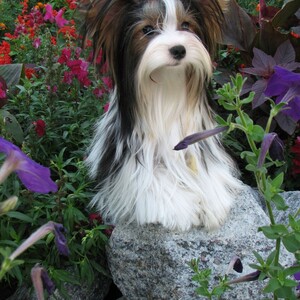
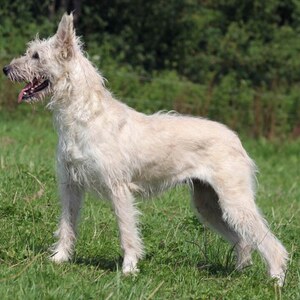
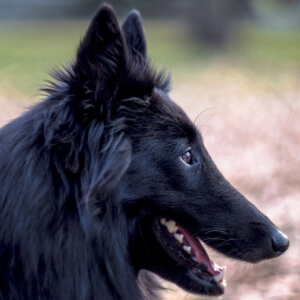
The Bearded Collie is a lean, athletic and agile dog with a long coat that protects it from the harsh Scottish weather.
General appearance
- A long, lean, muscular body, built for work.
- A long double coat, with a harsh, flat outer coat and a soft, insulating undercoat.
- A broad head with a "beard" of long hair on the chin, and medium-sized, hanging ears covered with long hair.
- A long tail, carried low at rest and raised when moving.
- Large, kind eyes that usually match the coat colour.
| Characteristic | Bearded Collie |
|---|---|
| Size | Medium (about 51-56 cm at the shoulder) |
| Weight | About 18-27 kg |
| Coat | Long, double, harsh outer coat |
| Muzzle | Medium length, with a beard |
| Shedding tendency | Moderate to high |
| Build | Lean, strong and athletic |
The Bearded Collie is a graceful, hardy dog, well suited to outdoor activities and dog sports.
Training and Socialization
The Bearded Collie is intelligent and friendly, which makes it fairly easy to train, but it is also very energetic and can be independent, so it needs a patient, consistent owner.
Tips for effective training
- Early socialisation - It should meet people, other animals and different places from an early age to avoid shyness and anxiety.
- Reward-based training - It responds well to treats, praise and games.
- Varied training - It quickly gets bored with repetitive exercises, so training should be varied and interactive.
- Basic commands - Commands such as "stay", "come" and "leave it" are essential, as the Beardie is energetic and curious.
- Managing energy - It needs plenty of exercise and mental stimulation, or it may become destructive.
As a clever dog that is eager to learn, the Bearded Collie trains easily, but it needs consistency and varied activities to stay motivated.
Activity and Lifestyle Needs
The Bearded Collie is an active breed that needs plenty of exercise and mental stimulation. Without enough activity, it can become restless and destructive.
| Activity | Recommended duration |
|---|---|
| Daily walks | About 60-90 min |
| Running and play | About 30 min |
| Interactive games | About 20-30 min |
| Obedience training | About 15 min/day |
Recommendations for a balanced lifestyle
- Best in a house with a garden - It needs space to run and does not suit a quiet lifestyle.
- Great at dog sports - It does well in agility, obedience, flyball and herding.
- Needs company - It is not a good choice for people who are away from home for long periods.
- Good with families - Thanks to its gentle, playful nature, it usually gets on well with children and other animals.
The Bearded Collie needs a lot of daily activity and suits active people or families who love the outdoors.
Care and Health
The Bearded Collie has a long, thick coat that needs regular care. It is generally a healthy breed but can be prone to some inherited problems.
Fur and skin care
- Frequent brushing - The long coat can tangle quickly, so it needs thorough brushing several times a week to prevent mats.
- Trimming - Not essential, but a shorter trim can make care easier for pet dogs.
- Baths when needed - As an active dog it gets dirty easily, but too much washing can remove the skin's natural oils.
- Ear and eye checks - The hanging ears can trap moisture, and hair around the eyes should be kept clean.
Common health problems
| Condition | Description | Common symptoms |
|---|---|---|
| Hip dysplasia | Abnormal development of the hip joint | Limping, stiff joints |
| Hypothyroidism and Addison's disease | Hormone disorders that occur in the breed | Low energy, weight changes, poor coat, weakness |
| Eye problems | Such as progressive retinal atrophy | Difficulty seeing in dim light |
Other aspects of care
- Regular veterinary checks - Help monitor the joints, eyes and hormones.
- Healthy weight - Regular exercise and good food help prevent joint problems.
- Coat care - Without brushing, the coat can form painful mats.
The Bearded Collie needs regular coat care, but it is generally a strong, healthy dog with a good life expectancy.
Diet and Nutrition
The Bearded Collie needs a balanced diet with good-quality protein to support its activity.
Recommendations for a healthy diet
Choose a complete, balanced diet suited to age, size and health. Plan home-prepared diets and supplements with a qualified veterinarian; raw pet food can carry harmful bacteria.
| Food type | Daily Amount (Adults) | Frequency |
|---|---|---|
| Premium dry food | Individual amount; follow a complete diet’s guidance and veterinary advice | 2 meals/day |
| Home cooked food | Individual amount; follow a complete diet’s guidance and veterinary advice | 2 meals/day |
| Raw food: bacterial contamination is a concern | Individual amount; follow complete-food guidance and veterinary advice | 2 meals/day |
Forbidden foods
Chocolate, grapes and raisins, onions and xylitol - toxic to dogs. ; Cooked bones - can splinter and cause intestinal blockage. ; Fatty and processed foods - can upset digestion. ; One large meal a day - can increase the risk of bloat.
The Bearded Collie should be fed according to its activity level, avoiding overfeeding and obesity.
Reproduction and Development
Breeding requires veterinary planning, suitable health screening and care for the mother and puppies. Pregnancy and birth can involve complications.
Physical and emotional maturity
- Physical maturity: It grows quickly and usually reaches adult size at about 12-18 months.
- Emotional maturity: It stays playful and energetic, but usually becomes calmer at about 2-3 years.
Mating and Gestation
- Breeding decisions require veterinary assessment of maturity, health and suitable screening; reaching a fixed age does not establish that breeding is appropriate.
- Duration of gestation: Approximately 58-68 days, usually about 63 days.
- Average number of puppies: Usually about 6-8 puppies.
Puppy care
- The first 3 weeks: Puppies depend completely on their mother for warmth and milk.
- Between 4-8 weeks: Solid food is introduced, and socialisation with people and littermates is essential.
- Moving to a new home: When puppies go to their new homes, basic training and socialisation should continue.
Good food and regular, gentle training are essential for healthy development.
Curiosities and Interesting Facts
- Scottish herding heritage — Recognisable examples of these sheepdogs appear in works published in 1803 and 1818; earlier origins are less securely documented.
- A changing coat - Bearded Collie puppies are born dark; the coat usually fades as they grow and may darken again in adulthood.
- The "Beardie bounce" - When working, Beardies often bounce up to see the sheep over tall grass or the backs of other sheep.
- A good athlete - It is an agile herding dog that takes part in agility, flyball, obedience and herding trials.
- Rebuilt after the war - The modern show breed was rebuilt from a few dogs from 1944 onwards.
- A "beard" - The breed's name comes from the long hair on its chin.
- Always busy - It is a loving family dog, but it needs plenty of exercise and mental stimulation.
The Dog in Popular Culture
The shaggy, friendly Bearded Collie is easy to recognise in films and on farms.
Bearded Collie in Media and Popular Culture
- "The Shaggy Dog" (2006) - The shaggy dog in this Disney film starring Tim Allen is a Bearded Collie.
The importance in British and Scottish culture
- A working sheepdog - In Scotland, Bearded Collies were valued as tough, tireless working dogs that could handle sheep and cattle in hard country.