Caucasian Shepherd DogCharacteristics, history, training and care
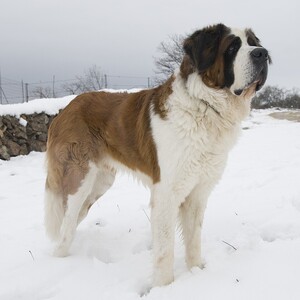
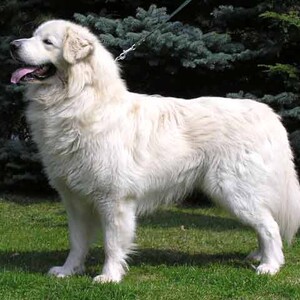
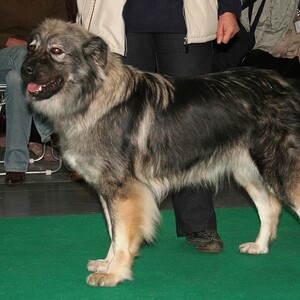
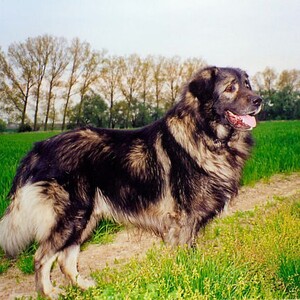
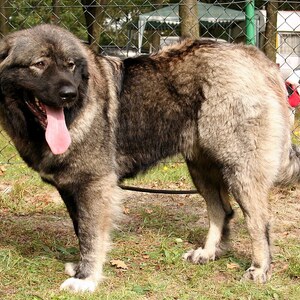
Caucasian Shepherd Dog. · Pleple2000 / Wikimedia Commons, CC BY-SA 3.0. Cropped and resized.
The Caucasian Shepherd Dog is a giant guard dog with a dense coat, from the Caucasus Mountains and the steppes of southern Russia. For centuries it protected flocks from wolves and thieves. It is gentle and devoted to its family, but faced with any threat it becomes brave and fierce. It is not a breed for beginners.
Quick facts
| Common name | Caucasian Shepherd Dog (Kavkazskaya Ovcharka) |
| Scientific name | Canis lupus familiaris |
| Country of origin | USSR (the Caucasus and the steppes of southern Russia); patronage: Russia |
| Official recognition | FCI, definitively since 23 August 1984 (group 2, mountain molossoid breeds; standard no. 328); also recognised by the AKC |
| Lifespan | 10–12 years |
| Size (males) | preferably 72–75 cm at the withers (at least 68 cm); at least 50 kg |
| Size (females) | preferably 67–70 cm at the withers (at least 64 cm); at least 45 kg |
| Weight | about 45–77 kg |
| Coat type | Straight, harsh, at least 5 cm long, with an abundant undercoat; mane, “trousers” and ear tufts |
| Common colours | Any solid, piebald or spotted colour, except black, blue and liver brown |
| Energy level | Moderate |
| Suited to an apartment? | No |
| Temperament | Brave, self-confident, independent; gentle with the family |
| Tendency to aggression | High towards strangers and threats; a serious guard dog |
| Good with children | Average; with supervision |
| Good with other animals | Good with the family's animals; poor with unfamiliar dogs |
| Genetic predispositions | No breed-specific diseases are known; as in all very large dogs, hip dysplasia and bloat |
- Primary category:Dog breeds
- Explore this animal's categories:
History and origin
The Caucasian Shepherd Dog descends from the old dogs of the Caucasus. For centuries, similar dogs have helped shepherds in the Caucasus Mountains protect their sheep from wolves and thieves. The breed spread from the Caucasus to the steppes of southern Russia.
Wikipedia notes that the modern breed was selected in the Soviet Union from around 1920. The dogs vary a great deal from one region to another: those from Azerbaijan are tall and lean, those from Dagestan smaller, and those from Chechnya and Ingushetia very massive.
How the breed developed
- Centuries – The dogs protect the flocks of the Caucasus from wolves and thieves.
- Around 1920 – Selection of the breed begins in the Soviet Union.
- 1930s – The breed appears at a Western show for the first time, in Germany.
- 23 August 1984 – The FCI recognises the breed.
- 13 October 2010 – The current FCI standard is published.
Breed rating
| Feature | Stars |
|---|---|
| Training and intelligence | ★★☆☆☆ |
| Easy to train | ★★★☆☆ |
| Intelligence | ★★★★☆ |
| Independence | ★★★★★ |
| Stubbornness | ★★★★☆ |
| Behaviour and temperament | ★★★☆☆ |
| Affectionate with family | ★★★☆☆ |
| Friendly with children | ★★★☆☆ |
| Good with other dogs | ★★☆☆☆ |
| Good with cats and other animals | ★★★☆☆ |
| Loyalty | ★★★★★ |
| Tendency to be aggressive | ★★★★☆ |
| Tendency to bark | ★★☆☆☆ |
| Needs and care | ★★★★☆ |
| Shedding | ★★★★☆ |
| Needs frequent grooming | ★★★☆☆ |
| Activity and lifestyle | ★★★☆☆ |
| Energy level | ★★★☆☆ |
| Daily exercise needs | ★★★☆☆ |
| Suited to apartment life | ★☆☆☆☆ |
| Health and longevity | ★★★☆☆ |
| Life expectancy | ★★★☆☆ |
| Predisposition to genetic diseases | ★★☆☆☆ |
| Working abilities and uses | ★★★★★ |
| Good guard dog | ★★★★★ |
| Good companion dog | ★★★☆☆ |
Indicative rating: 5 stars means the highest level. It is based on the ratings the American Kennel Club gives the breed and on the FCI standard.
Physical characteristics
It is a huge, powerful and massive dog, with a dense coat that makes it look even bigger. The AKC says there are two types: the mountain type, with a long coat and a heavier body, and the steppe type, with a shorter coat and a lighter body.
General appearance
The oval, brown eyes have a serious, alert and curious expression. The thick, triangular ears hang down. The very hairy tail is carried in a sickle or curled. The long coat forms tufts on the ears, a mane on the neck and “trousers” on the back of the thighs.
| Feature | Caucasian Shepherd Dog |
|---|---|
| Size | Very large |
| Height at the withers | males: preferably 72–75 cm; females: preferably 67–70 cm |
| Weight | males: at least 50 kg; females: at least 45 kg |
| Coat | Harsh, at least 5 cm long, with an abundant undercoat |
| Eyes | Oval, dark brown to hazel |
| Tail | Sickle-shaped or curled, very hairy |
Any solid, piebald or spotted colour is accepted, except black in any combination, blue and liver brown.
Training and socialisation
The AKC says it is extremely independent and intelligent, and obedience training can be difficult, but not impossible. Outdoors it is active, and indoors it is usually calm.
It is a serious guard dog that must not be taken lightly. It is very protective of its family and home, so having guests can be difficult.
Tips for effective training
- Socialise it intensively as a puppy. This is the most important step for such a protective dog.
- Be calm and consistent. An unsure owner cannot control a dog like this.
- Use the lead and the fence. The AKC recommends always keeping it fenced in or on a lead.
- Ask a trainer for help. With such a powerful breed, a specialist's advice helps a great deal.
Activity needs and lifestyle
The AKC describes it as a low-energy dog, but with good stamina on walks and hikes. It is happy in a large yard with daily walks.
| Activity | How often | Why it matters |
|---|---|---|
| Lead walks | daily | Exercise and stamina |
| Time in a large, fenced yard | daily | It guards its territory |
| Hikes | occasionally | It has good stamina |
Tips for a balanced life
- The fence must be very solid and high.
- It is not suitable for inexperienced owners.
- In summer, its dense coat makes it suffer in the heat.
Care and health
Coat and skin care
Long-coated dogs need daily brushing, and short-coated ones less often. The undercoat sheds heavily during moulting periods. The nails grow quickly and must be trimmed regularly.
Common health problems
The AKC says most Caucasian Shepherd Dogs are healthy. As with any very large dog, two conditions are worth watching:
| Condition | Description | Common symptoms |
|---|---|---|
| Hip dysplasia | The hip joint forms incorrectly and, over time, arthritis develops | Limping, difficulty getting up or jumping, hip pain |
| Gastric dilatation-volvulus (bloat) | The stomach fills with gas and may twist; this is a veterinary emergency | Swollen belly, trying to vomit without success, drooling, restlessness |
Other care
- Check the ears regularly.
- Brush its teeth regularly.
- Wipe its mouth: it drools quite a lot.
Diet and nutrition
The AKC recommends a food for giant breeds, suited to each life stage. The puppy should be given the breeder's food until at least 6 months of age.
Tips for a healthy diet
The table gives a starting estimate, calculated with the formula from the Merck Veterinary Manual. The first two calorie columns show the calories per day for a healthy adult dog. The last column shows what this means in dry food with 3,500–4,000 kcal per kilogram.
| Dog's weight | Calories per day (neutered) | Calories per day (not neutered) | Dry food per day (approximate) |
|---|---|---|---|
| 45 kg | 1,950 kcal | 2,190 kcal | 490–630 g |
| 60 kg | 2,410 kcal | 2,720 kcal | 600–780 g |
| 75 kg | 2,850 kcal | 3,210 kcal | 710–920 g |
- Split the food into two meals a day to reduce the risk of bloat.
- Puppies need growth food suited to very large breeds.
- A dog is at the right weight when you can feel its ribs under the coat without pressing hard.
Foods to avoid
Some human foods are dangerous for dogs: chocolate, coffee, grapes and raisins, onions, garlic, xylitol (a sweetener used in chewing gum), macadamia nuts and alcohol.
Reproduction and development
Physical and emotional maturity
In dogs, sexual maturity usually comes between 6 and 12 months, but in large breeds it can be delayed until about two years. Very large breeds become adults only at around 2 years.
Mating and pregnancy
Pregnancy lasts about 63 days, counted from ovulation. Mating a female on her first heat is not recommended. The FCI standard requires that only healthy dogs of typical breed appearance are used for breeding.
Caring for the puppies
In large breeds, a litter has around 7 puppies on average. The puppies grow very fast, so they need growth food suited to large breeds. Socialisation starts in the first weeks.
Interesting facts
- Two types. The mountain type has a long coat and a heavy body, while the steppe type has a short coat and a lighter body.
- It varies from region to region. Dogs from Azerbaijan, Dagestan and Chechnya look quite different.
- Calm indoors. The AKC says that, although it is active outdoors, it is usually calm indoors.
- Gentle with “its own”. It is gentle and devoted to its family and the family's animals.
- Many names. It is also known as the Caucasian Ovcharka or the Caucasus Shepherd.
Frequently asked questions
How big does a Caucasian Shepherd Dog get?
Males preferably measure 72–75 cm and weigh at least 50 kg; females 67–70 cm and at least 45 kg.
Is it suitable for a family?
It is gentle with the family, but very protective. It needs an experienced owner.
Is it easy to train?
No. It is very independent, and training requires patience and experience.
How long does it live?
Its life expectancy is 10–12 years.