Basset HoundCharacteristics, history, training and care
The Basset Hound is a short-legged scent hound with long ears and a strong sense of smell. It is often kept as a companion, but its hunting background still matters for exercise, training and safe outdoor management.
Quick facts
| Common name | Basset Hound |
| Scientific name | Canis lupus familiaris |
| Country of origin | France, United Kingdom |
| Official Recognition | Recognized by FCI and AKC |
| Typical lifespan | About 10-12 years |
| Dimensions (Male) | About 33-38 cm / 25-34 kg |
| Dimensions (Female) | About 30-36 cm / 20-29 kg |
| Coat type | Short, dense, smooth |
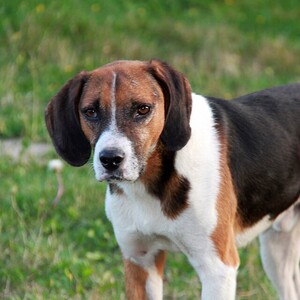
| Common colours | Tricolour (black, white and tan) or bicolour (lemon and white, red and white) |
| Energy Level | Low to moderate |
| Suitable for an apartment? | Depends on exercise, training, health and the individual dog |
| Temperament | Calm, loyal, friendly |
| Behaviour towards unfamiliar people and dogs | Individual behaviour varies; socialisation, training and management matter |
| Compatibility with children | Depends on the individual; adult supervision and suitable handling are essential |
| Compatibility with other animals | Depends on socialisation, prey drive and the animals involved |
| Health considerations | Hip and elbow dysplasia, obesity, back problems, ear infections, glaucoma |
- Primary category:Dog breeds
- Explore this animal's categories:
History and Origin
The Basset Hound descends from French hounds and was originally bred to hunt hares and rabbits. Its name comes from the French word bas, "low", referring to its short legs.
Evolution of the breed
- French origins - Short-legged hounds were used in France for centuries by hunters who followed them on foot.
- British development - In the 1860s and 1870s, basset hounds were brought from France to Britain, where breeders such as Sir Everett Millais developed the heavier modern Basset Hound.
- International recognition - The AKC recognised the Basset Hound in 1885, and it became popular in the United States and Europe as a pet and show dog.
Breed Evaluation
The Basset Hound is a clever, loyal and affectionate dog, but it can be stubborn and independent. These are general editorial ratings, not measured scores; individual dogs vary.
| Characteristic | Stars |
|---|---|
| Training and Intelligence | ★★★☆☆ |
| Easy to train | ★★☆☆☆ |
| Intelligence | ★★★★☆ |
| Level of independence | ★★★★☆ |
| Level of stubbornness | ★★★★☆ |
| Behavior and Temperament | ★★★★★ |
| Affectionate with family | ★★★★★ |
| Friendly with children | ★★★★★ |
| Compatible with other dogs | ★★★★☆ |
| Compatible with cats and other animals | ★★★★★ |
| Degree of loyalty | ★★★★★ |
| Tendency to be aggressive | ★☆☆☆☆ |
| Tendency to bark | ★★★☆☆ |
| Needs and Care | ★★★☆☆ |
| Shedding level | ★★★★☆ |
| Requires frequent care | ★★★☆☆ |
| Activity and Lifestyle | ★★★☆☆ |
| Energy level | ★★★☆☆ |
| Daily exercise requirement | ★★★☆☆ |
| Suitable for apartment living | ★★★★☆ |
| Health and Longevity | ★★★☆☆ |
| Life expectancy | ★★★★☆ |
| Predisposition to genetic diseases | ★★★★☆ |
| Work and Utility Features | ★★★★☆ |
| Good hunting dog | ★★★★★ |
| Good companion dog | ★★★★★ |
Physical Characteristics
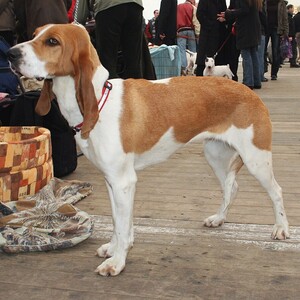
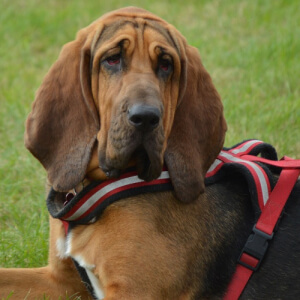
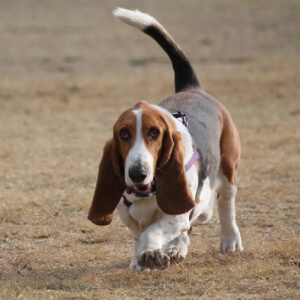
The Basset Hound is a heavy, long-bodied dog with very long ears and a gentle expression, easy to recognise.
General appearance
- A long, heavy body with short legs and strong bones.
- Very long, soft ears that may help sweep scents towards the nose.
- Dark eyes with a gentle, sad-looking expression, often showing some red of the lower eyelid.
- Loose skin that forms wrinkles on the face and forehead.
- A short, dense, smooth coat that is easy to care for.
| Characteristic | Basset Hound |
|---|---|
| Size | Low and heavy (about 33-38 cm at the shoulder) |
| Weight | About 20-34 kg |
| Coat | Short, dense, smooth |
| Muzzle | Long, deep, with loose lips |
| Shedding tendency | Moderate to high |
| Build | Heavy-boned, low to the ground |
The Basset Hound is a sturdy breed built for slow, steady tracking, but its weight must be watched to protect its joints and back.
Training and Socialization
The Basset Hound is intelligent but independent, which can make training a challenge. As a scent hound, it is strongly driven by smells, so training must be interesting and consistent.
Tips for effective training
- Early socialisation - The Basset Hound is friendly, but it should get used to people and other animals from an early age to prevent shyness.
- Reward-based training - It responds best to treats and praise.
- Short, varied training - It quickly gets bored with repetitive exercises.
- No harsh punishments - It is sensitive, so a gentle tone and patience work better than harsh methods.
- Recall practice - Its nose may lead it to ignore commands when it finds an interesting scent, so it should be walked on a lead in open areas.
The Basset Hound is not the most obedient dog, but with patience and motivation it can learn basic commands and fit easily into family life.
Activity and Lifestyle Needs
Although it is a hunting dog, the Basset Hound does not have very high energy. It needs regular exercise to prevent weight gain, but not intense activity.
| Activity | Recommended duration |
|---|---|
| Daily walks | About 45-60 min, at a steady pace |
| Free play in a fenced garden | About 20-30 min |
| Scent games | About 15-20 min |
| Obedience training | About 10 min/day |
Recommendations for a balanced lifestyle
- Good in a house with a garden, but also in an apartment - It is calm at home, but needs daily walks; its loud voice may disturb neighbours.
- Protect from extremes - Its short coat gives little protection from very cold or hot weather.
- Can become lazy - Without enough activity, it tends to sleep a lot and gain weight.
- Good with families - It is usually gentle and gets on well with children and other dogs.
- Careful with stairs and jumping - Its long back and short legs make it prone to back injuries.
The Basset Hound is not hyperactive, but it needs moderate daily exercise to stay healthy and balanced.
Care and Health
The Basset Hound is easy to groom, but it is prone to some health problems, especially obesity, back and joint problems and ear infections.
Fur and skin care
- Weekly brushing - The short coat needs regular brushing to remove dead hair.
- Occasional baths - It needs washing only when very dirty.
- Weekly ear cleaning - Its very long ears can trap moisture and dirt and often drag on the ground, so infections are common.
- Nail and paw care - Nails should be trimmed regularly and paws checked for irritation.
Common health problems
| Condition | Description | Common symptoms |
|---|---|---|
| Hip and elbow dysplasia | Abnormal development of the joints, which can lead to arthritis | Limping, stiff joints |
| Ear infections (otitis) | Very long ears trap moisture and dirt | Scratching, discharge, bad smell |
| Obesity and back problems | Extra weight strains its long back and can lead to disc disease | Weight gain, back pain, reluctance to move |
| Bloat and eye problems | Bloat is an emergency; the breed is also prone to glaucoma and eyelid problems | Swollen belly; red, painful or cloudy eyes |
Other aspects of care
- Regular veterinary checks - Essential for monitoring weight, joints, eyes and ears.
- Preventing obesity - Food must match its activity level.
- Skin folds - Wrinkled areas should be cleaned regularly to prevent irritation.
The Basset Hound can be healthy, but it needs regular checks of its weight, back and ears.
Diet and Nutrition
The Basset Hound gains weight very easily, so food must be carefully measured.
Recommendations for a healthy diet
Choose a complete, balanced diet suited to age, size and health. Plan home-prepared diets and supplements with a qualified veterinarian; raw pet food can carry harmful bacteria.
| Food type | Daily Amount (Adults) | Frequency |
|---|---|---|
| Premium dry food | Individual amount; follow a complete diet’s guidance and veterinary advice | 2 meals/day |
| Home cooked food | Individual amount; follow a complete diet’s guidance and veterinary advice | 2 meals/day |
| Raw food: bacterial contamination is a concern | Individual amount; follow a complete diet’s guidance and veterinary advice | 2 meals/day |
Forbidden foods
Chocolate, grapes and raisins, onions and xylitol - toxic to dogs. ; Cooked bones - can splinter and cause intestinal blockage. ; Fatty and processed foods - can cause digestive problems. ; One large meal a day - can increase the risk of bloat.
The Basset Hound should be fed according to its activity level, avoiding overfeeding and obesity.
Reproduction and Development
Breeding requires veterinary planning, suitable health screening and care for the mother and puppies. Pregnancy and birth can involve complications.
Physical and emotional maturity
- Physical maturity: The Basset Hound reaches adult size at about 12-18 months, but continues to fill out until about 2 years.
- Emotional maturity: Although calm by nature, it usually becomes more settled and predictable at about 2-3 years.
Mating and Gestation
- Breeding decisions require veterinary assessment of maturity, health and suitable screening; reaching a fixed age does not establish that breeding is appropriate.
- Duration of gestation: Approximately 58-68 days, usually about 63 days.
- Average number of puppies: Usually about 6-8 puppies.
Puppy care
- The first 3 weeks: Puppies stay close to their mother for milk and protection.
- Between 4-8 weeks: Solid food is introduced, and early socialisation helps prevent shyness or anxiety.
- Moving to a new home: When puppies go to their new homes, socialisation and basic training should continue.
Basset Hound puppies should eat correctly and get moderate exercise, without too much jumping or stair-climbing, to protect their joints.
Curiosities and Interesting Facts
- A great nose - The Basset Hound's sense of smell is often said to be second only to the Bloodhound's.
- A pop culture favourite - Thanks to its unique look and sad expression, the Basset Hound appears in many adverts, cartoons and TV shows.
- A deep voice - It does not bark constantly, but has a deep, ringing bay, especially when it finds a scent.
- Focused on scents - When it follows a trail, it can ignore everything else for a long time.
- Ears and wrinkles - Its long ears and loose skin may help keep scents close to its nose.
- Stubborn - Although gentle and affectionate, it is independent and sometimes refuses to obey.
- Poor swimmers - With heavy bones and short legs, Basset Hounds are not good swimmers and should be watched near water.
The Dog in Popular Culture
With its long ears and sad eyes, the Basset Hound is one of the most recognisable dogs in popular culture.
The importance in media culture
- Hush Puppies - A Basset Hound has been the logo of the Hush Puppies shoe brand since the 1950s.
- Elvis Presley - In 1956, Elvis sang "Hound Dog" to a Basset Hound on the Steve Allen Show.
- Fred Basset - A British comic strip about a Basset Hound called Fred has been published since 1963.
Basset Hound in dog competitions
- Tracking - Thanks to its excellent nose, the Basset Hound takes part in tracking and scent-work events.
- Dog shows - With its distinctive look, it is a familiar sight at dog shows around the world.