Scottish FoldCharacteristics, history, behaviour and care
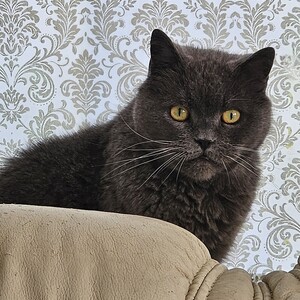
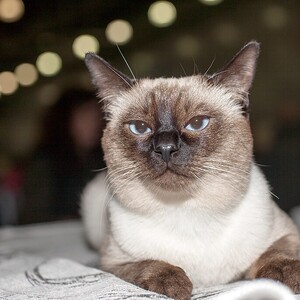
Tabby Scottish Fold cat. · TheNightmareOfRosguill / Wikimedia Commons, CC0 (public domain). Cropped and resized.
The Scottish Fold is a breed from Scotland, known for its ears folded forwards and downwards, which give it an owl-like look. The folded ears, however, come from a mutation that affects cartilage and bone throughout the body (osteochondrodysplasia). Every Scottish Fold develops arthritis sooner or later. That is why FIFe and the GCCF do not recognise the breed, and breeding it is banned in several countries. It is a gentle, quiet and affectionate cat.
Quick facts
| Common name | Scottish Fold (Highland Fold or Longhair Fold, for the longhaired variety) |
| Scientific name | Felis catus |
| Country of origin | United Kingdom (Scotland) |
| Official recognition | Not recognised by FIFe and the GCCF; CFA (championship since 1978), TICA, WCF |
| Lifespan | We found no data for the breed; pet cats live about 13 years on average |
| Weight | Males 4–6 kg, females 2.7–4 kg |
| Size | Medium to large |
| Body type | Round, “padded”, with medium to short legs |
| Coat type | Short or semi-long |
| Common colours | Any colour, including tortie and white |
| Eye colour | Large, round |
| Activity level | Moderate |
| Temperament | Quiet, gentle, affectionate, intelligent |
| Good with children | Suits quiet families |
| Good with other pets | Sometimes reserved with other cats |
| Genetic predispositions | Osteochondrodysplasia (arthritis in every folded cat), polycystic kidney disease, cardiomyopathy |
- Primary category:Cat breeds
- Explore this animal's categories:
History and origin
The first Scottish Fold was Susie, a white barn cat found in 1961 on a farm near Coupar Angus, in the Tayside region of Scotland. Her ears had a fold in the middle. The shepherd William Ross and his wife, Molly, took one of her kittens with folded ears; Susie's daughter, Snooks, became the ancestor of the breed. In the first three years 76 kittens were born: 42 with folded ears and 34 with straight ears.
The breed was first called “Lop-ears”, after lop-eared rabbits, and was given the name Scottish Fold in 1966. In the early 1970s the GCCF stopped registering it, because of health concerns. In 1970 the first kittens reached the USA, where CFA gave championship status to the shorthaired variety in 1978 and to the longhaired one in 1992.
In 2016 the mutation behind the folded ears and the bone disease was found: a change in the TRPV4 gene, which affects cartilage throughout the body.
How the breed developed
- 1961 – Susie the cat is found in Scotland.
- 1966 – the breed is given the name Scottish Fold.
- The early 1970s – the GCCF stops registration, for health reasons.
- 1978 – championship status at CFA for the shorthair.
- 2014–2021 – breeding is banned in the Netherlands, Austria and Flanders.
- 2016 – the TRPV4 gene mutation is discovered.
At a glance: who is it right for?
First of all, what the sources say about health: every cat with folded ears has osteochondrodysplasia and develops arthritis; the GCCF advises the public not to buy cats of this breed.
- If you are thinking of getting one: read up on the bone disease and on the laws in your country.
- Quiet families. It is a gentle, calm indoor cat.
- People who can pay for check-ups and treatment. Arthritis may need pain treatment for life.
- Not for breeding. Specialists recommend that no more cats with folded ears are bred.
Physical characteristics
It is a medium to large cat, rounded all over: round head, cheeks and whisker pads, large, round eyes and a short nose. The body looks “padded”, and the legs are medium to short. Males weigh 4–6 kg, and females 2.7–4 kg.
General appearance
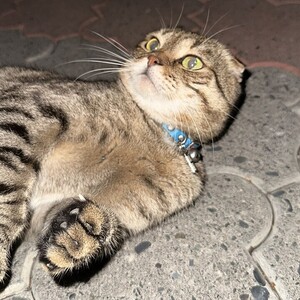
The ears are folded forwards and downwards, like a cap. Breeders prefer small, tightly folded ears. Even folded, the ears move: they swivel to listen, flatten back when the cat is annoyed and prick up at the rustle of the treat bag. Kittens that do not develop folded ears are called Scottish Straights.
| Feature | Scottish Fold |
|---|---|
| Size | Medium to large |
| Weight | Males 4–6 kg, females 2.7–4 kg |
| Body | Round, medium to short legs |
| Ears | Folded forwards and downwards |
| Eyes | Large, round |
| Tail | May be short and stiff because of the disease |
| Coat | Short or semi-long |
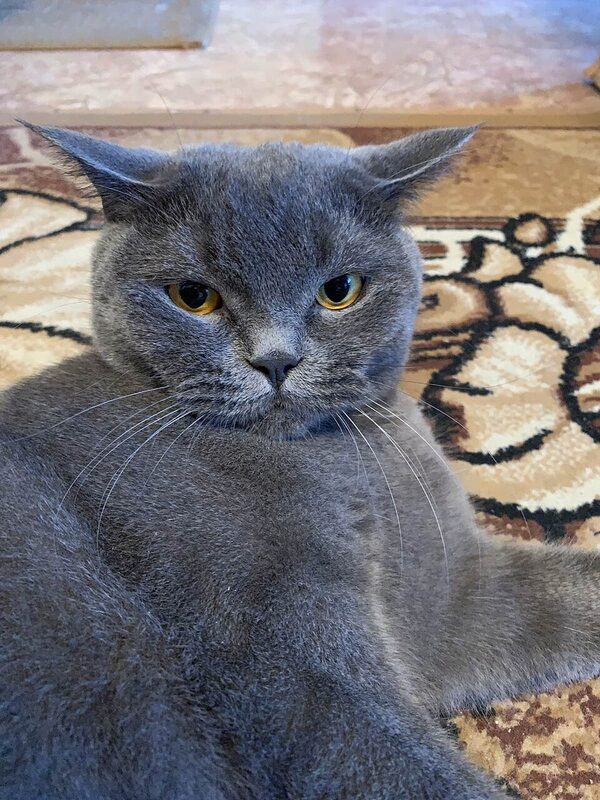
It can be any colour, including tortie and white. There are shorthaired and semi-longhaired varieties (the latter called Highland Fold, Longhair Fold or Coupari).
Related breeds and how to tell them apart
The British Shorthair was used in developing the breed, hence the round body. The American Curl has ears curled backwards, from a different mutation, with no known bone problems. The sources say Fold cats should not be crossed with other breeds with skeletal abnormalities, such as the Munchkin.
Behaviour and temperament
CFA describes it as a charming indoor cat that enjoys people's company but does not demand it insistently. It is quiet, but not lethargic; it plays fetch and can learn simple tricks. With its own people it is very affectionate.
Socialisation
CFA says it can be reserved with strangers and with other cats, which may read the folded ears as a sign of hostility.
A kitten gets used to new people, noises and other animals most easily in its first months of life.
Habits at home
Like all cats, it sleeps a lot: usually 12–16 hours a day. It is most active early in the morning and in the evening, but partly adapts to the family's routine.
Cats instinctively bury their droppings, so it quickly learns to use a litter tray. It scratches rough surfaces to shed the old outer layer of its claws, so it needs a scratching post or board.
Life at home and activity
It is moderately active. Because the joint disease can make jumping painful, ramps and low, soft resting places help.
| Activity | How often | Why it matters |
|---|---|---|
| Ramps and low, soft beds | always within reach | Its joints may be painful |
| Play with toys (wand toys, balls) | daily | Play imitates hunting and uses up its energy |
| Scratching post or board | always available | It looks after its claws without damaging the furniture |
| High places (cat tree, shelves) | always available | It has somewhere to watch from and to rest |
Tips for a balanced life
- Watch whether it limps or avoids jumping: these may be signs of pain.
- Keep it at a healthy weight, so its joints are not overloaded.
- Play with it calmly, without big jumps.
Care and health
Coat care
The short coat is brushed once a week, and the semi-long coat several times a week. The folded ears should be checked and cleaned carefully.
Common health problems
The mutation that folds the ears causes osteochondrodysplasia, a disease of cartilage and bone throughout the body. Wikipedia says every Scottish Fold develops arthritis: cats with one copy of the gene develop it gradually, those with two copies much sooner and more severely. The tail may be short and stiff. Some cats become so ill that they have to be put to sleep, even when young.
The breed also has polycystic kidney disease: a study in Japan found the PKD1 mutation in 54% of the Scottish Folds tested. Another study found genes linked to hypertrophic cardiomyopathy.
| Condition | Description | Common symptoms |
|---|---|---|
| Osteochondrodysplasia | Cartilage and bone develop abnormally, with progressive arthritis | Limping, stiff gait, refuses to jump, stiff tail |
| Polycystic kidney disease (PKD) | Cysts (fluid-filled sacs) form in the kidneys and grow over time | Drinks and urinates a lot, loses weight, has a poor appetite |
| Hypertrophic cardiomyopathy (HCM) | The heart wall thickens and the heart pumps less well. It is the most common heart disease in domestic cats | Often no signs at first; later rapid breathing, tiredness, sometimes sudden paralysis of the hind legs |
Recommended genetic tests
The TRPV4 mutation that causes folded ears is known, but every cat with folded ears has the disease. There is a genetic test for polycystic kidney disease; the heart is checked by ultrasound.
Is it hypoallergenic?
Cat allergy is caused mainly by the Fel d 1 protein, found in saliva and skin glands; it is behind the allergy in 90% of people who are allergic to cats. Kittens, females and neutered males produce less of it, but still enough to trigger symptoms. No breed is completely hypoallergenic.
Other care
- A check-up at the vet once a year.
- Vaccinations and parasite treatment on the schedule set by the vet.
- Trim the claws if they do not wear down on their own.
- Clean its teeth or give it food that helps keep them clean.
Diet and nutrition
The cat is a carnivore: it needs animal protein. Unlike a dog, it must get vitamin A, arachidonic acid and taurine from its food. Water is very important, because cats usually drink little; several water bowls around the house encourage it to drink.
Tips for a healthy diet
The table gives a starting estimate, calculated with the formula from the Merck Veterinary Manual for a healthy adult cat. The last column shows what this means in dry food with 3,500–4,000 kcal per kilogram. If you also feed wet food, reduce the dry portion.
| Cat's weight | Calories per day (neutered) | Calories per day (not neutered) | Dry food per day (approximate) |
|---|---|---|---|
| 3 kg | 190 kcal | 220 kcal | 48–63 g |
| 4 kg | 240 kcal | 280 kcal | 60–80 g |
| 5 kg | 280 kcal | 330 kcal | 70–94 g |
| 6 kg | 320 kcal | 380 kcal | 80–109 g |
- Adjust the portion to its weight: neutered cats put on weight easily.
- Weigh it monthly; the ribs should be easy to feel under your fingers.
- Kittens need more calories: Merck recommends 2.5 times the resting energy requirement.
Dangerous foods and substances
Some common household items are dangerous for cats:
- Lilies (and daylilies): they can destroy a cat's kidneys. Even the pollen or the water in the vase is dangerous.
- Paracetamol: extremely toxic to cats, which lack the enzyme that breaks it down. Never give it human medicines.
- Flea spot-ons and collars for dogs containing permethrin: the concentration meant for dogs is dangerous for cats.
- Foods: chocolate, coffee, alcohol, onions, garlic, grapes and raisins.
Reproduction and development
Maturity
Females usually reach sexual maturity at 5–10 months, and males at 5–7 months. The age varies from breed to breed.
Mating and pregnancy
Pregnancy in cats lasts 64–67 days, 65 on average. A first litter usually has fewer kittens than later ones. Only healthy cats that match the breed standard are used for breeding.
Blood type
Cats have blood type A, B or AB. Type A is the most common: in a study from England, 87.1% of non-pedigree cats and 54.6% of pedigree cats had type A. This matters for breeding: if the mother is type B and the kittens are type A, the antibodies in her first milk (colostrum) can destroy their red blood cells. The condition is called neonatal isoerythrolysis. That is why breeders test the blood type of both parents.
We found no published data on how common type B is in this breed; the test is done before mating anyway.
Caring for the kittens
Kittens are weaned at 6–7 weeks. They are ready to go to their new home at about 12 weeks, when they can be separated from their mother.
Neutering
Neutering used to be done at 6–9 months, but it is more and more often done before puberty, at around 3–6 months. It prevents unwanted kittens, urine marking in males and the loud “calling” of females in heat. A 2024 study found that neutered cats live one year longer on average. After the operation, the metabolism slows down and appetite increases, so the portion has to be reduced.
How to choose a kitten
- Ask for the pedigree from a recognised cat association (for example, CFA or TICA).
- The kitten leaves its mother at about 12 weeks.
- Think carefully: in several countries breeding this breed is banned because of the cats' suffering.
- Look at the mother and at the place where the kittens are raised: it should be clean, with kittens used to people.
- Ask about vaccinations, parasite treatment and the blood type of the parents.
Interesting facts
- Ears that keep moving. Although folded, the ears swivel and flatten back as in any cat.
- Banned in several countries. The Netherlands (2014), Austria (2020), Flanders (2021) and the state of Victoria in Australia have banned breeding cats with folded ears.
- Named after rabbits. At first it was called “Lop-ears”, after lop-eared rabbits.
- Straight-eared siblings. Kittens without folded ears are called Scottish Straights.
In popular culture
Taylor Swift's cats
The singer Taylor Swift has two Scottish Folds, Meredith Grey and Olivia Benson, named after characters in TV series. Wikipedia notes that the breed's popularity is growing, despite warnings from breeders' organisations.
Frequently asked questions
Why are its ears folded?
Because of a dominant mutation of the TRPV4 gene, which affects cartilage throughout the body.
Is it a healthy breed?
No. Every cat with folded ears has osteochondrodysplasia and develops arthritis; many also have polycystic kidney disease.
Why does FIFe not recognise it?
Because of the health problems caused by the ear mutation.
How much does it weigh?
Males 4–6 kg, females 2.7–4 kg.