LizardInteresting facts and information
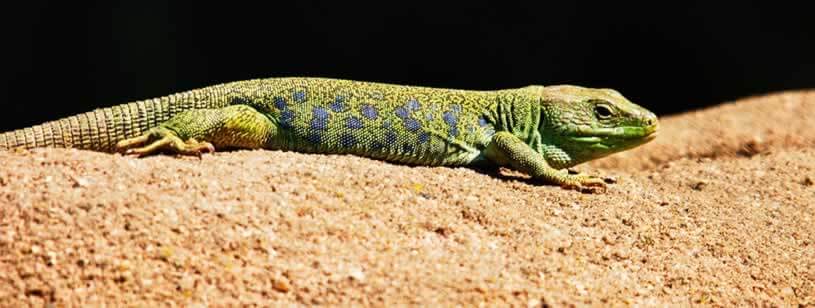
Lizards are reptiles in the order Squamata, which also includes snakes. They occupy many habitats, including tropical forests, grasslands, rocky areas and deserts. Some are small enough to fit on a fingertip, while monitor lizards can be much larger.
Many lizards use camouflage, and some can shed part of their tail to escape a predator. Tail regrowth and other adaptations vary by species; lizards do not all have the same abilities.
Quick facts
| Common name | Lizard |
| Scientific name | Lizards within the order Squamata; “Lacertilia” is a traditional grouping |
| Typical lifespan | From about 1 year to several decades (depending on the species) |
| Maximum speed | Varies by species; the spiny-tailed iguana reaches about 35 km/h |
| Dimensions | From about 1.6 cm to 3 metres (Komodo dragon) |
| Weight | From very small geckos to large monitor lizards weighing tens of kilograms |
| Diet type | Carnivore, herbivore or omnivore (varies according to species) |
| Main predators | Birds of prey, snakes, mammals, larger lizards |
| Conservation status | Varies by species; some are widespread while others face serious threats |
| Geographic distribution | On all continents except Antarctica |
| Habitat | Tropical forests, deserts, savannas, rocky areas, towns |
| Social behaviour | Most are solitary; many males are territorial |
| Special adaptations | Depending on species: camouflage, tail shedding, colour changes or specialised movement |
- Primary category:Reptiles
- Explore this animal's categories:Animals of AfricaAnimals of AsiaAnimals of AustraliaAnimals of EuropeAnimals of North AmericaAnimals of South AmericaAnimals that regrow body partsCamouflaged animalsDesert animalsEgg-laying animalsHibernating animalsInsect-eating animalsLOmnivoresPetsPredatory animals of RomaniaReptilesReptiles and amphibians of RomaniaScaled animalsVertebrates
Interesting facts
- Many lizards can drop and regrow their tail - When grabbed, many species shed their tail, which keeps wriggling to distract the predator; a new, simpler tail later grows back.
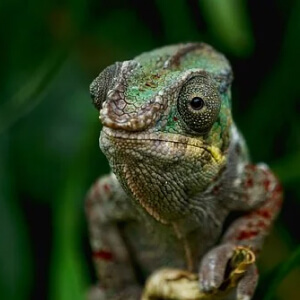
- Chameleons can move their eyes independently - So they can look in two different directions at the same time.
- Some lizards can run on water - The common basilisk (Basiliscus basiliscus), nicknamed the "Jesus Christ lizard", can sprint across the surface of water for short distances.
- Large lizards – The Komodo dragon (Varanus komodoensis) is the largest living lizard; exceptional size reports require reliable measurements.
- Lizards communicate with colours and movements - Anoles flash colourful throat fans, and many lizards bob their heads or do "push-ups" to send territorial messages or attract mates.
- Speed champions - The spiny-tailed iguana (Ctenosaura similis) can run at about 35 km/h, making it one of the fastest lizards.
- Talking lizards - Geckos are among the few lizards that call; the tokay gecko is named after its loud "to-kay" call.
Records and remarkable features
- The largest lizard - The Komodo dragon (Varanus komodoensis), up to about 3 metres long and over 70 kg.
- The smallest lizards - Dwarf geckos such as Sphaerodactylus ariasae are only about 16 mm long.
- One of the fastest lizards - The spiny-tailed iguana (Ctenosaura similis), at about 35 km/h.
- A long life - A Grand Cayman blue iguana (Cyclura lewisi) called Godzilla lived to about 69 years in captivity.
- Venomous lizards – The Gila monster (Heloderma suspectum) has venom glands and a medically important bite.
- Colour vision - Many lizards see colours well, and some can see ultraviolet light, which is invisible to us.
Characteristics
Lizards are reptiles with flexible, adaptable bodies and remarkable features that help them survive in many environments. There are more than 7,000 species, but most share some common features, such as a long body, protective scales and the ability to control their temperature by moving between sun and shade.
Appearance
- A scaly body - Scales protect lizards from drying out and from injury.
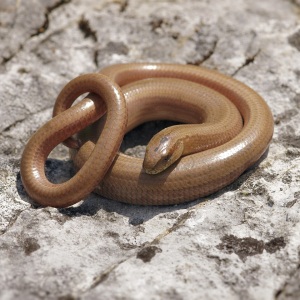
- Legs or no legs - Most lizards have four legs, but some, such as glass lizards and slow worms, have no legs and look like snakes.
- Different tails - Some species have long, thin tails, while others, such as the leopard gecko, have short, thick tails that store fat.
- Eyes adapted to their way of life - Most lizards have movable eyelids and can blink, unlike snakes; chameleons can move each eye separately.
- Many colours - Chameleons, anoles and some other lizards can change colour to communicate or camouflage themselves.
- Small, sharp teeth - Their teeth are shaped for their food, whether insects, plants or other animals.
Special adaptations
- Tail shedding (autotomy) - Many species break off their tail to escape predators; the tail keeps moving and distracts the attacker.
- Temperature control - As cold-blooded animals, lizards warm up in the sun and cool down in the shade.
- Gliding - Flying dragons (Draco) have flaps of skin supported by long ribs, which let them glide several metres between trees.
- Special tongues - Chameleons catch prey with a long, sticky tongue, while monitor lizards use their forked tongue to "smell" the air.
Habits and behaviour
Lizards use many survival strategies, from perfect camouflage to communicating with body movements and colours.
Social behaviour
- Mostly solitary - Many lizards live alone and meet mainly in the breeding season.
- Territorial males - Iguanas, anoles and monitor lizards defend their territory with threatening postures and colour displays.
- Body language - Lizards use head-bobbing, push-ups, throat fans and colour changes to signal their intentions.
- Family groups - A few species, such as some Australian skinks, live in family groups that share the same rock crevices for years.
Survival techniques
- Camouflage and colour change - Chameleons, anoles and many geckos blend in with their surroundings.
- Running on two legs – Frilled lizards (Chlamydosaurus kingii) can use bipedal running when escaping.
- Venom – Some lizards, including Gila monsters and Komodo dragons, have venom systems. Their anatomy and effects differ.
- Keeping still - Horned lizards (Phrynosoma) freeze and blend in with the ground.
- Squirting blood - When attacked, some horned lizards can squirt blood from their eyes, which tastes bad to dogs and foxes.
Habitat and geographic distribution
Lizards live on every continent except Antarctica, in a huge variety of habitats.
| Region | Examples | Habitat examples |
|---|---|---|
| North America | Collared lizards, horned lizards, Gila monster | Deserts, grasslands, forests |
| South America | Anoles, tegus, green iguanas | Tropical forests, savannas |
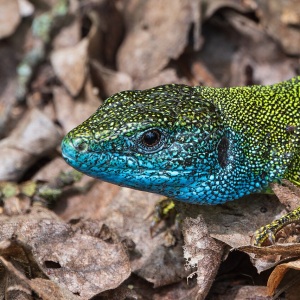
| Europe | Wall lizard, green lizard, sand lizard | Woodland edges, meadows, rocky areas |
| Africa | Agamas, monitor lizards, chameleons | Deserts, savannas, tropical forests |
| Asia | Komodo dragon, tokay gecko, leopard gecko | Tropical forests, islands, dry hills |
| Australia | Bearded dragon, thorny devil, goannas | Deserts, dry woodland |
Habitat types
- Deserts and savannas - Agamas, spiny-tailed lizards and the thorny devil cope with great heat.
- Tropical forests - Green iguanas, anoles and tegus climb trees and hunt or feed on leaves and fruit.
- Mountains - Some lizards, such as the viviparous lizard, live in cool mountain areas.
- Towns - Wall lizards and house geckos live close to people, on walls and around lights.
Human pressures and threats
- Habitat destruction - Deforestation and urban growth reduce the places where lizards can live.
- Illegal trade - Iguanas, monitor lizards and chameleons are captured for the exotic pet trade.
- Pesticides and pollution - Farm chemicals reduce the insects that many lizards eat.
- Climate change - Extreme temperatures affect breeding and winter rest.
Diet and feeding
Lizards' diets depend on the species, habitat and body shape. They can be carnivores, herbivores or omnivores, and their hunting techniques range from catching prey with a sticky tongue to patient ambush.
What do lizards eat?
| Type of food | Examples of lizards that eat it |
|---|---|
| Insects (crickets, beetles, grasshoppers, ants, termites) | Chameleons, leopard geckos, anoles, wall lizards |
| Plants (leaves, flowers, fruit, seeds) | Green iguana, spiny-tailed lizards (Uromastyx), day geckos (fruit and nectar) |
| Other reptiles and amphibians | Komodo dragon, Nile monitor |
| Small mammals | Komodo dragon, monitor lizards, tegus |
| Birds and eggs | Tegus, monitor lizards |
| Fish and water animals | Water monitors and other semi-aquatic lizards |
Feeding techniques
- A fast, sticky tongue - Chameleons shoot out their tongue to catch prey in a split second.
- Venom-assisted feeding – Venom contributes to the feeding biology of certain lizards; it is not a feature of all lizard species.
- Ambush - Many species stay still and wait for prey to come close before attacking.
- Eating plants - Iguanas and other plant-eating lizards have gut microbes that help them digest leaves.
Adapting to the food supply
- Insect-eating lizards hunt often when it is warm and they are active.
- Plant-eaters eat large amounts of leaves and flowers and need warmth from the sun to digest them.
- Omnivores are opportunists and eat whatever they can find.
Reproduction and life cycle
Lizards breed in different ways: most lay eggs, but some give birth to live young. The timing of breeding depends on the climate, the food supply and competition for territory.
| Feature | Details |
|---|---|
| Age at maturity | About 1-5 years (depending on the species) |
| Breeding season | Varies with region, species and local seasons |
| Type of reproduction | Egg-laying (most species) or live birth (some species, often in cold places) |
| Eggs per clutch | From 1-2 to about 70, depending on the species |
| Incubation | About 1-4 months |
| Lifespan | From about 1 year to several decades; large iguanas and monitor lizards live the longest |
Mating
- Males often defend territories and fight for the chance to mate.
- Many species use head-bobbing, displays and colour changes to attract females.
- Females may choose males based on their size, colours and displays.
Types of birth
- Egg-laying - Most lizards, such as iguanas and monitor lizards, lay eggs in nests dug in sand or soil.
- Live birth - Some species in cold regions, such as the viviparous lizard (Zootoca vivipara), give birth to fully formed young, which helps them breed in harsh climates.
- Virgin birth - In some lizards, such as certain whiptails and geckos, populations consist only of females that lay fertile eggs without males.
Survival of the young
- In most species, the young get no care from their parents and must look after themselves from birth.
- Many young lizards have camouflage colours or bright tails that distract predators.
Name and history
Lizards belong to a reptile lineage with an extensive fossil history. Their living diversity reflects many different evolutionary adaptations.
Origin of the name
- The English word "lizard" comes, through Old French, from the Latin lacertus or lacerta, meaning "lizard".
- The name Lacertilia, from the same Latin word, has traditionally been used for lizards as a group.
Lizards in human history
- Ancient Egypt - A lizard hieroglyph was used to write the word for "many" or "numerous".
- Ancient Greece - The sculptor Praxiteles made a famous statue of the young god Apollo about to catch a lizard, known as Apollo Sauroctonos, "the lizard-slayer".
- The Aztecs - "Lizard" (Cuetzpalin) was one of the 20 day signs of the Aztec calendar.
Lizards in folklore
- India - In parts of South India, a traditional belief holds that a house lizard falling on a person predicts good or bad events, depending on where it lands.
- The Philippines - The chirp of the house gecko is said to confirm that what someone has just said is true.
- Australia - Goannas, large monitor lizards, are important ancestral beings in many Aboriginal Dreaming stories.
Cultural significance and mythology
In many cultures, lizards are powerful symbols of renewal, luck and protection, but sometimes also of trickery or danger.
Lizards in folklore and belief
- Renewal - Because lizards can regrow their tails and shed their skin, they are often symbols of regeneration.
- Sunshine and warmth - Lizards basking in the sun are linked with the sun, summer and rest.
- Protectors of the home - In many warm countries, house geckos are welcome guests because they eat mosquitoes and other insects.
Conservation status and threats
Many lizard species are common and adaptable, but others are threatened by deforestation, climate change, introduced predators and the illegal pet trade.
| Status | Examples | Regions |
|---|---|---|
| Least Concern (LC) | Green iguana, common wall lizard, Asian water monitor | The Americas, Europe, Asia |
| Endangered (EN) | Grand Cayman blue iguana (Cyclura lewisi), Panay monitor (Varanus mabitang) | Cayman Islands, the Philippines |
| Critically Endangered (CR) | Jamaican iguana (Cyclura collei), Union Island gecko (Gonatodes daudini) | Jamaica, the Grenadines |
Main threats
- Habitat destruction - Deforestation and urban growth reduce the places where lizards live.
- Illegal trade - Iguanas, monitor lizards, geckos and chameleons are captured for the exotic pet trade.
- Introduced predators - Cats, rats, mongooses and dogs kill many island lizards.
- Climate change - Extreme temperatures and droughts change breeding patterns; in many lizards, nest temperature also affects whether the young are male or female.
Conservation work
- Captive breeding - Species such as the blue iguana have been bred in captivity and released into the wild, helping them recover from near extinction.
- Protected areas - National parks and reserves protect threatened lizards.
- Trade rules - CITES controls international trade in many lizards.
- Education - Campaigns help reduce poaching and show the importance of lizards in ecosystems.
In popular culture
Lizards appear in films, books, cartoons and video games, as symbols of survival and cleverness or as monsters.
Stories and music
- "The Lizard King" - The singer Jim Morrison of The Doors used this nickname for himself.
- Aboriginal stories - Lizards such as goannas appear in many traditional Australian stories.
Film and animation
- Rango (2011) - A pet chameleon becomes the unlikely sheriff of a Wild West town.
- The Amazing Spider-Man (2012) - The scientist Curt Connors turns into the giant villain known as the Lizard.
Video games
- The Legend of Zelda (Nintendo) - Lizard-like warriors called Lizalfos are common enemies.
- Pokémon - Characters such as Charmander and Treecko are inspired by lizards.
The lizard as a symbol
- Advertising - A talking gecko has been the mascot of the American insurance company GEICO since 1999.
- Pets - Bearded dragons and leopard geckos are among the most popular pet reptiles.