LykoiCharacteristics, history, behaviour and care
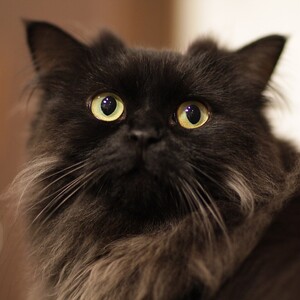
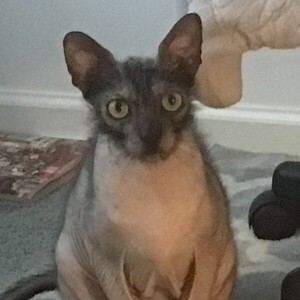
Lykoi cat. · Big Slosh / Wikimedia Commons, CC BY-SA 4.0 (https://creativecommons.org/licenses/by-sa/4.0). Cropped and resized.
The Lykoi, also called the “wolf cat” or “werewolf cat”, is a new breed from the USA that arose from a natural mutation in house cats. It has a sparse, roan coat and a hairless “mask” on its face, which gives it a wolf-like look. The name comes from the Greek “lykos”, wolf. It is described as sweet, active and playful, but also reserved and independent.
Quick facts
| Common name | Lykoi (wolf cat) |
| Scientific name | Felis catus |
| Country of origin | USA (Virginia, Tennessee) |
| Official recognition | FIFe: preliminary recognition (code LYO); TICA, CFA, WCF, GCCF |
| Lifespan | We found no data for the breed; pet cats live about 13 years on average |
| Weight | We found no sourced data |
| Size | Medium |
| Body type | Slender, agile, without extra bulk |
| Coat type | Sparse, roan, without undercoat; moults periodically |
| Common colours | “Roan” pattern (white hairs mixed with coloured hairs); most often black |
| Eye colour | We found no data in the sources |
| Activity level | High |
| Temperament | Sweet, active, playful, reserved, independent |
| Good with children | We found no data in the sources |
| Good with other pets | We found no data in the sources |
| Genetic predispositions | Skin problems (cysts, blackheads, folliculitis), sunburn |
- Primary category:Cat breeds
- Explore this animal's categories:
History and origin
Cats carrying this gene were found among stray cats. In 2010, Patti Thomas adopted two kittens with this look from a shelter in Virginia, and in 2011 Johnny Gobble found another pair in Tennessee.
The Gobbles checked that the look was not caused by a disease, with the help of geneticist Leslie Lyons and the University of California, Davis. Johnny Gobble mated two unrelated cats, and in 2011 the first Lykoi kitten bred on purpose was born. The gene turned out to be recessive; to avoid inbreeding, many crosses were made with black house cats.
How the breed developed
- 2010 – Patti Thomas adopts the first kittens in Virginia.
- 2011 – a second pair is found in Tennessee; the first kitten bred on purpose is born.
- 2020 – a study examines the breed's skin and coat.
- Today – FIFe gives it preliminary recognition.
At a glance: who is it right for?
- People who can look after its skin. The greasy skin needs baths and cleaning.
- Indoors only. Without a dense coat, it is sensitive to cold and sun.
- Active families. It is active and playful.
- People who accept a “moody” cat. It can be reserved and independent.
Physical characteristics
The standards call for a wedge-shaped head and a slender, agile body, without extra bulk.
General appearance
On its face, around the nose and eyes, it has a hairless “mask”. The coat moults and grows back regularly: the same cat may sometimes be fully covered, at other times almost hairless. Owners say it “turns into a wolf”.
| Feature | Lykoi |
|---|---|
| Size | Medium |
| Body | Slender, agile |
| Head | Wedge |
| Face | Hairless “mask” |
| Coat | Sparse, roan, without undercoat |
| Colour | Roan, most often black |
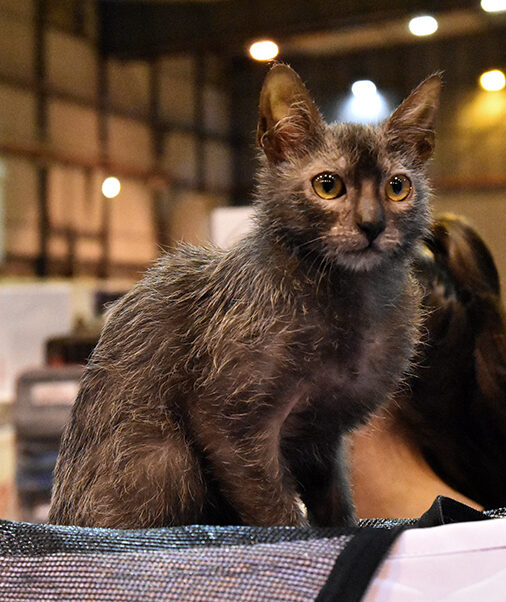
The standard calls for the “roan” pattern: a mix of completely white hairs and completely coloured hairs. Any colour is accepted, but black is the most common. It is the only known cat breed with this pattern. French Wikipedia says it has no undercoat, and its coat recalls an opossum's.
Related breeds and how to tell them apart
DNA tests show that it does not carry the genes that cause hairlessness in the Sphynx or the curly coat of the Devon Rex and Selkirk Rex. Its mutation is different.
Behaviour and temperament
Wikipedia says it is usually described as sweet, active and playful, but also reserved and independent.
Socialisation
A kitten gets used to new people, noises and other animals most easily in its first months of life.
Habits at home
Like all cats, it sleeps a lot: usually 12–16 hours a day. It is most active early in the morning and in the evening, but partly adapts to the family's routine.
Cats instinctively bury their droppings, so it quickly learns to use a litter tray. It scratches rough surfaces to shed the old outer layer of its claws, so it needs a scratching post or board.
Life at home and activity
It is active and playful; it needs daily play in a warm home.
| Activity | How often | Why it matters |
|---|---|---|
| Warm beds | always available | Its sparse coat keeps it only a little warm |
| Play with toys (wand toys, balls) | daily | Play imitates hunting and uses up its energy |
| Scratching post or board | always available | It looks after its claws without damaging the furniture |
| High places (cat tree, shelves) | always available | It has somewhere to watch from and to rest |
Tips for a balanced life
- Keep it indoors, warm, and out of strong sunlight.
- Clean its skin as your vet advises.
- Play with it every day.
Care and health
Coat care
A 2020 study found that Lykoi cats have larger sebaceous glands, so their skin easily becomes greasy. Owners are advised to groom and bathe them with extra care. They moult periodically, sometimes almost completely.
Common health problems
Wikipedia says it has the same risks as hairless cats: sensitivity to cold and heat, sunburn and a higher risk of skin cancer. The 2020 study found in all the cats examined an inflammation of the hair follicles (lymphocytic mural folliculitis), like a permanent allergic reaction. The breed develops cysts and blackheads very easily.
| Condition | Description | Common symptoms |
|---|---|---|
| Folliculitis | Inflammation of the hair follicles | Scabs, hair loss, itching |
| Cysts and blackheads | Blocked pores and skin glands | Small lumps and black dots on the skin |
Recommended genetic tests
There is no genetic test required for the breed. Ask for the parents' health records and how their skin is cared for.
Is it hypoallergenic?
Cat allergy is caused mainly by the Fel d 1 protein, found in saliva and skin glands; it is behind the allergy in 90% of people who are allergic to cats. Kittens, females and neutered males produce less of it, but still enough to trigger symptoms. No breed is completely hypoallergenic.
Other care
- A check-up at the vet once a year.
- Vaccinations and parasite treatment on the schedule set by the vet.
- Trim the claws if they do not wear down on their own.
- Clean its teeth or give it food that helps keep them clean.
Diet and nutrition
The cat is a carnivore: it needs animal protein. Unlike a dog, it must get vitamin A, arachidonic acid and taurine from its food. Water is very important, because cats usually drink little; several water bowls around the house encourage it to drink.
Tips for a healthy diet
The table gives a starting estimate, calculated with the formula from the Merck Veterinary Manual for a healthy adult cat. The last column shows what this means in dry food with 3,500–4,000 kcal per kilogram. If you also feed wet food, reduce the dry portion.
| Cat's weight | Calories per day (neutered) | Calories per day (not neutered) | Dry food per day (approximate) |
|---|---|---|---|
| 3 kg | 190 kcal | 220 kcal | 48–63 g |
| 3.5 kg | 210 kcal | 250 kcal | 52–71 g |
| 4 kg | 240 kcal | 280 kcal | 60–80 g |
| 4.5 kg | 260 kcal | 300 kcal | 65–86 g |
- Adjust the portion to its weight: neutered cats put on weight easily.
- Weigh it monthly; the ribs should be easy to feel under your fingers.
- Kittens need more calories: Merck recommends 2.5 times the resting energy requirement.
Dangerous foods and substances
Some common household items are dangerous for cats:
- Lilies (and daylilies): they can destroy a cat's kidneys. Even the pollen or the water in the vase is dangerous.
- Paracetamol: extremely toxic to cats, which lack the enzyme that breaks it down. Never give it human medicines.
- Flea spot-ons and collars for dogs containing permethrin: the concentration meant for dogs is dangerous for cats.
- Foods: chocolate, coffee, alcohol, onions, garlic, grapes and raisins.
Reproduction and development
Maturity
Females usually reach sexual maturity at 5–10 months, and males at 5–7 months. The age varies from breed to breed.
Mating and pregnancy
Pregnancy in cats lasts 64–67 days, 65 on average. A first litter usually has fewer kittens than later ones. Only healthy cats that match the breed standard are used for breeding.
Blood type
Cats have blood type A, B or AB. Type A is the most common: in a study from England, 87.1% of non-pedigree cats and 54.6% of pedigree cats had type A. This matters for breeding: if the mother is type B and the kittens are type A, the antibodies in her first milk (colostrum) can destroy their red blood cells. The condition is called neonatal isoerythrolysis. That is why breeders test the blood type of both parents.
We found no published data on how common type B is in this breed; the test is done before mating anyway.
Caring for the kittens
Kittens are weaned at 6–7 weeks. They are ready to go to their new home at about 12 weeks, when they can be separated from their mother.
Neutering
Neutering used to be done at 6–9 months, but it is more and more often done before puberty, at around 3–6 months. It prevents unwanted kittens, urine marking in males and the loud “calling” of females in heat. A 2024 study found that neutered cats live one year longer on average. After the operation, the metabolism slows down and appetite increases, so the portion has to be reduced.
How to choose a kitten
- Ask for the pedigree from a recognised cat association (for example, a FIFe member).
- The kitten leaves its mother at about 12 weeks.
- Look at the mother and at the place where the kittens are raised: it should be clean, with kittens used to people.
- Ask about vaccinations, parasite treatment and the blood type of the parents.
Interesting facts
- “It turns into a wolf”. That is what owners say when the cat moults.
- A unique pattern. It is the only known cat breed with the “roan” pattern.
- Found among strays. The first Lykoi cats were taken from shelters.
- A Greek name. “Lykoi” comes from “lykos”, meaning wolf.
Frequently asked questions
Why does it look like a wolf?
Because of its sparse, roan coat and the hairless “mask” on its face, caused by a natural mutation.
Does it shed a lot?
Yes, periodically; sometimes it is left almost hairless, then the coat grows back.
What care does it need?
Mainly skin care, as its skin easily becomes greasy and develops cysts and blackheads.
Is it recognised by FIFe?
It has preliminary recognition.