SquirrelInteresting facts and information
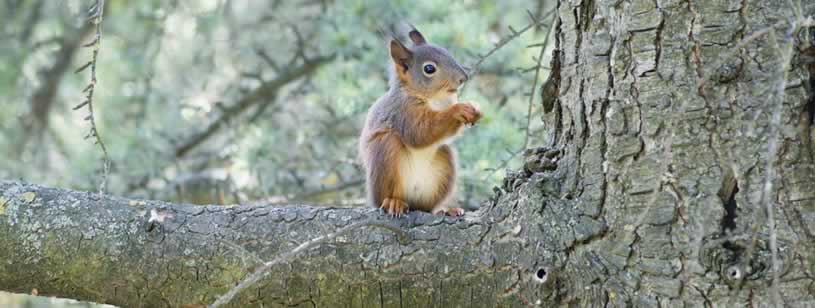
Squirrels are rodents in the family Sciuridae. The group includes tree squirrels, ground squirrels and flying squirrels, whose gliding differs from powered flight. Their diets, activity and winter habits vary between species.
Tree squirrels, ground squirrels and flying squirrels occupy different habitats. Some species also live in parks and gardens.
Quick facts
| Common name | Squirrel |
| Scientific name | Sciuridae (squirrels) |
| Typical lifespan | Usually about 5-6 years in the wild for tree squirrels; up to about 20 years in captivity |
| Length | About 15-50 cm for most tree squirrels (depending on species) |
| Weight | About 100 g to 1.5 kg for most tree squirrels |
| Diet | Mainly plant food (seeds, nuts, fruit, fungi), plus some insects and eggs |
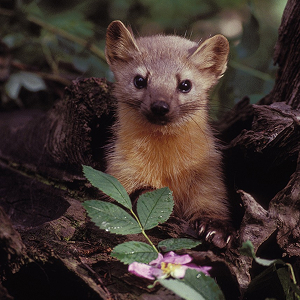
| Main predators | Birds of prey, foxes, snakes, wild cats, martens |
| Conservation status | Assessed separately by species and population; regional trends and needs differ |
| Distribution | Every continent except Antarctica; only introduced in Australia |
| Habitat | Forests, parks, grasslands, mountains |
- Primary category:Mammals
- Explore this animal's categories:Animals of AfricaAnimals of AsiaAnimals of AustraliaAnimals of EuropeAnimals of North AmericaAnimals of RomaniaAnimals of Romania’s forestsAnimals of Romania’s gardens and parksAnimals of South AmericaArboreal animalsForest animalsFurry animalsLive-bearing animalsMammalsMammals of RomaniaOmnivoresRed and reddish animalsRodentsSVertebrates
Interesting facts
- Squirrels hide food in many different places to stop it being stolen - and because they do not find all of it again, they help plant new trees.
- Flying squirrels glide using a membrane stretched between their limbs; this is not powered flight.
- They have an excellent memory and can remember the locations of many of their food stores.
- Their front teeth never stop growing, so squirrels must gnaw constantly to keep them at the right length.
- They are fast and agile - Squirrels can run at up to about 30 km/h and jump many times their own body length.
Records and remarkable features
- Squirrels are rodents in the family Sciuridae.
Physical characteristics and unique adaptations
Squirrels are agile, clever mammals adapted for climbing, jumping and surviving in many environments. Their bushy tails and strong legs give them balance and speed, while their strong teeth crack hard nuts and seeds.
Key physical adaptations
- A long, bushy tail - Helps with balance when jumping and keeps the squirrel warm in cold weather.
- Strong hind legs - Allow long leaps between branches, many times the squirrel's body length.
- Sharp, curved claws - Help squirrels climb and cling to tree bark.
- Ever-growing incisors - Let them gnaw through hard nut shells without wearing their teeth down completely.
- Excellent all-round vision - Their large eyes on the sides of the head help them spot predators, even behind them.
Types of squirrel
| Group | Features |
|---|---|
| Tree squirrels | Live in trees, are fast and have long tails for balance |
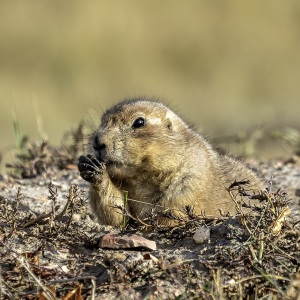
| Ground squirrels | Live in underground burrows, are often sturdier and more social; the group includes marmots, prairie dogs and chipmunks |
| Flying squirrels | Glide between trees using a furry membrane between their limbs |
Habits and behaviour
Squirrels are clever and adaptable, with clever strategies for storing food, communicating and staying alive.
Way of life
- Most tree and ground squirrels are active by day, especially in the morning and late afternoon; flying squirrels are active at night.
- Some species defend territories or food stores from other squirrels with calls and tail movements.
- Many squirrels live alone, but in cold weather several may share a nest or den for warmth.
Communication and interaction
- Tail signals - Squirrels flick and wave their tails to signal alarm or annoyance.
- Alarm calls - They chatter, bark and squeal to warn others of predators.
- Scent marking - They leave scent by rubbing their faces on branches and other surfaces.
Survival strategies
- Storing food for winter - Many squirrels bury acorns and seeds, which they can find again even under snow.
- Fake caches - When they think they are being watched, some squirrels pretend to bury food to fool would-be thieves.
- A good memory - They remember where many of their food stores are hidden.
Habitat and geographic distribution
Squirrels live on every continent except Antarctica and Australia, where only introduced squirrels are found. They live in many climates, from tropical forests to mountains and the Arctic tundra.
Distribution
| Region | Situation | Typical habitat |
|---|---|---|
| North America | Many species, often very common | Forests, prairies, city parks |
| Europe | Red squirrels widespread; grey squirrels introduced in Britain, Ireland and Italy | Deciduous and coniferous forests |
| Asia | The greatest variety, including giant and flying squirrels | Mountains, jungles, plains |
| South America | Several tree squirrels | Tropical forests |
| Africa | Tree, ground and sun squirrels | Savannas, forests |
| Australia | No native squirrels; a small introduced population of palm squirrels | Parks in Perth |
Habitats
- Deciduous and coniferous forests - The preferred habitat of tree squirrels, with plenty of food and shelter.
- Parks and gardens - Some species have adapted very well to life in towns.
- Grasslands and dry areas - Many ground squirrels live in open country, among shrubs and grasses.
Impact of environmental change
- Deforestation reduces squirrels' natural habitats.
- Climate change can affect the hibernation and breeding of some species.
- Competition from invasive species - The introduced American grey squirrel has replaced the native red squirrel in much of Britain.
Diet and feeding
Squirrels are opportunistic feeders: they eat mainly plant food but also take some animal protein. Their diet changes with the season and the food available.
What do squirrels eat?
| Type of food | Examples |
|---|---|
| Seeds and nuts | Acorns, hazelnuts, walnuts, pine seeds |
| Fruit and fungi | Apples, pears, berries, mushrooms |
| Buds, shoots and bark | Young shoots, tree buds, bark in hard winters |
| Insects and other animal food | Insects, larvae, snails, bird eggs |
| Human food (in towns) | Bird seed, bread, peanuts (salted food is bad for them) |
How they feed
- They use their front paws to hold and turn nuts while they gnaw them open.
- They store food in the ground or in hollow trees and remember where they hid much of it.
- They adapt their diet to the season, eating more buds and insects in spring and more nuts in autumn.
Reproduction and life cycle
Squirrels breed quickly, which helps keep their populations stable even in difficult conditions.
Breeding season
- Many tree squirrels breed once or twice a year, often in late winter and early summer.
- Males chase females through the trees in mating chases, and the fastest, most persistent male usually wins.
- A female may mate with several males in one season.
Development stages
| Stage | Timing | What happens |
|---|---|---|
| Pregnancy | About 30-45 days | The female gives birth in a sheltered nest (drey) or tree hole |
| Newborns | First weeks | Born blind and hairless; depend completely on their mother |
| First fur and eyes open | About 3-5 weeks | They start exploring around the nest |
| Independence | About 8-12 weeks | They leave their mother's nest and look for their own area |
Survival strategies
- Females often build several nests and move their young if danger threatens.
- When threatened, squirrels often freeze, then dash away in a zigzag.
- Young squirrels learn to climb and jump within their first months, which helps them escape predators.
Name and history
Origin of the name
- The English word "squirrel" comes, through Old French and Latin, from the Greek skiouros.
- Skiouros combines skia ("shadow") and oura ("tail"), meaning "shadow-tail", because a squirrel can shade itself with its bushy tail.
- The scientific name of the tree squirrel genus, Sciurus, comes from the same Greek word.
Taxonomic classification
| Classification | Name |
|---|---|
| Kingdom | Animalia |
| Phylum | Chordata |
| Class | Mammalia |
| Order | Rodentia |
| Family | Sciuridae |
Evolution and fossils
- The earliest known squirrels lived about 36-40 million years ago, in the Eocene epoch.
- Early squirrels already looked much like today's tree squirrels.
- Over time, squirrels diversified into tree, ground and flying squirrels, each adapted to different habitats.
Cultural significance and mythology
- Norse mythology - Ratatoskr is a squirrel who runs up and down the world tree Yggdrasil, carrying insulting messages between an eagle at the top and a dragon at the roots.
- A symbol of thrift - Because squirrels store food for winter, they are seen as symbols of saving and preparing for the future.
- India - In a Hindu legend, a little squirrel helped Lord Rama build a bridge to Lanka, and the stripes on the Indian palm squirrel's back are said to be the marks of Rama's fingers.
Conservation status and threats
Most squirrel species are common, but some are threatened by deforestation, climate change and introduced species.
Main threats
- Deforestation and habitat loss - The loss of woodland forces squirrels into towns, where they face traffic, pets and less natural food.
- Invasive species - In Britain and Italy, the introduced grey squirrel has replaced the native red squirrel in many areas, partly by spreading the squirrelpox virus.
- Climate change - Higher temperatures can disrupt the hibernation and breeding of some species.
- Road traffic - Many squirrels are killed by cars, especially in autumn, when they are busy gathering food.
Examples of squirrel species
| Species | Status | Region |
|---|---|---|
| Eurasian red squirrel (Sciurus vulgaris) | Least Concern overall, but declining in Britain and Ireland | Europe and northern Asia |
| Indian giant squirrel (Ratufa indica) | Least Concern, but locally affected by deforestation | India |
| Mount Graham red squirrel (a subspecies of Tamiasciurus fremonti) | Endangered (USA) | Arizona, USA |
| Some island flying squirrels | Several are threatened by forest loss | Southeast Asia |
Protection measures
- Protecting woodland and planting new forests.
- Controlling invasive grey squirrels to help native red squirrels.
- Building rope bridges and green corridors so that squirrels can cross roads safely.
Squirrels in popular culture
- The Tale of Squirrel Nutkin (Beatrix Potter, 1903) - A children's story about a cheeky red squirrel who loses his tail.
- Scrat (Ice Age) - A prehistoric squirrel-like creature obsessed with his acorn.
- Rocky the Flying Squirrel - The hero of the classic American cartoon The Rocky and Bullwinkle Show.
- Sandy Cheeks (SpongeBob SquarePants) - A squirrel from Texas who lives underwater in an air-filled dome.
The squirrel as a symbol
- Squirrels are popular symbols of saving money and preparing for the future, and they appear in the logos of some banks and savings schemes.