CoypuInteresting facts and information
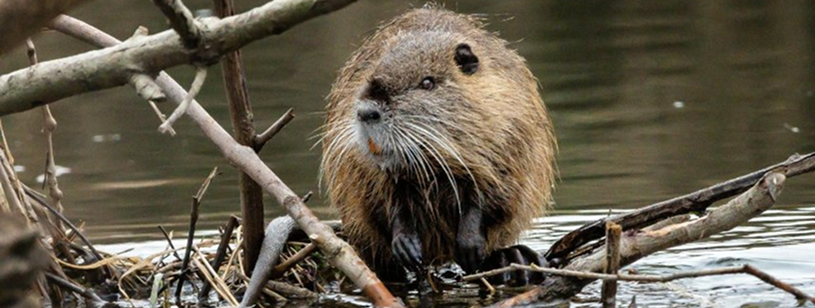
The coypu (Myocastor coypus), also called nutria, is a semi-aquatic rodent native to South America. It has orange incisors and a long, rounded tail. Introduced populations can damage wetland vegetation and banks.
Coypus live in wetlands, where they dig burrows in banks and dykes, which can damage flood defences. They are sometimes confused with beavers or muskrats, but they have a long, round, almost hairless tail and white whiskers.
Quick facts
| Common name | Coypu (nutria) |
| Scientific name | Myocastor coypus |
| Typical lifespan | A few years in the wild, up to about 6-10 years in captivity |
| Maximum speed | Varies with species or individual, distance and conditions |
| Size | About 40 - 60 cm long (without tail) |
| The length of the tail | About 25 - 45 cm |
| Weight | About 5 to 9 kg (some exceed 12 kg) |
| Diet type | Herbivore (aquatic plants, roots, rhizomes, crops) |
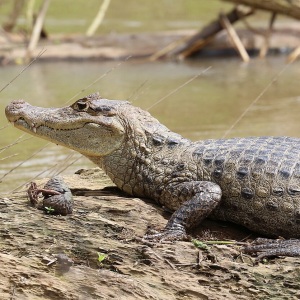
| Main predators | Caimans and big cats (native range); alligators, foxes, dogs and birds of prey (introduced range) |
| Conservation status | Least Concern (IUCN); invasive in many countries |
| Habitat | Wetlands, rivers, lakes, marshes, canals |
| Distribution (continents) | Native to South America; introduced to North America, Europe, Asia and Africa |
Interesting facts
- Orange teeth - The coypu's large front teeth are bright orange because their enamel contains iron, which makes them harder.
- Good swimmers - Coypus have webbed hind feet, can close their nostrils and mouth behind the teeth, and can stay underwater for several minutes.
- Feeding in the water - The female's teats are high on the sides of her body, so the young can suckle while she floats.
- Cold limits - Coypus do not cope well with long, hard frosts, and many die in severe winters.
- Big eaters - A coypu can eat about a quarter of its body weight in plants every day, which can seriously damage wetlands.
Records and remarkable features
- The coypu (Myocastor coypus), also called nutria, is a semi-aquatic rodent native to South America. It has orange incisors and a long, rounded tail. Introduced populations can damage wetland vegetation and banks.
- Eradicated in Britain - After escaping from fur farms, coypus spread in eastern England; a trapping campaign removed them completely by 1989.
Physical characteristics and adaptations
The coypu is a large, sturdy rodent adapted to life both in water and on land.
Distinguishing physical appearance
- A large, rounded body - Covered with thick fur: long, coarse outer hairs and a soft, dense underfur.
- A big head and white whiskers - Long white whiskers and a white or pale muzzle are typical.
- Eyes, nostrils and ears high on the head - They can see, breathe and hear while most of the body is under water.
- A long, round tail - The tail is scaly, almost hairless and about 25-45 cm long, unlike the flat tail of a beaver.
- Webbed hind feet - Four of the five hind toes are webbed for swimming.
- Orange teeth - The front teeth grow all the time and have orange, iron-rich enamel.
Adaptations for semi-aquatic life
- Closing nostrils - The nostrils can close when the coypu dives.
- Lips behind the teeth - The lips close behind the front teeth, so it can gnaw underwater without swallowing water.
- Two layers of fur - The dense underfur traps air and keeps the body warm and dry.
- Different feet - Webbed hind feet are used for swimming, while the front feet are used for digging and holding food.
Habits and behaviour
Coypus are mainly active at dusk and at night. They live in family groups and dig burrows in the banks of rivers and lakes.
Life mode and daily routine
- Active at dusk and night - By day, they often rest in burrows or dense vegetation.
- Life by the water - They spend much of their time swimming and feeding in or near the water.
- Burrows and platforms - They dig burrows in banks and build floating platforms of plants for resting and feeding.
Social behaviour and interactions
- Family groups - Coypus often live in groups of related females and their young, with an adult male.
- Scent marking - They use scent glands to mark their territory.
- Calls - They make a range of sounds, including grunts and calls between mothers and young.
Defence strategies
- Diving - At the first sign of danger, they slip into the water and can stay hidden under the surface.
- Biting - When cornered, they defend themselves with their large, sharp front teeth.
- Warning others - They make alarm calls to warn their group.
Habitat and geographic distribution
The coypu comes from South America, but it has been introduced to many other parts of the world, where it has often become an invasive species.
Geographical distribution
| Region | Examples and habitats |
|---|---|
| South America (native) | Argentina, Uruguay, Chile, southern Brazil, Paraguay, Bolivia - rivers and marshes |
| North America (introduced) | USA, especially Louisiana and other southern states - marshes and canals |
| Europe (introduced) | France, Italy, Germany, the Netherlands, Romania and other countries - rivers and lakes |
| Asia and Africa (introduced) | Japan, the Middle East, Kenya and other regions |
Habitats
- Rivers and lakes - They prefer slow-moving fresh water with soft banks for digging.
- Marshes and wetlands - These provide plenty of plants and shelter.
- Canals and ditches - They often live in man-made waterways.
Habitat threats
- Control - In many countries where they are invasive, coypus are trapped or shot to reduce the damage they cause.
- Hard winters - In cold regions, populations can crash during long periods of frost.
- Habitat loss - In their native range, drainage of wetlands reduces their habitat.
Diet and feeding
The coypu is almost entirely herbivorous and eats many kinds of water and land plants. Its big appetite can cause serious damage to wetlands and crops.
What do coypus eat?
| Food type | Examples |
|---|---|
| Aquatic plants | Reeds, bulrushes, water grasses, water lilies |
| Roots and rhizomes | The roots and underground stems of marsh plants |
| Leaves and stems | Grasses, clover and other land plants |
| Crops (agricultural damage) | Sugar beet, carrots, maize, rice, cereals |
| Other food (rarely) | Fruit, bark, and occasionally freshwater mussels and snails |
Food behaviour
- A big appetite - An adult coypu can eat about a quarter of its body weight a day.
- Feeding at dusk and night - It feeds mainly when it is less exposed to predators.
- Digging for roots - It digs up roots and rhizomes, destroying more plants than it eats.
- Damage to marshes - In places such as Louisiana, coypus have turned large areas of marsh into open water.
Reproduction and life cycle
The coypu breeds very quickly, which helps it spread fast in new areas.
Breeding and birth
| Characteristic | Details |
|---|---|
| Sexual maturity | About 4-6 months |
| Breeding season | All year round in mild climates |
| Gestation | About 130 days |
| Number of young | Usually 4-6, up to about 13 |
| Litters per year | Usually 2, sometimes 3 |
| Weaning | At about 6-8 weeks |
Reproductive behaviour
- Birth in a nest - Females give birth in a burrow or a nest of plants.
- Well-developed young - Young coypus are born furred, with open eyes, and can swim within hours.
- Nursing - The young suckle for several weeks but start eating plants within days.
- Fast breeding - Females can mate again soon after giving birth.
Longevity
- In the wild, most coypus live only a few years.
- In captivity, they can live up to about 6-10 years.
Name and history
Origin of the name "Coypu"
- "Coypu" comes from the Mapuche (Mapudungun) name of the animal, while "nutria" is the Spanish word for otter, although the coypu is not related to otters.
- The scientific name Myocastor coypus means "mouse-beaver", referring to its rat-like tail and beaver-like habits.
Taxonomic Classification
| Kingdom | Animalia |
|---|---|
| Phylum | Chordata |
| Class | Mammalia |
| Order | Rodentia |
| Family | Echimyidae (formerly Myocastoridae) |
| Genus | Myocastor |
History and spread
- A South American rodent - The coypu is related to other South American rodents such as spiny rats.
- Fur farming - In the late 19th and 20th centuries, coypus were taken to Europe, North America, Asia and Africa to be farmed for their fur.
- Escapes and releases - Animals that escaped or were released from farms formed wild populations.
- An invasive species - In many countries, coypus are now considered harmful because they damage wetlands, riverbanks and crops; the European Union lists them as an invasive species of concern.
Cultural significance and mythology
The coypu is best known for its fur and, today, for the problems it causes as an invasive species.
Coypus in history and traditions
- South America - Coypus have long been hunted for their meat and fur in their native range.
- The fur trade - In the 20th century, nutria fur was a popular material for coats and hats in Europe and North America.
- Louisiana - A popular story says that coypus were released in Louisiana by the family behind Tabasco sauce, but they actually came from several fur farms.
Coypus in cultural symbolism
| Region | Meaning |
|---|---|
| South America | A source of meat and fur |
| Europe and North America (20th century) | A valuable fur animal |
| USA and Europe (today) | An invasive species that damages wetlands |
| Louisiana | A pest, with rewards paid for each animal caught |
Conservation status and threats
The coypu is not threatened globally, but it causes major problems in many places where it has been introduced.
Main threats to coypus
- Control programmes - In many countries, coypus are trapped and hunted to limit their impact.
- Hard winters - Coypus are sensitive to long periods of frost.
- Loss of wetlands - In their native range, drainage of wetlands reduces their habitat.
Environmental impacts of coypus
- Damage to riverbanks - Their burrows weaken riverbanks, dykes and flood defences.
- Loss of marsh vegetation - By eating and digging up plants, they can destroy marshes, which then turn into open water.
- Damage to crops - They feed on cereals, sugar beet, rice and other crops.
Conservation status
| Region | Status |
|---|---|
| Global | Least Concern (IUCN) |
| Introduced areas | Invasive species, controlled in many countries |
Control efforts
- Trapping programmes - The USA, France, Italy and other countries run programmes to reduce coypu numbers; Louisiana pays a reward for each tail.
- Eradication - Britain successfully removed all wild coypus in the 1980s.
- Monitoring - Scientists study the effects of coypus on wetlands to plan control measures.
In popular culture
Because of its impact on wetlands and its history in the fur trade, the coypu appears in documentaries and news stories.
Coypus in films and television
- "Rodents of Unnatural Size" (2019) - A documentary about the fight against invasive coypus in Louisiana.
- Nature and news programmes often report on the damage coypus cause to wetlands.
Coypus in modern culture
- Fashion - Some designers in New Orleans use fur from coypus caught in control programmes, presenting it as a more ethical fur.
- Food - Some Louisiana chefs have tried to encourage people to eat coypu meat to help control the population.