GobyGobiidae — habitat, diet and reproduction
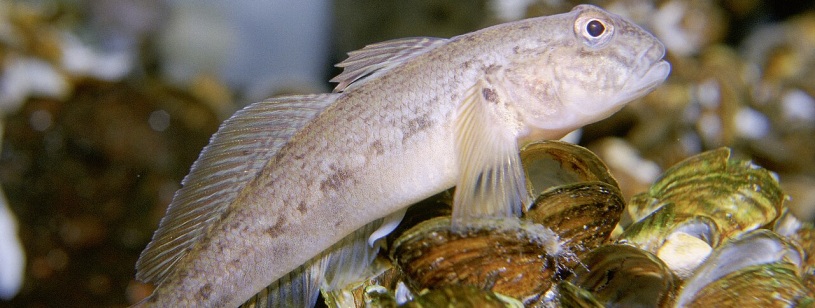
Round goby (Neogobius melanostomus) among mussels. · Eric Engbretson, U.S. Fish and Wildlife Service / Public domain ().
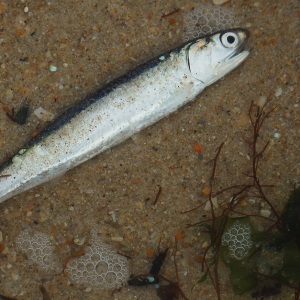
Gobies are small fish with large heads and high-set eyes that live on the bottom of seas, lakes and rivers. Their pelvic fins are joined into a sucker that grips stones. Many species live in the Black Sea, the Danube Delta and the river itself, and the round goby has invaded waters in Europe and North America.
Quick facts
| Common name | Goby |
| Scientific name | Gobiidae (family); example: Neogobius melanostomus |
| Lifespan | Usually 2–5 years; round goby up to about 6 years |
| Length | Most under 10 cm; round goby 10–25 cm |
| Weight | Round goby up to about 380 g |
| Diet | Carnivore: small mussels, crustaceans, worms, larvae |
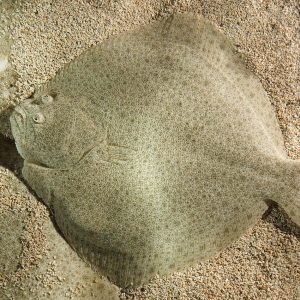
| Predators | Pike, zander, turbot, cormorants, herons |
| Conservation status | Most species Least Concern (LC) |
| Distribution | Worldwide; in Romania: Black Sea, Danube, Delta, coastal lakes |
| Habitat | Stone, sand and mussel beds in salt, brackish and fresh water |
| Family | Gobiidae |
| Reproduction | Eggs stuck to stones, guarded by the male |
Interesting facts
- The goby family has more than 2,000 species and includes some of the smallest vertebrates on Earth, under 1 cm long.
- The pelvic fins form a sucker that holds the goby on stones in currents.
- During breeding, the male round goby turns almost black and guards the eggs.
- The round goby reached North America’s Great Lakes in ships’ ballast water.
Characteristics
Gobies have an elongated body and a large, broad head with high-set eyes close together. They have two separate dorsal fins, and the pelvic fins are joined into a sucker-like disc.
The round goby, one of the common species in Romania, is grey-brown and mottled, with a black spot on the first dorsal fin. Males turn almost black when breeding.
Behaviour
Gobies spend much time motionless on the bottom among stones, mussels or plants. They move in short hops and quickly hide in crevices.
Many are territorial, with males defending a hiding place. Some species tolerate both salt and fresh water, so they move from the sea up the Danube.
Habitat and distribution
Gobies live on every continent, in seas, lagoons, rivers and lakes. The Black Sea and Caspian region has many species of its own.
In Romania they live along the coast, in the Danube, the Danube Delta and lakes such as Razim, Babadag and Brateș. Some species, such as the bighead goby, prefer fresh water.
Diet and feeding
Gobies eat small bottom animals: small mussels, snails, crustaceans, worms and insect larvae. The round goby has throat teeth that crush mussel shells.
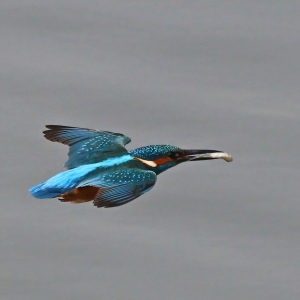
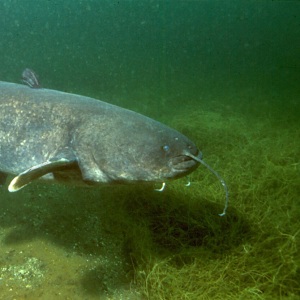
In turn, gobies are food for many predatory fish such as zander, pike, turbot and catfish, and for birds such as cormorants.
Reproduction and life cycle
Gobies breed in spring and summer. The female sticks her eggs to the underside of a stone or inside an empty shell.
The male guards the nest, fans the eggs and defends them until they hatch. A female may spawn several times in a season.
Name and history
The name “goby” comes from the Latin “gobius”, as does the family name Gobiidae.
Fishers on the Black Sea and in the Delta have long caught gobies, and fried gobies are a traditional coastal dish. Anglers also use them as bait for larger fish.
Conservation and threats
Most species are assessed as Least Concern. Some Black Sea species are sensitive to pollution and destruction of mussel beds.
The round goby, however, has become invasive: since 1990 it has spread to North America’s Great Lakes, the Baltic Sea and western European rivers, where it competes with local fish and eats their eggs.
Frequently asked questions
Where do gobies live in Romania?
Along the Black Sea coast, in the Danube, the Danube Delta and coastal lakes.
What does a goby eat?
Small mussels, snails, crustaceans, worms and insect larvae.
What is the round goby?
One of the most common gobies in Romania, Neogobius melanostomus. The male turns almost black in spring.
Why is the round goby invasive?
It was carried accidentally in ballast water to North America and western Europe, where it breeds fast and competes with local fish.