Tyrolean HoundCharacteristics, history, training and care
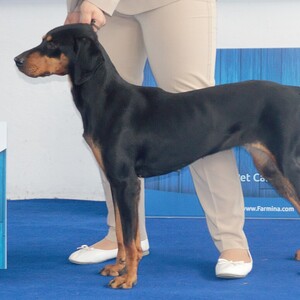
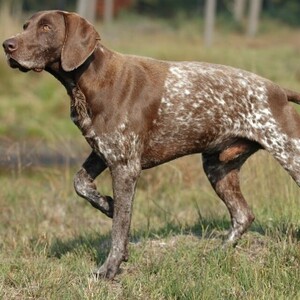
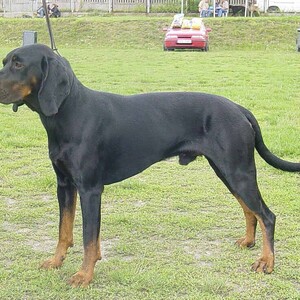
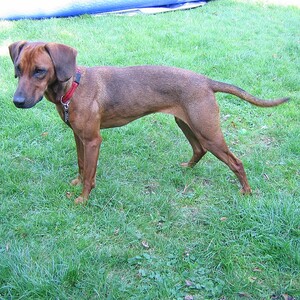
Tyrolean Hound. · Ingrid F. (=Fotting) / Wikimedia Commons, CC BY-SA 2.0 de. Cropped and resized.
The Tyrolean Hound (Tiroler Bracke) is a medium-sized Austrian hound with a dense double coat, red or black and tan. The FCI standard says it is the ideal working dog for the forest and mountain hunter, used to hunt hares and foxes and to trail wounded game, and describes it as a balanced, passionate hound with a fine nose, which works independently and gives clear voice on the trail.
Quick facts
| Common name | Tyrolean Hound (Tiroler Bracke) |
| Scientific name | Canis lupus familiaris |
| Country of origin | Austria |
| Official recognition | FCI, definitively since 8 October 1954 (group 6, scent hounds; standard no. 68) |
| Lifespan | No published data for the breed; medium-sized breeds usually live 10–13 years |
| Size (males) | 44–50 cm at the withers |
| Size (females) | 42–48 cm at the withers |
| Coat type | Double and dense, with a harsh undercoat |
| Common colours | Red, stag red, black and tan, sometimes tricolour |
| Energy level | High |
| Suited to an apartment? | No |
| Temperament | Balanced, passionate, independent, hard-working |
| Tendency to aggression | Low |
| Good with children | No specific data |
| Good with other animals | Good with dogs; poor with small animals |
| Genetic predispositions | No breed-specific diseases are known |
- Primary category:Dog breeds
- Explore this animal's categories:
History and origin
The FCI standard says that, like all Bracken, the Tyrolean Hound descends from the “Keltenbracke” (the Celtic hound). As early as around 1500, Emperor Maximilian I used this hound for hunting in Tyrol and wrote in his hunting diaries that he took his lead dogs from here.
In 1860, purebred breeding began from certain Tyrolean lines, and in 1896 a standard was written, officially recognised in 1908. Of the many types of Bracke in Tyrol, only the red and the black-and-tan varieties remained. In 1994, the short-legged variety was removed from the standard.
How the breed developed
- Around 1500 – Emperor Maximilian I hunts with these hounds.
- 1860 – Purebred breeding begins.
- 1896 – The first standard, officially recognised in 1908.
- 8 October 1954 – The FCI recognises the breed.
- 1994 – The short-legged variety is removed from the standard.
Breed rating
| Feature | Stars |
|---|---|
| Training and intelligence | ★★★★☆ |
| Easy to train | ★★★★☆ |
| Intelligence | ★★★★☆ |
| Independence | ★★★☆☆ |
| Stubbornness | ★★★☆☆ |
| Behaviour and temperament | ★★★★☆ |
| Affectionate with family | ★★★★★ |
| Friendly with children | ★★★★☆ |
| Good with other dogs | ★★★★☆ |
| Good with cats and other animals | ★☆☆☆☆ |
| Loyalty | ★★★★★ |
| Tendency to be aggressive | ★★☆☆☆ |
| Tendency to bark | ★★★★★ |
| Needs and care | ★★★☆☆ |
| Shedding | ★★☆☆☆ |
| Needs frequent grooming | ★★☆☆☆ |
| Activity and lifestyle | ★★★★☆ |
| Energy level | ★★★★☆ |
| Daily exercise needs | ★★★★★ |
| Suited to apartment life | ★★★☆☆ |
| Health and longevity | ★★★☆☆ |
| Life expectancy | ★★★★☆ |
| Predisposition to genetic diseases | ★★☆☆☆ |
| Working abilities and uses | ★★★☆☆ |
| Good hunting dog | ★★★★★ |
| Good companion dog | ★★★★☆ |
Indicative rating: 5 stars means the highest level. The breed has no AKC profile, so the rating is based on the FCI standard.
Physical characteristics
The standard describes it as a medium-sized dog with medium-strength bones, powerful, muscular and sinewy, robust and healthy, with a long, flowing, rectangular outline, slightly longer than it is tall. Wikipedia says it can trail game over long distances, on difficult ground, in heat or cold.
General appearance
The coat is double and dense, with an undercoat that is harsh rather than fine. The belly is covered with hair, the rump is feathered and the tail is well furnished, like a dense brush.
| Feature | Tyrolean Hound |
|---|---|
| Size | Medium |
| Height at the withers | males: 44–50 cm; females: 42–48 cm |
| Coat | Double, dense |
| Colour | Red or black and tan |
| Body | Rectangular |
| Type | Mountain hound |
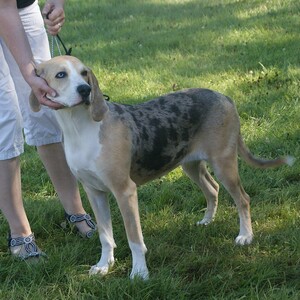
The standard accepts two varieties: red (red, stag red or red-fawn) and black and tan (black mantle or saddle with tan markings on the legs, belly and head; it may also be tricolour). The spots above the eyes (“Vieräugl”) are permitted.
Training and socialisation
The standard describes it as a balanced, passionate hound with a fine nose, which works independently and hunts with stamina, giving clear voice and following the trail firmly, with a good sense of direction. Wikipedia calls it hard-working, passionate and independent.
It is a working dog, suited mainly to hunters. Like any hound, it needs a lot of patience when it comes to the recall.
Tips for effective training
- Practise the recall. On a scent, it forgets about you.
- Keep it on a lead. Its hunting instinct is strong.
- Give it work. It enjoys trailing wounded game.
- Think of the neighbours. It barks on a scent.
Activity needs and lifestyle
As a forest and mountain hound, it needs plenty of exercise every day and activity for its nose.
| Activity | How often | Why it matters |
|---|---|---|
| Long walks over varied ground | daily | Stamina |
| Scent work | several times a week | Hound instinct |
| Running in a fenced area | several times a week | Energy |
Tips for a balanced life
- It is best suited to hunters.
- Check the ears often.
- It copes well with cold.
Care and health
Coat and skin care
The dense coat should be brushed once a week, more often during the moult. Check the ears regularly, especially after hunting.
Common health problems
There are no published health studies for the breed and no known breed-specific diseases. Wikipedia says hunters should watch out for injuries to the dog. It is worth watching for:
| Condition | Description | Common symptoms |
|---|---|---|
| Hunting injuries | Difficult ground can injure dogs | Cuts, limping |
| Ear infections | Infections of the ears | Head shaking, bad smell |
Other care
- Check it for wounds after hunting.
- Check for ticks after outings.
- Clean the ears regularly.
Diet and nutrition
An active hound needs good-quality food, adapted to its level of effort.
Tips for a healthy diet
The table gives a starting estimate, calculated with the formula from the Merck Veterinary Manual. The first two calorie columns show the calories per day for a healthy adult dog. The last column shows what this means in dry food with 3,500–4,000 kcal per kilogram.
| Dog's weight | Calories per day (neutered) | Calories per day (not neutered) | Dry food per day (approximate) |
|---|---|---|---|
| 15 kg | 850 kcal | 960 kcal | 210–270 g |
| 19 kg | 1,020 kcal | 1,150 kcal | 260–330 g |
| 23 kg | 1,180 kcal | 1,320 kcal | 300–380 g |
- Split the food into two meals a day.
- Do not let it run right after a meal.
- A dog is at the right weight when you can feel its ribs under the coat without pressing hard.
Foods to avoid
Some human foods are dangerous for dogs: chocolate, coffee, grapes and raisins, onions, garlic, xylitol (a sweetener used in chewing gum), macadamia nuts and alcohol.
Reproduction and development
Physical and emotional maturity
In dogs, sexual maturity usually comes between 6 and 12 months. Most breeds become adults at around 13–15 months.
Mating and pregnancy
Pregnancy lasts about 63 days, counted from ovulation. Mating a female on her first heat is not recommended. The FCI standard requires that only healthy dogs of typical breed appearance are used for breeding.
Caring for the puppies
In dogs, a litter has 5–6 puppies on average, and the number rises with the size of the breed. Socialisation starts in the first weeks: gentle handling, everyday noises and new people.
Interesting facts
- The emperor's dog. Maximilian I hunted with it around 1500.
- A descendant of the Celtic hound. Like all Bracken.
- “Vieräugl”. The spots above the eyes, like “four eyes”.
- No short-legged variety. It was removed from the standard in 1994.
- Two colours. Red or black and tan.
In popular culture
The hunting diaries of Maximilian I
The FCI standard says Emperor Maximilian I mentioned in his hunting diaries that he took his lead dogs from among these hounds of Tyrol.
Frequently asked questions
What does it hunt?
Hares and foxes; it also trails wounded game.
What colours does it come in?
Red or black and tan.
How big does it get?
Males measure 44–50 cm, females 42–48 cm.
Is it a family dog?
It is mainly a hunting dog.