Tatra Shepherd DogCharacteristics, history, training and care
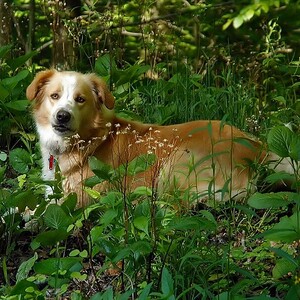
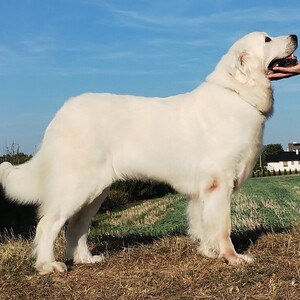
Tatra Shepherd Dog. · K.Karpiel / Wikimedia Commons, CC BY 4.0. Cropped and resized.
The Tatra Shepherd Dog (Polski owczarek podhalański) is a large, white mountain dog from the Podhale region of the Tatra Mountains, in southern Poland, used mainly to guard flocks. The FCI standard describes it as a dog with a calm, intelligent and alert temperament, and its imposing bearing and handsome looks make it a good companion dog.
Quick facts
| Common name | Tatra Shepherd Dog (Polski owczarek podhalański) |
| Scientific name | Canis lupus familiaris |
| Country of origin | Poland |
| Official recognition | FCI, definitively since 5 October 1963 (group 1, sheepdogs; standard no. 252) |
| Lifespan | No published data for the breed; large breeds usually live 9–12 years |
| Size (males) | 65–70 cm at the withers |
| Size (females) | 60–65 cm at the withers |
| Coat type | Long, thick, straight or slightly wavy, harsh, with a dense undercoat |
| Common colours | Solid white |
| Energy level | Medium |
| Suited to an apartment? | No |
| Temperament | Calm, intelligent, alert, protective |
| Tendency to aggression | Moderate towards intruders |
| Good with children | Moderate; with supervision |
| Good with other animals | Good with the animals it guards |
| Genetic predispositions | No specific diseases are known; as in other large breeds, hip dysplasia |
- Primary category:Dog breeds
- Explore this animal's categories:
History and origin
The FCI standard says that dogs guarding sheep and other livestock have lived in the Carpathians for centuries. The breed comes from the dogs kept by the shepherd tribes who settled in the Podhale region of the Tatras in the 15th century. It is one of the “mountain dogs” with a history similar to those of the Czech Republic, Hungary and Romania, used mainly for guarding, not herding. The traditional colour was pure white, so that it could easily be told apart from bears and wolves.
After the First World War, the first attempts at planned breeding began. The first standard was written in 1937, after the first show in Zakopane, and in May 1954, again in Zakopane, about 120 dogs were shown, most of them working with sheep. Wikipedia says it is one of the five breeds native to Poland.
How the breed developed
- 15th century – Shepherds settle in Podhale with their dogs.
- 1937 – The first standard, after the show in Zakopane.
- May 1954 – A show in Zakopane, with about 120 dogs.
- 5 October 1963 – The FCI recognises the breed.
Breed rating
| Feature | Stars |
|---|---|
| Training and intelligence | ★★★☆☆ |
| Easy to train | ★★★★☆ |
| Intelligence | ★★★☆☆ |
| Independence | ★★☆☆☆ |
| Stubbornness | ★★★☆☆ |
| Behaviour and temperament | ★★★☆☆ |
| Affectionate with family | ★★★☆☆ |
| Friendly with children | ★★★☆☆ |
| Good with other dogs | ★★★★★ |
| Good with cats and other animals | ★☆☆☆☆ |
| Loyalty | ★★★☆☆ |
| Tendency to be aggressive | ★★☆☆☆ |
| Tendency to bark | ★★★☆☆ |
| Needs and care | ★★★☆☆ |
| Shedding | ★★★☆☆ |
| Needs frequent grooming | ★★★☆☆ |
| Activity and lifestyle | ★★★☆☆ |
| Energy level | ★★★☆☆ |
| Daily exercise needs | ★★★☆☆ |
| Suited to apartment life | ★★★★★ |
| Health and longevity | ★★★☆☆ |
| Life expectancy | ★★★☆☆ |
| Predisposition to genetic diseases | ★★★☆☆ |
| Working abilities and uses | ★★☆☆☆ |
| Good guard dog | ★★★☆☆ |
| Good companion dog | ★★★★★ |
Indicative rating: 5 stars means the highest level. The breed has no AKC profile, so the rating is based on the FCI standard.
Physical characteristics
It is a large dog with a lean head, in proportion to the body and carried at medium height. Wikipedia places it alongside other European white livestock guardians, such as the Kuvasz, the Maremma Sheepdog and the Pyrenean Mountain Dog.
General appearance
On the head, muzzle and front of the legs the hair is short and dense. The neck and body are covered with long, thick, straight or slightly wavy hair, harsh to the touch, with a dense undercoat. It has a rich mane on the neck, and the tail is feathered.
| Feature | Tatra Shepherd Dog |
|---|---|
| Size | Large |
| Height at the withers | males: 65–70 cm; females: 60–65 cm |
| Coat | Long, harsh, with a mane |
| Colour | White |
| Tail | Feathered |
| Type | Mountain dog |
The colour is solid white; small cream patches are undesirable. The standard says the white made it easy to tell apart from bears and wolves.
Training and socialisation
The standard describes it as a dog with a calm, intelligent and alert temperament. It is first and foremost a flock guardian, independent and protective.
It needs early socialisation and calm, consistent training, suited to a guard dog that makes its own decisions.
Tips for effective training
- Socialise it early. It is a guardian by nature.
- Be calm and consistent. It is independent.
- Give it a territory. It likes to guard.
- Check the fence. It patrols the yard.
Activity needs and lifestyle
As a flock guardian, it does not need intense running, but rather space, daily walks and a territory to guard.
| Activity | How often | Why it matters |
|---|---|---|
| Walks | daily | Fitness |
| Guarding the yard | daily | Instinct |
| Training | several times a week | Discipline |
Tips for a balanced life
- It needs a large fenced yard.
- Brush it often during shedding.
- Not suited to a flat.
Care and health
Coat and skin care
The long, harsh coat should be brushed several times a week, more often during the moult, when it loses a lot of undercoat.
Common health problems
There are no published health studies for the breed and no known breed-specific diseases. As with any large breed, it is worth watching for:
| Condition | Description | Common symptoms |
|---|---|---|
| Hip dysplasia | The hip joint forms incorrectly and, over time, arthritis develops | Limping, difficulty getting up or jumping, hip pain |
| Elbow dysplasia | The elbow joint develops incorrectly and arthritis appears | Limping on the front legs, especially after exercise |
| Gastric dilatation-volvulus (bloat) | The stomach fills with gas and may twist; this is a veterinary emergency | Swollen belly, trying to vomit without success, drooling, restlessness |
Other care
- Ask for the parents' hip tests.
- Do not let it run after a meal.
- Go for yearly check-ups.
Diet and nutrition
A large guard dog needs good-quality food suited to its size and activity.
Tips for a healthy diet
The table gives a starting estimate, calculated with the formula from the Merck Veterinary Manual. The first two calorie columns show the calories per day for a healthy adult dog. The last column shows what this means in dry food with 3,500–4,000 kcal per kilogram.
| Dog's weight | Calories per day (neutered) | Calories per day (not neutered) | Dry food per day (approximate) |
|---|---|---|---|
| 40 kg | 1,780 kcal | 2,000 kcal | 440–570 g |
| 50 kg | 2,110 kcal | 2,370 kcal | 530–680 g |
| 60 kg | 2,410 kcal | 2,720 kcal | 600–780 g |
- Split the food into two meals a day.
- Large-breed puppies need special food.
- A dog is at the right weight when you can feel its ribs under the coat without pressing hard.
Foods to avoid
Some human foods are dangerous for dogs: chocolate, coffee, grapes and raisins, onions, garlic, xylitol (a sweetener used in chewing gum), macadamia nuts and alcohol.
Reproduction and development
Physical and emotional maturity
In dogs, sexual maturity usually comes between 6 and 12 months, but in large breeds it can be delayed until about two years. The body also reaches its adult form later than in small breeds.
Mating and pregnancy
Pregnancy lasts about 63 days, counted from ovulation. Mating a female on her first heat is not recommended. The FCI standard requires that only healthy dogs of typical breed appearance are used for breeding.
Caring for the puppies
In large breeds, a litter has around 7 puppies on average. Socialisation starts in the first weeks: gentle handling, everyday noises and new people.
Interesting facts
- White so as not to be mistaken. Its white coat set it apart from bears and wolves.
- Since the 15th century. It came with the shepherds of Podhale.
- The Zakopane show. The first, in 1937, “in the heart of the Tatras”.
- One of five Polish breeds. So says Wikipedia.
- Related to Romanian dogs. The standard links its history to the mountain dogs of Romania.
Frequently asked questions
Why is it white?
So that it could easily be told apart from bears and wolves.
How big does it get?
Males measure 65–70 cm, females 60–65 cm.
Is it a good guard dog?
Yes; it is first and foremost a flock guardian.
Is it suited to a flat?
No; it needs space.