
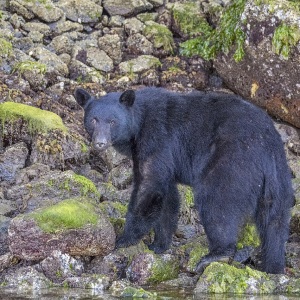
 American black bearUrsus americanus
Bears
Brown bears, polar bears and giant pandas belong to the bear family, Ursidae. These mammals have robust bodies, powerful paws and claws. Despite their relationships, their diets and habitats differ greatly.
Examples of bears
- Brown bears: they occur in Romania as well as other regions, using forests, mountains and other habitats.
- Polar bears: they are linked to the Arctic environment and sea ice, which is important for reaching prey.
- Giant pandas: bears from China’s mountain forests, with diets based largely on bamboo.
- Other species: the family also includes American black bears and spectacled bears, among others.
What do bears eat?
Not all bears eat the same food. Brown bears are omnivores whose food can include plants, fruit, invertebrates and other animal matter. Polar bears mainly eat marine animals, especially seals. Giant pandas predominantly eat bamboo.
Food also changes with season, location and age.
Behaviour and relationships
Many adult bears have mainly solitary lives. Females care for their cubs, however, and temporary gatherings can occur where food is abundant. Seasonal inactivity also differs among species.
Giant pandas are bears, but red pandas are not. Red pandas belong to the separate family Ailuridae. Similar names and eating bamboo do not place the two animals in the same family.
Frequently asked questions
Are giant pandas bears?
Yes. Giant pandas, Ailuropoda melanoleuca, belong to Ursidae.
Are red pandas also bears?
No. Red pandas belong to Ailuridae, a separate family.
Are all bears omnivores?
Their diets differ. Brown bears are omnivores, polar bears mainly eat animal prey, and giant pandas predominantly eat bamboo.
Sources: Mammal Diversity Database — Ursidae · San Diego Zoo — brown bear · San Diego Zoo — polar bear · San Diego Zoo — giant panda
American black bearUrsus americanus
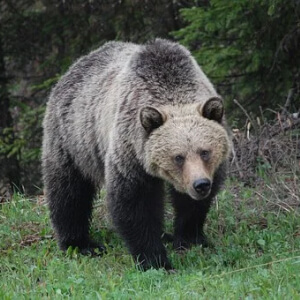 BearUrsidae
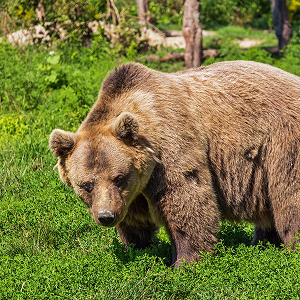 Brown bearUrsus arctos
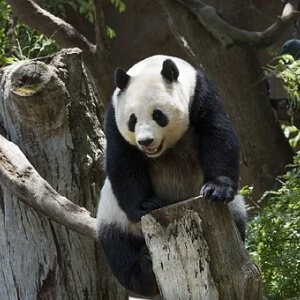 Giant pandaAiluropoda melanoleuca
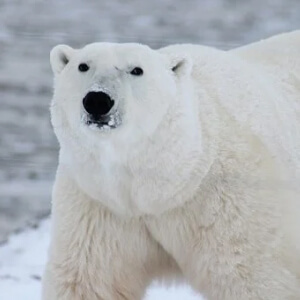 Polar bearUrsus maritimus