BearInteresting facts and information
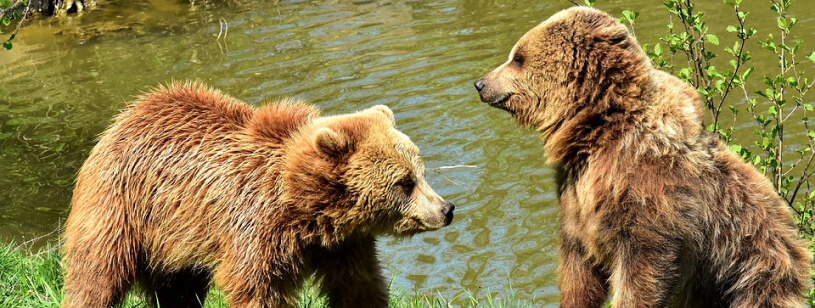
Bears (Ursidae) are mammals found in habitats from tropical forests to the Arctic. Diet differs sharply between species: polar bears mainly hunt marine mammals, while giant pandas feed largely on bamboo. Other bears eat varying mixtures of plants, insects and animal food.
There are eight living bear species, each with its own range and adaptations.
Extant Bear Species
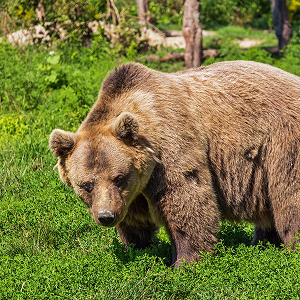
- Brown bear (Ursus arctos) – Most widespread, lives in Europe, Asia and North America.
- Sun bear (Helarctos malayanus) – A small bear of tropical forests in Southeast Asia.
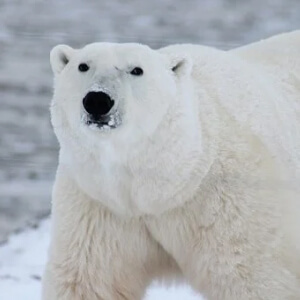
- Polar bear (Ursus maritimus) – The largest bear species, lives exclusively in arctic regions.
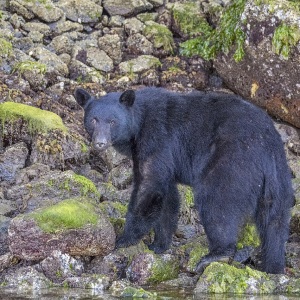
- American black bear (Ursus americanus) – The most common bear species in North America.
- Asiatic Black Bear (Ursus thibetanus) – Lives in Asia, having a distinctive white patch on its chest.
- The Spectacled Bear (Tremarctos ornatus) – The only species of bear in South America, it lives in the Andes Mountains.
- Sloth bear (Melursus ursinus) – Adapted to tropical life in India and Sri Lanka.
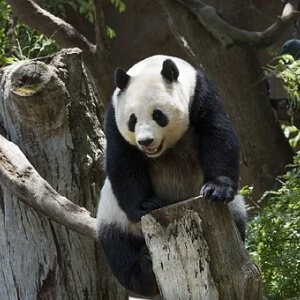
- Panda bear (Ailuropoda melanoleuca) – The only almost exclusively herbivorous species, consuming mainly bamboo.
Most bears spend much of their time alone, although mothers remain with cubs and groups may gather around abundant food. Bears can learn and remember important features of their environment.
Quick facts
| Common name | Bear |
| Scientific name | Ursidae (family containing 8 living species) |
| Typical lifespan | Usually 20-25 years or less in the wild, up to 40 years or more in captivity |
| Maximum speed | Brown and black bears can sprint at about 50-56 km/h |
| Height | Varies by species; standing height and shoulder height are different measurements |
| Weight | From about 25 kg (sun bear) to 700 kg or more (polar bear) |
| Diet type | Omnivore (some species predominantly carnivorous or herbivorous) |
| Main predators | Adults have few natural predators; cubs can be vulnerable to large carnivores |
| Conservation status | Least Concern (2 species) or Vulnerable (6 species), IUCN |
| Geographic distribution | North America, Europe, Asia, South America, Arctic regions |
| Habitat | Forests, tundra, sea ice, mountains, coastal areas |
| Social behaviour | Mostly solitary (except mothers with cubs) |
| Special adaptations | Strong claws and sense of smell; winter dormancy occurs in some species and populations |
Interesting facts
- Surprisingly fast – Despite their size, brown and black bears can sprint at up to about 50-56 km/h over short distances.
- The polar bear's fur is not really white – Its hairs are transparent and hollow and only look white because they scatter light; the skin underneath is black.
- Hibernation is not ordinary sleep – During winter dormancy, black and brown bears can go for months without eating, drinking, urinating or defecating, and lose very little muscle.
- An amazing nose – Bears have one of the best senses of smell of any animal and can detect food from many kilometres away.
- The giant panda's "thumb" – An enlarged wrist bone works like an extra thumb, helping the panda grip bamboo stems.
- Bears communicate with sounds and body language – They use grunts, huffs, jaw-popping and moans to express their mood.
- The sloth bear vacuums up termites – It blows away dust, then sucks up termites through a gap in its front teeth, using its lips like a tube.
Records and remarkable features
- Biggest bear – The polar bear (Ursus maritimus): large males usually weigh 350-700 kg, and exceptional ones have reached about 1,000 kg. Kodiak brown bears are almost as large.
- Smallest bear – The sun bear (Helarctos malayanus) weighs only about 25-65 kg and is about 1.2-1.5 metres long.
- Longest hibernation – In the far north, some black and brown bears stay in their dens for up to about 7 months a year.
- Long-lived – Brown bears have lived more than 40 years in captivity, while in the wild they rarely live beyond about 25-30 years.
- Marathon swimmer – In 2011, scientists tracked a female polar bear that swam for 9 days, covering about 687 km.
Characteristics
Bears are large, powerfully built mammals with impressive physical adaptations that let them live in many different habitats. Most are omnivores with a very varied diet, and some species spend the winter in a den in a state of deep dormancy.
Physical appearance
- Very different sizes – From the sun bear (25-65 kg), the smallest, to the polar bear (usually 350-700 kg for males), the largest.
- Thick fur – Protects them against cold, rain and insects.
- Large head and long snout – The snout holds their excellent sense of smell.
- Strong, non-retractable claws – Used for digging, catching food, climbing and defence.
- Strong legs – Allow them to walk long distances, and some species, such as black bears, sun bears and spectacled bears, are excellent tree climbers.
- Plantigrade gait – Unlike dogs or cats, bears walk on the whole sole of the foot, as people do.
Special adaptations
- Winter dormancy – Some bears greatly reduce their activity and metabolism, drawing on stored fat. This behaviour varies with species, climate and food supply.
- Exceptional sense of smell – Bears can smell food, carcasses and other bears from kilometres away.
- Flexible diet – From the mostly meat-eating polar bear to the bamboo-eating giant panda.
- Powerful jaws – Brown and polar bears have bites strong enough to crush bones.
Habits and behaviour
Bears are mostly solitary, except for mothers with cubs and pairs in the mating season. Many are most active at dawn and dusk, but activity varies with species, season and disturbance by people.
Social behaviour
- Home ranges – Bears leave scent marks by rubbing and scratching trees and with urine, but their ranges often overlap.
- Gatherings – At rich food sources, such as salmon rivers, many brown bears may gather and form a temporary hierarchy.
- Protective mothers – A female will fiercely defend her cubs, even against a much larger male.
Survival Techniques
- Winter dormancy – Saves energy and helps them survive long winters when food is scarce.
- Varied diet – Depending on the season, bears eat fruit, grass, roots, fish, meat, honey and insects.
- Excellent swimmers – Polar bears can swim for days between ice floes, and other bears easily cross rivers and lakes.
Habitat and geographic distribution
Bears live in many different habitats, from tropical rainforests and mountains to Arctic sea ice and tundra.
| Region | Species Present | Habitat examples |
|---|---|---|
| North America | Ursus arctos (brown bear), Ursus americanus (American black bear), Ursus maritimus (polar bear) | Temperate forests, tundra, mountains, Arctic coasts |
| Europe | Ursus arctos (brown bear) | Forests and mountains, such as the Carpathians and Scandinavia |
| Asia | Ursus thibetanus (Asiatic black bear), Melursus ursinus (sloth bear), Helarctos malayanus (sun bear), Ailuropoda melanoleuca (giant panda), Ursus arctos (brown bear) | Tropical forests, bamboo forests, coniferous forests, mountains |
| South America | Tremarctos ornatus (spectacled bear) | Mountain forests and grasslands of the Andes |
| Arctic Regions | Ursus maritimus (polar bear) | Sea ice, tundra and coasts |
Habitat types
- Temperate and boreal forests – Brown and black bears prefer mixed forests, where they find a variety of food.
- Arctic sea ice – The polar bear depends on the sea ice, where it hunts seals.
- Tropical forests – Sun bears, sloth bears and spectacled bears live in warm climates, eating fruit, insects and plants.
Human pressures and threats
- Habitat loss – Deforestation and development reduce the areas where bears can feed and den.
- Poaching – Bears are hunted for fur, meat, paws and gall bladders, which are used in traditional Asian medicine.
- Conflict with people – Where their habitat shrinks, bears may raid crops, beehives and livestock, and are then often killed.
- Climate change – Affects especially polar bears, which are losing the sea ice they need for hunting.
Diet and feeding
Most bears are opportunistic omnivores, eating many different foods depending on the species and season. Their diets range from almost pure meat to almost pure bamboo.
What does the bear eat?
| Food type | Consuming Species |
|---|---|
| Fruit and plants (berries, acorns, nuts, roots, grass) | Ursus arctos, Ursus americanus, Tremarctos ornatus |
| Fish (salmon, trout, Arctic char) | Ursus arctos, Ursus americanus |
| Honey and bee larvae | Helarctos malayanus, Melursus ursinus, Ursus arctos |
| Insects (ants, termites, moths) | Melursus ursinus, Helarctos malayanus, Ursus arctos |
| Meat (seals, deer, moose, elk, rodents) | Ursus maritimus, Ursus arctos |
| Bamboo | Ailuropoda melanoleuca (giant panda) |
| Carrion | Ursus arctos, Ursus maritimus and others |
Feeding Techniques
- Brown and black bears are opportunists – They eat whatever is available, from berries and roots to fish, carrion and young deer.
- The polar bear is the most carnivorous bear – It feeds mainly on seals, which it hunts on the sea ice, often waiting at breathing holes.
- The sloth bear sucks up termites – It breaks open termite mounds and sucks the insects up through its lips.
- The giant panda has the digestive system of a carnivore, but eats almost only bamboo – It eats about 12-38 kg of bamboo a day.
Reproduction and life cycle
Bears breed slowly, so populations reduced by hunting or habitat loss take a long time to recover.
| Characteristic | Details |
|---|---|
| Breeding maturity | About 3-7 years (depending on species) |
| Mating season | Mostly spring and early summer |
| Reproduction type | Viviparous |
| Number of cubs per litter | 1-4 cubs |
| Duration of pregnancy | About 6-9 months, including delayed implantation |
| Birth weight | About 100-700 g; giant panda cubs weigh only about 100-200 g |
| Independence of young | About 1.5 - 3 years |
| Lifespan | Usually 20-25 years or less in the wild, up to 40 years or more in captivity |
Breeding and family care
- Males compete for females, sometimes in violent fights.
- Birth and denning – In species such as brown and black bears, females usually give birth to small, helpless cubs in a winter den.
- The cubs stay with their mother for about 1.5 to 3 years, learning where to find food and how to survive.
- Delayed implantation – In several bear species, an embryo does not implant immediately. Reproduction is linked to the female’s condition and seasonal cycle.
Name and history
The bear family is ancient: its earliest ancestors lived more than 20 million years ago, and the extinct giant short-faced bear and cave bear were among the largest land carnivores of the Ice Age.
Origin and meaning of the name
- The English word "bear" comes from Old English bera and probably meant "the brown one". Many experts think early Germanic peoples used this nickname to avoid saying the animal's real name, out of fear or respect.
- The family name Ursidae comes from the Latin ursus, "bear".
- In Old Norse, björn means "bear", and Bjørn and Björn are still common names in Scandinavia.
Bears in Human History
- In prehistory, people painted cave bears on the walls of caves such as Chauvet in France, more than 30,000 years ago.
- In Greek mythology, the bear was linked to the goddess Artemis; at her sanctuary at Brauron, young girls served as "little bears".
- In ancient Rome, bears were brought from across the empire to fight in the arena, including the Colosseum.
- Norse warriors called berserkers were said to wear bear skins and fight with the fury of a bear.
- In Asia, bear parts have long been used in traditional medicine, which has led to heavy poaching and to the cruel farming of bears for their bile.
Bears in Folklore and Superstition
- A name not to be spoken – In many languages, people avoided the bear's real name: English "bear" meant "the brown one", and Russian medved means "honey-eater".
- Bears in the sky – In Greek myth, Zeus turned Callisto and her son into the constellations Ursa Major and Ursa Minor, the Great Bear and the Little Bear.
- Finland's national animal – In old Finnish poems, the bear was born in the sky and came down to earth in a golden cradle.
- Bear ceremonies – The Ainu of Japan held a ceremony called Iomante to send the spirit of a bear back to the world of the gods.
Cultural significance and mythology
Bears appear in the culture and mythology of many peoples. As large, strong and intelligent animals, they have been honoured as forest spirits, ancestors and symbols of strength and courage.
Bears in Mythology and Religion
- Siberian peoples – Many peoples of Siberia treated the bear as a sacred animal, and bear hunts were accompanied by special rituals and songs.
- Korea – In the founding myth of Korea, a bear became a woman and gave birth to Dangun, the legendary first king.
- Native American traditions – For many Native American peoples, the bear is a powerful animal linked with healing, strength and wisdom.
Bears in Folklore and Superstition
- Bear Day – In parts of Europe, old traditions held that a bear coming out of its den in early February could predict the weather, an idea similar to Groundhog Day.
- Hunting rules – Many northern peoples believed that a bear must be killed with respect and its bones treated carefully, or bears would not return.
- Bear dances – In Romania and Moldova, people dressed in bear skins dance through villages at New Year to chase away evil and bring good luck.
Conservation status and threats
The situation of bears varies greatly: two species are widespread, while the other six are Vulnerable because of habitat loss, poaching and climate change.
| Assessment scope | Species | Regions |
|---|---|---|
| Least Concern (LC) | Ursus arctos (brown bear), Ursus americanus (American black bear) | North America, Europe, Asia |
| Vulnerable (VU) | Tremarctos ornatus (spectacled bear), Ursus thibetanus (Asiatic black bear), Helarctos malayanus (sun bear) | South America, Asia |
| Vulnerable (VU) | Ailuropoda melanoleuca (giant panda), downgraded from Endangered in 2016 | China |
| Vulnerable (VU) | Melursus ursinus (sloth bear), Ursus maritimus (polar bear) | South Asia, Arctic |
Main threats
- Habitat loss – Deforestation reduces the places where bears can feed and den.
- Poaching – Bears are poached for fur, meat, paws and gall bladders used in traditional medicine.
- Conflict with people – As forests are destroyed, bears come closer to farms and villages and are often killed.
- Climate change – Polar bears are the most affected, because Arctic sea ice is melting.
Conservation work
- National parks and reserves – Protected areas such as Yellowstone (USA), Banff (Canada) and the giant panda reserves of China are vital for bears.
- Reintroduction – Brown bears from Slovenia have been released in the Pyrenees and in the Italian Alps to restore lost populations.
- Monitoring – GPS collars and camera traps help scientists follow bears and reduce conflicts with people.
- Controlling trade – International rules under CITES control or ban trade in bear parts.
In popular culture
Bears are symbols of strength, protection and comfort and appear often in books, films and games.
Literature and stories
- Winnie-the-Pooh (A. A. Milne, 1926) – The honey-loving bear is one of the most famous characters in children's literature.
- Masha and the Bear – A Russian folk tale that inspired a very successful animated series.
- Paddington (Michael Bond, 1958) – A polite bear from Peru who loves marmalade.
- Goldilocks and the Three Bears – An English fairy tale in which a little girl enters the house of three bears.
Film and animation
- The Jungle Book (Disney, 1967, 2016) – Baloo, the easy-going bear, is one of the most loved characters.
- The Revenant (2015) – Features a famously realistic grizzly bear attack.
- Coca-Cola polar bears – Since 1993, animated polar bears have appeared in Coca-Cola's Christmas advertising.
- Brother Bear (Disney, 2003) – An animated film in which a young man is turned into a bear.
Video games
- The Elder Scrolls V: Skyrim – Bears are dangerous wild animals in the game's northern lands.
- World of Warcraft – Bears appear as enemies and mounts, and druids can turn into bears.
- Red Dead Redemption 2 – Includes realistic bear encounters and hunts.
Bears as a Trading Symbol
- Misha – The bear cub mascot of the 1980 Moscow Olympic Games.
- Teddy bear – The famous toy is named after US President Theodore "Teddy" Roosevelt, who in 1902 refused to shoot a bear that had been tied to a tree.