AfricanisCharacteristics, history, training and care
Africanis describes a southern African landrace of domestic dog: a locally adapted population with variation in appearance and behaviour. Generations of life alongside people and local environmental conditions have shaped these dogs.
They are domestic animals, not a semi-wild species. Understanding an individual’s background, health and behaviour is more useful than assuming that every Africanis has identical needs or exceptional resistance to disease.
Quick facts
| Common name | Africanis; AfriCanis |
| Scientific name | Canis lupus familiaris — domestic dog |
| Geographical background | Southern Africa |
| Population type | A landrace conserved for its variation, rather than one uniform show standard |
| Lifespan | Reliable population-wide estimates are limited; health and care matter |
| Height: males | Variable; no single sex-specific standard is used |
| Height: females | Variable; no single sex-specific standard is used |
| Weight: males | Varies with the individual’s build and condition |
| Weight: females | Varies with the individual’s build and condition |
| Coat | Usually short; appearance varies |
| Colours | Many colours and markings occur |
| Activity | Assess the individual; provide daily exercise and enrichment |
| Housing | Depends on the dog and routine; safe boundaries and shelter matter |
| Temperament | Varies with heredity, experience and current circumstances |
| Unfamiliar people and dogs | Use gradual introductions and individual assessment |
| Children | Supervision and respectful handling are essential |
| Other animals | Do not assume compatibility; manage introductions and chasing |
| Health | No immunity or freedom from inherited disease can be assumed |
- Primary category:Dog breeds
- Explore this animal's categories:
History and origin
Africanis is an umbrella name for a southern African domestic-dog landrace: a varied population shaped by local environments and generations of life alongside people. It is not a wild species or a single show breed selected to one uniform appearance.
Development and recognition
- Long association with people: local dogs have lived and worked with rural southern African communities, including Bantu- and Khoisan-speaking peoples.
- A modern umbrella name: the Africanis Society dates use of the name to 1996 and its foundation to 1998.
- Historical caution: archaeology documents early domestic dogs in the region, but particular dates and the ancestry of modern populations require evidence. A single uninterrupted “oldest breed” pedigree is not established.
Editorial characteristics guide
Africanis dogs vary substantially, so these stars are broad editorial planning aids, not a breed standard or measured personality scores. More stars mean more of the named trait. Assess the individual dog. Reliable population-wide health and longevity comparisons are not available for a star rating.
| Characteristic | Editorial guide |
|---|---|
| Training and learning | Editorial group |
| Ease of training | ★★★☆☆ |
| Interest in learning tasks | ★★★★☆ |
| Independence | ★★★★☆ |
| Persistence | ★★★☆☆ |
| Behaviour and social needs | Editorial group |
| Affection towards familiar people | ★★★★☆ |
| Ease around young children | ★★★☆☆ |
| Ease with other dogs | ★★★☆☆ |
| Ease with cats and small pets | ★★☆☆☆ |
| Attachment to familiar people | ★★★★☆ |
| Aggression risk | Not rated — individual assessment / reliable data needed |
| Alert barking | ★★★☆☆ |
| Coat and care | Editorial group |
| Shedding | ★★★☆☆ |
| Grooming needs | ★★☆☆☆ |
| Activity and lifestyle | Editorial group |
| Activity level | ★★★★☆ |
| Need for daily exercise | ★★★★☆ |
| Ease of apartment living | ★★☆☆☆ |
| Health and longevity | Editorial group |
| Life expectancy | Not rated — individual assessment / reliable data needed |
| Inherited-disease risk | Not rated — individual assessment / reliable data needed |
| Roles and companionship | Editorial group |
| Watchfulness | ★★★★☆ |
| Companion suitability | ★★★★☆ |
Physical characteristics
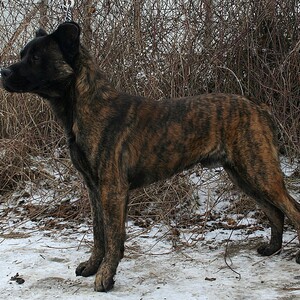
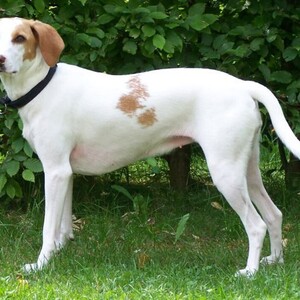
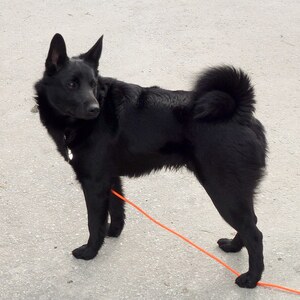
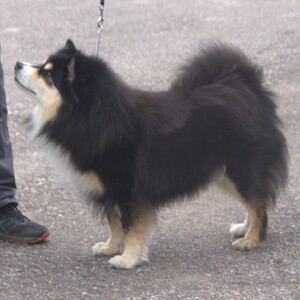
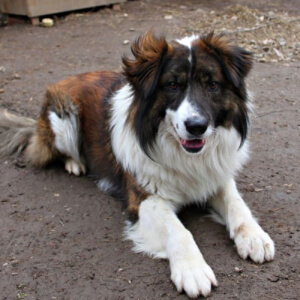
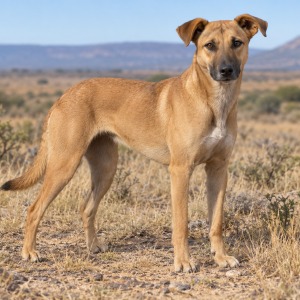
The Africanis Society describes a medium-sized, fairly slender but muscular dog with a short coat. Individuals differ in colour, markings, ear carriage and proportions. A photograph alone cannot establish a dog’s ancestry or membership of a landrace.
General appearance
- The build is generally functional and mobile rather than selected for one extreme outline.
- Coat colours and markings vary across the population.
- Ear shape and carriage are not identical in every dog.
- A short coat does not make a dog immune to cold, sun exposure, parasites or skin disease.
| Feature | Africanis |
|---|---|
| Overall size | Usually described as medium-sized; individual variation is important |
| Weight | Varies with the individual; no universal sex-specific standard is used here |
| Coat | Usually short |
| Colour | Many colours and markings occur |
| Body | Often relatively slender and muscular |
| Uniformity | A heterogeneous landrace rather than one fixed show-ring type |
Training and socialisation
An Africanis is a domestic dog, not a partly tamed wild animal. Training should reflect the individual’s experience, confidence and interests. Reward-based work and predictable routines build useful skills without a “pack leader” confrontation.
Tips for effective training
- Start with the dog in front of you: a newly adopted adult may need quiet adjustment before busy outings.
- Practise recall safely: use secure areas and an appropriate lead while building a reliable response.
- Introduce livestock and pets carefully: previous working roles do not prove that an individual is safe around every animal.
- Make handling rewarding: practise brief checks of paws, ears and coat before they become urgent.
Socialisation means helping a dog feel safe and cope with ordinary experiences. It does not mean making it meet every person or dog. If fear, guarding or aggression is persistent, seek a veterinarian’s assessment and qualified behaviour help.
Activity and lifestyle needs
Plan daily opportunities for walking, sniffing, play and rest. Activity requirements differ between individuals. A dog with a working background still needs recovery, and endless running is not a substitute for social contact or training.
| Activity | Planning guide, not a fixed prescription |
|---|---|
| Walking and sniffing | Daily outings matched to fitness and local conditions |
| Play and search games | Short, supervised sessions; stop before exhaustion |
| Training | Brief practice spread through the day |
| Rest and company | Quiet sleep and regular contact with familiar people |
A balanced daily routine
- A secure boundary helps prevent roaming and unwanted encounters with livestock or traffic.
- Judge housing by the dog’s needs and the daily routine, not by a blanket rule that every Africanis needs the same yard.
- Provide shade, drinking water and weatherproof shelter; bring the dog into safe conditions during extremes.
- Introduce time alone gradually and seek help for persistent distress rather than assuming destructiveness is stubbornness.
Care and health
Coat and skin care
A short coat is usually straightforward to brush, but check the skin as well as the hair. After outdoor activity, look for ticks, injuries or irritation. Bathe when needed with a suitable dog product rather than on an inflexible schedule.
Health problems and screening
A history of survival in local conditions does not establish immunity to infection, parasites or inherited disease. There are no reliable comparative figures here that justify calling the whole landrace disease-free. Veterinary examination and preventive care remain necessary.
| Problem | What it means | Possible signs |
|---|---|---|
| Parasites and skin disease | Exposure varies with environment and preventive care | Itching, hair loss or visible parasites |
| Joint or mobility problems | Injury and developmental or acquired disease are possible | Lameness, stiffness or difficulty rising |
| Heat-related illness | Any dog can overheat during unsuitable activity or exposure | Heavy panting, weakness or collapse |
Other aspects of care
- Routine prevention: arrange veterinary checks, vaccination and parasite prevention appropriate to the dog and locality.
- Dental care: introduce regular tooth brushing with a dog-safe product and have painful or damaged teeth examined.
- Eyes, ears and feet: check for changes rather than putting cleaning products into a sore eye or ear.
- Urgent signs: breathing difficulty, collapse or suspected heatstroke need prompt veterinary help.
Diet and nutrition
An Africanis needs a nutritionally complete diet just as other domestic dogs do. Past survival on limited resources is not evidence that scraps provide everything a modern dog needs. Feed for the individual’s age, condition and activity.
Choosing and portioning food
| Food or feeding choice | Portion guidance | Practical point |
|---|---|---|
| Complete commercial dog food | Start with the product’s guidance and adjust for body condition | Use a formulation appropriate to life stage |
| Home-prepared food | Use a recipe formulated with a qualified veterinary nutrition professional | Meat alone is not a balanced diet |
| Treats and extras | Include them in the daily food allowance | Avoid displacing the complete diet |
Keep fresh water available. Raw meat diets can carry harmful bacteria that affect dogs and people handling the food. Do not add vitamins, minerals or oils routinely to an already complete food unless a veterinarian identifies a need.
Foods and objects to avoid
Keep chocolate, grapes and raisins, onions, garlic and xylitol-containing products away from dogs. Bones can damage teeth or obstruct the digestive tract. If a dog eats a potentially dangerous item, contact a veterinarian promptly and keep the packaging or a description of what was eaten.
Reproduction and development
Preserving a landrace involves attention to welfare, health and population diversity. The Africanis Society’s conservation aims should not be taken as a reason to mate every dog. Veterinary advice and responsible planning are essential.
Physical and behavioural maturity
Size, previous nutrition and individual development affect growth. Adult-looking proportions do not prove that a dog has finished physical or behavioural development. Continue gentle training, suitable exercise and routine veterinary care as the dog matures.
Mating and pregnancy
A dog’s pregnancy lasts about nine weeks. The expected birth date depends on how pregnancy is dated; mating day is not a precise measure of conception. Litter size varies, so a fixed breed-wide number should not be used to plan care.
Discuss reproductive health, pregnancy monitoring and signs of birth complications with a veterinarian before a planned mating. Breeding should be a considered welfare decision, rather than an automatic step in a companion dog’s life.
Puppy care
- Newborn period: puppies need warmth, milk and close observation. Poor feeding or failure to gain weight calls for veterinary advice.
- Weaning: suitable puppy food is introduced gradually as development allows; milk feeding and social learning do not end overnight.
- Early experiences: introduce gentle handling, sounds and safe environments in manageable steps. Balance socialisation with a veterinary plan for infection risk.
- Moving home: consider health, readiness and local legal requirements. Continue suitable food, rest, training and preventive care.
Interesting facts
- A population rather than a single uniform look: variation is part of the landrace concept.
- The name joins Africa and Canis: it is a modern umbrella term, not an ancient scientific species name.
- A domestic dog: the Africanis is different from the African wild dog, Lycaon pictus.
- Conservation of diversity: the Africanis Society aims to retain the population’s heterogeneous character.
In popular culture
Africanis in media and modern culture
The Africanis Society documents these dogs through field observations, photographs and historical research. Its conservation work draws attention to local variation and the relationship between these dogs and rural communities.
Cultural significance today
Africanis dogs are part of southern African rural and pastoral histories. Their roles have included companionship and practical work alongside people. Those relationships differ between communities; one stereotype about “African tribes” cannot represent them all.