Plott HoundCharacteristics, history, training and care
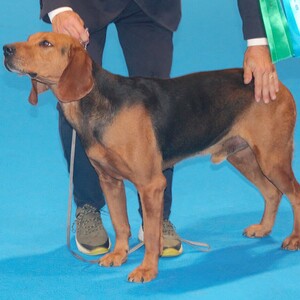
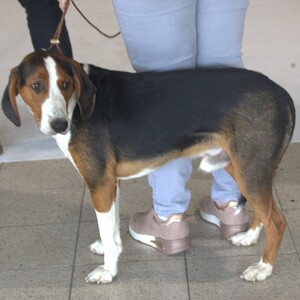
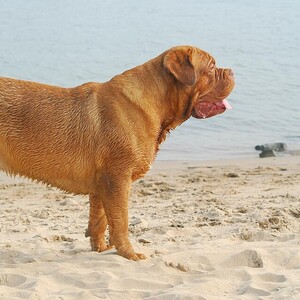
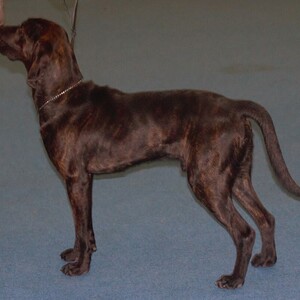
Plott Hound. · Canarian / Wikimedia Commons, CC BY-SA 4.0. Cropped and resized.
The Plott Hound is a large American hound with a brindle coat, originally bred for bear hunting. Wikipedia says it has been the official state dog of North Carolina since 1989 and that, of the seven coonhounds registered by the UKC, it is the only one that does not descend from the foxhound. The AKC describes it as independent, loyal and calm, intelligent, alert and confident. It is not recognised by the FCI; the AKC has recognised it since 2006.
Quick facts
| Common name | Plott Hound |
| Scientific name | Canis lupus familiaris |
| Country of origin | United States (North Carolina) |
| Official recognition | Not recognised by the FCI; UKC since 1946; AKC since 2006 |
| Lifespan | 12–14 years, according to the AKC |
| Size (males) | 51–64 cm at the withers; 23–27 kg according to the AKC |
| Size (females) | 51–58 cm at the withers; 18–25 kg according to the AKC |
| Coat type | Smooth, fine, glossy |
| Common colours | Brindle of any shade, black, with or without a saddle |
| Energy level | High |
| Suited to an apartment? | No |
| Temperament | Independent, loyal, calm, intelligent, confident |
| Tendency to aggression | Low towards people |
| Good with children | Moderate |
| Good with other animals | Very good with dogs, according to the AKC |
| Genetic predispositions | Hip dysplasia, ear infections |
- Primary category:Dog breeds
- Explore this animal's categories:
History and origin
Wikipedia says the breed is named after the Plott family, whose ancestor, Johannes George Plott (c. 1733–1815), emigrated from Germany to North Carolina in the mid-18th century. It is the only breed native to North Carolina, and the Plott Balsam mountains are also named after the family.
The Plott Hound was registered by the UKC in 1946, became the official dog of North Carolina in 1989, was recognised by the AKC in 2006 and appeared at the Westminster show in 2008.
How the breed developed
- Mid-18th century – The Plott family arrives in North Carolina.
- 1946 – It is registered by the UKC.
- 1989 – It becomes the official dog of North Carolina.
- 2006 – It is recognised by the AKC.
Breed rating
| Feature | Stars |
|---|---|
| Training and intelligence | ★★★★☆ |
| Easy to train | ★★★★★ |
| Intelligence | ★★★☆☆ |
| Independence | ★★★★☆ |
| Stubbornness | ★★★★☆ |
| Behaviour and temperament | ★★★☆☆ |
| Affectionate with family | ★★★★☆ |
| Friendly with children | ★★★☆☆ |
| Good with other dogs | ★★★★☆ |
| Good with cats and other animals | ★★★★☆ |
| Loyalty | ★★★★★ |
| Tendency to be aggressive | ★★☆☆☆ |
| Tendency to bark | ★★★★★ |
| Needs and care | ★★★☆☆ |
| Shedding | ★★★★☆ |
| Needs frequent grooming | ★★★☆☆ |
| Activity and lifestyle | ★★★☆☆ |
| Energy level | ★★★★☆ |
| Daily exercise needs | ★★★★☆ |
| Suited to apartment life | ★★★☆☆ |
| Health and longevity | ★★★☆☆ |
| Life expectancy | ★★★★☆ |
| Predisposition to genetic diseases | ★★☆☆☆ |
| Working abilities and uses | ★★★★☆ |
| Good hunting dog | ★★★★★ |
| Good companion dog | ★★★★☆ |
Indicative rating: 5 stars means the highest level. It is based on the ratings the American Kennel Club gives the breed; the breed is not recognised by the FCI.
Physical characteristics
The AKC describes it as a sleek hunter with a long tail and an easy stride, standing up to 64 cm. Wikipedia says it is athletic, muscular and agile, and its skin is not loose, as in other hounds.
General appearance
The coat is smooth, fine and glossy and needs very little grooming.
| Feature | Plott Hound |
|---|---|
| Size | Large |
| Height at the withers | males: 51–64 cm; females: 51–58 cm |
| Weight | 18–27 kg (AKC) |
| Coat | Smooth, glossy |
| Colour | Brindle |
| Type | Hound |
The AKC says the coat can be brindle of any shade, from black with gold flecks to bright orange, black, or with a saddle and markings.
Training and socialisation
The AKC describes it as intelligent, alert and confident. It can be very loving with people, but also a little aloof, being very clever and focused. Puppies must be well socialised, with plenty of people and animals.
The AKC says that, when hunting, it is a fearless, powerful and determined hunter that bays or “trees” big game such as bears. A bored Plott can be hard to manage.
Tips for effective training
- Socialise it well. It can be aloof.
- Give it daily exercise. When bored, it becomes hard to manage.
- Keep it on a lead. Its hunting instinct is strong.
- Check its ears. They are prone to infections.
Activity needs and lifestyle
The AKC says it needs daily exercise and stimulation; athletic and determined on the hunt, a bored Plott can cause problems.
| Activity | How often | Why it matters |
|---|---|---|
| Long walks | daily | Energy |
| Scent work | several times a week | Hound instinct |
| Running in a fenced area | several times a week | Physical fitness |
Tips for a balanced life
- Suited to experienced owners.
- The fence must be secure.
- Clean the ears regularly.
Care and health
Coat and skin care
The AKC says the smooth coat needs very little grooming: a weekly brush with a soft brush or a grooming mitt.
Common health problems
The AKC says the Plott is generally healthy, and responsible breeders screen the parents for:
| Condition | Description | Common symptoms |
|---|---|---|
| Hip dysplasia | The hip joint forms incorrectly and, over time, arthritis develops | Limping, difficulty getting up or jumping, hip pain |
| Ear infections | Hanging ears are prone to infection | Shakes its head, unpleasant smell |
Other care
- Check the ears regularly.
- Brush its teeth often.
- Ask for the parents' hip tests.
Diet and nutrition
The AKC recommends good-quality food suited to the dog's age, and attention to its weight.
Tips for a healthy diet
The table gives a starting estimate, calculated with the formula from the Merck Veterinary Manual. The first two calorie columns show the calories per day for a healthy adult dog. The last column shows what this means in dry food with 3,500–4,000 kcal per kilogram.
| Dog's weight | Calories per day (neutered) | Calories per day (not neutered) | Dry food per day (approximate) |
|---|---|---|---|
| 18 kg | 980 kcal | 1,100 kcal | 240–310 g |
| 23 kg | 1,180 kcal | 1,320 kcal | 300–380 g |
| 27 kg | 1,330 kcal | 1,490 kcal | 330–430 g |
- Adjust the portion to its level of effort.
- Do not let it run right after a meal.
- A dog is at the right weight when you can feel its ribs without pressing hard.
Foods to avoid
Some human foods are dangerous for dogs: chocolate, coffee, grapes and raisins, onions, garlic, xylitol (a sweetener used in chewing gum), macadamia nuts and alcohol.
Reproduction and development
Physical and emotional maturity
In dogs, sexual maturity usually comes between 6 and 12 months, but in large breeds it can be delayed until about two years. The body also reaches its adult form later than in small breeds.
Mating and pregnancy
Pregnancy lasts about 63 days, counted from ovulation. Mating a female on her first heat is not recommended. Only healthy dogs of typical breed appearance should be used for breeding.
Caring for the puppies
In large breeds, a litter has around 7 puppies on average. Socialisation starts in the first weeks: gentle handling, everyday noises and new people.
Interesting facts
- A bear hunter. That is what it was bred for.
- The dog of North Carolina. Since 1989.
- Not from the foxhound. The only UKC coonhound that does not descend from the foxhound.
- A mountain bearing its name. The Plott Balsams are named after the family.
- A police dog. Two puppies were trained for a sheriff's office.
Frequently asked questions
Is it recognised by the FCI?
No; the AKC has recognised it since 2006.
What does it hunt?
Originally, bears.
What colour is it?
Usually brindle.
How long does it live?
The AKC gives 12–14 years.