Coton de TulearCharacteristics, history, training and care
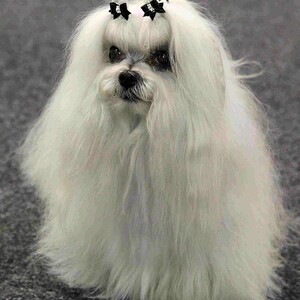
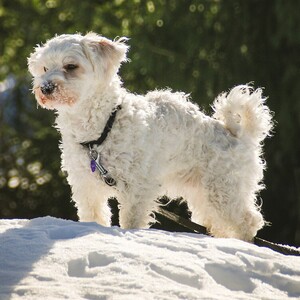
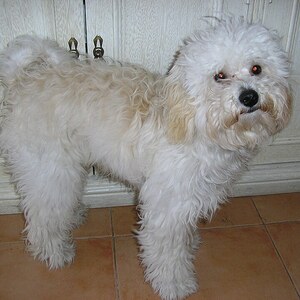
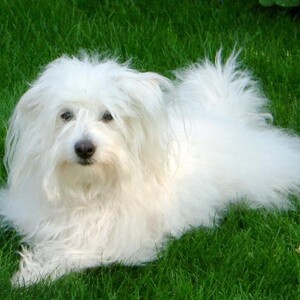
Coton de Tulear. · Uschi Goess / Wikimedia Commons, CC BY-SA 3.0. Cropped and resized.
The Coton de Tuléar is a small white companion dog from Madagascar, named after the port of Tuléar (now Toliara). “Coton” means cotton in French, and the name comes from its very soft coat. It is cheerful, well-balanced and very sociable, with people and with other dogs.
Quick facts
| Common name | Coton de Tulear |
| Scientific name | Canis lupus familiaris |
| Country of origin | Madagascar; patronage: France |
| Official recognition | FCI, definitively since 2 September 1970 (group 9, companion and toy dogs; standard no. 283); also recognised by the AKC |
| Lifespan | 15–19 years, according to the AKC |
| Size (males) | 26–28 cm at the withers; 4–6 kg |
| Size (females) | 23–25 cm at the withers; 3.5–5 kg |
| Coat type | Very soft, like cotton, dense and abundant |
| Common colours | White; the ears may have light grey or reddish shades |
| Energy level | Moderate |
| Suited to an apartment? | Yes |
| Temperament | Cheerful, well-balanced, very sociable |
| Tendency to aggression | Very low |
| Good with children | Very good |
| Good with other animals | Very good, including with cats |
| Genetic predispositions | Hip dysplasia, patellar luxation, eye diseases, disc herniation (rare) |
History and origin
The Coton de Tuléar developed on the island of Madagascar and is still the island's national dog today. Wikipedia says its ancestors, bichon-type dogs, probably arrived there in the 16th–17th centuries, on pirate ships. It was the companion dog of the Merina nobility, and for a time only royal families were allowed to keep it.
French colonists occasionally brought dogs to France, but official imports to Europe only began in the 1970s. The FCI standard says the breed reached France long before its official recognition in 1970 and quickly became one of the favourite companion dogs.
How the breed developed
- 16th–17th centuries – Its ancestors probably reach Madagascar on pirate ships.
- Hundreds of years – It is the companion dog of the nobility of Madagascar.
- 1970 – The French Kennel Club and the FCI recognise the breed.
- 1973 – Robert Jay Russell brings the first dogs to the United States.
- 1974 – Madagascar issues a stamp featuring the Coton de Tuléar.
- 25 November 1999 – The current FCI standard is published.
Breed rating
| Feature | Stars |
|---|---|
| Training and intelligence | ★★★★☆ |
| Easy to train | ★★★★☆ |
| Intelligence | ★★★★☆ |
| Independence | ★★☆☆☆ |
| Stubbornness | ★★☆☆☆ |
| Behaviour and temperament | ★★★★★ |
| Affectionate with family | ★★★★★ |
| Friendly with children | ★★★★★ |
| Good with other dogs | ★★★★★ |
| Good with cats and other animals | ★★★★★ |
| Loyalty | ★★★★★ |
| Tendency to be aggressive | ★☆☆☆☆ |
| Tendency to bark | ★☆☆☆☆ |
| Needs and care | ★★★★☆ |
| Shedding | ★★☆☆☆ |
| Needs frequent grooming | ★★★★☆ |
| Activity and lifestyle | ★★★★☆ |
| Energy level | ★★★☆☆ |
| Daily exercise needs | ★★★☆☆ |
| Suited to apartment life | ★★★★★ |
| Health and longevity | ★★★★★ |
| Life expectancy | ★★★★★ |
| Predisposition to genetic diseases | ★★☆☆☆ |
| Working abilities and uses | ★★★★☆ |
| Good watchdog | ★★★☆☆ |
| Good companion dog | ★★★★★ |
Indicative rating: 5 stars means the highest level. It is based on the ratings the American Kennel Club gives the breed and on the FCI standard.
Physical characteristics
The standard describes it as a small, long-haired companion dog with a cotton-like white coat, round, dark eyes and a lively, intelligent expression. The body is longer than its height.
General appearance
The round, dark eyes have rims pigmented black or brown. The triangular ears hang close to the cheeks and reach the corners of the lips. The low-set tail is carried merrily, curved over the back, in movement.
| Feature | Coton de Tulear |
|---|---|
| Size | Small |
| Height at the withers | males: 26–28 cm; females: 23–25 cm |
| Weight | males: 4–6 kg; females: 3.5–5 kg |
| Coat | Soft as cotton, dense |
| Eyes | Round, dark |
| Nose | Black; brown is tolerated |
The basic colour is white. A few light grey or reddish shades are allowed on the ears. On the rest of the body they are tolerated only if they do not change the white appearance of the coat. Wikipedia says puppies may have darker patches that lighten with maturity.
Training and socialisation
The AKC says it is alert, smart and easy to train. It responds poorly to negative methods, but excels at agility, obedience and as a therapy dog when trained positively.
The standard stresses that its cheerful, sociable temperament is one of the breed's main features. It adapts to any lifestyle.
Tips for effective training
- Keep sessions cheerful. The AKC says a bored Coton learns nothing.
- Use only positive methods. Harshness makes it shut down.
- Socialise it from an early age. It will then happily go anywhere with you.
- Do not leave it alone for long. It always wants to be with the family.
Activity needs and lifestyle
The AKC says it needs a moderate amount of exercise: daily walks at a slow pace and ball games. A bored Coton can become destructive.
| Activity | How often | Why it matters |
|---|---|---|
| Calm walks | daily | Keep it fit |
| Ball play | daily | Exercise and an active mind |
| Interactive toys | daily | Prevent boredom |
Tips for a balanced life
- It is suitable for a flat.
- Keep it close to the family: it suffers when alone.
- In summer, do not leave it in strong sun.
Care and health
Coat and skin care
The AKC says the long coat needs daily brushing, with brush and comb right down to the skin, otherwise mats form. A conditioning spray prevents the hairs from breaking. Wikipedia says it sheds very little. Many owners choose a short clip, which is easier to maintain.
Common health problems
The AKC says the breed has remained fairly free of hereditary diseases, with rare cases of 1–5%. The following may still occur:
| Condition | Description | Common symptoms |
|---|---|---|
| Hip dysplasia | The hip joint forms incorrectly and, over time, arthritis develops | Limping, difficulty getting up or jumping, hip pain |
| Patellar luxation | The kneecap slips out of place | Suddenly holds a hind leg up for a few steps, then uses it again |
| Intervertebral disc disease | A disc between the vertebrae ruptures and presses on the spinal cord | Back or neck pain, unsteady walking on the hind legs; in severe cases, paralysis |
| Eye diseases | Inherited eye problems, rare | Watery eyes, clouding of the eye, poor vision |
Other care
- Check the ears twice a week and remove excess hair.
- Brush its teeth regularly.
- Trim the nails when they start to touch the floor.
Diet and nutrition
A small dog needs small portions. Watch its weight, as the abundant coat easily hides extra kilos.
Tips for a healthy diet
The table gives a starting estimate, calculated with the formula from the Merck Veterinary Manual. The first two calorie columns show the calories per day for a healthy adult dog. The last column shows what this means in dry food with 3,500–4,000 kcal per kilogram.
| Dog's weight | Calories per day (neutered) | Calories per day (not neutered) | Dry food per day (approximate) |
|---|---|---|---|
| 3.5 kg | 290 kcal | 320 kcal | 72–91 g |
| 5 kg | 370 kcal | 420 kcal | 92–120 g |
| 6 kg | 430 kcal | 480 kcal | 110–140 g |
- Feed puppies several times a day.
- Choose small kibble suited to small breeds.
- Feel the ribs under the coat: you should be able to feel them without pressing hard.
Foods to avoid
Some human foods are dangerous for dogs: chocolate, coffee, grapes and raisins, onions, garlic, xylitol (a sweetener used in chewing gum), macadamia nuts and alcohol.
Reproduction and development
Physical and emotional maturity
In dogs, sexual maturity usually comes between 6 and 12 months. Small breeds become adults faster than large ones, usually at around one year.
Mating and pregnancy
Pregnancy lasts about 63 days, counted from ovulation. Mating a female on her first heat is not recommended. The FCI standard requires that only healthy dogs of typical breed appearance are used for breeding.
Caring for the puppies
In small breeds, a litter has 3–4 puppies on average. The puppies are very small and fragile in the first weeks, so they must be kept warm and handled with care. Socialisation starts early: gentle handling, everyday noises and new people.
Interesting facts
- The name means “cotton”. Its soft coat looks like a ball of cotton wool.
- The royal dog of Madagascar. Robert Jay Russell called it this when he brought it to the United States in 1973.
- The island's national dog. It is still the national dog of Madagascar today.
- It lives a very long time. The AKC gives a life expectancy of 15–19 years.
- It was never wild. Wikipedia says the stories about Cotons hunting wild boar are false.
In popular culture
The 1974 stamp
In 1974 Madagascar issued a stamp featuring the Coton de Tuléar, confirming its status as the country's “royal dog”.
Frequently asked questions
Where does the Coton de Tuléar come from?
From Madagascar; the name comes from the port of Tuléar (Toliara).
How big does it get?
Males measure 26–28 cm and weigh 4–6 kg; females measure 23–25 cm and weigh 3.5–5 kg.
Does it shed?
Very little, but the coat must be brushed daily.
Is it suited to a family?
Yes. It is cheerful and very sociable, with children and with other animals.
How long does it live?
The AKC gives 15–19 years.