German SpitzCharacteristics, history, training and care
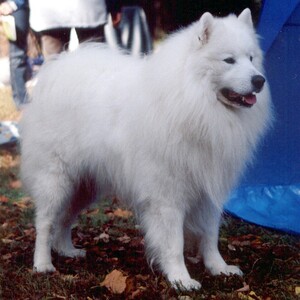
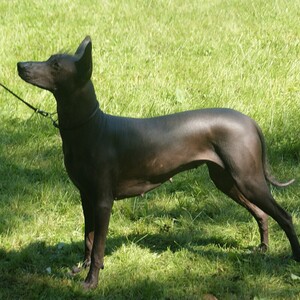
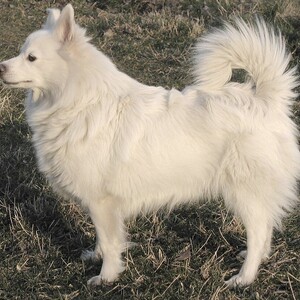
German Spitz. · Teuteul / Wikimedia Commons, CC BY-SA 3.0. Cropped and resized.
The German Spitz is a breed with five sizes: the Wolfsspitz (Keeshond), Giant Spitz, Medium-sized Spitz, Miniature Spitz and Toy Spitz (Pomeranian). All have an abundant coat, made to stand off by the dense undercoat, a mane-like collar and a bushy tail carried over the back. They are attentive, lively, very devoted to their owner and easy to train.
Quick facts
| Common name | German Spitz (Deutscher Spitz); varieties: Wolfsspitz/Keeshond, Giant, Medium-sized, Miniature and Toy/Pomeranian Spitz |
| Scientific name | Canis lupus familiaris |
| Country of origin | Germany |
| Official recognition | FCI, definitively since 1957 (group 5, European Spitz; standard no. 97); also recognised by the AKC |
| Lifespan | 13–15 years, according to the AKC |
| Size (males) | Wolfsspitz 49 ± 6 cm; Giant 45 ± 5 cm; Medium-sized 35 ± 5 cm; Miniature 27 ± 3 cm; Toy 21 ± 3 cm |
| Size (females) | the same sizes as males |
| Weight | in keeping with its size; AKC: from about 4.5 kg to 23 kg |
| Coat type | Double: long, straight, standing-off topcoat; short, dense, cotton-wool-like undercoat |
| Common colours | Wolfsspitz: grey-shaded; the others: white, black, brown, orange, grey-shaded and others |
| Energy level | Moderate to high |
| Suited to an apartment? | Yes, especially the small sizes |
| Temperament | Attentive, lively, very devoted to its owner, wary of strangers |
| Tendency to aggression | Low; neither shy nor aggressive |
| Good with children | Good |
| Good with other animals | Good; it has no hunting instinct |
| Genetic predispositions | Progressive retinal atrophy, retinal dysplasia, patellar luxation |
- Primary category:Dog breeds
- Explore this animal's categories:
History and origin
The FCI standard says German Spitzes descend from the Stone Age “peat dog” (Canis familiaris palustris) and the later “pile-dwelling Spitz”. The standard calls it the oldest dog breed in Central Europe and says many other breeds developed from it.
The FCI treats five varieties as a single breed, with a common standard: the Wolfsspitz/Keeshond and the Giant, Medium-sized, Miniature and Toy/Pomeranian Spitz. All share the same nature: watchful guardians of house and farm and devoted family companions.
How the breed developed
- Stone Age – The “peat dogs”, ancestors of the Spitzes, are living.
- Later – The “pile-dwelling Spitz” appears.
- 1957 – The FCI recognises the breed.
- 3 September 2024 – The current FCI standard is published, with the five varieties.
Breed rating
| Feature | Stars |
|---|---|
| Training and intelligence | ★★★★☆ |
| Easy to train | ★★★★☆ |
| Intelligence | ★★★★☆ |
| Independence | ★★★☆☆ |
| Stubbornness | ★★★☆☆ |
| Behaviour and temperament | ★★★★☆ |
| Affectionate with family | ★★★★★ |
| Friendly with children | ★★★★☆ |
| Good with other dogs | ★★★★☆ |
| Good with cats and other animals | ★★★★☆ |
| Loyalty | ★★★★★ |
| Tendency to be aggressive | ★☆☆☆☆ |
| Tendency to bark | ★★★★☆ |
| Needs and care | ★★★★☆ |
| Shedding | ★★★★☆ |
| Needs frequent grooming | ★★★☆☆ |
| Activity and lifestyle | ★★★★☆ |
| Energy level | ★★★★☆ |
| Daily exercise needs | ★★★☆☆ |
| Suited to apartment life | ★★★★★ |
| Health and longevity | ★★★★☆ |
| Life expectancy | ★★★★★ |
| Predisposition to genetic diseases | ★★☆☆☆ |
| Working abilities and uses | ★★★☆☆ |
| Good guard dog | ★★★★☆ |
| Good companion dog | ★★★★★ |
Indicative rating: 5 stars means the highest level. It is based on the ratings the American Kennel Club gives the breed and on the FCI standard.
Physical characteristics
The standard says Spitzes win people over with their beautiful coat, made to stand off by the abundant undercoat. Most impressive are the strong, mane-like collar and the bushy tail carried boldly over the back.
General appearance
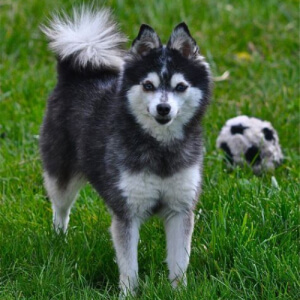
The fox-like head, lively eyes and small, pointed, closely set ears give the Spitz its cheeky look. The head, ears and fronts of the legs have short, dense, velvety hair, while the rest of the body has a long, abundant coat.
| Feature | German Spitz |
|---|---|
| Size | From toy to medium, in five sizes |
| Height at the withers | from 21 ± 3 cm (Pomeranian) to 49 ± 6 cm (Wolfsspitz) |
| Coat | Double, long, standing off |
| Neck | Abundant, mane-like collar |
| Ears | Small, pointed, closely set |
| Tail | Bushy, carried over the back |
The Wolfsspitz/Keeshond is grey-shaded (silver grey with black tips). The Giant Spitz can be white, black or brown, and the Medium-sized, Miniature and Toy Spitz can be white, black, brown, orange, grey-shaded and other colours.
Training and socialisation
The standard describes it as always attentive, lively and exceptionally devoted to its owner, very easy to teach and to train. Its natural mistrust of strangers and lack of hunting instinct make it an ideal family dog and guard for house and farm.
The AKC says it learns quickly and wants to please its owner with motivating methods, but it does not like to be forced. Barking at everything new must be controlled through training.
Tips for effective training
- Use rewards. It does not like to be forced.
- Work on the barking. As a watchdog, it barks at anything new.
- Check the fence. The AKC says it can squeeze through the smallest gaps.
- Fence off ponds. The AKC considers them a danger to the breed.
Activity needs and lifestyle
The AKC says a moderate amount of regular exercise is enough, but the Spitz will happily keep up on a long walk too. A safe, fenced area is highly recommended, as it is very curious.
| Activity | How often | Why it matters |
|---|---|---|
| Walks | daily | Moderate exercise |
| Play in a fenced area | several times a week | It is very curious |
| Tricks and exercises | daily | It learns quickly |
Tips for a balanced life
- Keep it under supervision near water.
- It copes very well with bad weather.
- In summer, give it shade: the coat is dense.
Care and health
Coat and skin care
The AKC says the German Spitz sheds its entire undercoat twice a year, over 2–3 weeks, and then needs daily brushing. The rest of the time it sheds little and a quick brush is enough. The standard requires that the coat should not look “styled”.
Common health problems
The AKC says most German Spitzes are healthy, but a few cases have occurred of:
| Condition | Description | Common symptoms |
|---|---|---|
| Progressive retinal atrophy | An inherited disease that gradually destroys the retina | Sees less and less well at night, then in the daytime too |
| Retinal dysplasia | Abnormal development of the retina | Poor eyesight |
| Patellar luxation | The kneecap slips out of place | Suddenly holds a hind leg up for a few steps, then uses it again |
Other care
- Buy a puppy only from breeders who test the parents' eyes.
- Brush its teeth regularly.
- Trim the nails when they start to touch the floor.
Diet and nutrition
The portion depends greatly on size: a Pomeranian eats several times less than a Wolfsspitz. Choose food according to size and life stage.
Tips for a healthy diet
The table gives a starting estimate, calculated with the formula from the Merck Veterinary Manual. The first two calorie columns show the calories per day for a healthy adult dog. The last column shows what this means in dry food with 3,500–4,000 kcal per kilogram.
| Dog's weight | Calories per day (neutered) | Calories per day (not neutered) | Dry food per day (approximate) |
|---|---|---|---|
| 3 kg | 260 kcal | 290 kcal | 65–83 g |
| 10 kg | 630 kcal | 710 kcal | 160–200 g |
| 20 kg | 1,060 kcal | 1,190 kcal | 260–340 g |
- In the small sizes, feed puppies several times a day.
- Training treats count towards the daily portion.
- Feel the ribs under the coat: you should feel them without pressing hard.
Foods to avoid
Some human foods are dangerous for dogs: chocolate, coffee, grapes and raisins, onions, garlic, xylitol (a sweetener used in chewing gum), macadamia nuts and alcohol.
Reproduction and development
Physical and emotional maturity
In dogs, sexual maturity usually comes between 6 and 12 months. Small breeds become adults faster than large ones, usually at around one year.
Mating and pregnancy
Pregnancy lasts about 63 days, counted from ovulation. Mating a female on her first heat is not recommended. The FCI standard requires that only healthy dogs of typical breed appearance are used for breeding.
Caring for the puppies
In small breeds, a litter has 3–4 puppies on average. The puppies are very small and fragile in the first weeks, so they must be kept warm and handled with care. Socialisation starts early: gentle handling, everyday noises and new people.
Interesting facts
- Five sizes, one breed. For the FCI, the Keeshond and the Pomeranian are varieties of the German Spitz.
- A Stone Age breed. The standard links it to the “peat dog”.
- No hunting instinct. That is why it is a good farm guard.
- Hardy and long-lived. The standard says these are its greatest qualities.
- Shedding “all at once”. It sheds its entire undercoat in 2–3 weeks, twice a year.
Frequently asked questions
Is the Pomeranian a German Spitz?
Yes. For the FCI, the Pomeranian is the toy variety of the German Spitz.
What sizes are there?
Wolfsspitz/Keeshond and the Giant, Medium-sized, Miniature and Toy/Pomeranian Spitz.
Is it easy to train?
Yes, the standard says it is very easy to train.
How long does it live?
The AKC gives 13–15 years.