Bengal tigerInteresting facts and information
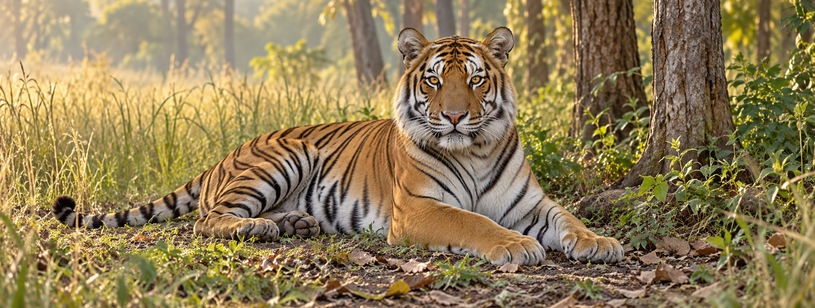
AI illustration of bengal tiger.
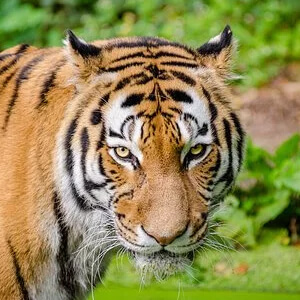
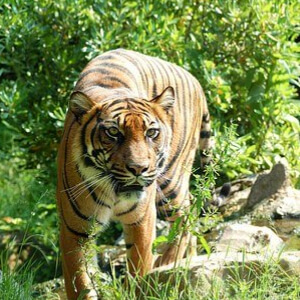
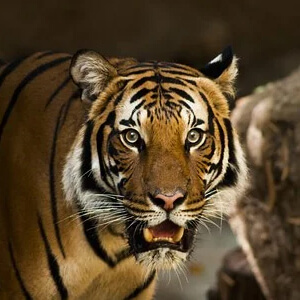
The Bengal tiger is the large striped predator of the Indian subcontinent. It lives in India, Nepal, Bhutan and Bangladesh, using forests, tall grasslands and the Sundarbans mangroves. It feeds mainly on deer, wild pigs and other mammals.
It is one of the largest tigers. Its usual coat is orange with dark stripes and white areas. White tigers are a colour variation, rather than a separate species or tigers specifically adapted to snow.
Quick facts
| Species | Panthera tigris |
| Traditional subspecies name | Panthera tigris tigris |
| Two-subspecies classification | Panthera tigris tigris; subspecies boundaries are under review |
| Class / order / family | Mammalia / Carnivora / Felidae |
| Distribution | India, Nepal, Bhutan and Bangladesh |
| Habitat | Forests, tall grasslands and mangroves; locally, wooded mountains |
| Diet | Carnivorous (mainly deer and wild pigs) |
| Size | Males usually about 200–260 kg and about 3 m long including the tail; females about 100–160 kg |
| Social organisation | Mainly solitary; the female raises the cubs |
| Gestation | Approximately 100–106 days |
| Independence of young | Usually around two years old, with variation |
| Conservation | Panthera tigris species: Endangered (EN) |
- Primary category:Mammals
- Explore this animal's categories:
Interesting facts
- It can inhabit forests flooded by tides. Sundarbans tigers use a landscape of mangroves, channels and islands.
- Stripes help researchers recognise individuals. Distinctive patterns allow comparisons between camera-trap images.
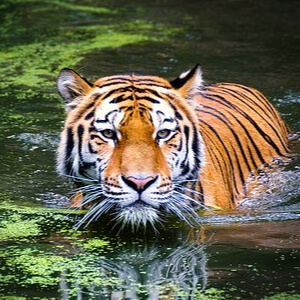
- It swims well. Water can provide cooling or a route across the landscape, as well as being a barrier.
- It does not form a pack. A female with cubs forms a temporary family group; adults generally live alone.
- A tiger’s presence does not reveal everything about forest health. Breeding also requires enough prey, cover and low disturbance.
Records and remarkable features
Bengal tigers are among the largest living cats. Large males usually weigh about 200–260 kg and can be about three metres long including the tail. Females are smaller, usually about 100–160 kg.
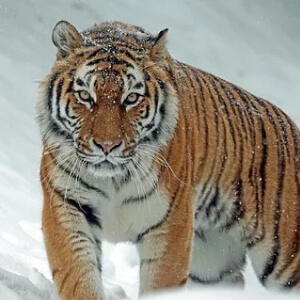
Bengal and Siberian tigers are similar in size, and the largest males of both can weigh well over 250 kg.
One remarkable feature is its use of very different habitats, from mainland forests and grasslands to mangroves. It needs habitat meeting its basic requirements, rather than a single kind of jungle.
Characteristics
The body is robust, with powerful shoulders and large paws. The coat has black or dark-brown stripes, with pale cheeks, abdomen and other lower areas. The tail helps balance during movement.
| Feature | Advantage |
| Stripes on an orange background | Conceal the outline among vegetation and shadows |
| Retractile claws | Help gripping and remain protected while walking |
| Strong canines and jaws | Hold and bring down prey |
| Hearing and vision adapted to hunting | Detect movements and sounds, including in dim light |
White tigers have a genetic colour variation. A white coat does not make them a new subspecies. It is not evidence of a snow adaptation; Bengal tigers are not polar animals.
White tigers are extremely rare in the wild. Many white tigers in zoos descend from Mohan, a white male captured in India in 1951, and are often inbred.
Habits and behaviour
Bengal tigers hunt alone, approaching quietly. They may rest for long periods between movements and hunts. Activity is often greater during cooler hours, but they can also be seen by day.
Territories are signalled with scent, tracks and scratches. A male’s range can overlap those of several females. Range size depends on food and habitat arrangement.
Roars can carry signals over distance, while close communication includes other sounds. Tigers do not roar continuously while hunting, since noise would alert prey.
In very hot places, they seek shade and water.
Habitat and geographic distribution
The current natural range includes India, Nepal, Bhutan and Bangladesh. Populations occupy many landscapes, and connections matter for dispersing young animals.
- Tropical and subtropical forests offer cover and food.
- Tall grasslands near forests can conceal tigers and deer.
- The Sundarbans mangroves form a tidal habitat with saline or brackish water.
- Wooded hills and mountains also form part of the range, including in Bhutan.
A national park is not a completely sealed island. Tigers can cross its boundaries, and corridors reduce isolation between protected areas. Busy roads and expanding settlements can make these journeys more dangerous.
India is home to about three-quarters of the world's wild tigers; its 2022 tiger census estimated about 3,700 tigers.
Diet and feeding
It is carnivorous and hunts mainly hoofed mammals. Prey includes chital, sambar and wild pigs. In some regions it also takes large bovids or smaller animals.
The tiger follows prey patiently and approaches through vegetation. The attack is short and powerful. Energy spent in an unsuccessful chase matters for such a large predator.
After a kill it may conceal the remains and return for further meals. Food availability influences territory size, breeding prospects and cub survival.
Attacks on cattle or goats can create conflict. Protecting wild prey and domestic animals forms part of coexistence, alongside intervention by specialist teams.
Reproduction and life cycle
Gestation lasts approximately 100–106 days. A female usually gives birth to several cubs in a sheltered site. Litter sizes vary, and a large litter does not mean every cub will survive.
Initially, cubs have closed eyes and feed on milk. Later they eat meat and accompany their mother. Chasing, stalking and grasping during play prepare skills used in hunting.
| Age or stage | Important change |
| Newborn | Completely dependent on the female |
| Early months | Explores and begins eating meat |
| Around two years old | Approaches independence |
| Adult | Seeks a territory and breeding opportunities |
The mother has the main role in raising cubs. Wild tigers often live approximately 10–15 years, but not all reach this age. Disease, injuries and human activities affect survival.
Name and history
“Bengal” refers to a region, although the animal has a wider distribution. The traditional scientific name is Panthera tigris tigris.
The same name identifies the mainland subspecies in a two-subspecies classification grouping several Asian populations. Its precise meaning therefore depends on the classification used. All these tigers belong to Panthera tigris, and subspecies boundaries continue to be studied.
Cultural significance and mythology
The tiger is India’s national animal, and the Bengal tiger is closely associated with this image. Central Zoo Authority documents present it as both a national symbol and an important conservation predator.
The tiger has been India's national animal since 1973. In Hindu art, the goddess Durga is often shown riding a tiger, and in the Sundarbans, local people honour Bonbibi, the forest goddess who protects them from tigers.
Conservation status and threats
Panthera tigris is Endangered (EN). Populations across the Indian subcontinent do not all follow the same trend. Success in one reserve does not guarantee safety elsewhere.
Main pressures include poaching, habitat loss and fragmentation, prey depletion and conflict with people. Coastal tigers can also be affected by changes to mangrove habitats.
India’s Project Tiger began in 1973. Conservation uses protected areas, patrols and monitoring. Camera traps and statistical methods estimate populations; simply adding photographs would count the same animal repeatedly.
Effective protection also maintains connections between reserves. Young tigers leaving their mother’s range need safe routes and places to settle.
In popular culture
Shere Khan in The Jungle Book is a familiar fictional Bengal tiger. Disney’s educational guide for the 2016 film identifies him this way and uses the character to introduce animal information.
Rudyard Kipling's The Jungle Book was published in 1894, and Shere Khan also appears in Disney's 1967 animated film. Another famous fictional Bengal tiger is Richard Parker, who shares a lifeboat with a boy in Yann Martel's novel Life of Pi (2001) and its 2012 film.
Discover other tigers
Read about Tiger or explore: Sumatran tiger · Siberian tiger · Indochinese tiger · Malayan tiger · South China tiger.
Frequently asked questions
- Where does the Bengal tiger live? In India, Nepal, Bhutan and Bangladesh. It uses forests, tall grasslands and the Sundarbans mangroves.
- What does it eat? It is carnivorous, eating mainly deer, wild pigs and other mammals available in its habitat.
- How large is it? Large males usually weigh about 200–260 kg and can be about three metres long including the tail. Females are smaller.
- Is the white tiger a separate species? No. It is a genetic colour variation, rather than a new species or an obligatory adaptation to snow.
- Does it live in groups? Adults are mainly solitary. Females with cubs form temporary family groups.
- Can it swim in the Sundarbans? Yes. Tigers are capable swimmers, and the Sundarbans population uses a habitat of islands and channels.
- How long do cubs remain with their mother? Usually around two years while learning to hunt. The exact age of independence varies.
- Is it threatened with extinction? Yes. Panthera tigris is Endangered, and local populations are affected by poaching, habitat loss and prey depletion.