DogInteresting facts and information
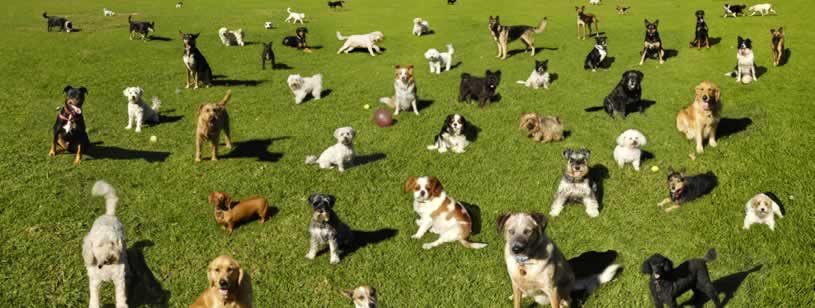
The dog (Canis lupus familiaris) was domesticated from ancient wolves and has lived alongside people for thousands of years. Its exact history is still being studied. Hundreds of dog breeds differ in size, appearance and behaviour, and dogs work as companions, herders, search dogs and assistance dogs.
Dogs are highly adaptable and live alongside people in almost every climate, from the Arctic to deserts. They are known for their intelligence, devotion and social skills and form close bonds with people and other dogs.
As well as being companions, dogs work with the police and the military, in therapy, as assistance dogs for disabled people and in detecting substances. Some breeds, such as sheepdogs, are essential for herding and protecting domestic animals, while others, such as greyhounds, were bred for speed and hunting.
Quick facts
| Common name | Dog |
| Scientific name | Canis lupus familiaris |
| Typical lifespan | 10 - 15 years (depending on breed and living conditions) |
| Length | 30 cm - 90 cm (depending on breed) |
| Weight | 2 kg - 100 kg |
| Diet type | Omnivore with a carnivore ancestry (meat, vegetables, grains) |
| Main predators | Large wild carnivores can attack dogs in some regions; the risks depend on where a dog lives |
| Conservation status | Domestic animal; wild-species conservation categories do not apply to individual dog breeds |
| Distribution | Worldwide, on every continent where people live |
| Living environment | Homes, towns and countryside, forests, mountains, deserts |
- Primary category:Mammals
- Explore this animal's categories:
Interesting facts
- A very clever breed – The Border Collie is often described as the most trainable dog breed; one Border Collie, Chaser, learned the names of more than 1,000 toys.
- The fastest dog – The Greyhound can reach speeds of about 70 km/h, making it one of the fastest land animals over short distances.
- Dogs read human emotions – Studies show they can pick up on stress, happiness and sadness from our tone of voice and facial expressions.
- An extraordinary sense of smell – A dog's nose is thousands of times more sensitive than ours, and specially trained dogs can detect some diseases, such as certain cancers, or low blood sugar in people with diabetes.
- Dogs dream – Research shows that dogs have REM sleep, the sleep stage linked with dreaming, and sometimes move their paws as if they were running.
- A possible magnetic sense – One study suggested that dogs prefer to line their bodies up north–south when they relieve themselves, but this is still debated.
- They can learn many words – An average dog can learn to recognise dozens of words and signals, and some highly trained dogs learn hundreds.
Records and remarkable features
- Tallest dog – Zeus, a Great Dane, held the world record with a height of 1.12 metres at the shoulder.
- Smallest dog – Miracle Milly, a Chihuahua, was only 9.65 cm tall.
- A long-lived dog – Guinness World Records documented Bluey, an Australian Cattle Dog, as living for 29 years and 5 months (1910–1939).
- The dog with the largest vocabulary – Chaser, a Border Collie, learned the names of more than 1,000 objects.
- A famous rescuer – Barry, a Saint Bernard, is credited with saving more than 40 people in the Swiss Alps in the early 19th century.
Physical characteristics and adaptations
Dogs show an amazing variety of sizes, shapes and features, the result of selective breeding by people over thousands of years.
Key physical adaptations
- Strong teeth – Adult dogs have 42 teeth, adapted for tearing and chewing, as in other carnivores.
- A superb sense of smell – Many thousands of times more sensitive than a human's, used to detect scents, follow trails and recognise individuals.
- Good vision in dim light – Their eyes have many rod cells and a reflective layer, which help them see well in low light.
- Coats suited to the climate – Some breeds have a thick double coat against the cold (e.g. the Siberian Husky), while others have short, thin hair suited to warm weather (e.g. the Greyhound).
- Legs built for speed or endurance – The Greyhound has long, muscular legs for speed, while working breeds such as the German Shepherd have strong legs for endurance.
- Different ears – Some breeds have upright ears that catch sounds well (e.g. the Belgian Shepherd), while others have drooping ears (e.g. the Cocker Spaniel).
What do dogs look like?
| Feature | Range |
|---|---|
| Height | About 15 - 90 cm (depending on breed) |
| Weight | About 2 - 100 kg |
| Coat | Short, long, wiry, silky, double, curly |
| Ears | Upright, drooping, semi-erect |
| Colour | White, black, brown, red, grey or mixed |
| Tail | Straight, curled, bushy or thin |
Habits and behaviour
Dogs are extremely social animals that form close bonds with people and with other dogs. They are loyal, protective and versatile, doing everything from keeping people company to rescue work.
Daily life
- Social animals – Dogs form close relationships with the members of their group, whether people or other dogs.
- Complex communication – They use barks, howls, whines, growls and body language to send messages.
- Territorial behaviour – Many dogs mark their territory and defend their space against intruders.
- Play is essential – It builds social bonds and helps young dogs practise skills.
- Training and learning – Dogs learn commands and rules through association and repetition, and some breeds learn exceptionally fast.
Typical behaviours
- Circling before lying down – Dogs often turn round before lying down, a habit that may come from their wild ancestors flattening grass or snow before resting.
- Head tilting – Many dogs tilt their heads when they hear an interesting sound or are trying to understand their owner.
- Marking territory – Dogs use urine and scent to mark their territory.
- Fetching – A natural behaviour linked with carrying prey.
- Burying food – A habit inherited from wolves, which hide food to eat later.
Survival strategies
- Living in social groups gives dogs protection and access to food.
- Their intelligence lets them adapt to very different environments.
- Working with people has made dogs essential for many tasks.
Habitat and geographic distribution
Domestic dogs live on every continent where people live and are one of the most adaptable mammals.
Distribution
| Region | Examples of breeds | Typical environment |
|---|---|---|
| North America | Labrador, Golden Retriever, Husky | Cities, countryside, forests |
| Europe | German Shepherd, Bulldog, Dachshund | Towns, farms, pastures |
| Asia | Shiba Inu, Akita, Tibetan Mastiff | Mountains, cities, villages |
| Africa | Basenji, Rhodesian Ridgeback | Savannas, deserts, forests |
| Australia | Australian Cattle Dog, Kelpie | Farmland and cattle stations |
| The Arctic | Siberian Husky, Alaskan Malamute | Tundra, cold regions |
Living environments
- Towns and cities – Many pet dogs live in houses or flats and depend on human care.
- The countryside – Farm and herding dogs roam more widely and are used for guarding and farm work.
- Cold regions – Huskies and Malamutes are adapted to the cold, with thick coats.
- Hot regions – Short-coated breeds such as the Basenji cope well with heat.
Environmental change
- In many places, cities have large populations of stray dogs.
- Extreme heat is dangerous for breeds that are sensitive to high temperatures, especially flat-faced breeds.
- Modern lifestyles can affect dogs' health, for example through obesity.
Diet and feeding
Dogs can digest meat, vegetables, fruit and grains, but they descend from carnivores and need plenty of animal protein.
What do dogs eat?
| Food group | Examples |
|---|---|
| Meat and other animal protein | Chicken, beef, lamb, fish, offal (liver, heart) |
| Vegetables and fruit | Carrots, apples, pumpkin, sweet potatoes, blueberries |
| Grains and starches | Rice, oats, wheat (in moderate amounts) |
| Dairy products | Cheese, yoghurt (only in small amounts; many adult dogs digest lactose poorly) |
| Dry and wet food | Kibble and canned food made to meet dogs' nutritional needs |
Foods that are dangerous for dogs
- Chocolate – Contains theobromine, which is toxic to dogs.
- Onions and garlic – Damage red blood cells and can cause anaemia.
- Grapes and raisins – Can cause kidney failure.
- Alcohol and caffeine – Dangerous to a dog's nervous system.
- Cooked bones – Can splinter and injure the gut or block it.
Feeding methods
- Measured feeding – Giving a set amount of food based on the dog's age, size and activity level.
- Raw feeding – A diet based on raw meat, bones and vegetables; it is controversial and carries risks, so it should be discussed with a vet.
- Commercial food – Most owners choose kibble or canned food made to provide all the nutrients a dog needs.
Role alongside people
- Using by-products – Much commercial dog food is made from parts of animals that people do not eat.
- Guarding – In many rural communities, dogs protect homes, land and livestock.
Reproduction and life cycle
In domestic dogs, breeding is often controlled by people, and selective breeding has produced hundreds of breeds.
Breeding season
- Most female dogs come into heat about twice a year, and each heat lasts about 2-3 weeks.
- Males can smell a female in heat from a long distance.
- Responsible breeders plan matings to avoid passing on genetic problems.
Birth and raising puppies
| Stage | Timing | What happens |
|---|---|---|
| Pregnancy | About 58-68 days | The female prepares a safe place to give birth |
| Litter size | 1-12 puppies | Depends on the breed: Chihuahuas usually have 1-3 puppies, while Labradors can have up to about 12 |
| Nursing | About 4-6 weeks | Puppies depend completely on their mother at first |
| Independence | 8-12 weeks | Puppies are weaned and can go to new homes |
Early development
- Puppies are born blind and deaf, but their eyes and ears open in the first two to three weeks.
- Training and socialisation are essential in the first months of life for a well-balanced dog.
- Mothers can become very protective while nursing and defend their puppies against possible threats.
Name and history
Origin of the name
- The word "canine" comes from the Latin canis, meaning "dog".
- The English word "dog" has an unknown origin; it appeared in late Old English and gradually replaced the older word "hound" as the general term.
- Many languages imitate a dog's bark with words such as "woof" or "bow-wow" in English.
Taxonomic classification
| Classification | Name |
|---|---|
| Kingdom | Animalia |
| Phylum | Chordata |
| Class | Mammalia |
| Order | Carnivora |
| Family | Canidae |
| Genus | Canis |
| Species | Canis lupus familiaris |
Evolution and domestication
- Dogs were domesticated from ancient wolves at least 15,000 years ago, and possibly much earlier.
- Some of the earliest evidence comes from Europe and Asia, where dogs were buried alongside people.
- Selective breeding has produced hundreds of modern breeds, each with its own characteristics.
- The first types of dog were used for hunting, guarding and herding.
Cultural significance and mythology
Dogs have had a profound influence on cultures around the world as symbols of loyalty, protection and friendship. In mythology, religion and folklore, dogs often appear as guides of souls, guardians of the underworld or protectors of people.
Dogs in myths and symbolism
- Egyptian mythology – The god Anubis, shown with the head of a jackal or dog, protected the dead and guided souls to the afterlife.
- Greek mythology – Cerberus, a three-headed dog, guarded the gates of the underworld and stopped the dead from leaving.
- Norse mythology – The hound Garmr was said to guard the entrance to Hel, the realm of the dead.
Superstitions and popular beliefs
- A dog howling at night foretells a death – A superstition found in many parts of Europe and the Americas.
- Black dogs – In some traditions they are spiritual protectors, while in others, such as British folklore, they are omens of bad luck.
- In Romania, a dog digging a hole is said to foretell bad weather or a misfortune.
- In ancient Mexico, hairless dogs (Xoloitzcuintli) were sacred animals and were sometimes buried with their owners to guide them in the afterlife.
Conservation status and threats
Domestic dogs are not at risk of extinction, but some breeds are rare, and many stray dogs live in difficult conditions.
Main pressures
- Abandonment and overpopulation – Millions of dogs are abandoned every year and end up in shelters or on the streets.
- Disease and lack of vaccination – Rabies, parvovirus and other diseases can seriously affect dog populations.
- Puppy farms – The trade in puppies from large commercial breeders, often in poor conditions, is a major welfare problem.
- Dog fighting – Illegal in most countries but still practised in some places.
- Breeding for extreme looks – Some breeds suffer serious health problems because of selection for exaggerated features (for example, flat-faced breeds such as Bulldogs often have breathing difficulties).
Protection efforts
| Measure | Organisation / action |
|---|---|
| Neutering and responsible adoption | Animal welfare groups such as the ASPCA and the RSPCA |
| Vaccination campaigns | Rabies vaccination programmes in Africa and Asia |
| Animal cruelty laws | Animal protection laws in the EU, the US and many other countries |
| Shelters for stray dogs | Shelters and rehabilitation programmes for abandoned dogs |
Rare breeds
- Otterhound – A British hunting breed with only a few hundred dogs in some countries.
- Chinook – A very rare American sled dog breed.
- Norwegian Lundehund – An unusual breed with six toes on each foot and very flexible joints.
- Dandie Dinmont Terrier – A Scottish terrier breed with a very small population.
Dogs in popular culture
Dogs are everywhere in books, films, art and the media, often shown as heroes, best friends and symbols of devotion.
Dogs in literature
- White Fang (Jack London, 1906) – A classic story about a wolf-dog who faces many hardships.
- Lassie Come-Home (Eric Knight, 1940) – The story of a loyal collie who travels hundreds of miles to return to her family.
- The Hundred and One Dalmatians (Dodie Smith, 1956) – A famous story about rescuing a group of Dalmatian puppies.
- Hachikō – The true story of an Akita in Japan who waited for his owner at a railway station for about nine years after the owner's death.
Dogs in films and cartoons
- Lassie – Many films and television series based on the book.
- Beethoven – A comedy about a lovable but unruly Saint Bernard.
- Marley & Me – A film based on a true story about an energetic Labrador.
- Bolt – An animated film about a dog who believes he has superpowers.
- Balto – An animated film inspired by the sled dog who helped bring medicine to Nome, Alaska, during a diphtheria outbreak in 1925.
Dogs as symbols
- Loyalty and protection – Dogs appear in heraldry and mythology as symbols of faithfulness.
- Mascots – Dogs are mascots of police units, sports teams and military organisations.
- Therapy dogs – Dogs are used to support people in animal-assisted therapy.