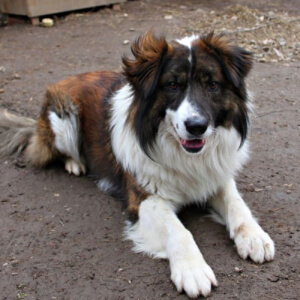
AidiCharacteristics, history, training and care
The Aidi, or Atlas Mountain Dog, is a Moroccan dog traditionally associated with protecting people, belongings and livestock. It is a guardian rather than a dog whose main task is gathering and moving a flock.
Its thick coat and watchful nature reflect a working background. A modern household still needs to provide suitable activity, training, safe boundaries and routine care; a hardy reputation does not guarantee health or easy behaviour.
Quick facts
| Common names | Aidi; Atlas Mountain Dog |
| Scientific name | Canis lupus familiaris — domestic dog |
| Country of origin | Morocco |
| Recognition | FCI standard 247 |
| Lifespan | Dependable breed-wide estimates are limited |
| Height: males | FCI: 52–62 cm at the shoulder |
| Height: females | FCI: the same 52–62 cm range |
| Weight: males | Not specified in the cited FCI standard |
| Weight: females | Not specified in the cited FCI standard |
| Coat | Thick, rather harsh and medium-length |
| Colours | Fawn, brown or black, with permitted variations and white markings |
| Activity | Regular exercise and mental engagement, matched to the individual |
| Housing | Secure management and a suitable daily routine are important |
| Temperament | The standard describes attachment to family and a guarding disposition |
| Unfamiliar people and dogs | Use calm introductions and safe management |
| Children | Supervise interactions and respect the dog’s resting space |
| Other animals | Individual assessment and controlled introductions are necessary |
| Health | Limited breed-wide data; preventive care and appropriate screening remain important |
- Primary category:Dog breeds
- Explore this animal's categories:
History and origin
The Aidi, also called the Atlas Mountain Dog, is a Moroccan guardian associated with North African mountain and plateau communities. Its traditional task is protecting people, belongings and livestock. Guarding a flock is different from gathering and moving it as a herding dog does.
Development and recognition
- Pastoral background: the FCI links the dog with semi-nomadic communities of the mountain regions.
- Working purpose: the standard describes protection of the household and flocks, rather than European-style herding.
- Modern recognition: the FCI recognises the Atlas Mountain Dog under standard 247, with Morocco as the country of origin.
Editorial characteristics guide
The stars below are editorial impressions of likely lifestyle demands, not measurements, safety guarantees or a ranking against other breeds. More stars mean more of the named trait. A guardian role does not prove that an individual dog will be aggressive. Health and lifespan are not scored without adequate comparative data.
| Characteristic | Editorial guide |
|---|---|
| Training and learning | Editorial group |
| Ease of training | ★★★☆☆ |
| Interest in learning tasks | ★★★★☆ |
| Independence | ★★★★☆ |
| Persistence | ★★★☆☆ |
| Behaviour and social needs | Editorial group |
| Affection towards familiar people | ★★★★☆ |
| Ease around young children | ★★★☆☆ |
| Ease with other dogs | ★★★☆☆ |
| Ease with cats and small pets | ★★☆☆☆ |
| Attachment to familiar people | ★★★★☆ |
| Aggression risk | Not rated — individual assessment / reliable data needed |
| Alert barking | ★★★★☆ |
| Coat and care | Editorial group |
| Shedding | ★★★☆☆ |
| Grooming needs | ★★★☆☆ |
| Activity and lifestyle | Editorial group |
| Activity level | ★★★★☆ |
| Need for daily exercise | ★★★★☆ |
| Ease of apartment living | ★★☆☆☆ |
| Health and longevity | Editorial group |
| Life expectancy | Not rated — individual assessment / reliable data needed |
| Inherited-disease risk | Not rated — individual assessment / reliable data needed |
| Roles and companionship | Editorial group |
| Watchfulness | ★★★★★ |
| Companion suitability | ★★★☆☆ |
Physical characteristics
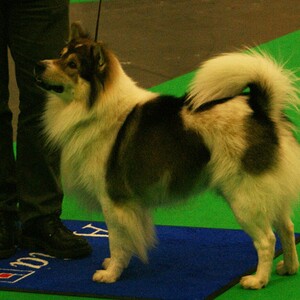
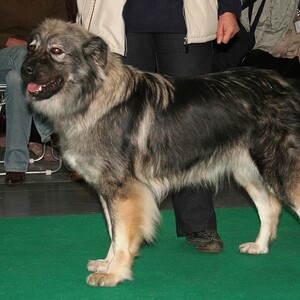
The Aidi is strongly built and mobile, with a thick coat and a bushy tail. The breed standard describes a dog able to work in its native mountain environment. That description does not remove the need for shelter, water and protection from dangerous temperatures.
General appearance
- Height at the shoulder is 52–62 cm under the FCI standard.
- The head is broad and conical, with an alert expression.
- The ears are normally carried half-dropped; permanently upright ears do not match the FCI description.
- The tail is long and well furnished with hair.
| Feature | Aidi |
|---|---|
| Height at the shoulder | FCI: 52–62 cm; the standard gives one range |
| Weight | No weight range specified in the cited FCI standard |
| Coat | Thick, rather harsh and medium-length |
| Colour | Fawn, brown or black, with permitted variations and white markings |
| Ears | Half-dropped, with slightly rounded tips |
| Build | Strong and muscular without excessive bulk |
Training and socialisation
A watchful dog needs clear, calm teaching and safe management around visitors. Reward settling, recall and leaving distractions. Forcing contact with strangers or encouraging confrontations can create avoidable problems.
Tips for effective training
- Socialise gradually: pair manageable new experiences with rewards and allow distance when the dog is worried.
- Teach useful alternatives: reward going to a mat or returning to the handler when someone approaches.
- Manage access: use gates, a lead or secure fencing during deliveries and introductions.
- Avoid protection games: deliberately practising pursuit or threatening behaviour is not a substitute for everyday training.
Socialisation means helping a dog feel safe and cope with ordinary experiences. It does not mean making it meet every person or dog. If fear, guarding or aggression is persistent, seek a veterinarian’s assessment and qualified behaviour help.
Activity and lifestyle needs
The Aidi’s working background makes a thoughtful activity plan important. Combine suitable walks and exploration with training and rest. There is no verified daily minute quota that fits every Aidi.
| Activity | Planning guide, not a fixed prescription |
|---|---|
| Walks and exploration | Regular outings at a pace appropriate to age and fitness |
| Scent and search games | Controlled activities that reward calm engagement |
| Training | Brief practice of recall, settling and polite greetings |
| Rest | Uninterrupted sleep and quiet recovery between activities |
A balanced daily routine
- Maintain secure boundaries and prevent unsupervised patrols near roads, neighbours or livestock.
- A yard is useful only when combined with exercise, care and contact with people.
- Supervise interactions with children and provide a separate resting area.
- Adapt outdoor time to weather; a protective coat does not prevent heatstroke.
Care and health
Coat and skin care
Brush the thick coat regularly, paying attention to tangles and changes in shedding. Check beneath the hair for skin irritation or parasites. Bathing needs depend on dirt, skin condition and veterinary or grooming advice.
Health problems and screening
The Aidi’s hardy reputation is not evidence that it has almost no genetic disease or uncomplicated births. Published breed-wide health data are limited. The examples below are general problems to recognise in dogs, not a proven ranking of the most common Aidi illnesses.
| Problem | What it means | Possible signs |
|---|---|---|
| Joint or mobility disorders | Developmental disease, injury and other causes need examination | Persistent stiffness, lameness or pain |
| Ear or skin problems | Inflammation may involve infection, allergy or parasites | Head shaking, redness, discharge or itching |
| Heat-related illness | Dogs can overheat despite a thick protective coat | Heavy panting, weakness or collapse |
Other aspects of care
- Routine prevention: arrange veterinary checks, vaccination and parasite prevention appropriate to the dog and locality.
- Dental care: introduce regular tooth brushing with a dog-safe product and have painful or damaged teeth examined.
- Eyes, ears and feet: check for changes rather than putting cleaning products into a sore eye or ear.
- Urgent signs: breathing difficulty, collapse or suspected heatstroke need prompt veterinary help.
Diet and nutrition
Choose a complete food suitable for life stage and activity, and monitor body condition. A working history does not mean that every Aidi needs a specially high-protein diet or routine oil supplements. Diet changes should meet the dog’s actual needs.
Choosing and portioning food
| Food or feeding choice | Portion guidance | Practical point |
|---|---|---|
| Complete commercial dog food | Start with the product’s guidance and adjust for body condition | Use a formulation appropriate to life stage |
| Home-prepared food | Use a recipe formulated with a qualified veterinary nutrition professional | Meat alone is not a balanced diet |
| Treats and extras | Include them in the daily food allowance | Avoid displacing the complete diet |
Keep fresh water available. Raw meat diets can carry harmful bacteria that affect dogs and people handling the food. Do not add vitamins, minerals or oils routinely to an already complete food unless a veterinarian identifies a need.
Foods and objects to avoid
Keep chocolate, grapes and raisins, onions, garlic and xylitol-containing products away from dogs. Bones can damage teeth or obstruct the digestive tract. If a dog eats a potentially dangerous item, contact a veterinarian promptly and keep the packaging or a description of what was eaten.
Reproduction and development
A robust appearance does not establish reproductive fitness. Before breeding, veterinary assessment should cover health, maturity, temperament and relevant screening, with a plan for pregnancy, birth and care of the puppies.
Physical and behavioural maturity
Physical growth and behaviour vary between dogs. Do not use a fixed birthday as proof of emotional maturity or breeding readiness. Continue reward-based training and age-appropriate activity through adolescence.
Mating and pregnancy
A dog’s pregnancy lasts about nine weeks. The expected birth date depends on how pregnancy is dated; mating day is not a precise measure of conception. Litter size varies, so a fixed breed-wide number should not be used to plan care.
Discuss reproductive health, pregnancy monitoring and signs of birth complications with a veterinarian before a planned mating. Breeding should be a considered welfare decision, rather than an automatic step in a companion dog’s life.
Puppy care
- Newborn period: puppies need warmth, milk and close observation. Poor feeding or failure to gain weight calls for veterinary advice.
- Weaning: suitable puppy food is introduced gradually as development allows; milk feeding and social learning do not end overnight.
- Early experiences: introduce gentle handling, sounds and safe environments in manageable steps. Balance socialisation with a veterinary plan for infection risk.
- Moving home: consider health, readiness and local legal requirements. Continue suitable food, rest, training and preventive care.
Interesting facts
- A guardian, rather than a flock-driving dog: this distinction is explicit in the FCI history.
- A descriptive second name: Atlas Mountain Dog links the breed to its Moroccan mountain background.
- A coat suited to its work: dense hair is a feature of the standard, but safe management still matters in both hot and cold weather.
- One height range: the cited FCI standard gives 52–62 cm without different male and female ranges.
In popular culture
Aidi in media and modern culture
International breed organisations use the name Atlas Mountain Dog (Aidi). The mountain name reflects the geographical background described in the breed’s history, while the Moroccan name Aidi remains in international use.
Cultural significance today
The breed’s cultural importance is tied to the relationship between people, their households and their animals in the Atlas region. Respecting that history includes distinguishing a livestock guardian from a herding dog and avoiding claims that all Moroccan dogs or communities share one tradition.