Australian BulldogCharacteristics, history, training and care
The Australian Bulldog is a bulldog-type dog developed in Australia through specialist breeding programmes. Names, standards and registration depend on the organisation involved. Claims of improved health need evidence and do not guarantee an individual dog’s health.
Quick facts
| Common name | Australian Bulldog (Aussie Bulldog) |
| Scientific name | Canis lupus familiaris |
| Country of origin | Australia |
| Official Recognition | Breed records and standards are maintained by specialist Australian organisations; registry recognition is organisation-specific |
| Typical lifespan | About 10-12 years |
| Dimensions (Male) | About 45-50 cm / 30-40 kg |
| Dimensions (Female) | About 40-45 cm / 25-35 kg |
| Coat type | Short, close and smooth |
| Common colours | Fawn, red, brindle, white and patterns with white |
| Energy Level | Moderate |
| Suitable for an apartment? | Depends on exercise, training, health and the individual dog |
| Temperament | Friendly, affectionate, easy-going |
| Behaviour towards unfamiliar people and dogs | Individual behaviour varies; socialisation, training and management matter |
| Compatibility with children | Depends on the individual; adult supervision and suitable handling are essential |
| Compatibility with other animals | Depends on socialisation, prey drive and the animals involved |
| Health considerations | Respiratory, joint and other health problems are possible; assess the individual dog and relevant screening. |
- Primary category:Dog breeds
- Explore this animal's categories:
History and Origin
The Australian Bulldog (also called the Aussie Bulldog) is a young breed, developed in Australia from the late 1990s. Breeders aimed to create a more active bulldog, better suited to the Australian climate, with fewer of the health problems of very short-faced bulldogs.
Evolution of the breed
- The 1990s - Australian breeders wanted an alternative to the English Bulldog that would be more active and handle heat better.
- Breeding programmes - The English Bulldog was crossed with breeds such as the Bullmastiff, Boxer and Staffordshire Bull Terrier, aiming for a longer muzzle, easier breathing and a more athletic body.
- Specialist Australian organisations maintain standards and records. Registration should not be confused with recognition by every national or international kennel organisation.
Breed Evaluation
The Australian Bulldog combines the solid look of a bulldog with a friendly, easy-going temperament. These are general editorial ratings, not measured scores; individual dogs vary.
| Characteristic | Stars |
|---|---|
| Training and Intelligence | ★★★★☆ |
| Easy to train | ★★★★☆ |
| Intelligence | ★★★★☆ |
| Level of independence | ★★★☆☆ |
| Level of stubbornness | ★★★☆☆ |
| Behavior and Temperament | ★★★★★ |
| Affectionate with family | ★★★★★ |
| Friendly with children | ★★★★★ |
| Compatible with other dogs | ★★★★☆ |
| Compatible with cats and other animals | ★★★★☆ |
| Degree of loyalty | ★★★★★ |
| Tendency to be aggressive | ★☆☆☆☆ |
| Tendency to bark | ★★★☆☆ |
| Needs and Care | ★★★☆☆ |
| Shedding level | ★★★☆☆ |
| Requires frequent care | ★★☆☆☆ |
| Activity and Lifestyle | ★★★★☆ |
| Energy level | ★★★★☆ |
| Daily exercise requirement | ★★★★☆ |
| Suitable for apartment living | ★★★★☆ |
| Health and Longevity | ★★★★☆ |
| Life expectancy | ★★★★☆ |
| Predisposition to genetic diseases | ★★★☆☆ |
| Work and Utility Features | ★★★★☆ |
| Good guard dog | ★★★☆☆ |
| Good companion dog | ★★★★★ |
Physical Characteristics
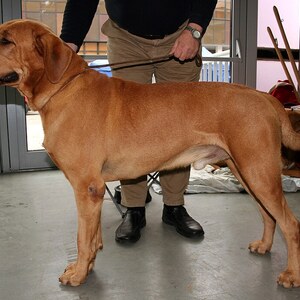
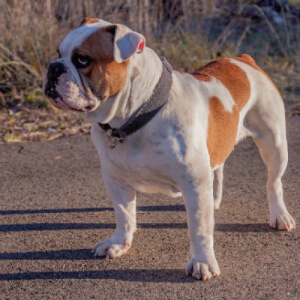
The Australian Bulldog is a medium-sized, muscular, well-proportioned dog, more athletic than the English Bulldog and with a longer muzzle.
General appearance
- A compact, muscular body with a short back and broad chest.
- A short, smooth, slightly glossy coat that is easy to care for.
- A broad head with a short muzzle, but not as flat as the English Bulldog's, to help it breathe more easily.
- Small to medium ears, usually folded ("rose" ears).
- A short to medium tail, straight or slightly curved.
- Dark, round eyes with a friendly expression.
| Characteristic | Australian Bulldog |
|---|---|
| Size | Medium (about 40-50 cm at the shoulder) |
| Weight | About 25-40 kg |
| Coat | Short, smooth |
| Muzzle | Short, but longer than the English Bulldog's |
| Shedding tendency | Moderate |
| Build | Muscular, compact |
The Australian Bulldog aims to balance strength, health and a friendly temperament, and suits both families and active people.
Training and Socialization
The Australian Bulldog is clever and willing, but it can be stubborn, like many bulldogs. With a fair, consistent and positive approach, training can be pleasant and effective.
Tips for effective training
- Start early - Training should begin at about 8-10 weeks to raise an obedient, balanced dog.
- Reward-based methods - It responds well to food rewards and praise.
- Early socialisation - Meeting new people, animals and places helps prevent shyness or over-protective behaviour.
- Consistency and patience - It can be stubborn, so training must be consistent but gentle.
- Mental stimulation - Obedience exercises, puzzle toys and simple tricks help keep its interest.
The Australian Bulldog is usually easier to train than the English Bulldog, but it still needs ongoing socialisation and clear rules.
Activity and Lifestyle Needs
The Australian Bulldog is active but not hyperactive and needs regular, moderate exercise.
| Activity | Recommended duration |
|---|---|
| Daily walks | About 45-60 min |
| Interactive games | About 20-30 min |
| Obedience training | About 10-15 min |
| Light activities (swimming, scent games) | A few times a week, in cool weather |
Recommendations for a balanced lifestyle
- Adaptable - It can live in an apartment or a house with a garden if it gets enough exercise.
- Moderate exercise - It does not need intense exercise, but it should stay active.
- Better in the heat than many bulldogs - It was bred for the Australian climate, but it must still be protected from extreme heat.
- Loves company - It enjoys family games and attention and is a sociable, affectionate dog.
The Australian Bulldog is more active than some bulldogs, but it does not need extreme exercise, so it suits families who want a relaxed but playful dog.
Care and Health
The Australian Bulldog was bred with health in mind, but it still needs regular care and veterinary checks.
Fur and skin care
- Weekly brushing - The short coat needs brushing about once a week.
- Occasional baths - Baths every few weeks, or when needed, keep the skin clean.
- Skin and fold checks - It can be prone to skin allergies, and any facial folds should be kept clean and dry.
Common health problems
| Condition | Description | Common symptoms |
|---|---|---|
| Hip and elbow dysplasia | Abnormal development of the joints | Lameness, stiff gait |
| Skin allergies | Sensitivity to dust, pollen or food | Itching, redness, irritation |
| Breathing and heat problems | Usually milder than in the English Bulldog, but still possible in hot weather | Heavy breathing, tiring quickly |
| Eye problems | Such as eyelid problems, irritation and infections | Redness, discharge, squinting |
Other aspects of care
- Weekly ear and eye checks - help prevent infections and irritation.
- Weight control - The Australian Bulldog loves food, so it needs measured portions and regular exercise.
- Regular veterinary checks - Yearly check-ups are recommended.
The Australian Bulldog is designed to be healthier than very short-faced bulldogs, but it still needs monitoring for inherited problems and a healthy weight.
Diet and Nutrition
The Australian Bulldog needs a balanced diet in measured portions to keep its muscles strong and its weight healthy.
Recommendations for a healthy diet
Choose a complete, balanced diet suited to age, size and health. Plan home-prepared diets and supplements with a qualified veterinarian; raw pet food can carry harmful bacteria.
| Food type | Daily Amount (Adults) | Frequency |
|---|---|---|
| Premium dry food | Individual amount; follow a complete diet’s guidance and veterinary advice | 2 meals/day |
| Home cooked food | Individual amount; follow a complete diet’s guidance and veterinary advice | 2 meals/day |
| Raw food: bacterial contamination is a concern | Individual amount; follow complete-food guidance and veterinary advice | 2 meals/day |
Forbidden foods
Chocolate, grapes and raisins, onions and xylitol - toxic to dogs. / Cooked bones - can splinter and cause intestinal blockage. / Too much dairy - can cause digestive problems. / Overfeeding - the Australian Bulldog gains weight easily, so portions should be controlled.
The Australian Bulldog should get a balanced diet, avoiding unhealthy foods that can lead to obesity and digestive problems.
Reproduction and Development
The Australian Bulldog is a young breed developed to improve the health of traditional bulldogs, so breeders should select breeding dogs carefully and use health screening. Breeding can involve health risks, and veterinary advice is necessary.
Physical and emotional maturity
- Physical maturity: The Australian Bulldog reaches adult size at about 12-18 months, but continues to fill out until about 2 years.
- Emotional maturity: It usually settles at about 2-3 years; until then it can be playful and sometimes stubborn.
Mating and Gestation
- Breeding decisions require veterinary assessment of maturity, health and suitable screening; reaching a fixed age does not establish that breeding is appropriate.
- Duration of gestation: Approximately 58-68 days, usually about 63 days.
- Average number of puppies: Usually about 5-8 puppies.
Puppy care
- The first 3 weeks: Puppies depend completely on their mother for warmth, milk and care.
- Between 4-8 weeks: They begin to explore and should meet people and other animals gently.
- Moving to a new home: When puppies go to their new homes, basic training and socialisation should continue.
The Australian Bulldog develops quickly, and early socialisation and training are important for balanced behaviour.
Curiosities and Interesting Facts
- Bred for the heat - The Australian Bulldog was developed to cope better with warm weather than the English Bulldog.
- An active bulldog - It enjoys walks, play and swimming more than many heavier bulldogs.
- A "smiling" dog - Many owners say their Australian Bulldog seems to smile when it is happy.
- Good with families - With proper socialisation, it is usually patient and friendly with children.
- Relaxed but alert - Although friendly, it will usually bark to warn its family of strangers.
- A young breed - It has existed for only a few decades and is still rare outside Australia.
The Dog in Popular Culture
The Australian Bulldog is still a young and fairly little-known breed.
Australian Bulldog in Modern Media and Culture
- A modern bulldog - It is often discussed as an example of breeders trying to create bulldogs that breathe and move more easily.
Importance in modern culture
- A family companion - The Australian Bulldog is seen as an alternative for people who want a friendly, active bulldog.