American AkitaCharacteristics, history, training and care
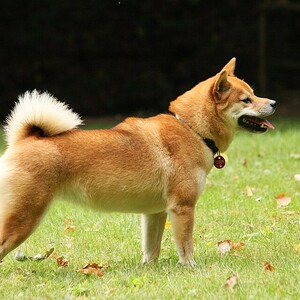
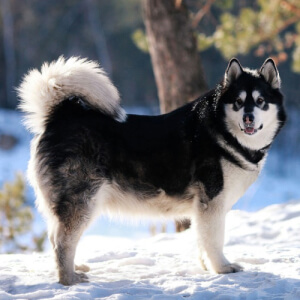
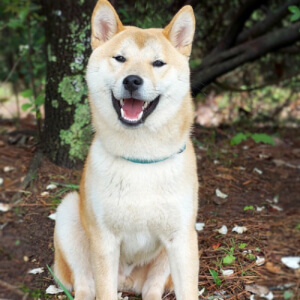
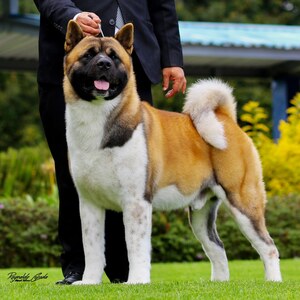
American Akita. · Edwin Campos / Wikimedia Commons, CC0 (public domain). Cropped and resized.
The American Akita is a big, powerful dog with a broad head, erect ears and a tail curled over its back. It developed in the United States from Akitas brought from Japan after the Second World War. It is loyal and protective with its family, reserved with strangers and often dominant with other dogs.
Quick facts
| Common name | American Akita |
| Scientific name | Canis lupus familiaris |
| Country of origin | Japan; the breed was developed in the United States |
| Official recognition | FCI, definitively since 30 May 1999 (group 5, standard no. 344); AKC, since October 1972 (under the name “Akita”) |
| Lifespan | 10–14 years |
| Size (males) | 66–71 cm at the withers; about 45–59 kg |
| Size (females) | 61–66 cm at the withers; about 32–45 kg |
| Coat type | Double: straight, harsh topcoat, thick, soft undercoat |
| Common colours | Any colour: red, fawn, white, pinto or brindle, with or without a mask |
| Energy level | Moderate to high |
| Suited to an apartment? | Possibly, with enough daily exercise |
| Temperament | Loyal, dignified, brave, independent |
| Tendency to aggression | Can be aggressive towards other dogs, especially of the same sex |
| Good with children | Average; needs supervision |
| Good with other animals | Poor; often does not tolerate other animals |
| Genetic predispositions | Bloat, progressive retinal atrophy, thyroid disease, hip dysplasia |
- Primary category:Dog breeds
- Explore this animal's categories:
History and origin
The Akita's story begins in Akita Prefecture, in northern Japan. There, medium-sized hunting dogs called Matagi were used to hunt bears. From 1868 they were crossed with Tosa and Mastiff dogs, and the dogs became larger.
After the Second World War, American soldiers took many Dewa-line Akitas to the United States, dogs with some Mastiff and German Shepherd blood. As no new dogs were coming from Japan, the Akita in the United States gradually became a different dog. This is how the American Akita was born.
How the breed developed
- 1931 – Japan declares nine outstanding Akitas a “natural monument”.
- 1937 – In Japan, Helen Keller receives the first two Akitas to reach the United States.
- After 1945 – American soldiers bring dogs of the Dewa line to the United States.
- 1956 – The Akita Club of America is founded.
- October 1972 – The American Kennel Club accepts the breed.
- 30 May 1999 – The FCI separates the breed from the Japanese Akita.
- 2006 – The FCI gives it its current name, American Akita.
Breed rating
| Feature | Stars |
|---|---|
| Training and intelligence | ★★★☆☆ |
| Easy to train | ★★★☆☆ |
| Intelligence | ★★★★☆ |
| Independence | ★★★★★ |
| Stubbornness | ★★★★☆ |
| Behaviour and temperament | ★★★☆☆ |
| Affectionate with family | ★★★☆☆ |
| Friendly with children | ★★★☆☆ |
| Good with other dogs | ★☆☆☆☆ |
| Good with cats and other animals | ★☆☆☆☆ |
| Loyalty | ★★★★★ |
| Tendency to be aggressive | ★★★★☆ |
| Tendency to bark | ★★☆☆☆ |
| Needs and care | ★★★☆☆ |
| Shedding | ★★★☆☆ |
| Needs frequent grooming | ★★★☆☆ |
| Activity and lifestyle | ★★★★☆ |
| Energy level | ★★★★☆ |
| Daily exercise needs | ★★★☆☆ |
| Suited to apartment life | ★★★☆☆ |
| Health and longevity | ★★★★☆ |
| Life expectancy | ★★★★☆ |
| Predisposition to genetic diseases | ★★★☆☆ |
| Working abilities and uses | ★★★★☆ |
| Good guard dog | ★★★★★ |
| Good companion dog | ★★★★☆ |
Indicative rating: 5 stars means the highest level. It is based on the ratings the American Kennel Club gives the breed and on the FCI standard.
Physical characteristics
The American Akita is a large, solid, heavy-boned dog. Seen from above, the broad head forms a blunt triangle. The chest is wide and deep, and the body is slightly longer than it is tall.
General appearance
The ears are small, triangular and very erect. The eyes are small and dark brown. The large, bushy tail is carried curled over the back or against the flank. The coat is about 5 cm long at the withers and rump.
| Feature | American Akita |
|---|---|
| Size | Large |
| Height at the withers | males: 66–71 cm; females: 61–66 cm |
| Weight | males: about 45–59 kg; females: about 32–45 kg |
| Head | Massive, shaped like a blunt triangle |
| Ears | Small, triangular, erect |
| Tail | Large, curled over the back |
| Coat | Double, with a thick undercoat and a harsh topcoat |
The standard accepts any colour: red, fawn, white, pinto (white with large patches) or brindle. White dogs have no mask. The undercoat may be a different colour from the topcoat.
Training and socialisation
The Akita is very intelligent and loyal, but independent and stubborn. As it is a big, strong dog, it needs consistent training from puppyhood.
It has a natural guarding instinct, so early socialisation is very important: it must learn that strangers are not a threat.
Tips for effective training
- Socialise it early and often. New people, new places, noises and calm dogs, from the first months of life.
- Be consistent. Clear rules help it respect you.
- Do not let it off the lead in unfenced places. It has a strong hunting instinct and may go after animals.
- Be careful around other dogs. It can be aggressive towards dogs of the same sex, so meetings must be supervised.
- Respect its food bowl. Some Akitas guard their food, so feed it apart from other animals.
Activity needs and lifestyle
The Akita is not a very restless dog, but it needs moderate daily exercise. According to the AKC, a jog or a brisk walk every day is enough for most dogs.
| Activity | How often | Why it matters |
|---|---|---|
| Brisk walk or easy jog | daily | Exercise and balance |
| Energetic play with the family | several times a week | It enjoys playing with its people |
| Obedience exercises | a few minutes a day | Keeps control of a powerful dog |
Tips for a balanced life
- Keep it on a lead outside the yard.
- The yard must have a solid fence.
- It copes well with cold, but needs shade and water in summer.
Care and health
Coat and skin care
The Akita is a clean dog with little doggy smell. The double coat should be brushed at least once a week. Twice a year it sheds its undercoat, losing hair in clumps, and needs brushing more often.
Common health problems
The AKC lists several health problems that responsible breeders test their dogs for:
| Condition | Description | Common symptoms |
|---|---|---|
| Gastric dilatation-volvulus (bloat) | The stomach fills with gas and may twist; this is a veterinary emergency | Swollen belly, trying to vomit without success, drooling, restlessness |
| Progressive retinal atrophy | The retina gradually degenerates with age | Sees less and less well, especially in the evening and at night |
| Thyroid disease | The thyroid gland does not work properly | Tiredness, weight gain, coat problems; confirmed by blood tests |
| Hip dysplasia | The hip joint forms incorrectly and, over time, arthritis develops | Limping, difficulty getting up or jumping, hip pain |
Other care
- Trim the nails regularly, as overly long nails hurt it.
- Brush its teeth often.
- Check the ears once a week.
Diet and nutrition
The Akita does well on good-quality food suited to its age. Some specialists recommend lighter food after the age of 7. Be careful with treats: too many lead to weight gain.
Tips for a healthy diet
The table gives a starting estimate, calculated with the formula from the Merck Veterinary Manual. The first two calorie columns show the calories per day for a healthy adult dog. The last column shows what this means in dry food with 3,500–4,000 kcal per kilogram.
| Dog's weight | Calories per day (neutered) | Calories per day (not neutered) | Dry food per day (approximate) |
|---|---|---|---|
| 35 kg | 1,610 kcal | 1,810 kcal | 400–520 g |
| 45 kg | 1,950 kcal | 2,190 kcal | 490–630 g |
| 55 kg | 2,260 kcal | 2,540 kcal | 560–730 g |
- Split the food into two meals a day to reduce the risk of bloat.
- Feed it apart from other animals, as some Akitas guard their food bowl.
- Fresh water should always be available.
Foods to avoid
Some human foods are dangerous for dogs: chocolate, coffee, grapes and raisins, onions, garlic, xylitol (a sweetener used in chewing gum), macadamia nuts and alcohol.
Reproduction and development
Physical and emotional maturity
In dogs, sexual maturity usually comes between 6 and 12 months, but in large breeds it can be delayed until about two years. The body also reaches its adult form later than in small breeds.
Mating and pregnancy
Pregnancy lasts about 63 days, counted from ovulation. Mating a female on her first heat is not recommended. The FCI standard requires that only healthy dogs of typical breed appearance are used for breeding.
Caring for the puppies
In large breeds, a litter has around 7 puppies on average. Socialisation starts in the first weeks: gentle handling, everyday noises and new people.
Interesting facts
- It reached the United States through Helen Keller. In 1937, in Japan, the American writer received the first two Akitas to reach the United States.
- Two breeds out of one. Since 1999 the FCI has separated the American Akita from the Japanese Akita, which is closer in type to the old dogs of Japan.
- It once had another name. Between 1999 and 2006, the FCI called it the “Great Japanese Dog”.
- It is very clean. The AKC says it is a clean dog with very little doggy smell.
- The tail matters. A tail that does not curl disqualifies a dog at shows.
In popular culture
Helen Keller and the first Akitas in America
In 1937, Helen Keller travelled to Japan and was given an Akita, Kamikaze-go. After his death she received his brother, Kenzan-go, whom she called “Go-Go”. They were the first Akitas brought to the United States.
Hachikō
The famous Hachikō, the dog who waited for his owner every day at Shibuya Station in Tokyo, was a Japanese Akita. See also our page on the Akita.
Frequently asked questions
What is the difference between the American Akita and the Japanese Akita?
The American Akita is more massive, has a broader head and is accepted in any colour, including pinto and brindle. The FCI has treated them as separate breeds since 1999.
How big does it get?
Males measure 66–71 cm and weigh about 45–59 kg; females measure 61–66 cm and weigh about 32–45 kg.
Does it get along with other dogs?
Often not, especially with dogs of the same sex. It needs early socialisation and supervision.
How long does an American Akita live?
Its life expectancy is 10–14 years.
Does it shed a lot?
Little for most of the year, but twice a year it loses a lot of undercoat.