PoodleCharacteristics, history, training and care
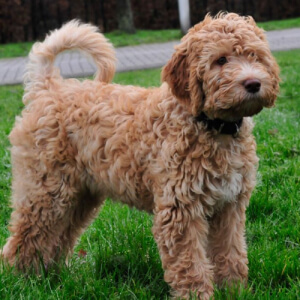
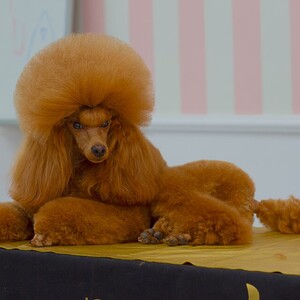
Poodle. · Boxerista96 / Wikimedia Commons, CC BY 4.0. Cropped and resized.
The Poodle (Caniche) is a dog with a very curly, woolly coat that comes in four sizes: standard, medium, miniature and toy. It was originally a water dog, used for duck hunting. The standard describes it as known for its loyalty and very easy to teach and train, and therefore a particularly pleasant companion.
Quick facts
| Common name | Poodle (Pudel, Caniche) |
| Scientific name | Canis lupus familiaris |
| Country of origin | France (according to the FCI) |
| Official recognition | FCI, definitively since 1 January 1955 (group 9, companion and toy dogs; standard no. 172); also recognised by the AKC |
| Lifespan | 10–18 years, according to the AKC |
| Size (males) | standard: 45–60 cm; medium: 35–45 cm; miniature: 28–35 cm; toy: 24–28 cm |
| Size (females) | the same four sizes |
| Coat type | Curly and woolly or corded; practically does not shed |
| Common colours | Black, white, brown, grey, fawn (including apricot) |
| Energy level | High |
| Suited to an apartment? | Yes, especially the small sizes |
| Temperament | Loyal, highly intelligent, cheerful, friendly |
| Tendency to aggression | Low |
| Good with children | Very good, according to the AKC |
| Good with other animals | Average |
| Genetic predispositions | Hip dysplasia, progressive retinal atrophy, cataracts, epilepsy, sebaceous adenitis, von Willebrand disease |
- Primary category:Dog breeds
- Explore this animal's categories:
History and origin
The FCI standard says the French name “caniche” comes from “cane”, the female duck; in other countries, the breed's name is linked to splashing in water. It was originally used for hunting waterfowl and descends from the Barbet. In 1743 it was called “caniche”, meaning the female Barbet; the two breeds then gradually drew apart.
Wikipedia says the breed probably comes from Germany (where it is called Pudel), although the FCI and some cynologists consider it French. Similar dogs have existed since at least the 17th century. The Poodle became very popular as a companion dog thanks to its friendly, cheerful and loyal nature and its four sizes and different colours.
How the breed developed
- 17th century – Similar dogs appear, according to Wikipedia.
- 1743 – It is called “caniche”, the female Barbet.
- Later – The Barbet and the Poodle gradually separate.
- 1 January 1955 – The FCI recognises the breed.
Breed rating
| Feature | Stars |
|---|---|
| Training and intelligence | ★★★★★ |
| Easy to train | ★★★★★ |
| Intelligence | ★★★★☆ |
| Independence | ★★☆☆☆ |
| Stubbornness | ★★☆☆☆ |
| Behaviour and temperament | ★★★★★ |
| Affectionate with family | ★★★★★ |
| Friendly with children | ★★★★★ |
| Good with other dogs | ★★★☆☆ |
| Good with cats and other animals | ★★★☆☆ |
| Loyalty | ★★★★★ |
| Tendency to be aggressive | ★☆☆☆☆ |
| Tendency to bark | ★★★★☆ |
| Needs and care | ★☆☆☆☆ |
| Shedding | ★★★★★ |
| Needs frequent grooming | ★★★★☆ |
| Activity and lifestyle | ★★★★☆ |
| Energy level | ★★★★☆ |
| Daily exercise needs | ★★★★☆ |
| Suited to apartment life | ★★★★☆ |
| Health and longevity | ★★★★★ |
| Life expectancy | ★★★☆☆ |
| Predisposition to genetic diseases | ★★★☆☆ |
| Working abilities and uses | ★★★★☆ |
| Good guard dog | ★★★☆☆ |
| Good companion dog | ★★★★★ |
Indicative rating: 5 stars means the highest level. The rating is based on the American Kennel Club scores (for the Standard size) and on the FCI standard.
Physical characteristics
The standard describes it as a dog of medium proportions, with a characteristically curly coat, either curled or corded. The AKC says all three sizes it recognises share the same build and proportions.
General appearance
The curly coat is abundant, fine, woolly, tightly curled and springy, with even curls. The corded coat forms characteristic cords at least 20 cm long. The head is distinguished, straight and in proportion to the body.
| Feature | Poodle |
|---|---|
| Sizes | standard, medium, miniature, toy |
| Height at the withers | 45–60 cm, 35–45 cm, 28–35 cm or 24–28 cm |
| Coat | Curly or corded |
| Shedding | Practically none |
| Colours | Solid |
| Head | Distinguished, straight |
The accepted colours are solid: black, white, brown, grey and fawn. The brown should be dark and warm; the fawn ranges from pale to red or orange (apricot).
Training and socialisation
The standard describes it as a dog known for its loyalty, able to learn and be trained, and therefore a particularly pleasant companion. Wikipedia says a 1994 book by Stanley Coren ranked it second out of 130 breeds for working and obedience intelligence.
The AKC says it is extremely intelligent, easy to train, agile and graceful, and excels at agility, obedience and tracking. It is very attached to people.
Tips for effective training
- Use rewards. It learns very easily.
- Keep its mind busy. The AKC gives it top marks for its need for mental stimulation.
- Let it swim. Most love water.
- Do not leave it alone for long. It is very attached to people.
Activity needs and lifestyle
The AKC says Poodles of every size are very active and need exercise every day. Swimming is excellent exercise, and throwing toys or a ball satisfies its retrieving instinct.
| Activity | How often | Why it matters |
|---|---|---|
| Brisk walks | daily | Energy |
| Fetch with a ball | daily | Retrieving instinct |
| Swimming or dog sports | weekly | Physical and mental activity |
Tips for a balanced life
- Choose the size that suits your home.
- Set aside time or budget for clipping.
- Do not leave it alone for long.
Care and health
Coat and skin care
The AKC says that, unless it is kept in a short clip, the coat must be brushed daily, right down to the skin, or it mats at the roots and has to be shaved. Most owners keep it in a short clip, with a visit to the groomer every few weeks.
Common health problems
The AKC says most Poodles live long, healthy lives, thanks to the tests carried out by breeders. The following may occur:
| Condition | Description | Common symptoms |
|---|---|---|
| Hip dysplasia | The hip joint forms incorrectly and, over time, arthritis develops | Limping, difficulty getting up or jumping, hip pain |
| Progressive retinal atrophy | The retina gradually degenerates | Has trouble seeing at night, then sees less and less well |
| Cataracts | The lens becomes cloudy | A “milky” eye |
| Idiopathic epilepsy | Repeated neurological seizures | Trembling, convulsions |
| Sebaceous adenitis | Inflammation of the skin glands | Hair loss, scaly skin |
| Von Willebrand disease | A clotting disorder | Bleeding that is slow to stop |
Other care
- Clean the ears regularly.
- Brush its teeth often, especially in the small sizes.
- Trim the nails regularly.
Diet and nutrition
The AKC says some dogs gain weight easily, so calories and weight should be watched. The amount depends greatly on size.
Tips for a healthy diet
The table gives a starting estimate, calculated with the formula from the Merck Veterinary Manual. The first two calorie columns show the calories per day for a healthy adult dog. The last column shows what this means in dry food with 3,500–4,000 kcal per kilogram.
| Dog's weight | Calories per day (neutered) | Calories per day (not neutered) | Dry food per day (approximate) |
|---|---|---|---|
| 3 kg | 260 kcal | 290 kcal | 65–83 g |
| 8 kg | 530 kcal | 600 kcal | 130–170 g |
| 25 kg | 1,250 kcal | 1,410 kcal | 310–400 g |
- Choose food suited to its size.
- Treats count towards the daily portion.
- A dog is at the right weight when you can feel its ribs under the coat without pressing hard.
Foods to avoid
Some human foods are dangerous for dogs: chocolate, coffee, grapes and raisins, onions, garlic, xylitol (a sweetener used in chewing gum), macadamia nuts and alcohol.
Reproduction and development
Physical and emotional maturity
In dogs, sexual maturity usually comes between 6 and 12 months. Most breeds become adults at around 13–15 months.
Mating and pregnancy
Pregnancy lasts about 63 days, counted from ovulation. Mating a female on her first heat is not recommended. The FCI standard requires that only healthy dogs of typical breed appearance are used for breeding.
Caring for the puppies
In dogs, a litter has 5–6 puppies on average, and the number rises with the size of the breed. Socialisation starts in the first weeks: gentle handling, everyday noises and new people.
Interesting facts
- Named after a duck. “Caniche” comes from “cane”, the female duck.
- Once a water dog. It originally hunted waterfowl.
- The second cleverest. Stanley Coren ranked it second out of 130 breeds.
- Four sizes. Standard, medium, miniature and toy.
- It does not shed. The AKC gives it the lowest score for shedding.
Frequently asked questions
How many sizes does the Poodle come in?
Four: standard, medium, miniature and toy.
Does it shed?
Practically not, but the coat needs regular care.
Is it intelligent?
Very. Stanley Coren ranked it second out of 130 breeds.
How long does it live?
The AKC gives 10–18 years; the small sizes usually live longer.