StabyhounCharacteristics, history, training and care
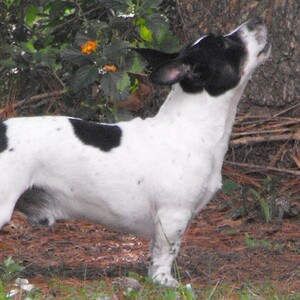
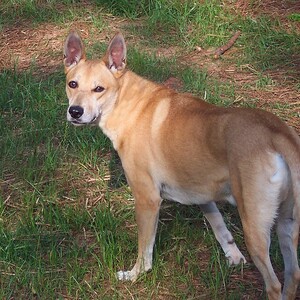
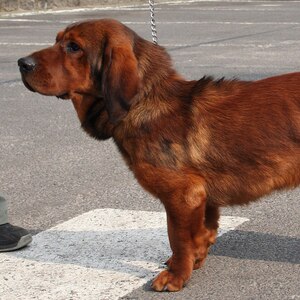
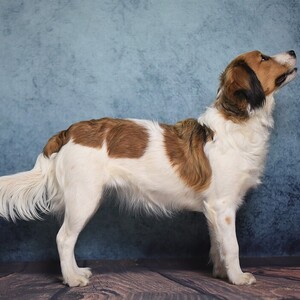
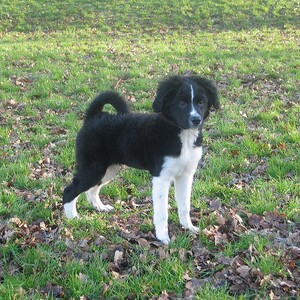
Stabyhoun. · Alewijnsej / Wikimedia Commons, public domain. Cropped and resized.
The Stabyhoun (Stabijhoun) is a Dutch pointing dog from the forests of Friesland, a versatile hunter also famous as a catcher of moles and polecats. The name comes from “sta mij bij” (“stand by me”). The FCI standard describes it as affectionate but very independent and sometimes stubborn, quiet and alert at home. Wikipedia says it is one of the rarest breeds in the world.
Quick facts
| Common name | Stabyhoun (Stabijhoun) |
| Scientific name | Canis lupus familiaris |
| Country of origin | Netherlands (Friesland) |
| Official recognition | FCI, definitively since 25 February 1960 (group 7, pointing dogs; standard no. 222); in the Netherlands since 1942; also recognised by the AKC |
| Lifespan | 13–15 years, according to the AKC |
| Size (males) | ideally 50–53 cm at the withers; 22–27 kg |
| Size (females) | ideally 48–50 cm at the withers; 18–23 kg |
| Coat type | Medium length, straight, with a weather-resistant undercoat |
| Common colours | Black or brown with white; black or brown roan |
| Energy level | High |
| Suited to an apartment? | Only with enough exercise |
| Temperament | Affectionate, independent, stubborn, quiet, alert |
| Tendency to aggression | Low |
| Good with children | Very good, according to the AKC |
| Good with other animals | Good with dogs; strong hunting instinct |
| Genetic predispositions | No known breed-specific diseases; hip dysplasia, as in medium-sized breeds |
- Primary category:Dog breeds
- Explore this animal's categories:
History and origin
The FCI standard says the Stabyhoun is related to the Drentsche Patrijshond and the Heidewachtel and comes from the wooded area of Friesland. In the early 20th century the Stabyhoun and the Wetterhoun were often crossed, and the character of each breed was in danger of being lost. In 1938 a group of enthusiasts from the Kynologenclub Friesland began to purify them, and in 1942 both breeds were officially recognised.
The first standard dates from 10 February 1944, and in 1947 the Dutch association for the Stabij and Wetterhoun breeds was founded. The AKC says today's Stabyhoun clearly resembles the dogs painted in the 17th century, for example by Jan Steen. Wikipedia says it is considered a Dutch national treasure.
How the breed developed
- 17th century – Similar dogs appear in Jan Steen's paintings.
- 1938 – Purification of the breed begins.
- 1942 – Official recognition in the Netherlands.
- 10 February 1944 – The first standard.
- 25 February 1960 – The FCI recognises the breed.
Breed rating
| Feature | Stars |
|---|---|
| Training and intelligence | ★★★☆☆ |
| Easy to train | ★★★★★ |
| Intelligence | ★★★★★ |
| Independence | ★★★★☆ |
| Stubbornness | ★★★★☆ |
| Behaviour and temperament | ★★★★☆ |
| Affectionate with family | ★★★★☆ |
| Friendly with children | ★★★★★ |
| Good with other dogs | ★★★☆☆ |
| Good with cats and other animals | ★★☆☆☆ |
| Loyalty | ★★★★☆ |
| Tendency to be aggressive | ★★☆☆☆ |
| Tendency to bark | ★★★★☆ |
| Needs and care | ★★★☆☆ |
| Shedding | ★★★★☆ |
| Needs frequent grooming | ★★★☆☆ |
| Activity and lifestyle | ★★★★★ |
| Energy level | ★★★★☆ |
| Daily exercise needs | ★★★★☆ |
| Suited to apartment life | ★★★☆☆ |
| Health and longevity | ★★★★☆ |
| Life expectancy | ★★★☆☆ |
| Predisposition to genetic diseases | ★★☆☆☆ |
| Working abilities and uses | ★★★☆☆ |
| Good hunting dog | ★★★★☆ |
| Good companion dog | ★★★★☆ |
Indicative rating: 5 stars means the highest level. It is based on the ratings the American Kennel Club gives the breed and on the FCI standard.
Physical characteristics
The standard describes it as a functional, powerful pointing dog, with a body slightly longer than it is tall, neither too robust nor too fine. Its expression is gentle, friendly and attentive.
General appearance
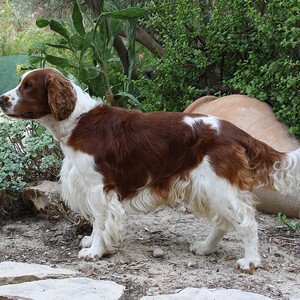
The coat is of medium length and straight on the body, with a weather-resistant undercoat; on the croup it may be slightly wavy. The abundant hair on the chest, collar, “trousers” and tail gives it the look of a long-haired dog.
| Feature | Stabyhoun |
|---|---|
| Size | Medium |
| Height at the withers | males: 50–53 cm; females: 48–50 cm |
| Weight | males: 22–27 kg; females: 18–23 kg |
| Coat | Medium, feathered |
| Colour | Black or brown with white |
| Type | Pointing dog |
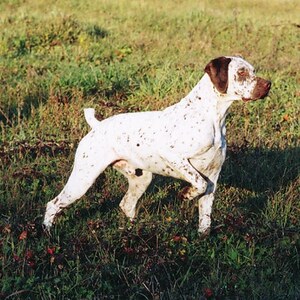
The standard describes it as a pied dog, black or brown with white; black or brown roans are also accepted. The head is black or brown, with or without a white blaze. Tan markings and tricolour disqualify it.
Training and socialisation
The standard says the Stabyhoun guards the yard and keeps it free of mice and rats. It is very independent and likes to go its own way, affectionate but sometimes very stubborn, so patience and consistency are essential. At home it is quiet but alert.
The AKC says that with positive, gentle training it learns quickly and wants to please; too much pressure never helps. It likes to have a job to do.
Tips for effective training
- Be patient and consistent. It is independent.
- Use gentle methods. Pressure does not help.
- Give it a job. It likes to work.
- Socialise it early. It is reserved with strangers.
Activity needs and lifestyle
It is a versatile hunting dog that needs daily exercise and mental activity: long walks, retrieving, search work or dog sports.
| Activity | How often | Why it matters |
|---|---|---|
| Long walks | daily | Energy |
| Retrieving and search games | several times a week | Instinct |
| Dog sports | weekly | A busy mind |
Tips for a balanced life
- Suited to active families.
- Keep it on a lead in the street.
- Brush it more often during shedding.
Care and health
Coat and skin care
The AKC says the medium-length coat is self-cleaning: dirt falls off as it dries, and a brushing removes the remaining sand. It rarely needs a bath. During moulting the undercoat sheds heavily and needs more brushing.
Common health problems
There are no known diseases specific to the breed. As with any active medium-sized dog, it is worth watching for:
| Condition | Description | Common symptoms |
|---|---|---|
| Hip dysplasia | The hip joint forms incorrectly and, over time, arthritis develops | Limping, difficulty getting up or jumping, hip pain |
| Elbow dysplasia | The elbow joint develops incorrectly and arthritis appears | Limping on the front legs, especially after exercise |
Other care
- Ask for the parents' hip tests.
- Check the ears regularly.
- Go for yearly check-ups.
Diet and nutrition
The AKC recommends good-quality food suited to the dog's age, and attention to its weight.
Tips for a healthy diet
The table gives a starting estimate, calculated with the formula from the Merck Veterinary Manual. The first two calorie columns show the calories per day for a healthy adult dog. The last column shows what this means in dry food with 3,500–4,000 kcal per kilogram.
| Dog's weight | Calories per day (neutered) | Calories per day (not neutered) | Dry food per day (approximate) |
|---|---|---|---|
| 18 kg | 980 kcal | 1,100 kcal | 240–310 g |
| 22 kg | 1,140 kcal | 1,280 kcal | 280–370 g |
| 27 kg | 1,330 kcal | 1,490 kcal | 330–430 g |
- Treats count towards the daily portion.
- Split the food into two meals a day.
- A dog is at the right weight when you can feel its ribs under the coat without pressing hard.
Foods to avoid
Some human foods are dangerous for dogs: chocolate, coffee, grapes and raisins, onions, garlic, xylitol (a sweetener used in chewing gum), macadamia nuts and alcohol.
Reproduction and development
Physical and emotional maturity
In dogs, sexual maturity usually comes between 6 and 12 months. Most breeds become adults at around 13–15 months.
Mating and pregnancy
Pregnancy lasts about 63 days, counted from ovulation. Mating a female on her first heat is not recommended. The FCI standard requires that only healthy dogs of typical breed appearance are used for breeding.
Caring for the puppies
In dogs, a litter has 5–6 puppies on average, and the number rises with the size of the breed. Socialisation starts in the first weeks: gentle handling, everyday noises and new people.
Interesting facts
- “Stand by me”. The name comes from “sta mij bij”.
- A mole catcher. Mole skins were worth a lot of money.
- It pulled milk carts. The larger type pulled the milk carts.
- By bicycle. It was carried in a basket on a bicycle over long distances.
- A national treasure. That is how it is regarded in the Netherlands.
In popular culture
Jan Steen's paintings
The AKC says today's Stabyhoun resembles the dogs in 17th-century Dutch paintings, for example those by Jan Steen.
“Ús Hûnen”
Wikipedia mentions the “Ús Hûnen” (“Our Dogs”) sculptures in the central park of the Frisian capital, which depict a Stabij.
Frequently asked questions
What does the name mean?
“Stand by me”, in Frisian.
Is it good with children?
Yes; the AKC gives it the top score.
Is it easy to train?
It learns quickly, but it is independent; it takes patience.
How long does it live?
The AKC gives 13–15 years.