BroholmerCharacteristics, history, training and care
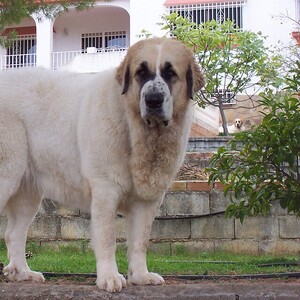
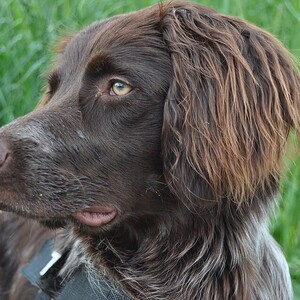
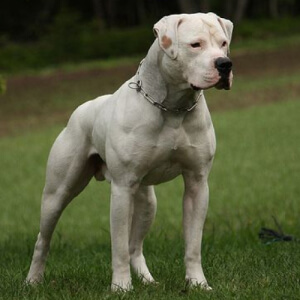
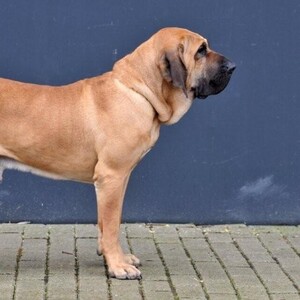
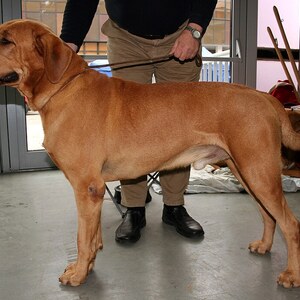
Broholmer. · Pleple2000 / Wikimedia Commons, CC BY-SA 3.0. Cropped and resized.
The Broholmer, also called the Danish Mastiff, is a very large mastiff-type dog from Denmark. In the Middle Ages it hunted deer, then guarded large farms and manor houses. It is calm, gentle and loves being close to the family, but its size keeps intruders at a distance.
Quick facts
| Common name | Broholmer (Danish Mastiff) |
| Scientific name | Canis lupus familiaris |
| Country of origin | Denmark |
| Official recognition | FCI, definitively since 26 May 1982 (group 2, molossoid breeds, mastiff type; standard no. 315); AKC, in the Foundation Stock Service since June 2013 |
| Lifespan | 8–10 years |
| Size (males) | about 75 cm at the withers; 50–70 kg |
| Size (females) | about 70 cm at the withers; 40–60 kg |
| Coat type | Short, close-lying, with undercoat |
| Common colours | Yellow or red, with or without a black mask; black |
| Energy level | Low to moderate |
| Suited to an apartment? | No, because of its size |
| Temperament | Calm, gentle, dignified, brave |
| Tendency to aggression | Low; watchful with strangers |
| Good with children | Good, with supervision because of its size |
| Good with other animals | Good with other dogs |
| Genetic predispositions | Degenerative myelopathy; as in all very large dogs, hip dysplasia and bloat |
- Primary category:Dog breeds
- Explore this animal's categories:
History and origin
This type of dog has been known since the Middle Ages, when it was used for hunting deer. Later it became mainly a guard dog for large farms and manor houses.
At the end of the 18th century, the dogs were bred pure and grew in number thanks to Chamberlain Sehested of Broholm, after whom the breed is named. After the Second World War it almost disappeared, but around 1975 a group of enthusiasts, supported by the Danish Kennel Club, began to rebuild it.
How the breed developed
- Middle Ages – The dogs are used for hunting deer.
- Late 18th century – Chamberlain Sehested of Broholm breeds the dogs pure.
- After 1945 – The breed has almost disappeared.
- Around 1975 – Rebuilding of the breed begins, with the support of the Danish Kennel Club.
- 26 May 1982 – The FCI recognises the breed.
- June 2009 – The first Broholmer, named Honor, arrives in the United States.
- 3 May 2025 – The current FCI standard is published.
Breed rating
| Feature | Stars |
|---|---|
| Training and intelligence | ★★★☆☆ |
| Easy to train | ★★★☆☆ |
| Intelligence | ★★★☆☆ |
| Independence | ★★★☆☆ |
| Stubbornness | ★★★☆☆ |
| Behaviour and temperament | ★★★★☆ |
| Affectionate with family | ★★★★☆ |
| Friendly with children | ★★★☆☆ |
| Good with other dogs | ★★★☆☆ |
| Good with cats and other animals | ★★★☆☆ |
| Loyalty | ★★★★★ |
| Tendency to be aggressive | ★★☆☆☆ |
| Tendency to bark | ★☆☆☆☆ |
| Needs and care | ★★★☆☆ |
| Shedding | ★★★☆☆ |
| Needs frequent grooming | ★☆☆☆☆ |
| Activity and lifestyle | ★★☆☆☆ |
| Energy level | ★★☆☆☆ |
| Daily exercise needs | ★★★☆☆ |
| Suited to apartment life | ★★☆☆☆ |
| Health and longevity | ★★★☆☆ |
| Life expectancy | ★★☆☆☆ |
| Predisposition to genetic diseases | ★★★☆☆ |
| Working abilities and uses | ★★★★☆ |
| Good guard dog | ★★★★☆ |
| Good companion dog | ★★★★☆ |
Indicative rating: 5 stars means the highest level. It is based on the ratings the American Kennel Club gives the breed and on the FCI standard.
Physical characteristics
It is a very large, rectangular and powerful mastiff-type dog, with a very well-developed forequarter. The head is massive and broad, the neck strong with a little loose skin, and the chest broad and deep.
General appearance
At rest it carries its head fairly low and the tail hangs like a sabre. When alert, it raises both head and tail. The round eyes are light to dark amber, with an expression of great self-confidence.
| Feature | Broholmer |
|---|---|
| Size | Very large |
| Height at the withers | males: about 75 cm; females: about 70 cm |
| Weight | males: 50–70 kg; females: 40–60 kg |
| Coat | Short, close-lying, with undercoat |
| Eyes | Round, amber |
| Tail | Broad at the base, hanging; horizontal in movement |
The accepted colours are yellow or red, with or without a black mask on the muzzle, and black. White markings on the chest, feet and tail tip are allowed.
Training and socialisation
The AKC gives it an average score for trainability. A well-trained Broholmer should be calm, good-natured and friendly, but watchful with strangers.
As it is very large, it must be trained from puppyhood, while it can still be controlled easily.
Tips for effective training
- Start early. Lead walking and basic commands from the first months.
- Be calm and consistent. It responds well to a quiet owner.
- Socialise it. New people and dogs, so that it stays calm with strangers.
- Supervise play with children. The AKC says it seems to underestimate its size.
Activity needs and lifestyle
The AKC says that, although very large, it is surprisingly agile: it can do agility, retrieve or catch a frisbee. It likes to go everywhere with the family, on hikes or picnics.
| Activity | How often | Why it matters |
|---|---|---|
| Walks | several times a day | Exercise without overexertion |
| Play in a fenced yard | daily | Burns off energy |
| Swimming or hiking | weekly | Varied exercise |
Tips for a balanced life
- Puppies must not be overexerted: in very large breeds the bones keep growing for a long time.
- It needs space, because of its size.
- It likes to be very close to its people, even on their laps.
Care and health
Coat and skin care
The short coat should be brushed once a week and bathed occasionally. The nails grow quickly and must be trimmed regularly.
Common health problems
The AKC says most Broholmers are healthy. Wikipedia notes that in 2016 degenerative myelopathy was found in dogs imported to the United States. As with any very large dog, the joints and stomach are worth watching.
| Condition | Description | Common symptoms |
|---|---|---|
| Degenerative myelopathy | A disease of the spinal cord that appears in adulthood | Gradual weakness of the hind legs, unsteady gait |
| Hip dysplasia | The hip joint forms incorrectly and, over time, arthritis develops | Limping, difficulty getting up or jumping, hip pain |
| Gastric dilatation-volvulus (bloat) | The stomach fills with gas and may twist; this is a veterinary emergency | Swollen belly, trying to vomit without success, drooling, restlessness |
Other care
- Check the ears regularly.
- Brush its teeth regularly.
- Wipe its mouth after meals, as it drools moderately.
Diet and nutrition
The AKC warns that some dogs put on weight easily. For such a large dog, extra kilos put a strain on the joints.
Tips for a healthy diet
The table gives a starting estimate, calculated with the formula from the Merck Veterinary Manual. The first two calorie columns show the calories per day for a healthy adult dog. The last column shows what this means in dry food with 3,500–4,000 kcal per kilogram.
| Dog's weight | Calories per day (neutered) | Calories per day (not neutered) | Dry food per day (approximate) |
|---|---|---|---|
| 40 kg | 1,780 kcal | 2,000 kcal | 440–570 g |
| 55 kg | 2,260 kcal | 2,540 kcal | 560–730 g |
| 70 kg | 2,710 kcal | 3,050 kcal | 680–870 g |
- Split the food into two meals a day to reduce the risk of bloat.
- Puppies need growth food suited to very large breeds.
- A dog is at the right weight when you can feel its ribs without pressing hard.
Foods to avoid
Some human foods are dangerous for dogs: chocolate, coffee, grapes and raisins, onions, garlic, xylitol (a sweetener used in chewing gum), macadamia nuts and alcohol.
Reproduction and development
Physical and emotional maturity
In dogs, sexual maturity usually comes between 6 and 12 months, but in large breeds it can be delayed until about two years. Very large breeds become adults only at around 2 years.
Mating and pregnancy
Pregnancy lasts about 63 days, counted from ovulation. Mating a female on her first heat is not recommended. The FCI standard requires that only healthy dogs of typical breed appearance are used for breeding.
Caring for the puppies
In large breeds, a litter has around 7 puppies on average. The puppies grow very fast, so they need growth food suited to large breeds. Socialisation starts in the first weeks.
Interesting facts
- The butcher's dog. The AKC says it was often seen lying at the door of butcher's shops, which is why it was also called “the butcher's dog”.
- The name comes from a manor. Chamberlain Sehested of Broholm saved the breed in the 18th century.
- It wants to sit on your lap. The AKC says it prefers to sit on its owner, even though it weighs dozens of kilos.
- Agile for its size. It can do agility and catch a frisbee.
- The first American one was called Honor. It arrived in the United States in June 2009.
Frequently asked questions
How big does a Broholmer get?
Males measure about 75 cm and weigh 50–70 kg; females measure about 70 cm and weigh 40–60 kg.
Is it a family dog?
Yes. It is gentle and loves being close to the family, but play with children should be supervised.
How long does it live?
Its life expectancy is 8–10 years.
What colours does it come in?
Yellow or red, with or without a black mask, or black.