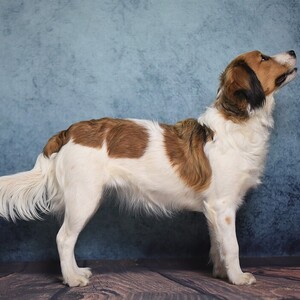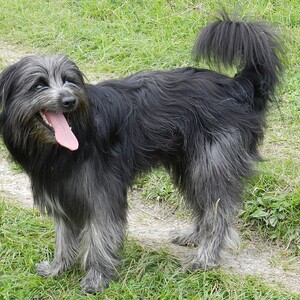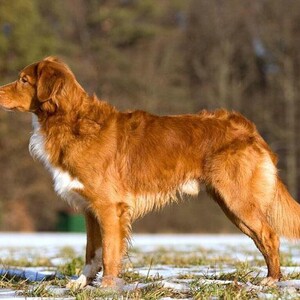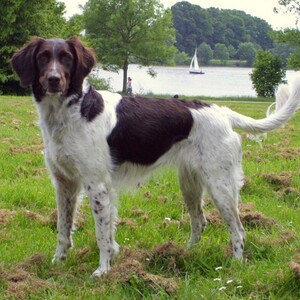
German PinscherCharacteristics, history, training and care
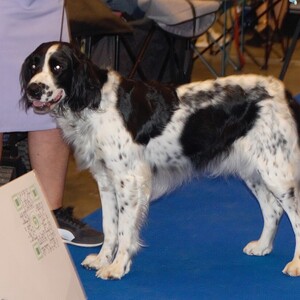
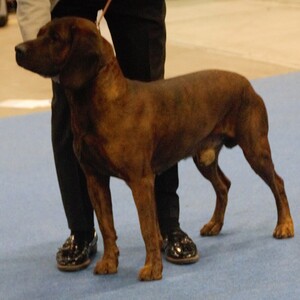
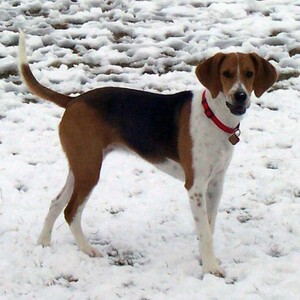
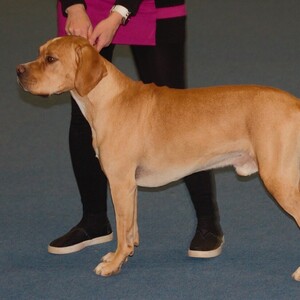
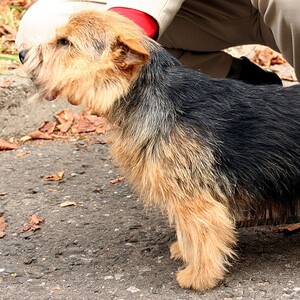
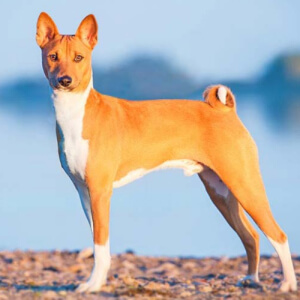
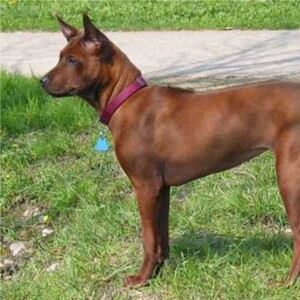
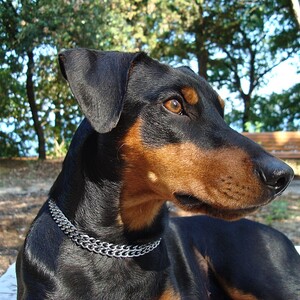
German Pinscher. · Babsi B. / Wikimedia Commons, CC BY-SA 3.0. Cropped and resized.
The German Pinscher is a medium-sized, smooth-haired dog, elegant and square, and a close relative of the Schnauzer. In the past it ran alongside carriages, guarded stables and caught rats. It is lively, high-spirited, confident, well-balanced and intelligent, a good family dog and guard dog.
Quick facts
| Common name | German Pinscher (Deutscher Pinscher) |
| Scientific name | Canis lupus familiaris |
| Country of origin | Germany |
| Official recognition | FCI, definitively since 14 July 1955 (group 2, Pinscher and Schnauzer type; standard no. 184); also recognised by the AKC |
| Lifespan | 12–14 years, according to the AKC |
| Size (males) | 45–50 cm at the withers; 14–20 kg |
| Size (females) | 45–50 cm at the withers; 14–20 kg |
| Coat type | Short, dense, smooth, close-lying and glossy |
| Common colours | Stag red to dark reddish brown; lacquer black and tan |
| Energy level | Very high |
| Suited to an apartment? | Can adapt, with plenty of exercise |
| Temperament | Lively, high-spirited, confident, well-balanced, intelligent |
| Tendency to aggression | Low; a good watchdog |
| Good with children | Average |
| Good with other animals | Average; strong prey drive |
| Genetic predispositions | Hip dysplasia, eye diseases, von Willebrand disease, heart problems (rare) |
- Primary category:Dog breeds
- Explore this animal's categories:
History and origin
The FCI standard says the smooth-haired Pinscher is a very old breed, recorded in the German stud book as early as 1880. It shares its ancestors with the Schnauzer, once called the “wire-haired Pinscher”; smooth-haired and wire-haired dogs could even be born in the same litter.
Wikipedia says these dogs ran alongside carriages, lived in stables and caught rats. After the Second World War the breed almost disappeared. Werner Jung rebuilt it from a single standard-sized Pinscher and four unusually large Miniature Pinschers; after eight years without a single registered litter, puppies were born again in 1958.
How the breed developed
- 1836 – Heinrich Reichenbach mentions the “smooth Pinscher”.
- 1880 – The Pinscher appears in the German stud book.
- 1895 – The Pinscher-Schnauzer-Klub is founded.
- 14 July 1955 – The FCI recognises the breed.
- 1958 – The first litter in eight years; Werner Jung rebuilds the breed.
- 2003 – It is named “endangered breed of the year” in Germany.
Breed rating
| Feature | Stars |
|---|---|
| Training and intelligence | ★★★★★ |
| Easy to train | ★★★★★ |
| Intelligence | ★★★★★ |
| Independence | ★★★★☆ |
| Stubbornness | ★★★★☆ |
| Behaviour and temperament | ★★★★☆ |
| Affectionate with family | ★★★★★ |
| Friendly with children | ★★★☆☆ |
| Good with other dogs | ★★★☆☆ |
| Good with cats and other animals | ★★☆☆☆ |
| Loyalty | ★★★★★ |
| Tendency to be aggressive | ★★☆☆☆ |
| Tendency to bark | ★★★☆☆ |
| Needs and care | ★★★★☆ |
| Shedding | ★★★☆☆ |
| Needs frequent grooming | ★☆☆☆☆ |
| Activity and lifestyle | ★★★★☆ |
| Energy level | ★★★★★ |
| Daily exercise needs | ★★★★★ |
| Suited to apartment life | ★★★☆☆ |
| Health and longevity | ★★★★☆ |
| Life expectancy | ★★★★☆ |
| Predisposition to genetic diseases | ★★★☆☆ |
| Working abilities and uses | ★★★★☆ |
| Good guard dog | ★★★★☆ |
| Good companion dog | ★★★★☆ |
Indicative rating: 5 stars means the highest level. It is based on the ratings the American Kennel Club gives the breed and on the FCI standard.
Physical characteristics
The standard describes it as a smooth-haired, medium-sized dog with a proud bearing, flowing lines, elegant and square, as strong as the Schnauzer. Thanks to the short coat, the muscles show clearly, especially in movement.
General appearance
The skull is strong and elongated, with a flat forehead parallel to the bridge of the nose. Wikipedia says it is a breed distinct from the Miniature Pinscher and the Affenpinscher.
| Feature | German Pinscher |
|---|---|
| Size | Medium |
| Height at the withers | 45–50 cm |
| Weight | 14–20 kg |
| Coat | Short, smooth, glossy |
| Shape | Square, elegant |
| Relative | The Schnauzer |
The standard accepts two varieties: self-coloured, stag red, reddish brown to dark reddish brown, and black and tan (lacquer black with red or brown markings, as dark and as clearly defined as possible).
Training and socialisation
The standard says its lively, high-spirited, confident and well-balanced nature, together with its intelligence and stamina, makes it a pleasant family, guard and companion dog.
The AKC says it is so intelligent that it can become manipulative. It needs a firm, skilled owner, ideally one with experience of other working dogs, plenty of early socialisation and obedience training. The main challenge is keeping it interested.
Tips for effective training
- Be firm and consistent. The AKC says it can become manipulative.
- Keep it interested. Vary the exercises so that it does not get bored.
- Socialise it a lot as a puppy. The AKC says it needs plenty of early socialisation.
- Be careful with small animals. It has a strong prey drive.
Activity needs and lifestyle
The AKC says it is an agile, athletic and very energetic dog that needs plenty of exercise every day for its physical and mental health. It excels at anything that tests its body and mind: agility, obedience, tracking.
| Activity | How often | Why it matters |
|---|---|---|
| Long walks or running | daily | Very high energy |
| Agility or obedience | several times a week | Mental activity |
| Search games | daily | Keep it interested |
Tips for a balanced life
- It suits an experienced owner.
- In winter it may need a coat.
- The yard must be well fenced.
Care and health
Coat and skin care
The AKC says the short, dense coat needs very little grooming: a brush once a week and an occasional bath. The nails should be trimmed monthly and the ears checked weekly.
Common health problems
The AKC says German Pinschers are usually robust and healthy, but the following may occur:
| Condition | Description | Common symptoms |
|---|---|---|
| Hip dysplasia | The hip joint forms incorrectly and, over time, arthritis develops | Limping, difficulty getting up or jumping, hip pain |
| Von Willebrand disease | An inherited blood-clotting disorder | Prolonged bleeding after injuries or surgery |
| Eye diseases | Inherited eye conditions | Poor vision, cloudy eyes |
Other care
- Check the ears weekly.
- Trim the nails monthly.
- Talk to your vet about vaccinations: the AKC mentions some delayed reactions.
Diet and nutrition
The AKC recommends good-quality food suited to its age and activity level. Too many treats lead to obesity.
Tips for a healthy diet
The table gives a starting estimate, calculated with the formula from the Merck Veterinary Manual. The first two calorie columns show the calories per day for a healthy adult dog. The last column shows what this means in dry food with 3,500–4,000 kcal per kilogram.
| Dog's weight | Calories per day (neutered) | Calories per day (not neutered) | Dry food per day (approximate) |
|---|---|---|---|
| 14 kg | 810 kcal | 910 kcal | 200–260 g |
| 17 kg | 940 kcal | 1,050 kcal | 240–300 g |
| 20 kg | 1,060 kcal | 1,190 kcal | 260–340 g |
- Give it its food in two meals a day.
- Training treats count towards the daily portion.
- A dog is at the right weight when you can feel its ribs without pressing hard.
Foods to avoid
Some human foods are dangerous for dogs: chocolate, coffee, grapes and raisins, onions, garlic, xylitol (a sweetener used in chewing gum), macadamia nuts and alcohol.
Reproduction and development
Physical and emotional maturity
In dogs, sexual maturity usually comes between 6 and 12 months. Most breeds become adults at around 13–15 months.
Mating and pregnancy
Pregnancy lasts about 63 days, counted from ovulation. Mating a female on her first heat is not recommended. The FCI standard requires that only healthy dogs of typical breed appearance are used for breeding.
Caring for the puppies
In dogs, a litter has 5–6 puppies on average, and the number rises with the size of the breed. Socialisation starts in the first weeks: gentle handling, everyday noises and new people.
Interesting facts
- Brother of the Schnauzer. Smooth-haired and wire-haired Pinschers were once born in the same litter.
- Rebuilt from five dogs. After the war, the breed was rebuilt from one Pinscher and four large Miniature Pinschers.
- An endangered breed. In Germany it is on the red list of endangered breeds.
- A stable dog. It caught rats in stables and ran alongside carriages.
- Too clever. The AKC says it can become manipulative.
Frequently asked questions
Is the German Pinscher the same as the Miniature Pinscher?
No. They are different breeds; the German Pinscher is medium-sized.
How big does it get?
It measures 45–50 cm at the withers and weighs 14–20 kg.
Is it easy to train?
The AKC gives it top marks for trainability, but it needs a firm, experienced owner.
How long does it live?
The AKC gives 12–14 years.