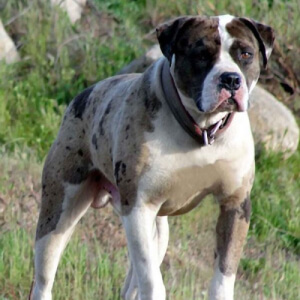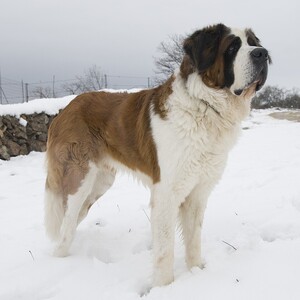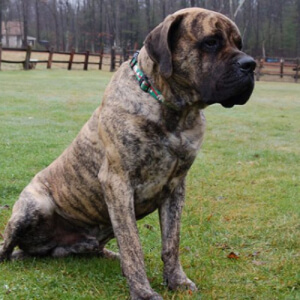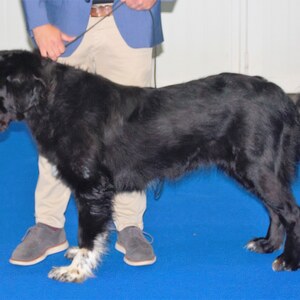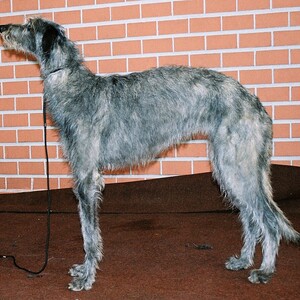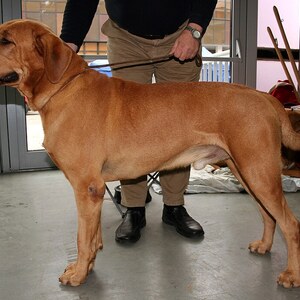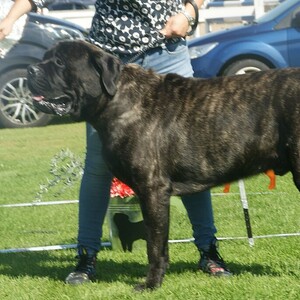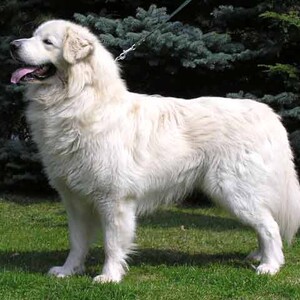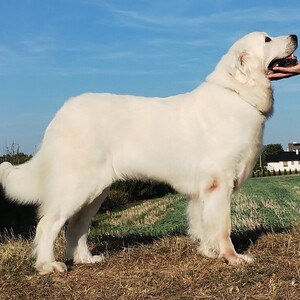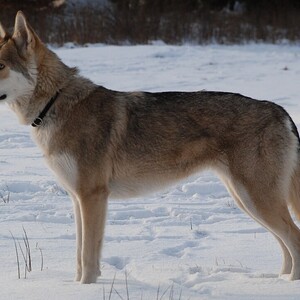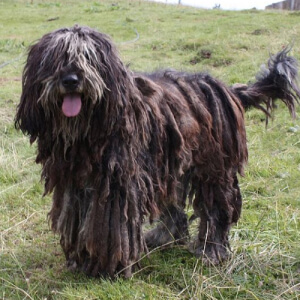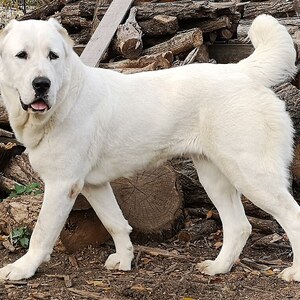
Anatolian Shepherd DogCharacteristics, history, training and care
The Anatolian Shepherd Dog is a large livestock-guardian dog associated with Turkey. It is known for working independently around flocks, protecting sheep and goats from predators such as the wolf and the bear. The AKC uses this breed name, while the FCI recognises the related Kangal Shepherd Dog under its own standard.
Quick facts
| Common name | Anatolian Shepherd Dog |
| Scientific name | Canis lupus familiaris |
| Country of origin | Turkey |
| Official Recognition | Recognised by the AKC; the FCI recognises the Kangal Shepherd Dog under a separate standard |
| Typical lifespan | About 11-13 years |
| Dimensions (Male) | About 74-81 cm / 50-68 kg |
| Dimensions (Female) | About 69-79 cm / 40-54 kg |
| Coat type | Double, short to medium, dense |
| Common colours | All colours; most often fawn or cream with a black mask, also brindle, pinto and white |
| Energy Level | Moderate |
| Suitable for apartment? | Depends on exercise, training, health and the individual dog |
| Temperament | Independent, protective, calm |
| Behaviour towards unfamiliar people and dogs | Often wary of strangers and strange dogs; socialisation, training and management matter |
| Compatibility with children | Depends on the individual; adult supervision and suitable handling are essential |
| Compatibility with other animals | Depends on socialisation, prey drive and the animals involved |
| Genetic predispositions | Hip and elbow dysplasia, hypothyroidism, entropion, bloat |
- Primary category:Dog breeds
- Explore this animal's categories:
History and Origin
The Anatolian Shepherd Dog comes from the ancient tradition of livestock-guardian dogs in Anatolia (today's Turkey), where large dogs have protected flocks of sheep and goats from predators for thousands of years.
Development of the breed
- Village guardians - Turkish shepherds kept large, tough dogs that lived with the flocks, followed them to summer pastures and drove off wolves and bears.
- The 20th century - In the 1970s, dogs from Turkey were brought to the United States, where they began to be used to protect livestock from coyotes and other predators.
- Breed recognition – The AKC recognises the Anatolian Shepherd Dog. In 2018, the FCI replaced its former Anatolian Shepherd standard with the Kangal Shepherd Dog standard.
Breed Evaluation
The Anatolian Shepherd Dog is an intelligent, powerful and very protective dog, best suited to guarding livestock and large properties. These editorial ratings provide a general guide. Individual dogs vary with health, training and environment.
| Characteristic | Stars |
|---|---|
| Training and Intelligence | ★★★☆☆ |
| Easy to train | ★★☆☆☆ |
| Intelligence | ★★★★☆ |
| Level of independence | ★★★★★ |
| Level of stubbornness | ★★★★☆ |
| Behavior and Temperament | ★★★★☆ |
| Affectionate with family | ★★★★☆ |
| Friendly with children | ★★★☆☆ |
| Compatible with other dogs | ★★★☆☆ |
| Compatible with cats and other animals | ★★★☆☆ |
| Degree of loyalty | ★★★★★ |
| Tendency to be aggressive | ★★★☆☆ |
| Tendency to bark | ★★★☆☆ |
| Needs and Care | ★★★☆☆ |
| Shedding level | ★★★★☆ |
| Requires frequent care | ★★☆☆☆ |
| Activity and Lifestyle | ★★★☆☆ |
| Energy level | ★★★☆☆ |
| Daily exercise requirement | ★★★☆☆ |
| Suitable for apartment living | ★☆☆☆☆ |
| Health and Longevity | ★★★★☆ |
| Life expectancy | ★★★★☆ |
| Predisposition to genetic diseases | ★★☆☆☆ |
| Work and Utility Features | ★★★★★ |
| Good guard dog | ★★★★★ |
| Good companion dog | ★★★☆☆ |
Physical Characteristics
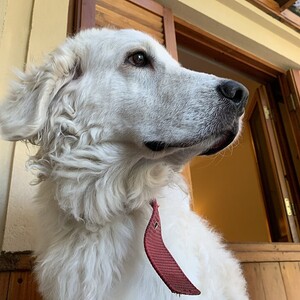
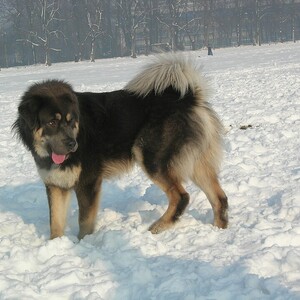
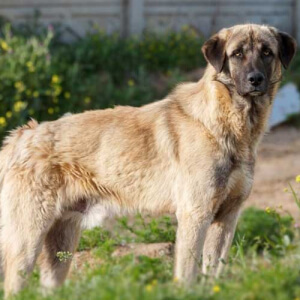
The Anatolian Shepherd Dog is a large, powerful and very hardy dog, with an athletic build and a calm but watchful nature.
General appearance
- A large, muscular body, built for strength and stamina rather than bulk.
- A short to medium-length, dense double coat that protects it from heat and cold.
- A large, broad head with V-shaped, hanging ears, giving a calm, confident expression.
- A long tail, often curled over the back when the dog is alert.
- Brown or amber eyes, often with a dark mask around the face.
| Characteristic | Anatolian Shepherd Dog |
|---|---|
| Size | Giant (about 69-81 cm at the shoulder) |
| Weight | About 40-68 kg |
| Coat | Short to medium, dense double coat |
| Muzzle | Broad, strong |
| Shedding tendency | Moderate, heavy twice a year |
| Build | Strong and muscular |
The Anatolian Shepherd Dog is an impressive working dog, adapted to harsh climates and demanding work.
Training and Socialization
The Anatolian Shepherd Dog is clever but very independent, which makes training a challenge for inexperienced owners. It was bred for centuries to guard flocks without human help, so it is used to making its own decisions and may ignore commands it sees no reason for.
Tips for effective training
- Early socialisation is essential - Puppies should meet people, animals and different places from an early age to prevent over-protective behaviour.
- Calm, consistent training - This breed does not respond well to harsh corrections, but to a calm, patient and consistent approach.
- Important commands - Commands such as "wait", "leave it" and "come" help to manage its strong guarding instinct.
- Clear rules - The whole family should apply the same rules, as the dog will test limits.
- Not an obedience star - Although it learns quickly, it is far less eager to obey than breeds such as the German Shepherd.
The Anatolian Shepherd Dog is an outstanding guardian, but it needs lifelong socialisation and training to remain balanced and manageable.
Activity and Lifestyle Needs
As a livestock guardian with a moderate energy level, the Anatolian Shepherd Dog does not need intense exercise, but it does need space, regular walks and something to guard.
| Activity | Recommended duration |
|---|---|
| Daily walks | About 45-60 min |
| Mental stimulation | About 20-30 min/day |
| Time in a large, securely fenced area | Daily |
| Interactive games | About 20-30 min |
Recommendations for a balanced lifestyle
- Best on farms or large properties - It is happiest outdoors, guarding livestock or land.
- Not suited to apartments - As a large, independent dog, it does not adapt well to small spaces.
- Needs a secure fence - It tends to patrol and extend its territory, so good fencing is essential.
- Watch the heat - Although it tolerates cold well, it should be protected from extreme heat, with shade and water.
The Anatolian Shepherd Dog does not need long runs, but it is happiest when it has a territory or flock to watch over.
Care and Health
Its short, dense coat needs little care, and the breed is generally healthy, although it can have some inherited problems.
Fur and skin care
- Brushing 1-2 times a week - Removes dead hair; daily brushing helps during the heavy seasonal shedding.
- Baths only when needed - The coat stays fairly clean and does not need frequent washing.
- Ear and claw checks - Ears should be checked and claws trimmed regularly, especially in dogs that live outdoors.
Common health problems
| Condition | Description | Possible signs |
|---|---|---|
| Hip and elbow dysplasia | Abnormal development of the joints | Lameness, difficulty getting up |
| Hypothyroidism | Low thyroid hormone, which affects metabolism and weight | Tiredness, hair loss, weight gain |
| Gastric dilatation-volvulus (bloat) | The stomach swells and may twist; can be fatal if not treated quickly | Swollen belly, pain, drooling |
| Entropion | The eyelid rolls inwards and rubs the eye | Watery, red or squinting eyes |
Other aspects of care
- Regular veterinary checks - Checking the joints and thyroid function is important.
- Careful feeding - Balanced portions help prevent excess weight.
- Avoid exercise in extreme heat - Exercise early in the morning or in the evening to prevent overheating.
Diet and Nutrition
The Anatolian Shepherd Dog often needs less food than its size suggests, but it needs a balanced diet with good-quality protein to keep strong muscles.
Recommendations for a healthy diet
Choose a complete, balanced diet for the dog’s age, size and health. Plan home-prepared diets or supplements with a qualified veterinarian. Raw pet food can carry harmful bacteria. Good protein sources in complete dog foods include chicken, lamb and turkey.
| Food type | Daily Amount (Adults) | Frequency |
|---|---|---|
| Premium dry food | Individual amount; follow a complete diet’s guidance and veterinary advice | 2 meals/day |
| Home cooked food | Individual amount; follow a complete diet’s guidance and veterinary advice | 2 meals/day |
| Raw food: bacterial contamination is a concern | Individual amount; follow complete-food guidance and veterinary advice | 2 meals/day |
Forbidden foods
Chocolate, grapes and raisins, onions and xylitol - toxic to dogs. / Cooked bones - can splinter and cause internal injuries. / Salty foods - not suitable for dogs. / Too much milk - many dogs cannot digest lactose well and may get diarrhoea.
The Anatolian Shepherd Dog needs a balanced diet to stay healthy and to avoid joint and digestive problems.
Reproduction and Development
The Anatolian Shepherd Dog is a hardy breed, but as a large dog it grows for a long time, and its growth should be monitored carefully to protect the joints.
Physical and emotional maturity
- Physical maturity: It reaches adult height at about 18-24 months, and continues to fill out until about 3-4 years.
- Emotional maturity: Guarding behaviour appears early, but it usually becomes fully mature and settled only at about 2-3 years.
Mating and Gestation
- Breeding decisions - A veterinarian should assess health, maturity and relevant screening. A fixed age alone does not establish that a dog should be bred.
- Duration of gestation: Approximately 58-68 days, usually about 63 days.
- Average number of puppies: Usually about 5-10 puppies per litter.
Puppy care
- The first 3 weeks: Puppies need a warm place and feed only on their mother's milk, which gives them nutrients and immunity.
- Between 4-8 weeks: They begin to eat solid food; socialisation becomes very important to prevent excessive fear or aggression.
- Moving to a new home - Timing depends on health, development and local requirements. Puppies meant to guard livestock are often raised with the animals they will protect.
The Anatolian Shepherd Dog matures slowly and needs balanced food and controlled growth to prevent joint and bone problems.
Curiosities and Interesting Facts
- Livestock-guardian projects – In Namibia, the Cheetah Conservation Fund uses guardian dogs to protect flocks and reduce conflict between farmers and predators such as cheetahs.
- A good judge of threats - It usually stays calm with familiar visitors but reacts quickly to real predators.
- A wolf deterrent - In Turkey, these dogs protect flocks from wolves and other large predators, usually by barking and placing themselves between the threat and the animals.
- An independent worker - Unlike guard dogs that wait for orders, it was bred to make its own decisions while guarding flocks.
- A coat for all weathers - Its dense double coat helps it cope with both cold winters and hot summers on the Anatolian plateau.
- AKC recognition - The American Kennel Club fully recognised the Anatolian Shepherd Dog in 1996.
The Dog in Popular Culture
The Anatolian Shepherd Dog is best known for its role in conservation and as a symbol of the shepherds of Anatolia.
The importance in Turkish culture
- A symbol of Anatolian shepherds - For centuries, these dogs have been essential to farms and flocks and are valued for their courage and loyalty.
- Kangal dogs - The closely related Kangal, from Sivas province, is a national symbol of Turkey.
Anatolian Shepherd Dog in Media
- Livestock-guardian projects – Documentaries about the Cheetah Conservation Fund in Namibia show how guardian dogs protect goats and sheep, so that farmers no longer need to kill cheetahs.