Ca de BouCharacteristics, history, training and care
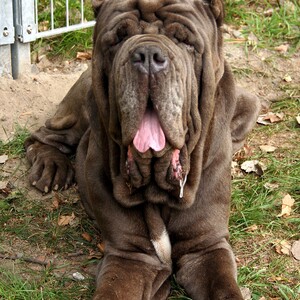
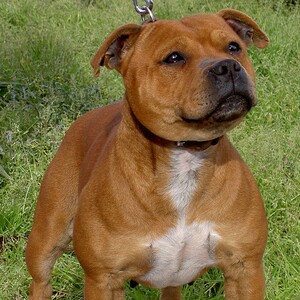
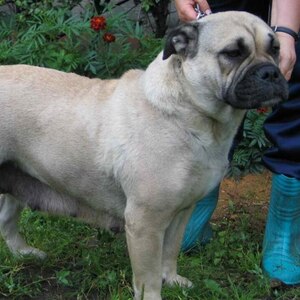
Ca de Bou (Majorca Mastiff) · Michiel1972 / Wikimedia Commons, CC BY-SA 3.0. Cropped and resized.
The Ca de Bou, also called the Majorca Mastiff, is a medium-sized, very muscular molossoid with a large, square head. It comes from the Balearic Islands in Spain. It is calm by nature, self-confident and devoted to its owner, and it makes a very good guard dog.
Quick facts
| Common name | Ca de Bou (Perro Dogo Mallorquín, Majorca Mastiff) |
| Scientific name | Canis lupus familiaris |
| Country of origin | Spain (Balearic Islands) |
| Official recognition | FCI, definitively since 21 September 1963 (group 2, molossoid breeds, mastiff type; standard no. 249) |
| Lifespan | 10–12 years |
| Size (males) | 55–58 cm at the withers; 35–38 kg |
| Size (females) | 52–55 cm at the withers; 30–34 kg |
| Coat type | Short and harsh to the touch |
| Common colours | Brindle, fawn or black; white markings up to 30% |
| Energy level | Moderate |
| Suited to an apartment? | Not really; it suits a house with a yard |
| Temperament | Calm, self-confident, loyal, devoted |
| Tendency to aggression | Low with the family; very protective |
| Good with children | Good, with supervision |
| Good with other animals | Average; needs socialisation |
| Genetic predispositions | No known breed-specific diseases; as in massive dogs, the joints should be watched |
- Primary category:Dog breeds
- Explore this animal's categories:
History and origin
Since ancient times, ships crossing the Mediterranean have carried animals from place to place, among them large guard dogs for ports, against pirates and thieves. One of these dogs was the molosser of the Iberian Peninsula. The FCI standard says it accompanied King James I on his conquests and reached the Balearic Islands around 1230.
In the 18th century, the British brought their own dogs to the Balearics and crossed them with the local ones. At that time, fights between dogs and bulls were popular, hence the name “Ca de Bou”, meaning “bull dog”. After these fights were banned in the 20th century, the breed almost disappeared, but it was saved by enthusiasts from mainland Spain.
How the breed developed
- Around 1230 – Iberian molossers reach the Balearics with King James I.
- 18th century – The British bring their dogs to the islands and cross them with the local ones.
- 1923 – The breed is recorded in the Spanish stud book.
- 1929 – The breed is shown for the first time, at a show in Barcelona.
- 21 September 1963 – The FCI recognises the breed.
- 2026 – The Spanish Kennel Club lists it among the 16 vulnerable Spanish breeds.
Breed rating
| Feature | Stars |
|---|---|
| Training and intelligence | ★★★☆☆ |
| Easy to train | ★★★☆☆ |
| Intelligence | ★★★☆☆ |
| Independence | ★★★☆☆ |
| Stubbornness | ★★★☆☆ |
| Behaviour and temperament | ★★★★☆ |
| Affectionate with family | ★★★★★ |
| Friendly with children | ★★★☆☆ |
| Good with other dogs | ★★☆☆☆ |
| Good with cats and other animals | ★★☆☆☆ |
| Loyalty | ★★★★★ |
| Tendency to be aggressive | ★★☆☆☆ |
| Tendency to bark | ★★☆☆☆ |
| Needs and care | ★★☆☆☆ |
| Shedding | ★★☆☆☆ |
| Needs frequent grooming | ★★☆☆☆ |
| Activity and lifestyle | ★★★☆☆ |
| Energy level | ★★★☆☆ |
| Daily exercise needs | ★★★☆☆ |
| Suited to apartment life | ★★☆☆☆ |
| Health and longevity | ★★★★☆ |
| Life expectancy | ★★★★☆ |
| Predisposition to genetic diseases | ★★☆☆☆ |
| Working abilities and uses | ★★★★★ |
| Good guard dog | ★★★★★ |
| Good companion dog | ★★★★☆ |
Indicative rating: 5 stars means the highest level. The breed has no AKC profile; the rating is based on the FCI standard (“calm, loyal, devoted to its owner, unrivalled as a guard dog”).
Physical characteristics
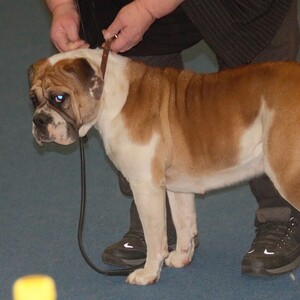
It is a medium-sized, slightly elongated, powerful and muscular molossoid. The head is large, broad and almost square, with strong jaws.
General appearance
The large, oval eyes, as dark as possible, are deep-set. The small ears are “rose ears”, meaning they fold backwards. The tail, thick at the base, hangs at rest.
| Feature | Ca de Bou |
|---|---|
| Size | Medium to large |
| Height at the withers | males: 55–58 cm; females: 52–55 cm |
| Weight | males: 35–38 kg; females: 30–34 kg |
| Coat | Short, harsh |
| Head | Large, broad, almost square |
| Ears | Small, “rose ears” |
The accepted colours, in order of preference, are brindle, fawn and black. In brindle, dark shades are preferred. White markings on the forefeet, chest and muzzle are allowed, up to 30% of the coat. A black mask is allowed.
Training and socialisation
The standard says it is calm by nature, but becomes brave in certain situations. It is at ease among people and loyal to its owner.
As a powerful dog, it needs early socialisation and calm, consistent training without harshness.
Tips for effective training
- Socialise it early. New people, dogs and situations, from puppyhood.
- Be calm and firm. It responds well to a confident owner.
- Use rewards. Praise and play work better than harshness.
- Supervise meetings with other dogs. Especially until you know how it reacts.
Activity needs and lifestyle
It has moderate energy. Daily walks and play in a fenced yard are enough.
| Activity | How often | Why it matters |
|---|---|---|
| Walks on the lead | daily | Exercise and socialisation |
| Play in a fenced yard | daily | Burns off energy |
| Obedience exercises | a few minutes a day | Keeps control of a powerful dog |
Tips for a balanced life
- In summer, avoid exertion in the hottest hours.
- The fence must be solid.
- It suits an experienced owner.
Care and health
Coat and skin care
The short, harsh coat is very easy to look after, with a brush once a week.
Common health problems
There are no known hereditary diseases specific to the breed. As with any massive dog, the joints are worth watching.
| Condition | Description | Common symptoms |
|---|---|---|
| Hip dysplasia | The hip joint forms incorrectly and, over time, arthritis develops | Limping, difficulty getting up or jumping, hip pain |
Other care
- Trim the nails regularly.
- Check the ears and teeth once a week.
- Protect it from intense heat.
Diet and nutrition
A muscular molossoid needs good-quality food, but not too much: extra kilos put a strain on the joints.
Tips for a healthy diet
The table gives a starting estimate, calculated with the formula from the Merck Veterinary Manual. The first two calorie columns show the calories per day for a healthy adult dog. The last column shows what this means in dry food with 3,500–4,000 kcal per kilogram.
| Dog's weight | Calories per day (neutered) | Calories per day (not neutered) | Dry food per day (approximate) |
|---|---|---|---|
| 30 kg | 1,440 kcal | 1,620 kcal | 360–460 g |
| 34 kg | 1,580 kcal | 1,770 kcal | 400–510 g |
| 38 kg | 1,710 kcal | 1,930 kcal | 430–550 g |
- Give it its food in two meals a day to reduce the risk of bloat.
- Fresh water should always be available.
- A dog is at the right weight when you can feel its ribs without pressing hard.
Foods to avoid
Some human foods are dangerous for dogs: chocolate, coffee, grapes and raisins, onions, garlic, xylitol (a sweetener used in chewing gum), macadamia nuts and alcohol.
Reproduction and development
Physical and emotional maturity
In dogs, sexual maturity usually comes between 6 and 12 months, but in large breeds it can be delayed until about two years. The body also reaches its adult form later than in small breeds.
Mating and pregnancy
Pregnancy lasts about 63 days, counted from ovulation. Mating a female on her first heat is not recommended. The FCI standard requires that only healthy dogs of typical breed appearance are used for breeding.
Caring for the puppies
In large breeds, a litter has around 7 puppies on average. Socialisation starts in the first weeks: gentle handling, everyday noises and new people.
Interesting facts
- It came with a king. The standard says its ancestors reached the Balearics around 1230, with King James I.
- The name means “bull dog”. “Ca de Bou” is the Catalan name; “bou” means bull.
- “Rose” ears. Its ears fold backwards, like the petals of a rose.
- An unrivalled guard. The standard describes it as unsurpassed as a guard dog.
- It is vulnerable. In 2024 only 243 dogs were reported, and in 2026 the breed was listed as vulnerable.
Frequently asked questions
What does “Ca de Bou” mean?
In Catalan it means “bull dog”.
How big does it get?
Males measure 55–58 cm and weigh 35–38 kg; females measure 52–55 cm and weigh 30–34 kg.
What is its temperament like?
It is calm, self-confident and devoted to its owner; it makes a very good guard dog.
How long does it live?
Its life expectancy is 10–12 years.