French SpanielCharacteristics, history, training and care
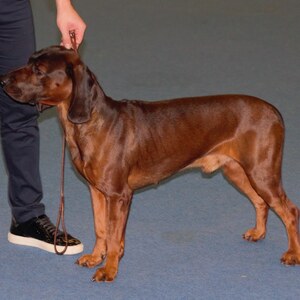
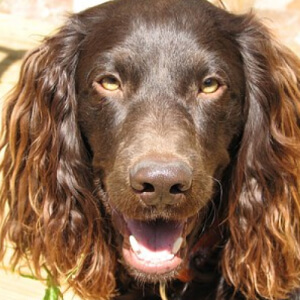
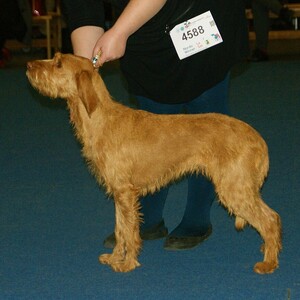
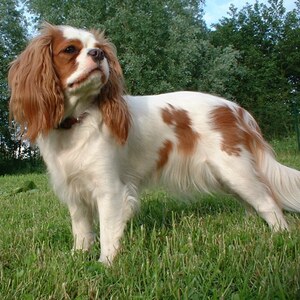
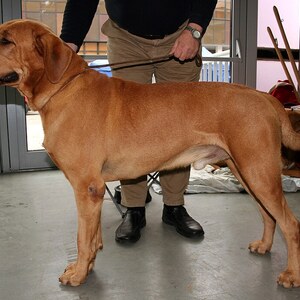
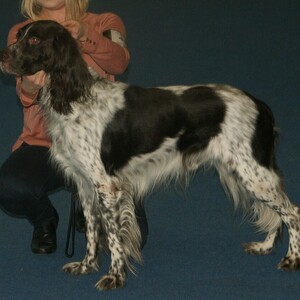
French Spaniel. · Canarian / Wikimedia Commons, CC BY-SA 4.0. Cropped and resized.
The Épagneul Français (French Spaniel) is an elegant, muscular pointing dog, white with brown patches, descended from the bird dogs of the Middle Ages. It came close to disappearing in the early 20th century and was saved by a priest, Father Fournier. It is balanced, gentle, calm and docile, an enthusiastic hunter and an ideal companion.
Quick facts
| Common name | French Spaniel (Épagneul Français) |
| Scientific name | Canis lupus familiaris |
| Country of origin | France |
| Official recognition | FCI, definitively since 25 June 1955 (group 7, continental pointing dogs, spaniel type, with a working trial; standard no. 175); Canadian Kennel Club, since 1985 |
| Lifespan | 10–12 years, according to the AKC |
| Size (males) | 56–61 cm at the withers (tolerance +2/–1 cm) |
| Size (females) | 55–59 cm at the withers (tolerance +2/–1 cm) |
| Weight | about 23–27 kg (AKC) |
| Coat type | Flat and silky on the body; long and wavy on the ears, legs and tail |
| Common colours | White and brown, with medium-sized patches, sometimes ticked or roan |
| Energy level | High |
| Suited to an apartment? | Can adapt, with plenty of exercise |
| Temperament | Balanced, open, gentle, calm, docile |
| Tendency to aggression | Very low |
| Good with children | Very good |
| Good with other animals | Very good with dogs |
| Genetic predispositions | Few; acral mutilation syndrome (loss of sensation in the paws) can occur |
History and origin
The FCI standard says the Épagneul Français descends from the bird dogs described by Gaston Phoebus and used in the Middle Ages. Its ancestors are probably at the origin of many varieties of hunting spaniel. Wikipedia says it was much loved at the royal courts, including Versailles, and that Tsarina Catherine I of Russia had a French Spaniel named Babe.
The first standard was written in 1891 by James de Connick. At the beginning of the 20th century French hunters preferred English breeds, and the French Spaniel almost disappeared. A priest, Father Fournier, gathered the last dogs in his kennel and rebuilt the lines from which today's dogs descend. The breed club was founded in 1921, with Father Fournier as its president.
How the breed developed
- 14th century – Gaston Phoebus describes the bird dogs from which the breed descends.
- 1850s – The Épagneul Breton is formed from French spaniels and English setters.
- 1891 – James de Connick writes the first standard.
- 1921 – The breed club is founded, led by Father Fournier.
- 25 June 1955 – The FCI recognises the breed.
- 1970s – The breed reaches Quebec, Canada.
- 1985 – The Canadian Kennel Club recognises the breed.
Breed rating
| Feature | Stars |
|---|---|
| Training and intelligence | ★★★★★ |
| Easy to train | ★★★★★ |
| Intelligence | ★★★★★ |
| Independence | ★★★☆☆ |
| Stubbornness | ★★☆☆☆ |
| Behaviour and temperament | ★★★★☆ |
| Affectionate with family | ★★★★★ |
| Friendly with children | ★★★★★ |
| Good with other dogs | ★★★★★ |
| Good with cats and other animals | ★★★☆☆ |
| Loyalty | ★★★★★ |
| Tendency to be aggressive | ★☆☆☆☆ |
| Tendency to bark | ★★★☆☆ |
| Needs and care | ★★★★☆ |
| Shedding | ★★★☆☆ |
| Needs frequent grooming | ★☆☆☆☆ |
| Activity and lifestyle | ★★★★☆ |
| Energy level | ★★★★☆ |
| Daily exercise needs | ★★★★☆ |
| Suited to apartment life | ★★★★☆ |
| Health and longevity | ★★★★☆ |
| Life expectancy | ★★★★☆ |
| Predisposition to genetic diseases | ★★☆☆☆ |
| Working abilities and uses | ★★★★☆ |
| Good hunting dog | ★★★★★ |
| Good companion dog | ★★★★★ |
Indicative rating: 5 stars means the highest level. It is based on the ratings the American Kennel Club gives the breed and on the FCI standard.
Physical characteristics
The standard describes it as a medium-sized, elegant and muscular dog of the braccoid type. Its balanced build gives it the energy and stamina it needs for hunting, and the bones are strong without being coarse. Wikipedia says it is one of the largest spaniels.
General appearance
The head is carried proudly, without heaviness. The coat is flat and silky on the body, with a few waves behind the neck and at the base of the tail, and becomes long and wavy on the ears, the backs of the legs and the tail.
| Feature | French Spaniel |
|---|---|
| Size | Large |
| Height at the withers | males: 56–61 cm; females: 55–59 cm |
| Weight | about 23–27 kg |
| Coat | Flat on the body, wavy on the ears and tail |
| Colour | White and brown |
| Type | Spaniel-type pointing dog |
The colour is white and brown, with medium-sized patches, sometimes predominant, irregular, lightly or moderately ticked and roan.
Training and socialisation
The standard describes it as balanced, open, gentle, calm and docile, an enthusiastic hunter, sociable with other dogs and an ideal companion in any situation. It is an excellent pointing dog and also has a talent for retrieving.
The AKC gives it the top score for trainability and says it is very intelligent, enthusiastic and eager to work. As it is sensitive, it learns best with rewards.
Tips for effective training
- Use rewards. It is sensitive and learns very quickly.
- Give it a job. The AKC gives it the top score for mental stimulation needs.
- Work on pointing and retrieving. It has a talent for both.
- Socialise it with other dogs. It is very sociable.
Activity needs and lifestyle
The AKC recommends play in a fenced yard, walks several times a day and activities such as swimming, hiking or fetching a ball or a frisbee. Indoors it enjoys hide-and-seek and learning new tricks.
| Activity | How often | Why it matters |
|---|---|---|
| Walks | several times a day | High energy |
| Hiking or swimming | weekly | Stamina |
| Fetching a ball or frisbee | daily | Talent for retrieving |
Tips for a balanced life
- Check the ears after walks.
- Look for burrs in the coat after outings in the fields.
- It suits an active family.
Care and health
Coat and skin care
The AKC recommends brushing once a week and an occasional bath. The nails grow quickly and must be trimmed regularly, and the ears should be checked for wax and dirt.
Common health problems
The AKC says most French Spaniels are healthy. Wikipedia mentions one specific, rare disease:
| Condition | Description | Common symptoms |
|---|---|---|
| Acral mutilation syndrome | An inherited disease in which the dog can no longer feel pain in its paws | Licks and bites its paws until they are wounded |
| Hip dysplasia | The hip joint forms incorrectly and, over time, arthritis develops | Limping, difficulty getting up or jumping, hip pain |
| Ear infections | Infections of the long ears | Scratching, bad smell, tilted head |
Other care
- Check the ears regularly.
- Trim the nails regularly: they grow quickly.
- Brush its teeth regularly.
Diet and nutrition
The AKC recommends good-quality food for medium-sized breeds, suited to each stage of life and chosen together with your vet or breeder.
Tips for a healthy diet
The table gives a starting estimate, calculated with the formula from the Merck Veterinary Manual. The first two calorie columns show the calories per day for a healthy adult dog. The last column shows what this means in dry food with 3,500–4,000 kcal per kilogram.
| Dog's weight | Calories per day (neutered) | Calories per day (not neutered) | Dry food per day (approximate) |
|---|---|---|---|
| 23 kg | 1,180 kcal | 1,320 kcal | 300–380 g |
| 25 kg | 1,250 kcal | 1,410 kcal | 310–400 g |
| 27 kg | 1,330 kcal | 1,490 kcal | 330–430 g |
- Give it its food in two meals a day.
- Increase the portion on hunting days.
- A dog is at the right weight when you can feel its ribs under the coat without pressing hard.
Foods to avoid
Some human foods are dangerous for dogs: chocolate, coffee, grapes and raisins, onions, garlic, xylitol (a sweetener used in chewing gum), macadamia nuts and alcohol.
Reproduction and development
Physical and emotional maturity
In dogs, sexual maturity usually comes between 6 and 12 months, but in large breeds it can be delayed until about two years. The body also reaches its adult form later than in small breeds.
Mating and pregnancy
Pregnancy lasts about 63 days, counted from ovulation. Mating a female on her first heat is not recommended. The FCI standard requires that only healthy dogs of typical breed appearance are used for breeding.
Caring for the puppies
In large breeds, a litter has around 7 puppies on average. Socialisation starts in the first weeks: gentle handling, everyday noises and new people.
Interesting facts
- Saved by a priest. Father Fournier gathered the last dogs and rebuilt the breed.
- Loved at Versailles. It was a favourite of kings and princes at the French court.
- A tsarina's dog. Catherine I of Russia had a French Spaniel named Babe.
- Popular in Quebec. Since the 1970s it has been much loved by hunters in Quebec.
- Ancestor of the Brittany. The Épagneul Breton was formed from French spaniels and English setters.
In popular culture
At the royal courts
Wikipedia says the French Spaniel was very popular in the Middle Ages and became the favourite of kings and princes at the court of Versailles. Tsarina Catherine I of Russia (1684–1727) also had a French Spaniel, named Babe.
Frequently asked questions
What is the Épagneul Français?
A French spaniel-type pointing dog, white and brown.
How big does it get?
Males measure 56–61 cm, females 55–59 cm; they weigh about 23–27 kg.
Is it a family dog?
Yes, the standard calls it an ideal companion in any situation.
How long does it live?
The AKC gives 10–12 years.