Australian TerrierCharacteristics, history, training and care
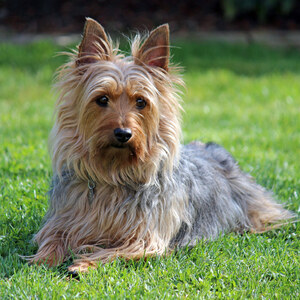
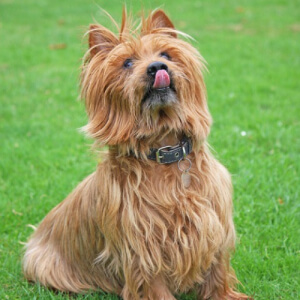
The Australian Terrier is a small dog with short legs and a harsh coat, created in Australia from terriers brought over from Great Britain. It stands about 25 cm at the withers and weighs about 6.5 kg. The FCI standard describes it as a working terrier, but its loyalty and even temperament make it just as good a companion dog.
Quick facts
| Common name | Australian Terrier |
| Scientific name | Canis lupus familiaris |
| Country of origin | Australia |
| Official recognition | FCI, definitively since 20 June 1963 (group 3, terriers; standard no. 8) |
| Lifespan | About 11–12 years (surveys in the United States and the United Kingdom) |
| Size (males) | About 25 cm at the withers; about 6.5 kg |
| Size (females) | Slightly smaller and lighter |
| Coat type | Double, harsh, of medium length, with a ruff around the neck |
| Common colours | Blue and tan; sandy or red |
| Energy level | Medium to high |
| Suited to an apartment? | Yes, with daily walks |
| Temperament | Lively, alert, loyal, curious |
| Tendency to aggression | Can be quarrelsome with other dogs; hunts small animals |
| Good with children | Good |
| Good with other animals | Average; small rodents are prey to it |
| Genetic predispositions | Diabetes, patellar luxation, allergies |
- Primary category:Dog breeds
- Explore this animal's categories:
History and origin
In the early 19th century, settlers brought wire-haired terriers from Great Britain to Australia to keep mice and rats away. According to Wikipedia, the breed shares ancestors with the Cairn Terrier, the Skye Terrier and the Dandie Dinmont Terrier.
Work on the breed began in Australia around 1820, under the name Rough Coated Terrier. The breed was recognised in 1850 and was given the name Australian Terrier in 1892. It first appeared at a show in 1906, in Melbourne.
The FCI recognised the breed definitively on 20 June 1963. Its close relative in Australia is the Australian Silky Terrier, with a long, silky coat.
How the breed developed
- Early 19th century – British terriers reach Australia.
- Around 1820 – Work on the breed begins.
- 1892 – It is given the name Australian Terrier.
- 1906 – Its first show, in Melbourne.
- 20 June 1963 – Definitive FCI recognition.
Breed rating
| Feature | Stars |
|---|---|
| Training and intelligence | ★★★★☆ |
| Easy to train | ★★★★☆ |
| Intelligence | ★★★★☆ |
| Independence | ★★★☆☆ |
| Stubbornness | ★★★☆☆ |
| Behaviour and temperament | ★★★☆☆ |
| Affectionate with family | ★★★★☆ |
| Friendly with children | ★★★★★ |
| Good with other dogs | ★★★☆☆ |
| Good with cats and other animals | ★★☆☆☆ |
| Loyalty | ★★★★☆ |
| Tendency to be aggressive | ★★☆☆☆ |
| Tendency to bark | ★★★☆☆ |
| Needs and care | ★★☆☆☆ |
| Shedding | ★☆☆☆☆ |
| Needs frequent grooming | ★★☆☆☆ |
| Activity and lifestyle | ★★★☆☆ |
| Energy level | ★★★☆☆ |
| Daily exercise needs | ★★★☆☆ |
| Suited to apartment life | ★★★★☆ |
| Health and longevity | ★★★★☆ |
| Life expectancy | ★★★★☆ |
| Predisposition to genetic diseases | ★★★☆☆ |
| Working abilities and uses | ★★★★☆ |
| Good rodent hunter | ★★★★☆ |
| Good companion dog | ★★★★☆ |
Indicative rating: 5 stars means the highest level. The rating is based on the breed's AKC profile (trainability 4 out of 5, children 5 out of 5, shedding 1 out of 5) and on the FCI standard.
Physical characteristics
The FCI standard describes it as a small, sturdy dog, long in body compared with its height, with a strong terrier character. It is alert, active and healthy. The head is long, with small, erect, pointed ears.
General appearance
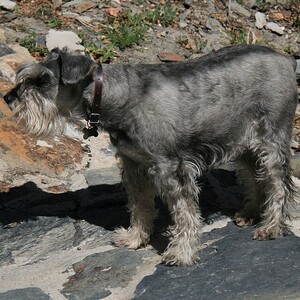
The coat is double and harsh, of medium length, and is usually not clipped. The hair is shorter on the muzzle, the lower legs and the feet. It has a ruff around the neck and a lighter-coloured topknot on the head.
| Feature | Australian Terrier |
|---|---|
| Size | Small |
| Height at the withers | about 25 cm; females slightly smaller |
| Weight | about 6.5 kg; females slightly lighter |
| Coat | Double, harsh, of medium length |
| Colour | Blue and tan; sandy or red |
| Ears | Small, erect, pointed |
The standard accepts two varieties: blue (steel blue or dark grey-blue) with rich tan on the face, ears, underbody and legs, or clear sandy or red. White markings on the chest or feet are a fault.
Training and socialisation
Stanley Coren ranked it 34th for working and obedience intelligence, which is above average. According to Wikipedia, this shows that it trains well. Its AKC profile gives it 4 stars out of 5 for ease of training.
The standard describes its nature as that of a ratter, with the “natural aggressiveness” that goes with it. Early socialisation with other dogs and small animals helps it stay calm at home.
Tips for effective training
- Use rewards. It learns quickly.
- Socialise it early. It can be quarrelsome with other dogs.
- Keep it on a lead outdoors. It goes after rodents.
- Give it search games. It has a hunter's instinct.
Activity needs and lifestyle
It is an active dog, but a small one, so daily walks and play indoors or in the yard keep it happy. Its AKC profile gives it 3 stars out of 5 for energy and 4 out of 5 for adaptability. It enjoys games where it can search and dig.
| Activity | How often | Why it matters |
|---|---|---|
| Walks | daily | Fitness |
| Search games | several times a week | Hunting instinct |
| Play | daily | Energy |
Tips for a balanced life
- Also suitable for a flat.
- A fence without holes, as it digs.
- Include it in family life.
Care and health
Coat and skin care
The harsh coat is brushed once a week and sheds little. Its AKC profile gives it 2 stars out of 5 for grooming. The hair around the eyes and on the feet can be trimmed from time to time.
Common health problems
A 2002 survey by the American breed club found a lifespan of 11 years. A survey in the United Kingdom found just over 12 years. The most common problems were diabetes (10%) and patellar luxation (9%).
| Condition | Description | Common symptoms |
|---|---|---|
| Diabetes mellitus | The body can no longer control blood sugar properly | Drinks and urinates a lot, loses weight, tiredness |
| Patellar luxation | The kneecap slips out of place | Suddenly holds a hind leg up for a few steps, then uses it again |
| Vogt-Koyanagi-Harada syndrome | An autoimmune disease that attacks the eyes and skin | Red, painful eyes, pale patches on the nose and lips |
Other care
- Do not overfeed it: diabetes is also linked to weight.
- Check its ears.
- Go for yearly check-ups.
Diet and nutrition
A small, active terrier needs good-quality food in suitable portions, so that it does not put on weight.
Tips for a healthy diet
The table gives a starting estimate, calculated with the formula from the Merck Veterinary Manual. The first two calorie columns show the calories per day for a healthy adult dog. The last column shows what this means in dry food with 3,500–4,000 kcal per kilogram.
| Dog's weight | Calories per day (neutered) | Calories per day (not neutered) | Dry food per day (approximate) |
|---|---|---|---|
| 5 kg | 370 kcal | 420 kcal | 92–120 g |
| 6.5 kg | 460 kcal | 510 kcal | 120–150 g |
| 8 kg | 530 kcal | 600 kcal | 130–170 g |
- Split the food into two meals a day.
- Training treats count towards the daily portion.
- A dog is at the right weight when you can feel its ribs under the coat without pressing hard.
Foods to avoid
Some human foods are dangerous for dogs: chocolate, coffee, grapes and raisins, onions, garlic, xylitol (a sweetener used in chewing gum), macadamia nuts and alcohol.
Reproduction and development
Physical and emotional maturity
In dogs, sexual maturity usually comes between 6 and 12 months. Small breeds become adults faster than large ones, usually at around one year.
Mating and pregnancy
Pregnancy lasts about 63 days, counted from ovulation. Mating a female on her first heat is not recommended. The FCI standard requires that only healthy dogs of typical breed appearance are used for breeding.
Caring for the puppies
In small breeds, a litter has 3–4 puppies on average. The puppies are very small and fragile in the first weeks, so they must be kept warm and handled with care. Socialisation starts early: gentle handling, everyday noises and new people.
Interesting facts
- Recognised early. The breed was officially recognised in 1850.
- An old name. At first it was called the Rough Coated Terrier.
- A lighter topknot. On its head it has a tuft lighter than the rest of the coat.
- First show in Melbourne. In 1906.
- 34th on Coren's list. Above the breed average for obedience.
Frequently asked questions
Is it good for a flat?
Yes; it is small and is happy with daily walks.
Does it shed a lot?
Little; the harsh coat is brushed once a week.
How does it differ from the Silky Terrier?
The Silky Terrier has a long, silky coat, while the Australian Terrier's coat is harsh and shorter.
Does it get on with hamsters?
Hardly; as a rodent hunter, it may see them as prey.