Lowland streaked tenrecInteresting facts and information
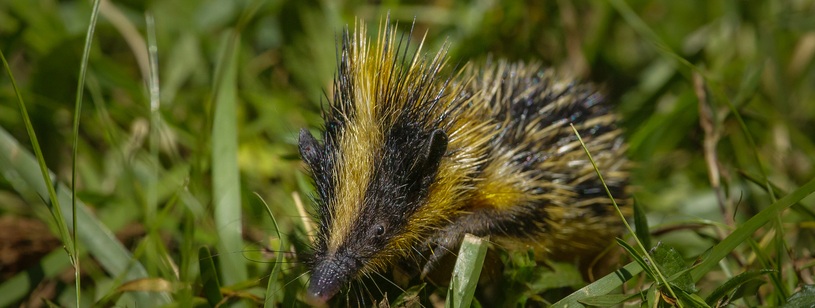
Lowland streaked tenrec (Hemicentetes semispinosus). · Cover: Thomas Fuhrmann, CC BY-SA 4.0; thumbnail: Bernard DUPONT, CC BY-SA 2.0. Cropped and resized; full credits below.
The lowland streaked tenrec (Hemicentetes semispinosus) is a small mammal from Madagascar with yellow-and-black stripes, a pointed snout and spines among its hairs. It mainly lives in the island's eastern rainforests and feeds primarily on earthworms.
Although it resembles a hedgehog, it belongs to a different family. A group of specialised spines on its back allows it to produce sounds by rubbing them together, an unusual form of communication among mammals.
Quick facts
| Scientific name | Hemicentetes semispinosus |
| Family | Tenrecidae |
| Order | Afrosoricida |
| Class | Mammalia — mammals |
| Natural distribution | Madagascar, mainly in the east |
| Habitat | Rainforests, forest edges and some cultivated land |
| Body length | Approximately 13–19 cm; size varies between individuals |
| Weight | 125–280 g in the data compiled by Animal Diversity Web |
| Tail | No visible external tail |
| Diet | Mainly earthworms; also other small invertebrates |
| Activity | Can be active by day or night |
| Shelter | Burrows dug in the ground |
| Gestation | Approximately 55–63 days |
| Number of young | Often around 6; litters of up to 11 have been reported |
| Lifespan | Poorly known in the wild; around 30 months reported in captivity |
| IUCN status | LC — Least Concern |
Interesting facts
- It “sings” with its spines. Sound is produced when a small group of spines on its back rub against one another. The process is called stridulation.
- The stripe on its head helps with identification. A yellow band runs along the snout and forehead; it is absent in the related species Hemicentetes nigriceps.
- Its diet is not based on fruit. It mainly searches for earthworms in leaf litter and soil.
- It may live with relatives. Family groups containing several generations have been described.
- Its spines do not all have the same function. Some help with defence, while others form the sound-producing apparatus.
Records and remarkable abilities
An unusual form of mammal communication
Streaked tenrecs are notable for using specialised spines to produce sound. Muscles under the skin move them rapidly, and contact between the spines generates vibrations. The apparatus lies towards the rear of the trunk.
It would be incorrect to call the lowland streaked tenrec the only mammal capable of stridulation: research describes related mechanisms in other tenrecs too. Its distinctive feature is a well-developed apparatus that remains present in adults.
Very rapid development
The profile published by IUCN specialists describes reproductive maturity at approximately 35–40 days. This unusually rapid development within the tenrec family has been observed in reproductive studies; it is not a record for all mammals.
Characteristics
What does a lowland streaked tenrec look like?
It has an elongated body, short legs and a narrow snout. Yellowish stripes, sometimes with orange tones, stand out against its dark background colour. Spines are interspersed with hairs and form a prominent crest behind the head.
Its head and body measure approximately 13–19 cm. It has no long external tail like a mouse. Males and females look very similar, so their sex cannot be identified reliably from colour alone.
Differences from other spiny animals
| Animal | Features that help distinguish it |
| Lowland streaked tenrec | Yellow stripes, including one on the head; family Tenrecidae. |
| Highland streaked tenrec | Hemicentetes nigriceps: paler stripes and a black head without the central yellow band. |
| Hedgehog | Belongs to the family Erinaceidae; having similar spines does not make it a tenrec. |
Defensive spines can detach when they enter an attacker's skin. The animal does not shoot them like arrows. Raising its crest and moving its head are part of its defence during contact.
Habits and behaviour
Burrows and family life
The lowland streaked tenrec spends much of its time on the ground. It digs tunnels leading to a nest and may block the entrance with leaves. This shelter protects it from predators and helps maintain suitable resting conditions.
Groups may include adults and young from different generations. Specialist literature reports families of more than 20 individuals, although this is not the usual size of every group.
How does it communicate, and when is it active?
Sounds produced by the spines help animals stay in contact, including mothers and young. They also use scents, nose contact and vocalisations. Not every function of each sound is fully understood.
It may search for food by day or night. During unfavourable periods, it can reduce its activity and metabolism by entering torpor, an energy-saving state. Unlike its highland relative, it may remain active when conditions allow.
Habitat and geographical distribution
Where does it live?
It is endemic to Madagascar: its natural range is restricted to this Indian Ocean island off Africa. It is particularly associated with the rainforests of the east.
- Natural forests provide leaf litter in which it searches for food.
- Secondary forests, regrowing after disturbance, may also be occupied.
- Gardens and cultivated land are used in some regions; the species does not depend exclusively on intact forest.
“Lowland” does not mean only at sea level
The name lowland streaked tenrec distinguishes it from the highland streaked tenrec. However, a study published in 2000 documented both species around Mahatsinjo at approximately 1,550 m above sea level.
Researchers found distinct features even where the animals lived in the same area. This shows why elevation alone is not enough for identification.
Diet and feeding
What does it eat?
Earthworms form the basis of its diet. An animal specialised in eating worms is called a vermivore. It may also eat insects and other small invertebrates, but these should not be presented as its main food.
| Food | Importance in the diet |
| Earthworms | The main resource described in biological studies. |
| Insects and other invertebrates | Supplement the diet, depending on availability. |
How does it find food?
It explores soil and leaf litter with its elongated snout. Forefoot tapping on the ground has also been observed and has been proposed to encourage earthworm activity. This is a behavioural hypothesis, rather than a technique proven to work in every situation.
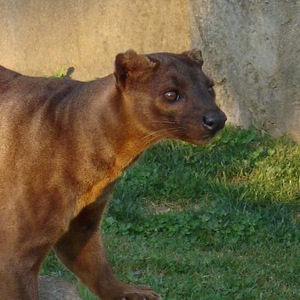
Within its ecosystem, it is both a consumer of invertebrates and prey for other animals. Sources mention the fossa and other Malagasy carnivores among its predators.
Reproduction and life cycle
Gestation and birth
Reproduction is often linked to the rainy season, when resources are more accessible. Under favourable conditions, the breeding period may be longer.
Gestation lasts approximately 55–63 days. A female gives birth to several young, often around six; the literature also describes litters of up to 11. Figures vary between observations and care conditions.
How do the young develop?
The mother prepares and maintains the nest, nurses her young and may bring them back if they wander away. Much information about parental care comes from observations in captivity.
Their eyes open within the first two weeks, and weaning occurs after approximately three to four weeks. Rapid development allows several generations to occur within a family group.
Lifespan in the wild is not well established. Animal Diversity Web reports around 30 months in captivity; this should not be confused with life expectancy measured in wild populations.
Name and history
Name and classification
The name “streaked tenrec” describes the contrasting markings on its body. The accepted scientific name is Hemicentetes semispinosus, and the species belongs to the family Tenrecidae and order Afrosoricida.
The Mammal Diversity Database records Georges Cuvier's description from 1797 and the historical name Erinaceus semispinosus. Earlier classifications explain some of the different names found in zoological literature.
Why do newer books recognise two species?
Some older works treated the highland form as a subspecies. Field observations and differences in appearance supported separating it. The current classification recognises H. semispinosus and H. nigriceps as distinct species.
Conservation status and threats
What does LC mean?
The species is classified as LC — Least Concern in its global assessment. This status is reported by both the Mammal Diversity Database and the IUCN Afrotheria Specialist Group.
Its tolerance of some modified habitats and presence in protected areas are favourable factors. LC does not mean that every local population is safe from habitat loss or capture.
Keeping its habitats
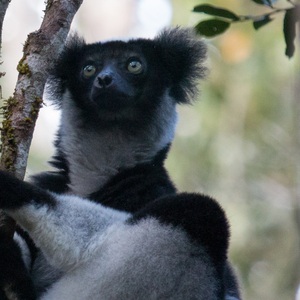
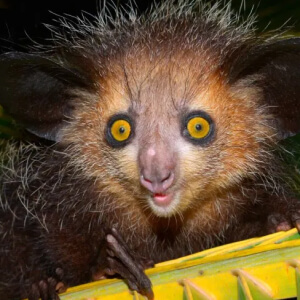
Protecting forests and using land carefully support Madagascar's mammal diversity. The lowland streaked tenrec shares the island's fauna with the indri and aye-aye, but has a different way of life and diet.
Frequently asked questions
- What is a lowland streaked tenrec? Hemicentetes semispinosus is a mammal in the family Tenrecidae, endemic to Madagascar. It has yellow-and-black stripes and spines among its hairs.
- Is a lowland streaked tenrec a hedgehog? No. Tenrecs belong to Tenrecidae, while hedgehogs belong to Erinaceidae. Similar appearance does not make them the same animal.
- Where do lowland streaked tenrecs live? In Madagascar, mainly in eastern rainforests. They may also occupy secondary forests and cultivated land.
- What do lowland streaked tenrecs eat? Mainly earthworms. Insects and other small invertebrates may supplement their diet.
- How do they make sounds with their spines? Muscles move a group of specialised spines on the back, causing them to rub together. This process is called stridulation.
- Are lowland streaked tenrecs nocturnal? They can be active by day or night; they are not exclusively nocturnal.
- How many young do they have? Often around six, after a gestation of approximately 55–63 days. Litters of up to 11 have also been reported.
- Are they endangered? The global assessment classifies them as LC, or Least Concern. This does not rule out problems for some local populations.
Cover photograph: Thomas Fuhrmann · CC BY-SA 4.0. Thumbnail: Bernard DUPONT · CC BY-SA 2.0. Real photographs of Hemicentetes semispinosus, cropped and resized. Each adaptation retains the licence indicated for its original photograph.
Did you know?
- The lowland streaked tenrec produces sounds by rubbing specialised spines together.
- Earthworms are its main food.
- It is not a hedgehog: it belongs to Tenrecidae.
- It is endemic to Madagascar.