AffenpinscherCharacteristics, history, training and care
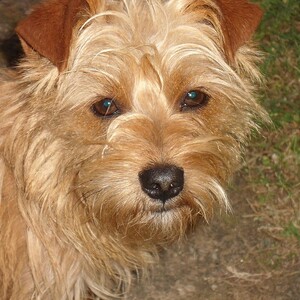
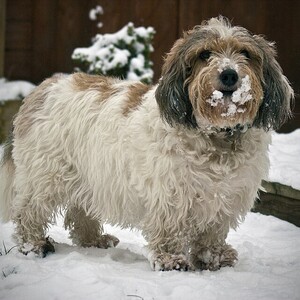
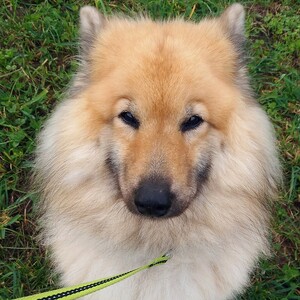
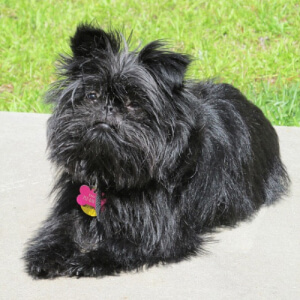
The rough coat and facial hair contribute to the Affenpinscher’s characteristic expression.
The Affenpinscher is a small German dog with a rough coat and a distinctive monkey-like expression. Its ancestors were used to catch rodents around homes and stores.
Today it is mainly a companion. A small body does not remove the need for walks, training, grooming and respectful handling. Temperament and suitability for a household depend on the individual dog as well as its upbringing.
Quick facts
| Common name | Affenpinscher |
| Scientific name | Canis lupus familiaris — domestic dog |
| Country of origin | Germany |
| Recognition | Recognised by the FCI and AKC |
| Lifespan | Often quoted as 12–15 years; individual outcomes vary |
| Height: males | FCI: 25–30 cm at the shoulder |
| Height: females | FCI: 25–30 cm at the shoulder |
| Weight: males | FCI: approximately 4–6 kg |
| Weight: females | FCI: approximately 4–6 kg |
| Coat | Rough and dense, with longer facial furnishings |
| Colours | FCI: black; the AKC standard permits additional colours |
| Activity | Regular walks and play, adapted to the individual |
| Apartment living | Can be suitable when exercise, rest and social needs are met |
| Temperament | Often alert, curious and attached to familiar people |
| Unfamiliar people and dogs | Careful introductions and individual assessment are important |
| Children | Supervise; provide gentle handling and a protected resting place |
| Other animals | Manage introductions; a ratting background warrants care with small pets |
| Health screening | Eyes, kneecaps, hips and heart; discuss current requirements with a veterinarian |
- Primary category:Dog breeds
- Explore this animal's categories:
History and origin
The Affenpinscher developed in Germany from small dogs used to catch rodents around homes and stores. Its name refers to its monkey-like face. It later became a companion dog, while retaining an alert, lively character.
Development and recognition
- German origins: the FCI describes a southern German house-dog background and records studbook entries from 1879.
- Changing role: a former ratter became a small companion with a distinctive rough coat.
- Recognition: the AKC accepted the breed in 1936; definitive FCI recognition followed in 1955.
Editorial characteristics guide
These stars are editorial impressions of typical care and lifestyle demands, not test results, intelligence rankings or predictions about an individual dog. More stars mean more of the named trait. Health and longevity are not scored because a star cannot reliably express disease risk or life expectancy.
| Characteristic | Editorial guide |
|---|---|
| Training and learning | Editorial group |
| Ease of training | ★★★☆☆ |
| Interest in learning tasks | ★★★★☆ |
| Independence | ★★★★☆ |
| Persistence | ★★★★☆ |
| Behaviour and social needs | Editorial group |
| Affection towards familiar people | ★★★★☆ |
| Ease around young children | ★★☆☆☆ |
| Ease with other dogs | ★★★☆☆ |
| Ease with cats and small pets | ★★☆☆☆ |
| Attachment to familiar people | ★★★★☆ |
| Aggression risk | Not rated — individual assessment / reliable data needed |
| Alert barking | ★★★☆☆ |
| Coat and care | Editorial group |
| Shedding | ★★☆☆☆ |
| Grooming needs | ★★★★☆ |
| Activity and lifestyle | Editorial group |
| Activity level | ★★★☆☆ |
| Need for daily exercise | ★★★☆☆ |
| Ease of apartment living | ★★★★☆ |
| Health and longevity | Editorial group |
| Life expectancy | Not rated — individual assessment / reliable data needed |
| Inherited-disease risk | Not rated — individual assessment / reliable data needed |
| Roles and companionship | Editorial group |
| Watchfulness | ★★★☆☆ |
| Companion suitability | ★★★★☆ |
Physical characteristics
An Affenpinscher is small and compact, with a rough coat and a short muzzle framed by eyebrows and a beard. Its build should be sturdy rather than fragile. The facial expression is often described as monkey-like.
General appearance
- The body is approximately square, with height and length in balance.
- The round, dark eyes should not protrude.
- Longer facial hair frames the eyes and muzzle.
- A natural tail is retained; appearance is not a reason to perform a cosmetic procedure.
| Feature | Affenpinscher |
|---|---|
| Height at the shoulder | FCI: 25–30 cm for both sexes |
| Weight | FCI: approximately 4–6 kg for both sexes |
| Coat | Rough and dense; longer hair frames the head |
| Colour | FCI: black; the AKC standard accepts additional colours |
| Muzzle | Short, with a slightly undershot bite described in the standard |
| Build | Compact and sturdy |
Training and socialisation
Curiosity can make an Affenpinscher an engaging learner, but distractions and repetition may reduce interest. Work in short, successful sessions. Reward the behaviour you want instead of trying to prove dominance over the dog.
Tips for effective training
- Practise everyday skills: reward coming when called, waiting at a door and settling on a mat.
- Handle gently: teach the dog to accept brushing, paw checks and veterinary examination in small steps.
- Manage valued items: practise exchanging an object for a reward. Do not grab food or punish growling.
- Introduce carefully: supervise meetings with larger dogs and protect small pets from chasing.
Socialisation means helping a dog feel safe and cope with ordinary experiences. It does not mean making it meet every person or dog. If fear, guarding or aggression is persistent, seek a veterinarian’s assessment and qualified behaviour help.
Activity and lifestyle needs
Regular walks, sniffing and play matter even for a small dog. Match the pace to age, health and breathing comfort. A small home can work when daily needs are met; floor area alone does not decide suitability.
| Activity | Planning guide, not a fixed prescription |
|---|---|
| Walks and sniffing | Several comfortable outings, with rest as needed |
| Play | Brief games suited to the dog’s interest and stamina |
| Training | Short sessions integrated into the day |
| Exploration | Calm new experiences at a comfortable distance |
A balanced daily routine
- Provide a quiet resting place where children and visitors leave the dog undisturbed.
- Use safe steps or management where a fall could cause injury; do not treat every small dog as physically delicate.
- Avoid exercise in hot conditions, and watch for noisy or difficult breathing.
- Build confidence with gradual introductions rather than forcing close contact with unfamiliar dogs.
Care and health
Coat and skin care
Brush through the rough coat regularly and check for tangles, especially in longer hair around the face and legs. A groomer familiar with the breed can advise on trimming or hand-stripping. Keep hair out of the eyes without attempting risky trimming close to them.
Health problems and screening
The Affenpinscher Club of America recommends attention to the eyes, kneecaps, hips and heart when screening breeding dogs. Screening reduces uncertainty; it cannot guarantee lifelong health. Symptoms need assessment rather than a diagnosis based on breed alone.
| Problem | What it means | Possible signs |
|---|---|---|
| Slipping kneecap (patellar luxation) | The kneecap moves out of its normal position | Intermittent skipping or lameness |
| Hip and other joint disorders | Joint development and disease can affect movement | Stiffness, reluctance to move or pain |
| Eye disorders | Different eye problems require different examinations | Redness, squinting, discharge or vision changes |
| Dental disease | Plaque and gum disease can cause pain | Bad breath, sore gums or difficulty eating |
Other aspects of care
- Routine prevention: arrange veterinary checks, vaccination and parasite prevention appropriate to the dog and locality.
- Dental care: introduce regular tooth brushing with a dog-safe product and have painful or damaged teeth examined.
- Eyes, ears and feet: check for changes rather than putting cleaning products into a sore eye or ear.
- Urgent signs: breathing difficulty, collapse or suspected heatstroke need prompt veterinary help.
Diet and nutrition
Choose a complete diet for the dog’s life stage and monitor body condition. Small body size does not justify unlimited treats or a fixed gram allowance copied from another dog. Measure portions and adjust them with veterinary guidance.
Choosing and portioning food
| Food or feeding choice | Portion guidance | Practical point |
|---|---|---|
| Complete commercial dog food | Start with the product’s guidance and adjust for body condition | Use a formulation appropriate to life stage |
| Home-prepared food | Use a recipe formulated with a qualified veterinary nutrition professional | Meat alone is not a balanced diet |
| Treats and extras | Include them in the daily food allowance | Avoid displacing the complete diet |
Keep fresh water available. Raw meat diets can carry harmful bacteria that affect dogs and people handling the food. Do not add vitamins, minerals or oils routinely to an already complete food unless a veterinarian identifies a need.
Foods and objects to avoid
Keep chocolate, grapes and raisins, onions, garlic and xylitol-containing products away from dogs. Bones can damage teeth or obstruct the digestive tract. If a dog eats a potentially dangerous item, contact a veterinarian promptly and keep the packaging or a description of what was eaten.
Reproduction and development
Responsible breeding requires more than reaching a particular birthday. Health screening, physical maturity, temperament and the ability to care for the mother and litter all matter. Ask for the actual parental test results, not just a claim that the line is healthy.
Physical and behavioural maturity
Growth and behaviour do not change on a single fixed schedule. Young Affenpinschers need age-appropriate activity, rest and continuing training. Being sexually mature does not mean a dog is physically or behaviourally ready for breeding.
Mating and pregnancy
A dog’s pregnancy lasts about nine weeks. The expected birth date depends on how pregnancy is dated; mating day is not a precise measure of conception. Litter size varies, so a fixed breed-wide number should not be used to plan care.
Discuss reproductive health, pregnancy monitoring and signs of birth complications with a veterinarian before a planned mating. Breeding should be a considered welfare decision, rather than an automatic step in a companion dog’s life.
Puppy care
- Newborn period: puppies need warmth, milk and close observation. Poor feeding or failure to gain weight calls for veterinary advice.
- Weaning: suitable puppy food is introduced gradually as development allows; milk feeding and social learning do not end overnight.
- Early experiences: introduce gentle handling, sounds and safe environments in manageable steps. Balance socialisation with a veterinary plan for infection risk.
- Moving home: consider health, readiness and local legal requirements. Continue suitable food, rest, training and preventive care.
Interesting facts
- The name describes the face: German Affe means monkey.
- A working past: the breed’s small ancestors helped control rodents.
- Standards differ: FCI and AKC rules do not use identical size and colour descriptions.
- A notable show winner: Banana Joe, an Affenpinscher, won Best in Show at Westminster in 2013.
In popular culture
Affenpinscher in media and modern culture
Banana Joe’s Westminster win in 2013 gave this small breed wider public attention. The achievement belongs to one dog in a conformation competition; it does not establish the health or suitability of every Affenpinscher.
Cultural significance today
The monkey-like expression and rough coat contribute to the breed’s comic image. Living with one still involves ordinary canine needs: comfortable exercise, patient training, grooming and respectful handling. A striking appearance is only one part of choosing a companion.