Continental BulldogCharacteristics, history, training and care
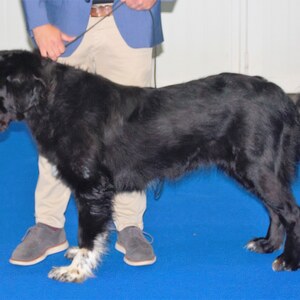
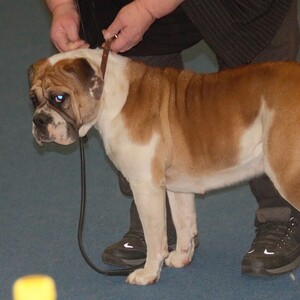
Continental Bulldog. · Canarian / Wikimedia Commons, CC BY-SA 4.0. Cropped and resized.
The Continental Bulldog, known for short as the Conti, is a new breed from Switzerland. It was created by the breeder Imelda Angehrn, who wanted a more agile bulldog that would breathe freely and give birth naturally. It is an alert, self-confident and friendly family dog, neither aggressive nor shy.
Quick facts
| Common name | Continental Bulldog (Conti) |
| Scientific name | Canis lupus familiaris |
| Country of origin | Switzerland |
| Official recognition | FCI, provisionally (group 2, molossoid breeds, mastiff type, without working trial; standard no. 369, published on 11 February 2026); Swiss Kennel Club, since 2005 |
| Lifespan | No published data exist for the breed; medium-sized dogs usually live 10–13 years |
| Size (males) | 42–50 cm at the withers; about 30 kg |
| Size (females) | 40–48 cm at the withers; about 25 kg |
| Coat type | Short, close-lying, glossy, with or without undercoat |
| Common colours | Fawn (from sand to red), brindle, black, with or without white; white with markings |
| Energy level | Moderate |
| Suited to an apartment? | Yes, if it goes out every day |
| Temperament | Alert, self-confident, friendly |
| Tendency to aggression | Low; the standard disqualifies aggressive dogs |
| Good with children | Good |
| Good with other animals | Good, with socialisation |
| Genetic predispositions | The breed was created to avoid the bulldog's breathing problems; the standard disqualifies noisy breathing |
- Primary category:Dog breeds
- Explore this animal's categories:
History and origin
The Swiss breeder Imelda Angehrn had been breeding English Bulldogs since 1966. She was unhappy with the breed's health problems: laboured breathing and the difficult births of large-headed puppies. She tried to breed lighter bulldogs, but they did not win at shows.
So she decided to create a new breed by crossing the English Bulldog with the Olde English Bulldogge. The first puppies were born in 2001. The FCI standard says the programme produced a dog close to the original bulldog type, and the name “Continental Bulldog” was chosen to distinguish it from the English Bulldog.
How the breed developed
- 1966 – Imelda Angehrn begins breeding English Bulldogs.
- 2001 – The first puppies from the cross with the Olde English Bulldogge are born.
- 2004 – The Swiss Kennel Club approves the creation of the breed; the breed club is founded.
- 2005 – The breed and its standard are officially announced in Switzerland.
- 2017 – The eight bloodlines required by the FCI are complete.
- 11 February 2026 – The current FCI standard is published.
Breed rating
| Feature | Stars |
|---|---|
| Training and intelligence | ★★★★☆ |
| Easy to train | ★★★★☆ |
| Intelligence | ★★★★☆ |
| Independence | ★★★☆☆ |
| Stubbornness | ★★★☆☆ |
| Behaviour and temperament | ★★★★☆ |
| Affectionate with family | ★★★★★ |
| Friendly with children | ★★★★☆ |
| Good with other dogs | ★★★★☆ |
| Good with cats and other animals | ★★★☆☆ |
| Loyalty | ★★★★★ |
| Tendency to be aggressive | ★☆☆☆☆ |
| Tendency to bark | ★★☆☆☆ |
| Needs and care | ★★★★☆ |
| Shedding | ★★☆☆☆ |
| Needs frequent grooming | ★☆☆☆☆ |
| Activity and lifestyle | ★★★★☆ |
| Energy level | ★★★☆☆ |
| Daily exercise needs | ★★★☆☆ |
| Suited to apartment life | ★★★★☆ |
| Health and longevity | ★★★★☆ |
| Life expectancy | ★★★☆☆ |
| Predisposition to genetic diseases | ★★★☆☆ |
| Working abilities and uses | ★★★★☆ |
| Good watchdog | ★★★☆☆ |
| Good companion dog | ★★★★★ |
Indicative rating: 5 stars means the highest level. The breed has no AKC profile; the rating is based on the FCI standard (“alert, self-confident, friendly, neither aggressive nor shy”).
Physical characteristics
The standard describes it as a bull-type dog, almost square, medium-sized and athletic. Although compact, it is active and strong, and even at a trot or gallop it must breathe without noise.
General appearance
The head is less massive than the English Bulldog's, with wrinkles that are not too deep. The round eyes are dark brown, and the small, high-set ears are “rose” or dropped. The low-set tail is thick at the base and ideally reaches the hock.
| Feature | Continental Bulldog |
|---|---|
| Size | Medium |
| Height at the withers | males: 42–50 cm; females: 40–48 cm |
| Weight | between 20 and 30 kg, depending on height |
| Coat | Short, glossy |
| Eyes | Round, dark brown |
| Tail | Low-set, thick, straight or slightly curved |
The accepted colours are fawn (from sand to red), brindle and black, with or without white markings and with or without a dark mask. White is also accepted, with or without markings in the permitted colours.
Training and socialisation
The standard describes it as alert, self-confident and friendly. It is bred as a companion and family dog.
It responds well to rewards and clear rules. Early socialisation helps it stay balanced with people and other dogs.
Tips for effective training
- Use rewards. Praise and food motivate it.
- Be consistent. Clear rules prevent stubbornness.
- Socialise it as a puppy. New people, dogs and places, from the first months.
- Keep sessions short. It gets bored if you repeat things too much.
Activity needs and lifestyle
It is more agile and has more stamina than the English Bulldog. It needs daily walks and play, but not extreme exertion.
| Activity | How often | Why it matters |
|---|---|---|
| Walks | daily | Exercise and new smells |
| Play in the garden or park | daily | Burns off energy |
| Obedience exercises | a few minutes a day | Mental activity |
Tips for a balanced life
- In summer, avoid exertion during the hottest hours.
- Keep it at the right weight.
- It adapts well to family life.
Care and health
Coat and skin care
The short coat is easy to maintain: brushing once a week with a rubber grooming mitt. The facial wrinkles should be cleaned and dried regularly.
Common health problems
The breed was created precisely to avoid the English Bulldog's health problems. The standard disqualifies noisy breathing, entropion and ectropion. Worth watching:
| Condition | Description | Common symptoms |
|---|---|---|
| Hip dysplasia | The hip joint forms incorrectly and, over time, arthritis develops | Limping, difficulty getting up or jumping, hip pain |
| Brachycephalic syndrome | The airways are narrowed by the short muzzle | Noisy breathing, tires quickly, copes poorly with heat |
Other care
- Clean and dry the wrinkles on its face.
- Check the ears weekly.
- Trim the nails when they start to touch the floor.
Diet and nutrition
A compact, muscular dog easily gains weight if it gets too much food. The portion should be based on its actual weight.
Tips for a healthy diet
The table gives a starting estimate, calculated with the formula from the Merck Veterinary Manual. The first two calorie columns show the calories per day for a healthy adult dog. The last column shows what this means in dry food with 3,500–4,000 kcal per kilogram.
| Dog's weight | Calories per day (neutered) | Calories per day (not neutered) | Dry food per day (approximate) |
|---|---|---|---|
| 20 kg | 1,060 kcal | 1,190 kcal | 260–340 g |
| 25 kg | 1,250 kcal | 1,410 kcal | 310–400 g |
| 30 kg | 1,440 kcal | 1,620 kcal | 360–460 g |
- Give it its food in two meals a day.
- Training treats count towards the daily portion.
- A dog is at the right weight when you can feel its ribs without pressing hard.
Foods to avoid
Some human foods are dangerous for dogs: chocolate, coffee, grapes and raisins, onions, garlic, xylitol (a sweetener used in chewing gum), macadamia nuts and alcohol.
Reproduction and development
Physical and emotional maturity
In dogs, sexual maturity usually comes between 6 and 12 months. Most breeds become adults at around 13–15 months.
Mating and pregnancy
Pregnancy lasts about 63 days, counted from ovulation. Mating a female on her first heat is not recommended. The FCI standard requires that only healthy dogs of typical breed appearance are used for breeding.
Caring for the puppies
In dogs, a litter has 5–6 puppies on average, and the number rises with the size of the breed. Socialisation starts in the first weeks: gentle handling, everyday noises and new people.
Interesting facts
- The short name: Conti. The breed is affectionately known as the “Conti”.
- “The grand dame of bulldogs”. This is what the breed's creator, Imelda Angehrn, is called.
- Eight bloodlines. For the FCI, the breed needed eight lines with no common ancestors in the last three generations.
- Breathing matters. The standard requires breathing to be noiseless even at a gallop.
- A bulldog that gives birth naturally. Its creator wanted dogs that could give birth without a caesarean.
Frequently asked questions
How does it differ from the English Bulldog?
It is more agile, has a less massive head and must breathe without noise.
How big does it get?
Males measure 42–50 cm, females 40–48 cm; they weigh between 20 and 30 kg.
Is it a family dog?
Yes, the standard describes it as a friendly companion and family dog.
Where does it come from?
From Switzerland, where it has been bred since 2001.