AkbashCharacteristics, history, training and care
Quick facts
| Common name | Akbash |
| Scientific name | Canis lupus familiaris |
| Country of origin | Turkey |
| Official Recognition | Recognised by UKC, but not by FCI |
| Typical lifespan | About 10-12 years |
| Dimensions (Male) | About 71-86 cm |
| Dimensions (Female) | About 69-81 cm |
| Weight (Male) | About 41-64 kg |
| Weight (Females) | About 34-50 kg |
| Coat type | Short to medium-long, double, weather-resistant |
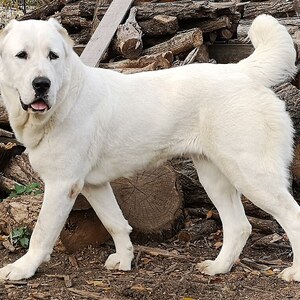
| Common colours | White |
| Energy Level | Moderate |
| Suitable for apartment? | Depends on exercise, training, health and the individual dog |
| Temperament | Independent, protective, intelligent |
| Behaviour towards unfamiliar people and dogs | Often wary of strangers and strange dogs; socialisation, training and management matter |
| Compatibility with children | Depends on the individual; adult supervision and suitable handling are essential |
| Compatibility with other animals | Depends on socialisation, prey drive and the animals involved |
| Genetic predispositions | Hip dysplasia, bloat |
- Primary category:Dog breeds
- Explore this animal's categories:
History and Origin
The Akbash developed as a livestock guardian in western Turkey. A precise ancient origin date cannot be established from the source provided.
Development of the breed
- An old tradition - Large white guardian dogs have been kept by shepherds in Anatolia for a very long time, but their exact origins are unknown.
- Flock guardian - Turkish shepherds used the Akbash to protect sheep and goats from predators such as the wolf and the bear, as well as from thieves.
- The modern era - In the 1970s and 1980s, Akbash dogs were brought to North America, where they are used to guard livestock; some are also kept as companions by people with large properties.
Breed Evaluation
The Akbash is an intelligent, independent and protective dog, well suited to farms and large properties, but less suited to city life. These editorial ratings provide a general guide. Individual dogs vary with health, training and environment.
| Characteristic | Stars |
|---|---|
| Training and Intelligence | ★★★★☆ |
| Easy to train | ★★★☆☆ |
| Intelligence | ★★★★★ |
| Level of independence | ★★★★★ |
| Level of stubbornness | ★★★☆☆ |
| Behavior and Temperament | ★★★★☆ |
| Affectionate with family | ★★★★★ |
| Friendly with children | ★★★★☆ |
| Compatible with other dogs | ★★★☆☆ |
| Compatible with cats and other animals | ★★★☆☆ |
| Degree of loyalty | ★★★★★ |
| Tendency to be aggressive | ★★★☆☆ |
| Tendency to bark | ★★★★☆ |
| Needs and Care | ★★★★☆ |
| Shedding level | ★★★★☆ |
| Requires frequent care | ★★★☆☆ |
| Activity and Lifestyle | ★★★★☆ |
| Energy level | ★★★★☆ |
| Daily exercise requirement | ★★★★☆ |
| Suitable for apartment living | ★☆☆☆☆ |
| Health and Longevity | ★★★★☆ |
| Life expectancy | ★★★☆☆ |
| Predisposition to genetic diseases | ★★★☆☆ |
| Work and Utility Features | ★★★★★ |
| Good guard dog | ★★★★★ |
| Good companion dog | ★★★★☆ |
Physical Characteristics
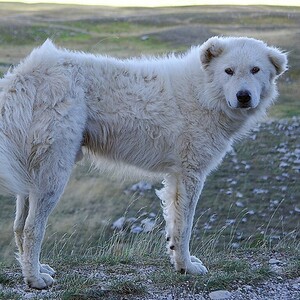
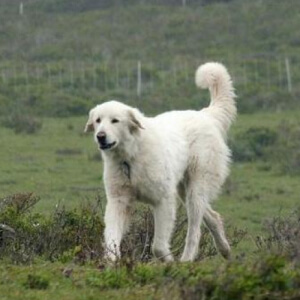
The Akbash is a large, strong and elegant dog, taller and lighter in build than many other livestock guardians.
General appearance
- A tall, athletic body with long legs, built for speed and endurance.
- A white double coat, short to medium-long, which protects it from cold and bad weather.
- A strong head with a fairly long muzzle and medium-sized, hanging V-shaped ears.
- A long, bushy tail, often curled over the back when the dog is alert.
- Almond-shaped, dark eyes, with dark eye rims and nose, giving an alert, intelligent expression.
| Characteristic | Akbash |
|---|---|
| Size | Large (about 69-86 cm at the shoulder) |
| Weight | About 34-64 kg |
| Coat | White, short to medium-long, double |
| Muzzle | Fairly long, strong |
| Shedding tendency | Moderate to high |
| Build | Tall, athletic, strong-boned |
The Akbash is a strong, agile dog, well adapted to protecting flocks, and a loyal companion for families who understand its needs.
Training and Socialization
The Akbash is clever and independent, which makes training a challenge, especially for inexperienced owners. As a natural guardian, it has strong protective instincts and is used to making its own decisions without waiting for orders.
Tips for effective training
- Early socialisation is essential - The Akbash should meet new people, animals and places as a puppy; otherwise it can become over-protective and very suspicious of strangers.
- Calm, reward-based training - It does not respond well to harsh methods. Rewards and praise work better than punishment.
- Consistency - It thinks for itself and will test limits, so rules must be clear and consistent.
- Managing guarding instincts - Owners should help the dog learn the difference between real threats and normal situations, such as visitors.
- Lifelong training - Even adult dogs benefit from regular, short obedience sessions.
When properly trained and socialised, the Akbash becomes a loyal, balanced dog that protects without being needlessly aggressive.
Activity and Lifestyle Needs
The Akbash is a large dog with a moderate energy level and a strong instinct to patrol, so it needs space and regular activity.
| Activity | Recommended duration |
|---|---|
| Daily walks | About 45-60 min |
| Time in a large, securely fenced area | Daily |
| Interactive games | About 20-30 min |
| Obedience training | About 15 min/day |
Recommendations for a balanced lifestyle
- Not suited to apartment life - The Akbash needs a lot of space, ideally a large, securely fenced property.
- A natural patroller - It is not hyperactive, but it likes to patrol and guard its territory, often at night.
- Can become destructive if bored - Without enough activity, it may dig or chew things.
- Best on farms - It is happiest in the countryside, where it can use its guarding instincts with livestock.
The Akbash needs space, exercise and a clear job, such as guarding animals, to be balanced and happy.
Care and Health
The Akbash is a hardy breed, but it needs regular care, especially for its coat and joints.
Fur and skin care
- Brushing 1-2 times a week - The double coat should be brushed to remove dead hair and prevent tangles.
- Seasonal shedding - When the seasons change, the Akbash can shed a lot of hair and needs more frequent brushing.
- Baths only when needed - Frequent baths can dry out the skin.
- Ear and claw checks - Dogs that live outdoors should have their ears and claws checked regularly.
Common health problems
| Condition | Description | Possible signs |
|---|---|---|
| Hip dysplasia | An inherited joint problem common in large dogs | Lameness, difficulty getting up |
| Gastric dilatation-volvulus (bloat) | The stomach swells and may twist; an emergency, more likely after large meals followed by exercise | Swollen belly, restlessness, trying to vomit |
| Skin problems | Irritation from dust, moisture or parasites | Itching, redness, hair loss |
Other aspects of care
- Regular veterinary checks - Important for monitoring the joints and general health.
- Weight control - An overweight Akbash is more likely to have joint problems.
- Fresh water - Dogs that work outdoors must always have fresh water available.
Diet and Nutrition
The Akbash is a large dog, but many livestock guardians need less food than their size suggests; the diet should be balanced and matched to activity.
Recommendations for a balanced diet
Choose a complete, balanced diet for the dog’s age, size and health. Plan home-prepared diets or supplements with a qualified veterinarian. Raw pet food can carry harmful bacteria.
| Food type | Daily Amount (Adults) | Frequency |
|---|---|---|
| Premium dry food | Individual amount; follow a complete diet’s guidance and veterinary advice | 2 meals/day |
| Home cooked food | Individual amount; follow a complete diet’s guidance and veterinary advice | 2 meals/day |
| Raw food: bacterial contamination is a concern | Individual amount; follow complete-food guidance and veterinary advice | 2 meals/day |
Forbidden foods
Chocolate, grapes and raisins, onions and xylitol - toxic to dogs. / Cooked bones - can splinter and cause choking or internal injuries. / Salty, fatty human food - can upset digestion and cause pancreatitis. / Overfeeding - can lead to weight gain and joint problems.
The Akbash should be fed a balanced diet matched to its age, size and activity.
Reproduction and Development
Breeding can involve health risks. Responsible breeders use appropriate health screening and veterinary advice rather than assuming that a breed is free of reproductive problems.
Physical and emotional maturity
- Physical maturity: The Akbash reaches adult height at about 12-18 months, but continues to fill out until about 2-3 years.
- Emotional maturity: As an independent guardian, it usually becomes fully mature in behaviour at about 2-3 years.
Mating and Gestation
- Breeding decisions - A veterinarian should assess health, maturity and relevant screening. A fixed age alone does not establish that a dog should be bred.
- Duration of gestation: Approximately 58-68 days, usually about 63 days.
- Average number of puppies: Usually about 6-10 puppies per litter.
Puppy care
- The first 3 weeks: Puppies need a warm, safe place and feed only on their mother's milk.
- Between 4-8 weeks: They begin to eat solid food and need gentle socialisation to prevent fearfulness or aggression.
- Moving to a new home - Timing depends on health, development and local requirements. Puppies meant to guard livestock are often raised with the animals they will protect.
Curiosities and Interesting Facts
- A shepherd's dog - In Turkey, the Akbash was traditionally used by shepherds to protect flocks from wolves, bears and jackals.
- A careful guardian - A well-raised Akbash usually watches and assesses a situation before reacting.
- "White head" - The name Akbash comes from the Turkish words ak (white) and baş (head), referring to its white coat.
- White on purpose - Shepherds preferred white guardian dogs because they are easy to tell apart from wolves, even at night.
- Protecting wildlife - In North America and Africa, guardian dogs like the Akbash help protect livestock from coyotes, wolves and cheetahs, so farmers have less reason to kill predators.
The Dog in Popular Culture
The Akbash is less famous than many guard dogs, but it is respected in Turkey and among livestock farmers around the world.
The importance in Turkish culture
- Traditional flock protector - For centuries, the white guardian dogs of western Turkey have been valued by shepherds for their loyalty and courage.
Akbash in Media and Research
- Livestock-guardian research - In the 1970s and 1980s, the Akbash was one of the breeds tested in American programmes to protect sheep from coyotes without killing them.
- Used in other countries - Farmers in the USA, Canada and other countries use the Akbash to reduce losses to predators.