Bosnian Coarse-haired HoundCharacteristics, history, training and care
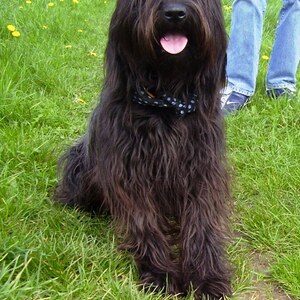
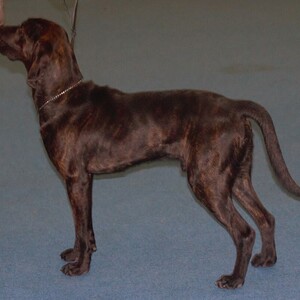
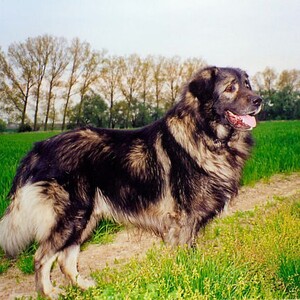
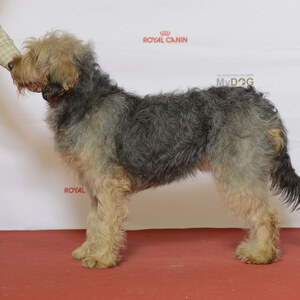
Barak (Bosnian Coarse-haired Hound) · Svenska Mässan from Sweden / Wikimedia Commons, CC BY 2.0. Cropped and resized.
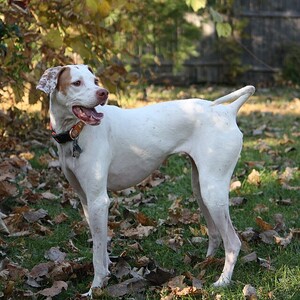
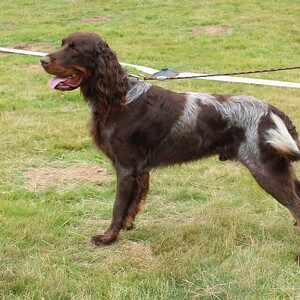
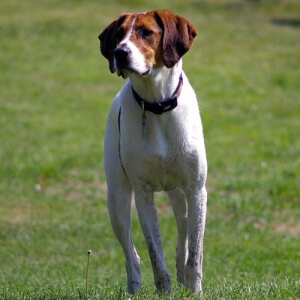
The Barak, officially called the “Bosnian Coarse-haired Hound”, is a hunting dog from Bosnia. It has a long, harsh, shaggy coat, and its bushy eyebrows give it a serious look. It is lively, brave and very persistent on a trail.
Quick facts
| Common name | Bosnian Coarse-haired Hound (Bosanski oštrodlaki gonič; Barak) |
| Scientific name | Canis lupus familiaris |
| Country of origin | Bosnia and Herzegovina |
| Official recognition | FCI (Group 6, with a working trial; standard no. 155); registered in 1965 as the “Illyrian Hound” |
| Lifespan | No published data for the breed; medium-sized breeds usually live 10–13 years |
| Size (males) | 46–56 cm at the withers (ideally 52 cm) |
| Size (females) | slightly smaller than males |
| Weight | 16–24 kg (ideally 20 kg) |
| Coat type | Long, harsh, shaggy, with a dense undercoat |
| Common colours | Wheaten yellow, reddish yellow, earthy grey or blackish, with white markings |
| Energy level | High |
| Suited to an apartment? | No |
| Temperament | Lively, brave, persistent |
| Tendency to aggression | Low |
| Good with children | Good |
| Good with other animals | Good with other dogs; chases game |
| Genetic predispositions | No breed-specific diseases are known |
- Primary category:Dog breeds
- Explore this animal's categories:
History and origin
The Barak took shape in the 19th century, when hunters in Bosnia wanted an efficient hound and used the dogs they had to hand. Wikipedia notes that in the 1890s the local dogs were also crossed with an Italian hunting dog.
A genetic study showed that the modern Barak has high genetic diversity and is closest to the Tornjak, the shepherd dog of Bosnia and Croatia.
How the breed developed
- 19th century – Local hunters create the breed from the dogs available.
- 1890s – The local dogs are crossed with an Italian hunting dog.
- 19 June 1965 – The breed is registered with the FCI under the name “Illyrian Hound”.
- 15 January 1973 – The current standard is published, and the name becomes “Bosnian Coarse-haired Hound – Barak”.
Breed rating
| Feature | Stars |
|---|---|
| Training and intelligence | ★★★☆☆ |
| Easy to train | ★★★☆☆ |
| Intelligence | ★★★☆☆ |
| Independence | ★★★☆☆ |
| Stubbornness | ★★★☆☆ |
| Behaviour and temperament | ★★★★☆ |
| Affectionate with family | ★★★★☆ |
| Friendly with children | ★★★★☆ |
| Good with other dogs | ★★★★☆ |
| Good with cats and other animals | ★★☆☆☆ |
| Loyalty | ★★★★☆ |
| Tendency to be aggressive | ★☆☆☆☆ |
| Tendency to bark | ★★★★☆ |
| Needs and care | ★★★☆☆ |
| Shedding | ★★★☆☆ |
| Needs frequent grooming | ★★☆☆☆ |
| Activity and lifestyle | ★★★★☆ |
| Energy level | ★★★★★ |
| Daily exercise needs | ★★★★★ |
| Suited to apartment life | ★☆☆☆☆ |
| Health and longevity | ★★★★☆ |
| Life expectancy | ★★★★☆ |
| Predisposition to genetic diseases | ★★☆☆☆ |
| Working abilities and uses | ★★★★★ |
| Good hunting dog | ★★★★★ |
| Good companion dog | ★★★☆☆ |
Indicative rating: 5 stars means the highest level. The breed has no AKC profile; the rating is based on the FCI standard (“lively, courageous and persistent temperament”).
Physical characteristics
The Barak is a robust dog, with a body 10% longer than it is tall. The head is long and fairly broad, with prominent, bushy eyebrows.
General appearance
Its expression is serious and stern, yet playful. The large, oval eyes are chestnut brown. The ears hang down and are rounded at the tip. The very hairy tail is carried slightly curved upwards, like a yataghan.
| Feature | Bosnian Coarse-haired Hound |
|---|---|
| Size | Medium |
| Height at the withers | 46–56 cm (ideally 52 cm); females slightly smaller |
| Weight | 16–24 kg (ideally 20 kg) |
| Coat | Long, harsh, shaggy, with a dense undercoat |
| Eyes | Large, oval, chestnut brown |
| Tail | Very hairy, slightly curved upwards |
The base colour can be wheaten yellow, reddish yellow, earthy grey or blackish. White markings often appear on the head, under the neck, on the chest, on the lower legs and at the tip of the tail. The coat can be bicolour or tricolour.
Training and socialisation
The Barak is a hardy, persistent hound with a sonorous, sometimes deep voice. It follows game stubbornly, so the recall needs a lot of practice.
It is trained mainly for hunting, with calm, patience and rewards.
Tips for effective training
- Use its nose. Search games keep it content.
- Practise the recall. On a trail, it may forget commands.
- Be consistent. Clear rules help it understand what you want.
- Socialise it early. Get it used to new people, dogs and noises.
Activity needs and lifestyle
It is a hardy hunting dog that needs a lot of daily exercise and scent work.
| Activity | How often | Why it matters |
|---|---|---|
| Long walks in nature | daily | Its stamina calls for a lot of exercise |
| Scent work | several times a week | Uses its hound instinct |
| Running in a fenced area | several times a week | Uses up energy |
Tips for a balanced life
- Keep it on a lead outside the yard.
- It suits hunters and country life best.
- Its powerful voice carries a long way.
Care and health
Coat and skin care
Brush the harsh, shaggy coat once a week to remove dead hair and burrs. The dense undercoat sheds more when it is moulting.
Common health problems
There are no published health studies for this breed and no known hereditary diseases specific to it. Annual vet check-ups and parasite control are important for a dog that spends a lot of time in the woods.
Other care
- Check the ears after every outing.
- Look for ticks in the dense coat.
- Trim the nails when they start to touch the floor.
Diet and nutrition
An active hunting dog needs more energy during the hunting season. Adjust the portion to its workload and weight.
Tips for a healthy diet
The table gives a starting estimate, calculated with the formula from the Merck Veterinary Manual. The first two calorie columns show the calories per day for a healthy adult dog. The last column shows what this means in dry food with 3,500–4,000 kcal per kilogram.
| Dog's weight | Calories per day (neutered) | Calories per day (not neutered) | Dry food per day (approximate) |
|---|---|---|---|
| 16 kg | 900 kcal | 1,010 kcal | 220–290 g |
| 20 kg | 1,060 kcal | 1,190 kcal | 260–340 g |
| 24 kg | 1,210 kcal | 1,370 kcal | 300–390 g |
- Give it its food in two meals a day.
- Fresh water should always be available.
- A dog is at the right weight when you can feel its ribs without pressing hard.
Foods to avoid
Some human foods are dangerous for dogs: chocolate, coffee, grapes and raisins, onions, garlic, xylitol (a sweetener used in chewing gum), macadamia nuts and alcohol.
Reproduction and development
Physical and emotional maturity
In dogs, sexual maturity usually comes between 6 and 12 months. Most breeds become adults at around 13–15 months.
Mating and pregnancy
Pregnancy lasts about 63 days, counted from ovulation. Mating a female on her first heat is not recommended. The FCI standard requires that only healthy dogs of typical breed appearance are used for breeding.
Caring for the puppies
In dogs, a litter has 5–6 puppies on average, and the number rises with the size of the breed. Socialisation starts in the first weeks: gentle handling, everyday noises and new people.
Interesting facts
- It once had another name. Until 1973 it was known to the FCI as the “Illyrian Hound”.
- It has bushy eyebrows. Its prominent eyebrows give it a serious but playful expression.
- A relative of a shepherd dog. Genetically, it is closest to the Tornjak, the Bosnian shepherd dog.
- It is taller than its neighbours. The standard calls for a body only 10% longer than its height, to set it apart from the low-set hounds of the region.
- It has a sonorous voice. The standard says it gives a sonorous, high-pitched, sometimes deep bay when hunting.
Frequently asked questions
What is the Barak?
It is a hound from Bosnia with a harsh, shaggy coat, used for hunting.
How big does it get?
It stands 46–56 cm at the withers and weighs 16–24 kg.
What colours does it come in?
Wheaten yellow, reddish yellow, earthy grey or blackish, often with white markings.
Is it suited to an apartment?
No. It is a hunting dog that needs a lot of space and exercise.