American FoxhoundCharacteristics, history, training and care
The American Foxhound is an American scent hound developed for following trails, often in packs. It is active and has a strong voice. Exercise, companionship, training and secure outdoor management are important.
Quick facts
| Common name | American Foxhound |
| Scientific name | Canis lupus familiaris |
| Country of origin | United States of America |
| Official Recognition | Recognised by AKC and UKC |
| Typical lifespan | About 11-13 years |
| Dimensions (Male) | About 56-64 cm / 29-34 kg |
| Dimensions (Female) | About 53-61 cm / 27-32 kg |
| Coat type | Short, hard, close |
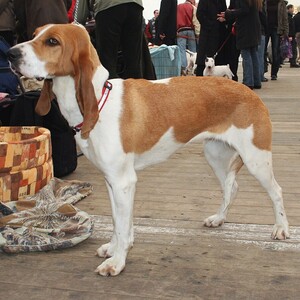
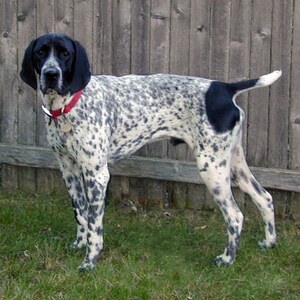
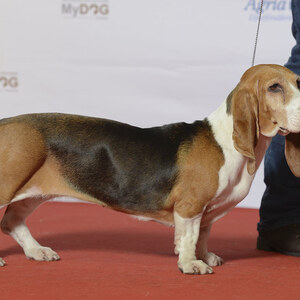
| Common colours | Any colour; often tricolour (white, black and tan), or white with tan or lemon |
| Energy Level | Very high |
| Suitable for an apartment? | Depends on exercise, training, health and the individual dog |
| Temperament | Independent, friendly, hard-working |
| Behaviour towards unfamiliar people and dogs | Individual behaviour varies; socialisation, training and management matter |
| Compatibility with children | Depends on the individual; adult supervision and suitable handling are essential |
| Compatibility with other animals | Depends on socialisation, prey drive and the animals involved |
| Health considerations | Hip dysplasia, ear infections, obesity, thrombopathy |
- Primary category:Dog breeds
- Explore this animal's categories:
History and Origin
The American Foxhound’s ancestry includes English hounds brought to colonial North America in the 17th century. Later breeding helped shape the American breed.
Evolution of the breed
- Colonial hounds - In 1650, Robert Brooke brought a pack of English hounds to Maryland; these and other imported hounds were used to hunt foxes.
- Mixing bloodlines - Later, English, French and Irish hounds were crossed to produce a lighter, faster hound with a good nose, suited to American terrain.
- George Washington's hounds - The first US president bred foxhounds at Mount Vernon and received French hounds as a gift from the Marquis de Lafayette.
- The American Foxhound is a recognised American scent-hound breed; this does not make it an official dog of the whole United States.
Breed Evaluation
The American Foxhound is an energetic, sociable hunting dog that needs a lot of activity and company. These are general editorial ratings, not measured scores; individual dogs vary.
| Characteristic | Stars |
|---|---|
| Training and Intelligence | ★★★★☆ |
| Easy to train | ★★★☆☆ |
| Intelligence | ★★★★☆ |
| Level of independence | ★★★★★ |
| Level of stubbornness | ★★★★☆ |
| Behavior and Temperament | ★★★★★ |
| Affectionate with family | ★★★★★ |
| Friendly with children | ★★★★★ |
| Compatible with other dogs | ★★★★★ |
| Compatible with cats and other animals | ★★★★☆ |
| Degree of loyalty | ★★★★☆ |
| Tendency to be aggressive | ★☆☆☆☆ |
| Tendency to bark | ★★★★★ |
| Needs and Care | ★★★☆☆ |
| Shedding level | ★★★☆☆ |
| Requires frequent care | ★★☆☆☆ |
| Activity and Lifestyle | ★★★★★ |
| Energy level | ★★★★★ |
| Daily exercise requirement | ★★★★★ |
| Suitable for apartment living | ★☆☆☆☆ |
| Health and Longevity | ★★★★☆ |
| Life expectancy | ★★★★☆ |
| Predisposition to genetic diseases | ★★★☆☆ |
| Work and Utility Features | ★★★★★ |
| Good hunting dog | ★★★★★ |
| Good companion dog | ★★★★☆ |
Physical Characteristics
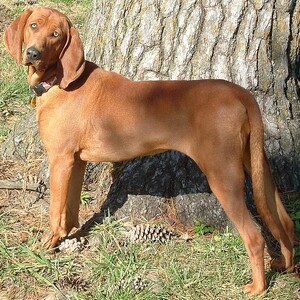
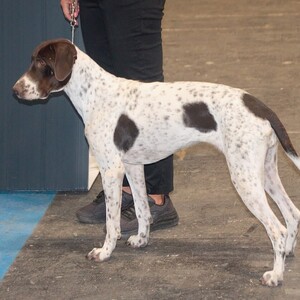
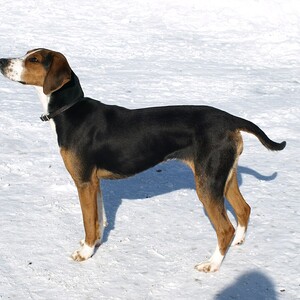
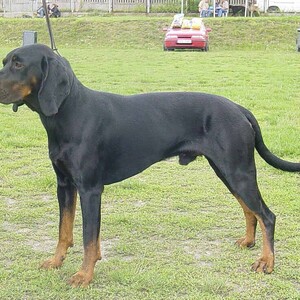
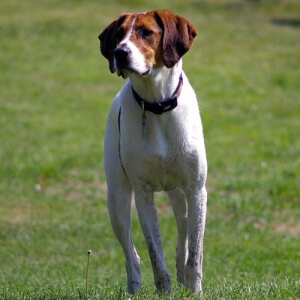
The American Foxhound is a medium-large, athletic hound with a light but muscular build, made for speed and stamina.
General appearance
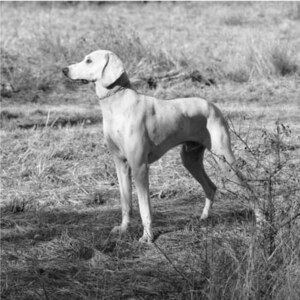
- A lean body with long, muscular legs, built for running.
- A short, hard coat that protects it from weather and undergrowth.
- Long, wide, hanging ears, typical of scent hounds.
- A fairly long head with a straight, square muzzle.
- Large brown or hazel eyes with a gentle, pleading expression.
| Characteristic | American Foxhound |
|---|---|
| Size | Medium to large (about 53-64 cm at the shoulder) |
| Weight | About 27-34 kg |
| Coat | Short, hard, close |
| Muzzle | Long, straight |
| Shedding tendency | Moderate |
| Build | Light but strong |
The American Foxhound is an elegant, agile dog with a body built for long hunts.
Training and Socialization
The American Foxhound is clever but independent, which can make training hard for inexperienced owners. As a pack hound, it has a strong urge to follow scents and usually enjoys the company of other dogs.
Tips for effective training
- Start early - Training should start at about 8 weeks to manage its independent nature.
- Positive techniques - It responds well to rewards and praise, but badly to harsh corrections.
- Recall training - Because of its hunting instinct, it is essential to practise "come" and "stay" to prevent it from running off.
- Wide socialisation - It should meet many places, people and animals to prevent shyness.
- Keep it on a lead - If it picks up an interesting scent, it may run off and ignore commands, so it should be kept on a lead or in secure areas.
With patient, consistent training, the American Foxhound becomes a well-mannered, sociable dog, but it needs an experienced, active owner.
Activity and Lifestyle Needs
The American Foxhound is a very energetic breed that needs plenty of exercise and mental stimulation to prevent destructive behaviour.
| Activity | Recommended duration |
|---|---|
| Daily walks and runs | At least 60-90 min |
| Interactive games | About 30 min |
| Obedience training | About 15-20 min |
| Scent work, tracking, canicross | As often as possible |
Recommendations for a balanced lifestyle
- Not ideal for apartments - It needs a large, securely fenced garden or open space to run.
- Great stamina - It can run long distances, which suits very active people.
- Does not like being alone - If left alone too long, it may howl or become destructive; it is happiest with people or other dogs.
- Dog sports - It does well in tracking, canicross and other activities that use its nose.
Without enough activity, the American Foxhound can become destructive and hard to manage, so it suits only very active people.
Care and Health
The American Foxhound is easy to groom and generally healthy, but some problems should be monitored.
Fur and skin care
- Weekly brushing - The short coat needs regular brushing to remove dead hair.
- Occasional baths - It needs washing only when necessary.
- Ear and claw checks - The long ears should be checked and cleaned regularly to prevent infections, and claws trimmed.
Common health problems
| Condition | Description | Common symptoms |
|---|---|---|
| Hip dysplasia | Abnormal development of the hip joint | Lameness, joint pain |
| Obesity | Foxhounds love food and can gain weight if under-exercised | Low energy, difficulty moving |
| Ear infections | Long ears can trap moisture | Head shaking, scratching |
| Thrombopathy | An inherited blood-clotting disorder seen in the breed | Easy bruising, prolonged bleeding |
Other aspects of care
- Weight control - A balanced diet and regular activity help prevent obesity.
- Regular checks at the vet – annual checks are recommended, to detect any health problems in time.
The American Foxhound is generally healthy and hardy, but its joints and weight should be monitored.
Diet and Nutrition
The American Foxhound needs a balanced diet with enough protein and energy for its high activity.
Recommendations for a healthy diet
Choose a complete, balanced diet suited to age, size and health. Plan home-prepared diets and supplements with a qualified veterinarian; raw pet food can carry harmful bacteria.
| Food type | Daily Amount (Adults) | Frequency |
|---|---|---|
| Premium dry food | Individual amount; follow complete-food guidance and veterinary advice | 2 meals/day |
| Home cooked food | Individual amount; follow a complete diet’s guidance and veterinary advice | 2 meals/day |
| Raw food: bacterial contamination is a concern | Individual amount; follow a complete diet’s guidance and veterinary advice | 2 meals/day |
Forbidden foods
Chocolate, grapes and raisins, onions and xylitol - toxic to dogs. / Cooked bones - can splinter and cause intestinal blockage. / Fatty foods - can cause digestive problems and weight gain. / Overfeeding - this breed tends to eat more than it needs, which can lead to rapid weight gain.
The American Foxhound should be fed properly and kept active to avoid digestive and weight problems.
Reproduction and Development
Breeding requires veterinary planning, suitable health screening and care for the mother and puppies. Pregnancy and birth can involve complications.
Physical and emotional maturity
- Physical maturity: It reaches adult size at about 12-18 months, but continues to fill out until about 2 years.
- Emotional maturity: It usually settles at about 2-3 years and stays more independent than many companion breeds.
Mating and Gestation
- Breeding decisions require veterinary assessment of maturity, health and suitable screening; reaching a fixed age does not establish that breeding is appropriate.
- Duration of gestation: Approximately 58-68 days, usually about 63 days.
- Average number of puppies: Usually about 5-8 puppies.
Puppy care
- The first 3 weeks: Puppies depend completely on their mother for warmth, milk and protection.
- Between 4-8 weeks: They begin to play and explore, and early socialisation is essential for a balanced character.
- Moving to a new home: When puppies go to their new homes, they should start basic training and learn house rules.
Early socialisation and training are essential for shaping the American Foxhound's personality and behaviour.
Curiosities and Interesting Facts
- A state dog - The American Foxhound is the official state dog of Virginia.
- George Washington's hounds - The first US president was a keen fox hunter and bred foxhounds at Mount Vernon.
- An early AKC breed - The American Foxhound was one of the first breeds recognised by the AKC, in 1886.
- A canine marathon runner - It can run long distances and follow a trail for hours.
- A musical voice - It has a loud, ringing bay that lets hunters follow the chase from far away.
- Lighter than its English cousin - It is taller, lighter and longer-legged than the English Foxhound.
- Rare as a pet - Although many foxhounds live in hunting packs, very few are registered as pets, so it is one of the rarer AKC breeds.
The Dog in Popular Culture
The American Foxhound is not widely known as a pet, but it is an important part of American hunting history.
American Foxhound in modern media and culture
- Washington's diaries - George Washington's diaries describe his fox hunts and the hounds he bred at Mount Vernon.
- Field trials - Foxhounds take part in field trials and hound shows that test their hunting ability.
- Rare outside the USA - The American Foxhound is seldom seen in other countries.
Importance in modern culture
- A family dog for active people - Although bred for hunting, it can be a gentle companion for families who can give it enough exercise.
- A symbol of Virginia - Its status as Virginia's state dog reflects its long history in the American South.