English PointerCharacteristics, history, training and care
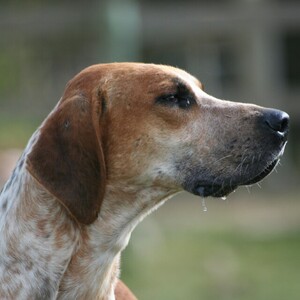
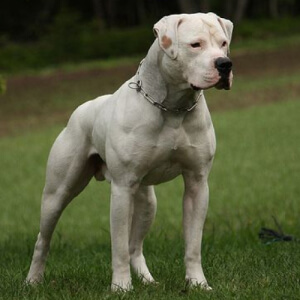
English Pointer. · Anne Hornyak / Wikimedia Commons, CC BY 2.0. Cropped and resized.
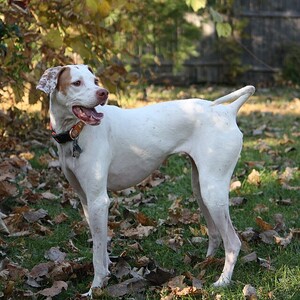
The English Pointer is an elegant, athletic pointing dog with a short, glossy coat, usually white with lemon, orange, liver or black patches. Its name comes from the stance in which it freezes when it scents game, “pointing” it out to the hunter. The standard describes it as aristocratic, alert, kind and even-tempered.
Quick facts
| Common name | English Pointer |
| Scientific name | Canis lupus familiaris |
| Country of origin | United Kingdom |
| Official recognition | FCI, definitively since 5 March 1963 (group 7, British pointers and setters, with a working trial; standard no. 1); also recognised by the AKC |
| Lifespan | 12–15 years, according to the AKC |
| Size (males) | 63–69 cm at the withers; 25–34 kg according to the AKC |
| Size (females) | 61–66 cm at the withers; 20–29 kg according to the AKC |
| Coat type | Fine, short, hard, smooth, glossy |
| Common colours | White with lemon, orange, liver or black |
| Energy level | High |
| Suited to an apartment? | Not really |
| Temperament | Aristocratic, alert, kind, even-tempered |
| Tendency to aggression | Low |
| Good with children | Average |
| Good with other animals | Very good with other dogs, according to the AKC |
| Genetic predispositions | Hip dysplasia, epilepsy, eye diseases, allergies, hypothyroidism, bloat |
- Primary category:Dog breeds
- Explore this animal's categories:
History and origin
Wikipedia says that, according to a widely held view, the Pointer descends from the old Spanish Pointer, brought to England by soldiers returning from Spain in the early 18th century. In England it was crossed with local breeds to improve its hunting abilities.
The name comes from the stance it takes when it scents game: it freezes and “points” to where the game is hiding, showing the hunter what it has found and where. Unlike most hunting breeds, its job is to point the game, not to retrieve it.
How the breed developed
- Early 18th century – Spanish pointers reach England.
- 18th century – They are crossed with English breeds.
- 5 March 1963 – The FCI recognises the breed.
Breed rating
| Feature | Stars |
|---|---|
| Training and intelligence | ★★★★★ |
| Easy to train | ★★★★☆ |
| Intelligence | ★★★★☆ |
| Independence | ★★★☆☆ |
| Stubbornness | ★★☆☆☆ |
| Behaviour and temperament | ★★★★☆ |
| Affectionate with family | ★★★★★ |
| Friendly with children | ★★★☆☆ |
| Good with other dogs | ★★★★★ |
| Good with cats and other animals | ★★★☆☆ |
| Loyalty | ★★★★★ |
| Tendency to be aggressive | ★☆☆☆☆ |
| Tendency to bark | ★★★☆☆ |
| Needs and care | ★★★☆☆ |
| Shedding | ★★☆☆☆ |
| Needs frequent grooming | ★☆☆☆☆ |
| Activity and lifestyle | ★★★★☆ |
| Energy level | ★★★★★ |
| Daily exercise needs | ★★★☆☆ |
| Suited to apartment life | ★★☆☆☆ |
| Health and longevity | ★★★★☆ |
| Life expectancy | ★★★★☆ |
| Predisposition to genetic diseases | ★★★☆☆ |
| Working abilities and uses | ★★★☆☆ |
| Good hunting dog | ★★★★★ |
| Good companion dog | ★★★★★ |
Indicative rating: 5 stars means the highest level. It is based on the ratings the American Kennel Club gives the breed and on the FCI standard.
Physical characteristics
The standard describes it as a symmetrical, well-built dog, with an outline made up of a series of graceful curves that shows strength, stamina and speed.
General appearance
The skull is of medium width, with a well-defined stop. The coat is fine, short, hard and even, perfectly smooth and straight, with a strong sheen.
| Feature | English Pointer |
|---|---|
| Size | Large |
| Height at the withers | males: 63–69 cm; females: 61–66 cm |
| Weight | males: 25–34 kg; females: 20–29 kg (AKC) |
| Coat | Short, glossy |
| Outline | Graceful curves |
| Use | Pointing dog |
The usual colours are lemon and white, orange and white, liver and white, and black and white. Self colours and tricolours are also allowed.
Training and socialisation
The standard describes it as aristocratic, alert, with an appearance of strength, stamina and speed, kind and even-tempered. The AKC says its friendly temperament and good sense make it a pleasant companion that is easy to train, in the field and at home.
The AKC gives it the top score for ease of training. Many Pointers hold several titles in dog sports, and they have also distinguished themselves as assistance dogs.
Tips for effective training
- Use rewards. It learns very easily.
- Give it a job. It enjoys search games.
- Practise recall. In the field, its instinct can carry it away.
- Try dog sports. It excels at many.
Activity needs and lifestyle
The AKC says it is a very active hunting breed that needs plenty of exercise every day: long walks and energetic play sessions. A securely fenced yard where it can run flat out makes it calmer at home.
| Activity | How often | Why it matters |
|---|---|---|
| Long walks | daily | High energy |
| Free running in a fenced yard | daily | Renowned stamina |
| Dog sports | weekly | Mental activity |
Tips for a balanced life
- It suits very active families.
- In winter, its short coat does not protect it from the cold.
- It needs a fenced yard.
Care and health
Coat and skin care
The AKC says the short, dense, glossy coat is very easy to look after: a weekly brushing with a soft brush or a grooming mitt. The ears should be checked and cleaned regularly.
Common health problems
The AKC says it is generally very healthy. The following may occur:
| Condition | Description | Common symptoms |
|---|---|---|
| Hip dysplasia | The hip joint forms incorrectly and, over time, arthritis develops | Limping, difficulty getting up or jumping, hip pain |
| Epilepsy | Repeated neurological seizures | Trembling, convulsions |
| Eye diseases | Inherited eye conditions | Watery eyes, poor vision |
| Allergies and hypothyroidism | Autoimmune conditions of the skin and thyroid | Itching, tiredness, weight gain |
| Gastric dilatation-volvulus (bloat) | The stomach fills with gas and may twist; this is a veterinary emergency | Swollen belly, trying to vomit without success, drooling, restlessness |
Other care
- Check the ears regularly.
- Check for ticks after outings in nature.
- Trim the nails regularly.
Diet and nutrition
The AKC says some dogs gain weight easily, so calories and weight should be watched.
Tips for a healthy diet
The table gives a starting estimate, calculated with the formula from the Merck Veterinary Manual. The first two calorie columns show the calories per day for a healthy adult dog. The last column shows what this means in dry food with 3,500–4,000 kcal per kilogram.
| Dog's weight | Calories per day (neutered) | Calories per day (not neutered) | Dry food per day (approximate) |
|---|---|---|---|
| 20 kg | 1,060 kcal | 1,190 kcal | 260–340 g |
| 27 kg | 1,330 kcal | 1,490 kcal | 330–430 g |
| 34 kg | 1,580 kcal | 1,770 kcal | 400–510 g |
- Split the food into two meals a day to reduce the risk of bloat.
- Do not let it run right after a meal.
- A dog is at the right weight when you can feel its ribs without pressing hard.
Foods to avoid
Some human foods are dangerous for dogs: chocolate, coffee, grapes and raisins, onions, garlic, xylitol (a sweetener used in chewing gum), macadamia nuts and alcohol.
Reproduction and development
Physical and emotional maturity
In dogs, sexual maturity usually comes between 6 and 12 months, but in large breeds it can be delayed until about two years. The body also reaches its adult form later than in small breeds.
Mating and pregnancy
Pregnancy lasts about 63 days, counted from ovulation. Mating a female on her first heat is not recommended. The FCI standard requires that only healthy dogs of typical breed appearance are used for breeding.
Caring for the puppies
In large breeds, a litter has around 7 puppies on average. Socialisation starts in the first weeks: gentle handling, everyday noises and new people.
Interesting facts
- It points, it does not retrieve. Its job is to point the game, not to retrieve it.
- Spanish ancestors. It is believed to come from the old Spanish Pointer.
- “Bird dog”. In the southern United States it is often called this, according to Wikipedia.
- An outline of curves. The standard describes its silhouette as a series of graceful curves.
- An assistance dog, too. The AKC says it has also distinguished itself as an assistance dog.
Frequently asked questions
Where does the name come from?
From the stance in which it “points” at game with its body frozen still.
How big does it get?
Males measure 63–69 cm, females 61–66 cm.
Is it easy to train?
Yes. The AKC gives it the top score for ease of training.
How long does it live?
The AKC gives 12–15 years.