ŠarplaninacCharacteristics, history, training and care
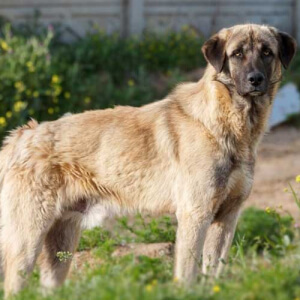
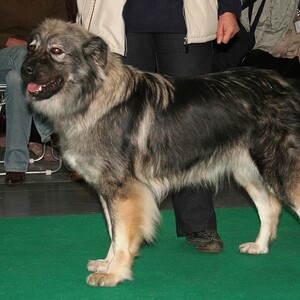
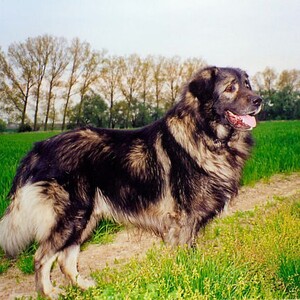
Šarplaninac. · Urok / Wikimedia Commons, CC BY-SA 3.0. Cropped and resized.
The Šarplaninac is a flock guardian from the Šar Mountains (Šar Planina) in the Balkans: sturdy and heavy-boned, with a thick, long, fairly harsh coat, usually iron grey. The standard describes it as balanced, reliable and protective, but never biting without reason, incorruptible and devoted to its owner.
Quick facts
| Common name | Šarplaninac (Sharr) |
| Scientific name | Canis lupus familiaris |
| Country of origin | North Macedonia and Serbia |
| Official recognition | FCI, definitively since 24 July 1957 (group 2, molossoid breeds; standard no. 41); registered since 1939 as the “Illyrian Shepherd Dog” |
| Lifespan | No published data for the breed; large breeds usually live 10–12 years |
| Size (males) | 62 cm at the withers on average; 35–45 kg |
| Size (females) | 58 cm at the withers on average; 30–40 kg |
| Coat type | Long, almost flat, harsh, with a dense undercoat |
| Common colours | Solid, from white to dark brown; iron grey preferred |
| Energy level | Moderate |
| Suited to an apartment? | No |
| Temperament | Balanced, reliable, protective, incorruptible, devoted |
| Tendency to aggression | Moderate; a serious guard dog, but it does not bite without reason |
| Good with children | No specific data |
| Good with other animals | Good with the flock |
| Genetic predispositions | No breed-specific diseases are known |
- Primary category:Dog breeds
- Explore this animal's categories:
History and origin
The FCI standard says it has been bred since time immemorial in the mountainous regions of south-eastern former Yugoslavia and takes its name from the Šar Planina massif, where it is most widespread. It has been registered with the FCI since 1939, under number 41, as the “Illyrian Shepherd Dog”.
In 1957, the FCI accepted the proposal of the Yugoslav canine federation to call it the “Yugoslav Shepherd Dog Šarplaninac”. The origin of the breed is disputed. The Karst Shepherd bore the same name until 1968, when the two breeds were separated.
How the breed developed
- Time immemorial – It guards flocks in the Šar Mountains.
- 1939 – The FCI registers it as the “Illyrian Shepherd Dog”.
- 24 July 1957 – The FCI recognises it as the “Yugoslav Shepherd Dog Šarplaninac”.
- 1968 – It is definitively separated from the Karst Shepherd.
Breed rating
| Feature | Stars |
|---|---|
| Training and intelligence | ★★★☆☆ |
| Easy to train | ★★★★☆ |
| Intelligence | ★★★★☆ |
| Independence | ★★★★★ |
| Stubbornness | ★★★★☆ |
| Behaviour and temperament | ★★★★☆ |
| Affectionate with family | ★★★★★ |
| Friendly with children | ★★★☆☆ |
| Good with other dogs | ★★★☆☆ |
| Good with cats and other animals | ★★★☆☆ |
| Loyalty | ★★★★★ |
| Tendency to be aggressive | ★★★☆☆ |
| Tendency to bark | ★★★☆☆ |
| Needs and care | ★★★★☆ |
| Shedding | ★★★☆☆ |
| Needs frequent grooming | ★★☆☆☆ |
| Activity and lifestyle | ★★★☆☆ |
| Energy level | ★★★☆☆ |
| Daily exercise needs | ★★★★☆ |
| Suited to apartment life | ★☆☆☆☆ |
| Health and longevity | ★★★☆☆ |
| Life expectancy | ★★★☆☆ |
| Predisposition to genetic diseases | ★★☆☆☆ |
| Working abilities and uses | ★★★★★ |
| Good guard dog | ★★★★★ |
| Good companion dog | ★★★☆☆ |
Indicative rating: 5 stars means the highest level. The breed has no AKC profile, so the rating is based on the FCI standard.
Physical characteristics
The standard describes it as a sturdy, well-proportioned, heavy-boned dog, well above medium size, with a thick, long and fairly harsh coat that makes it look shorter than it is. The body is slightly longer than its height.
General appearance
The head, ears and front of the legs have short hair. Around the neck, on the croup, on the back of the legs and on the tail, the hair is long, almost flat and harsh, with a plentiful, short, dense undercoat. At the withers, the hair is 10–12 cm long.
| Feature | Šarplaninac |
|---|---|
| Size | Large |
| Height at the withers | males: 62 cm on average; females: 58 cm on average |
| Weight | males: 35–45 kg; females: 30–40 kg |
| Coat | Long, with a dense undercoat |
| Colour | Solid, iron grey preferred |
| Body | Sturdy, slightly longer than tall |
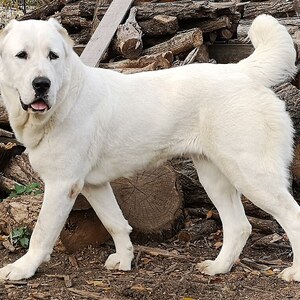
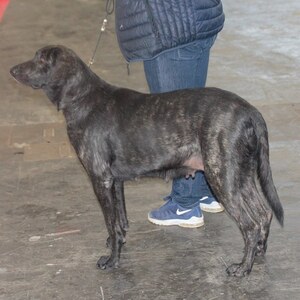
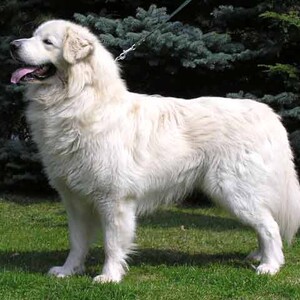
It is a single-coloured dog: all shades from white to very dark brown, almost black, are accepted. Greenish grey (iron grey) and dark grey are preferred. White patches and markings are not allowed.
Training and socialisation
The standard describes it as having a solid constitution, a balanced nature and a good, reliable temperament: protective, but never biting without reason, incorruptible and devoted to its owner.
Like any large flock guardian, it needs early socialisation and a calm, consistent owner.
Tips for effective training
- Socialise it from puppyhood. It is a serious guard dog.
- Be calm and consistent. It is independent.
- Give it a territory. It is made to guard.
- Earn its trust. It is devoted to its owner.
Activity needs and lifestyle
As a mountain dog, it needs daily walks and a large, fenced yard.
| Activity | How often | Why it matters |
|---|---|---|
| Long walks | daily | Exercise |
| Time in a large, fenced yard | daily | It guards its territory |
| Hikes | occasionally | A mountain dog |
Tips for a balanced life
- It suits experienced owners.
- The fence must be solid.
- It copes well with cold.
Care and health
Coat and skin care
The long coat, with its dense undercoat, should be brushed weekly, and more often when it is shedding.
Common health problems
No health studies have been published for the breed and no specific diseases are known. As with any large dog, it is worth watching out for:
| Condition | Description | Common symptoms |
|---|---|---|
| Hip dysplasia | The hip joint forms incorrectly and, over time, arthritis develops | Limping, difficulty getting up or jumping, hip pain |
| Gastric dilatation-volvulus (bloat) | The stomach fills with gas and may twist; this is a veterinary emergency | Swollen belly, trying to vomit without success, drooling, restlessness |
Other care
- Check the ears regularly.
- Check for ticks after time out on the pasture.
- Trim the nails if they do not wear down on their own.
Diet and nutrition
A large dog needs food suited to large breeds, especially while it is growing.
Tips for a healthy diet
The table gives a starting estimate, calculated with the formula from the Merck Veterinary Manual. The first two calorie columns show the calories per day for a healthy adult dog. The last column shows what this means in dry food with 3,500–4,000 kcal per kilogram.
| Dog's weight | Calories per day (neutered) | Calories per day (not neutered) | Dry food per day (approximate) |
|---|---|---|---|
| 30 kg | 1,440 kcal | 1,620 kcal | 360–460 g |
| 38 kg | 1,710 kcal | 1,930 kcal | 430–550 g |
| 45 kg | 1,950 kcal | 2,190 kcal | 490–630 g |
- Split the food into two meals a day to reduce the risk of bloat.
- Do not let it run right after a meal.
- A dog is at the right weight when you can feel its ribs under the coat without pressing hard.
Foods to avoid
Some human foods are dangerous for dogs: chocolate, coffee, grapes and raisins, onions, garlic, xylitol (a sweetener used in chewing gum), macadamia nuts and alcohol.
Reproduction and development
Physical and emotional maturity
In dogs, sexual maturity usually comes between 6 and 12 months, but in large breeds it can be delayed until about two years. The body also reaches its adult form later than in small breeds.
Mating and pregnancy
Pregnancy lasts about 63 days, counted from ovulation. Mating a female on her first heat is not recommended. The FCI standard requires that only healthy dogs of typical breed appearance are used for breeding.
Caring for the puppies
In large breeds, a litter has around 7 puppies on average. Socialisation starts in the first weeks: gentle handling, everyday noises and new people.
Interesting facts
- Named after mountains. The name comes from the Šar Planina massif.
- Once the “Illyrian Shepherd Dog”. That is how it was registered in 1939.
- A single colour. Patches are not allowed.
- Iron grey preferred. The most prized colour is greenish grey.
- Incorruptible. The standard describes it as incorruptible.
Frequently asked questions
Where does the name come from?
From the Šar Planina massif, in the Balkans.
How big does it get?
Males average 62 cm and 35–45 kg; females 58 cm and 30–40 kg.
How does it differ from the Karst Shepherd?
They have been separate breeds since 1968; the Šarplaninac can come in more colours.
Is it aggressive?
It is protective, but the standard says it does not bite without reason.