Canaan DogCharacteristics, history, training and care
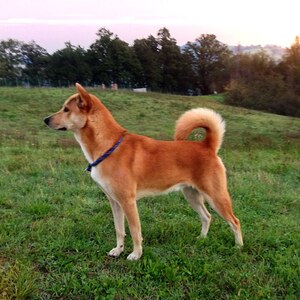
Canaan Dog. · Giora Sluzky / Wikimedia Commons, CC BY-SA 3.0. Cropped and resized.
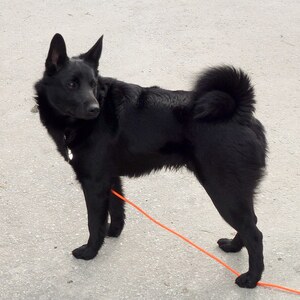
The Canaan Dog is a medium-sized dog from Israel with the look of a wild dog, erect ears and a bushy tail curled over its back. Its ancestors lived freely in the Negev Desert, and in the 1930s they were tamed and bred as a breed. It is alert, very devoted to its family and suspicious of strangers.
Quick facts
| Common name | Canaan Dog |
| Scientific name | Canis lupus familiaris |
| Country of origin | Israel |
| Official recognition | FCI, definitively since 23 November 1966 (group 5, primitive type; standard no. 273); also recognised by the AKC |
| Lifespan | 12–15 years |
| Size (males) | 50–60 cm at the withers; males can be much larger than females |
| Size (females) | 50–60 cm at the withers |
| Weight | 18–25 kg |
| Coat type | Double: dense, harsh, straight topcoat, plentiful undercoat |
| Common colours | Sand, gold, red, cream, white, black or patched, with or without a mask |
| Energy level | Moderate |
| Suited to an apartment? | It can adapt, if it goes out every day |
| Temperament | Alert, quick to react, devoted, easy to train |
| Tendency to aggression | Low; defensive, but not aggressive by nature |
| Good with children | Average |
| Good with other animals | Average; suspicious of unfamiliar dogs |
| Genetic predispositions | Hip and elbow dysplasia, patellar luxation |
- Primary category:Dog breeds
- Explore this animal's categories:
History and origin
Dogs almost identical to the Canaan Dog have lived in the region for a very long time. Wikipedia mentions the dog cemetery at Ashkelon, from the Persian period, with 700 skeletons of dogs very similar to today's breed.
Semi-wild dogs lived for a long time in the Negev Desert, and the Bedouin used them to herd flocks and guard their camps. In the 1930s, the animal behaviour specialist Rudolphina Menzel caught a few, tamed them and began breeding them. The dogs were used by the army and as guides for the blind.
How the breed developed
- Antiquity – Similar dogs are buried in the cemetery at Ashkelon.
- Centuries – The dogs live freely in the Negev; the Bedouin use them for herding and guarding.
- 1930s – Rudolphina Menzel tames them and begins breeding the breed.
- 23 November 1966 – The FCI recognises the breed.
- 28 November 1985 – The current FCI standard is published.
Breed rating
| Feature | Stars |
|---|---|
| Training and intelligence | ★★★★☆ |
| Easy to train | ★★★★☆ |
| Intelligence | ★★★★☆ |
| Independence | ★★★★☆ |
| Stubbornness | ★★★☆☆ |
| Behaviour and temperament | ★★★★☆ |
| Affectionate with family | ★★★☆☆ |
| Friendly with children | ★★★☆☆ |
| Good with other dogs | ★★★☆☆ |
| Good with cats and other animals | ★★☆☆☆ |
| Loyalty | ★★★★★ |
| Tendency to be aggressive | ★★☆☆☆ |
| Tendency to bark | ★★★★★ |
| Needs and care | ★★★☆☆ |
| Shedding | ★★☆☆☆ |
| Needs frequent grooming | ★★★★☆ |
| Activity and lifestyle | ★★★☆☆ |
| Energy level | ★★★☆☆ |
| Daily exercise needs | ★★★☆☆ |
| Suited to apartment life | ★★★☆☆ |
| Health and longevity | ★★★★☆ |
| Life expectancy | ★★★★☆ |
| Predisposition to genetic diseases | ★★☆☆☆ |
| Working abilities and uses | ★★★★☆ |
| Good guard dog | ★★★★☆ |
| Good companion dog | ★★★★☆ |
Indicative rating: 5 stars means the highest level. It is based on the ratings the American Kennel Club gives the breed and on the FCI standard.
Physical characteristics
It is a medium-sized, well-balanced, strong and square dog that resembles a wild dog. Males and females are clearly different.
General appearance
The erect, relatively short and broad ears are rounded at the tip. The dark brown, almond-shaped eyes have dark rims. The bushy tail is carried curled over the back.
| Feature | Canaan Dog |
|---|---|
| Size | Medium |
| Height at the withers | 50–60 cm |
| Weight | 18–25 kg |
| Coat | Double, harsh, short to medium |
| Ears | Erect, short and broad |
| Tail | Bushy, curled over the back |
The typical colours are desert colours: sand, gold, red and cream. White, black or a patched coat, with or without a mask, are also accepted. Grey, brindle, black and tan and tricolour are not accepted.
Training and socialisation
The standard describes it as extraordinarily devoted and easy to train. The AKC says it is highly intelligent, sensitive and affectionate.
Its self-protective instinct and territorial sense make it suspicious of new people, dogs and places. Early socialisation and puppy classes are a must, and training should always be positive.
Tips for effective training
- Socialise it early. The process starts at the breeder's and continues at home.
- Be positive. It is sensitive; punishment spoils it.
- Try dog sports. It enjoys obedience, tracking, agility and scent work.
- Work on the barking. The AKC gives it the top score for barking.
Activity needs and lifestyle
It needs moderate exercise. The AKC says it adapts to many kinds of home, as long as it goes out every day.
| Activity | How often | Why it matters |
|---|---|---|
| Walks | daily | Exercise and new smells |
| Dog sports | weekly | Burn off energy and keep its mind active |
| Scent games | several times a week | Use its instincts |
Tips for a balanced life
- It adapts to most climates.
- The fence must be solid: it has a territorial instinct.
- Get it used to new places and people gradually.
Care and health
Coat and skin care
Canaan Dogs are clean and rarely need a bath. They shed at least once a year, when they need frequent brushing. Trim the nails if they do not wear down on their own.
Common health problems
The AKC says the breed is generally healthy, but a few problems can occur:
| Condition | Description | Common symptoms |
|---|---|---|
| Hip dysplasia | The hip joint forms incorrectly and, over time, arthritis develops | Limping, difficulty getting up or jumping, hip pain |
| Elbow dysplasia | The elbow joint develops incorrectly and arthritis appears | Limping on the front legs, especially after exercise |
| Patellar luxation | The kneecap slips out of place | Suddenly holds a hind leg up for a few steps, then uses it again |
Other care
- Check the ears regularly for signs of infection.
- Brush its teeth often.
- Trim the nails if they do not wear down on their own.
Diet and nutrition
The AKC warns that some dogs put on weight easily. Keep an eye on calories and treats.
Tips for a healthy diet
The table gives a starting estimate, calculated with the formula from the Merck Veterinary Manual. The first two calorie columns show the calories per day for a healthy adult dog. The last column shows what this means in dry food with 3,500–4,000 kcal per kilogram.
| Dog's weight | Calories per day (neutered) | Calories per day (not neutered) | Dry food per day (approximate) |
|---|---|---|---|
| 18 kg | 980 kcal | 1,100 kcal | 240–310 g |
| 22 kg | 1,140 kcal | 1,280 kcal | 280–370 g |
| 25 kg | 1,250 kcal | 1,410 kcal | 310–400 g |
- Give it its food in two meals a day.
- Training treats count towards the daily portion.
- A dog is at the right weight when you can feel its ribs without pressing hard.
Foods to avoid
Some human foods are dangerous for dogs: chocolate, coffee, grapes and raisins, onions, garlic, xylitol (a sweetener used in chewing gum), macadamia nuts and alcohol.
Reproduction and development
Physical and emotional maturity
In dogs, sexual maturity usually comes between 6 and 12 months. Most breeds become adults at around 13–15 months.
Mating and pregnancy
Pregnancy lasts about 63 days, counted from ovulation. Mating a female on her first heat is not recommended. The FCI standard requires that only healthy dogs of typical breed appearance are used for breeding.
Caring for the puppies
In dogs, a litter has 5–6 puppies on average, and the number rises with the size of the breed. Socialisation starts in the first weeks: gentle handling, everyday noises and new people.
Interesting facts
- 700 dogs in an ancient cemetery. An ancient cemetery with 700 skeletons of similar dogs was found at Ashkelon.
- It lived freely in the desert. Its ancestors lived semi-wild in the Negev Desert.
- A guide for the blind. Rudolphina Menzel also trained it as a guide for the blind.
- Desert colours. Sand, gold, red and cream are the most typical colours.
- It tames easily. Menzel found that these semi-wild dogs adapt and become domesticated easily.
In popular culture
The dog cemetery at Ashkelon
At Ashkelon, in Israel, archaeologists discovered an ancient cemetery with 700 skeletons of dogs very similar to the Canaan Dog. The cemetery dates from the period of Persian rule, and archaeologists believe these dogs were considered sacred animals.
Frequently asked questions
Where does the Canaan Dog come from?
From Israel; its ancestors lived semi-wild in the Negev Desert.
How big does it get?
It measures 50–60 cm at the withers and weighs 18–25 kg.
Is it a good family dog?
Yes, it is very devoted, but suspicious of strangers; it needs socialisation.
Does it bark a lot?
Yes, the AKC gives it the top score for barking.
How long does it live?
Its life expectancy is 12–15 years.