Segugio MaremmanoCharacteristics, history, training and care
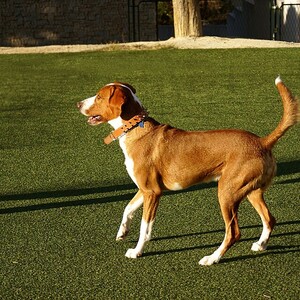
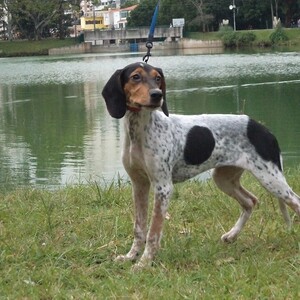
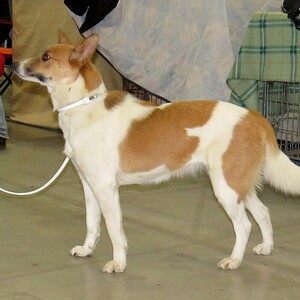
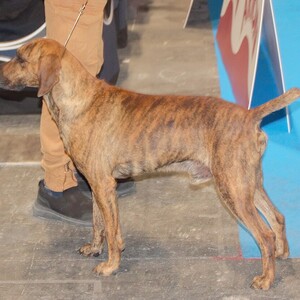
Segugio Maremmano. · Canarian / Wikimedia Commons, CC BY-SA 4.0. Cropped and resized.
The Segugio Maremmano is a medium-sized Italian hound from the coastal plains of the Maremma, in Tuscany, used mainly to hunt wild boar, but also hares. It may be short-haired or rough-haired. The FCI standard describes it as a dog without exaggerations, natural in appearance, with a strong hunting instinct, a strong temperament, self-confidence and a pleasant voice that differs at each stage of the hunt.
Quick facts
| Common name | Segugio Maremmano |
| Scientific name | Canis lupus familiaris |
| Country of origin | Italy (Tuscany) |
| Official recognition | FCI, provisionally since 2018 (group 6, hounds; standard no. 361); ENCI since 2009 |
| Lifespan | No published data for the breed; medium-sized breeds usually live 10–13 years |
| Size (males) | 48–54 cm at the withers (Wikipedia); 16–23 kg |
| Size (females) | about 2 cm smaller; 13–20 kg |
| Coat type | Short and harsh to the touch, or rough, 3–4 cm |
| Common colours | Fawn from light to dark red, black and tan, brindle |
| Energy level | High |
| Suited to an apartment? | No |
| Temperament | Passionate, strong, self-confident |
| Tendency to aggression | Low towards people |
| Good with children | No specific data |
| Good with other animals | Good with pack hounds; poor with small animals |
| Genetic predispositions | No breed-specific diseases are known |
- Primary category:Dog breeds
- Explore this animal's categories:
History and origin
The FCI standard says the Segugio Maremmano comes from an unregistered population of hunting dogs in the Maremma Toscana, in southern Tuscany. The breed has existed there since the 1930s, when enthusiasts first tried to have it officially recognised. Tuscan wild boar hunters created it, adapted to this kind of hunting and to the local terrain.
Thanks to Dr Bosio, a vet and president of the Italian hound club, the standard was officially recognised. Wikipedia says ENCI recognised the breed in 2009, when more than 6,600 dogs were registered, the highest number among the Italian breeds. The FCI accepted it provisionally in 2018.
How the breed developed
- 1930s – The breed is present in the Maremma; first attempts at recognition.
- 2009 – Recognition in Italy (ENCI).
- 2018 – Provisional FCI recognition; more than 90% of puppies are short-haired.
Breed rating
| Feature | Stars |
|---|---|
| Training and intelligence | ★★★★☆ |
| Easy to train | ★★★★☆ |
| Intelligence | ★★★★☆ |
| Independence | ★★★☆☆ |
| Stubbornness | ★★★☆☆ |
| Behaviour and temperament | ★★★★☆ |
| Affectionate with family | ★★★★★ |
| Friendly with children | ★★★★☆ |
| Good with other dogs | ★★★★☆ |
| Good with cats and other animals | ★☆☆☆☆ |
| Loyalty | ★★★★★ |
| Tendency to be aggressive | ★★☆☆☆ |
| Tendency to bark | ★★★★★ |
| Needs and care | ★★★☆☆ |
| Shedding | ★★☆☆☆ |
| Needs frequent grooming | ★★☆☆☆ |
| Activity and lifestyle | ★★★★☆ |
| Energy level | ★★★★☆ |
| Daily exercise needs | ★★★★★ |
| Suited to apartment life | ★★★☆☆ |
| Health and longevity | ★★★☆☆ |
| Life expectancy | ★★★★☆ |
| Predisposition to genetic diseases | ★★☆☆☆ |
| Working abilities and uses | ★★★☆☆ |
| Good hunting dog | ★★★★★ |
| Good companion dog | ★★★★☆ |
Indicative rating: 5 stars means the highest level. The breed has no AKC profile, so the rating is based on the FCI standard.
Physical characteristics
The standard describes it as a breed without exaggerations, natural in appearance and easy in movement, with a rectangular body, a fairly broad skull, high-set ears and expressive eyes with an attentive, lively gaze.
General appearance
There are two varieties: short-haired, harsh to the touch and dense, often with undercoat; and rough-haired, 3–4 cm long. Wikipedia says more than 90% of dogs are short-haired.
| Feature | Segugio Maremmano |
|---|---|
| Size | Medium |
| Height at the withers | males: 48–54 cm (Wikipedia) |
| Weight | males: 16–23 kg; females: 13–20 kg |
| Coat | Short or rough |
| Body | Rectangular |
| Type | Hound |
The standard accepts fawn from light to dark red, black and tan, and brindle. There may be white markings.
Training and socialisation
The standard describes it as a hound specialised in hunting wild boar, with a strong hunting instinct, a strong temperament, self-confidence and a pleasant voice that differs at each stage of the hunt.
It is a working dog that needs a determined, patient owner. Like any hound, it needs a lot of recall practice.
Tips for effective training
- Be determined. It has a strong temperament.
- Practise the recall. On a scent, it forgets about you.
- Keep it on a lead. Its hunting instinct is strong.
- Think of the neighbours. It barks on a scent.
Activity needs and lifestyle
It is a hunting hound, created for the difficult terrain of Tuscany, so it needs plenty of exercise and work for its nose every day.
| Activity | How often | Why it matters |
|---|---|---|
| Long walks | daily | Stamina |
| Scent work | several times a week | Hound instinct |
| Running in a fenced area | several times a week | Energy |
Tips for a balanced life
- It is best suited to hunters.
- Check the ears often.
- The fence must be solid.
Care and health
Coat and skin care
The short coat should be brushed once a week, the rough coat a little more often. The ears should be checked regularly, especially after hunting.
Common health problems
No health studies have been published for the breed and no specific diseases are known. As with any boar-hunting dog, it is worth watching for:
| Condition | Description | Common symptoms |
|---|---|---|
| Hunting injuries | Wild boar can seriously injure dogs | Cuts, limping after hunting |
| Ear infections | Infections of the ears | Head shaking, bad smell |
Other care
- Check it for wounds after every hunt.
- Check for ticks after outings.
- Clean the ears regularly.
Diet and nutrition
An active hound needs good-quality food, adapted to its level of effort.
Tips for a healthy diet
The table gives a starting estimate, calculated with the formula from the Merck Veterinary Manual. The first two calorie columns show the calories per day for a healthy adult dog. The last column shows what this means in dry food with 3,500–4,000 kcal per kilogram.
| Dog's weight | Calories per day (neutered) | Calories per day (not neutered) | Dry food per day (approximate) |
|---|---|---|---|
| 13 kg | 770 kcal | 860 kcal | 190–250 g |
| 18 kg | 980 kcal | 1,100 kcal | 240–310 g |
| 23 kg | 1,180 kcal | 1,320 kcal | 300–380 g |
- Split the food into two meals a day.
- Do not let it run right after a meal.
- A dog is at the right weight when you can feel its ribs without pressing hard.
Foods to avoid
Some human foods are dangerous for dogs: chocolate, coffee, grapes and raisins, onions, garlic, xylitol (a sweetener used in chewing gum), macadamia nuts and alcohol.
Reproduction and development
Physical and emotional maturity
In dogs, sexual maturity usually comes between 6 and 12 months. Most breeds become adults at around 13–15 months.
Mating and pregnancy
Pregnancy lasts about 63 days, counted from ovulation. Mating a female on her first heat is not recommended. The FCI standard requires that only healthy dogs of typical breed appearance are used for breeding.
Caring for the puppies
In dogs, a litter has 5–6 puppies on average, and the number rises with the size of the breed. Socialisation starts in the first weeks: gentle handling, everyday noises and new people.
Interesting facts
- A wild boar specialist. The standard says it was created for hunting wild boar.
- Very popular in Italy. In 2009 it had the most registrations of any Italian breed.
- Almost always short-haired. More than 90% of puppies are short-haired.
- A close relative. A 2015 study found no major genetic differences from the Segugio dell'Appennino.
- A changing voice. Its bark differs according to the stage of the hunt.
Frequently asked questions
What does it hunt?
Mainly wild boar, but also hares and other mammals.
How big does it get?
Males measure 48–54 cm and weigh 16–23 kg.
What kind of coat does it have?
Short or rough; the short coat is much more common.
Is it recognised by the FCI?
Yes, provisionally, since 2018.