Australian Silky TerrierCharacteristics, history, training and care
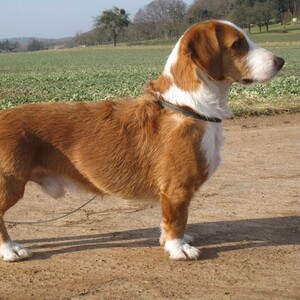
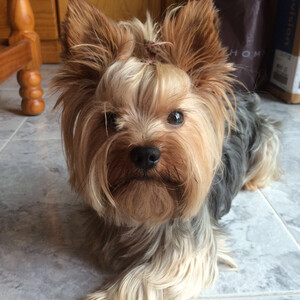
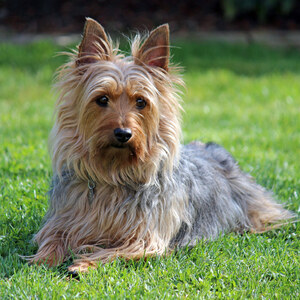
Australian Silky Terrier. · island silks / Wikimedia Commons, CC BY 2.0. Cropped and resized.
The Australian Silky Terrier is a small dog, about 25 cm tall, with a long, straight, glossy coat in blue and tan. It looks like a Yorkshire Terrier, but is bigger and more energetic. It is cheerful, brave and playful, a true terrier in the body of a companion dog.
Quick facts
| Common name | Australian Silky Terrier (Silky Terrier) |
| Scientific name | Canis lupus familiaris |
| Country of origin | Australia |
| Official recognition | FCI, definitively since 3 October 1962 (Group 3, toy terriers; standard no. 236); also recognised by the AKC |
| Lifespan | 13–15 years |
| Size (males) | 23–26 cm at the withers |
| Size (females) | slightly smaller than males |
| Weight | about 4.5 kg |
| Coat type | Long, straight, fine and glossy, like silk |
| Common colours | Blue and tan (fawn), in any shade |
| Energy level | Moderate to high |
| Suited to an apartment? | Yes, if it gets daily exercise |
| Temperament | Cheerful, brave, playful, alert |
| Tendency to aggression | Low |
| Good with children | Average; suits older, gentle children |
| Good with other animals | Average; strong instinct towards rodents |
| Genetic predispositions | Patellar luxation, eye diseases |
- Primary category:Dog breeds
- Explore this animal's categories:
History and origin
The breed's main ancestors are the Australian Terrier and the Yorkshire Terrier. In the 1820–1830 period, a rough-coated, bluish terrier bitch bred in Tasmania was taken to England and mated with a Dandie Dinmont Terrier.
An Englishman, Macarthur Little, bought puppies from that litter and tried to produce a soft, silky coat. He later moved to Sydney and continued breeding with Australian Terriers and Yorkshire Terriers. The dogs then spread all over Australia.
How the breed developed
- 1820–1830 – A terrier bitch from Tasmania is mated in England with a Dandie Dinmont Terrier.
- 1906–1909 – Separate, differing breed standards appear in Sydney and in Victoria.
- 1926 – The standards are merged into one.
- 1955 – In Australia, the name “Sydney Silky Terrier” is changed to “Australian Silky Terrier”.
- 3 October 1962 – The FCI recognises the breed.
- 8 October 2012 – The current FCI standard is published.
Breed rating
| Feature | Stars |
|---|---|
| Training and intelligence | ★★★★☆ |
| Easy to train | ★★★★☆ |
| Intelligence | ★★★★☆ |
| Independence | ★★★☆☆ |
| Stubbornness | ★★★☆☆ |
| Behaviour and temperament | ★★★★★ |
| Affectionate with family | ★★★★★ |
| Friendly with children | ★★★☆☆ |
| Good with other dogs | ★★★☆☆ |
| Good with cats and other animals | ★★☆☆☆ |
| Loyalty | ★★★★★ |
| Tendency to be aggressive | ★★☆☆☆ |
| Tendency to bark | ★★★★☆ |
| Needs and care | ★★☆☆☆ |
| Shedding | ★★☆☆☆ |
| Needs frequent grooming | ★★★☆☆ |
| Activity and lifestyle | ★★★☆☆ |
| Energy level | ★★★☆☆ |
| Daily exercise needs | ★★★★☆ |
| Suited to apartment life | ★★★★☆ |
| Health and longevity | ★★★★☆ |
| Life expectancy | ★★★★★ |
| Predisposition to genetic diseases | ★★☆☆☆ |
| Working abilities and uses | ★★★☆☆ |
| Good rodent hunter | ★★★☆☆ |
| Good companion dog | ★★★★★ |
Indicative rating: 5 stars means the highest level. It is based on the ratings the American Kennel Club gives the breed and on the FCI standard.
Physical characteristics
It is a small, compact, slightly long dog: the body is about one fifth longer than it is tall. Its bones are fine, but strong enough for it to catch rodents.
General appearance
The head is wedge-shaped, with small, oval, very dark eyes. The small, V-shaped ears stand erect. On the crown the hair forms a topknot, and along the back the coat is parted from head to tail.
| Feature | Australian Silky Terrier |
|---|---|
| Size | Small |
| Height at the withers | males: 23–26 cm; females may be slightly smaller |
| Weight | about 4.5 kg |
| Coat | Long, straight, fine, glossy; must not touch the ground |
| Eyes | Small, oval, as dark as possible |
| Ears | Small, V-shaped, erect |
All shades of blue and tan are accepted. The blue covers the body from the back of the neck to the tip of the tail, and the tan appears on the face, at the base of the ears and on the legs. Puppies may be black; the blue colour must develop by 18 months.
Training and socialisation
The Silky Terrier is intelligent and eager to learn. The AKC gives it a good score for trainability. It is more terrier than lapdog: brave, curious and with a hunting instinct.
Because it is so cute, owners are tempted to overlook its mischief. Clear rules that the whole family sticks to help it a lot.
Tips for effective training
- Set rules from the start. And stick to them, even when it gives you pleading looks.
- Use play. Fetch and toys are excellent rewards.
- Always walk it on the lead. It has a strong hunting instinct.
- Try dog sports. It does very well at agility.
Activity needs and lifestyle
The AKC says the Silky Terrier needs more exercise than most small dogs. It does not like being ignored and prefers play and walks with its family.
| Activity | How often | Why it matters |
|---|---|---|
| Walks on the lead | daily | Burns off energy |
| Games of fetch | daily | It loves them and they keep it fit |
| Agility or scent games | weekly | Training for mind and body |
Tips for a balanced life
- It adapts to any home, as long as it gets attention and exercise.
- Do not leave it alone for many hours.
- It barks fairly often to raise the alarm; teach it a “quiet” command.
Care and health
Coat and skin care
The silky coat should be brushed at least twice a week, with a pin brush or a soft brush. A metal comb works out the tangles. Bath it every 4–6 weeks with a mild dog shampoo. It sheds little.
Common health problems
The AKC says the Silky Terrier is generally a healthy breed. Responsible breeders test their dogs for two problems:
| Condition | Description | Common symptoms |
|---|---|---|
| Patellar luxation | The kneecap slips out of place | Suddenly holds a hind leg up for a few steps, then uses it again |
| Eye diseases | Hereditary eye conditions | Cloudy eyes, watering, poorer sight; detected at an eye examination |
Other care
- Trim the nails once a month.
- Brush its teeth often, with dog toothpaste.
- Check the ears regularly for signs of infection.
Diet and nutrition
Choose a good-quality food suited to its age and, ideally, made for small breeds. Table scraps should be given rarely or not at all, especially cooked bones and fatty food.
Tips for a healthy diet
The table gives a starting estimate, calculated with the formula from the Merck Veterinary Manual. The first two calorie columns show the calories per day for a healthy adult dog. The last column shows what this means in dry food with 3,500–4,000 kcal per kilogram.
| Dog's weight | Calories per day (neutered) | Calories per day (not neutered) | Dry food per day (approximate) |
|---|---|---|---|
| 4 kg | 320 kcal | 360 kcal | 80–103 g |
| 5 kg | 370 kcal | 420 kcal | 92–120 g |
- Give it its food in two meals a day.
- Training treats count towards the daily portion.
- A dog is at the right weight when you can feel its ribs without pressing hard.
Foods to avoid
Some human foods are dangerous for dogs: chocolate, coffee, grapes and raisins, onions, garlic, xylitol (a sweetener used in chewing gum), macadamia nuts and alcohol.
Reproduction and development
Physical and emotional maturity
In dogs, sexual maturity usually comes between 6 and 12 months. Small breeds become adults faster than large ones, usually at around one year.
Mating and pregnancy
Pregnancy lasts about 63 days, counted from ovulation. Mating a female on her first heat is not recommended. The FCI standard requires that only healthy dogs of typical breed appearance are used for breeding.
Caring for the puppies
In small breeds, a litter has 3–4 puppies on average. The puppies are very small and fragile in the first weeks, so they must be kept warm and handled with care. Socialisation starts early: gentle handling, everyday noises and new people.
Interesting facts
- The coat is like human hair. The AKC says its coat looks and behaves almost like human hair.
- It is born black. Puppies may be black, and the blue develops by 18 months.
- It sits “in the middle”. It is bigger than a Yorkshire Terrier and smaller than an Australian Terrier.
- It had three standards. Between 1906 and 1909, Sydney and Victoria had different standards, which were only merged in 1926.
- It caught snakes too. Wikipedia notes that it was used to catch rodents and snakes.
Frequently asked questions
What is the difference between the Silky Terrier and the Yorkshire Terrier?
The Silky Terrier is bigger and has a different head and ears. The Yorkshire Terrier was one of its ancestors.
How big does it get?
It stands 23–26 cm at the withers and weighs about 4.5 kg.
Does it shed a lot?
No, it sheds little, but the coat must be brushed at least twice a week.
How long does it live?
Its life expectancy is 13–15 years.
Can it live in an apartment?
Yes, if it gets daily exercise and is not left alone for long.