SamoyedCharacteristics, history, training and care
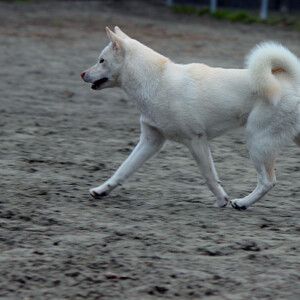
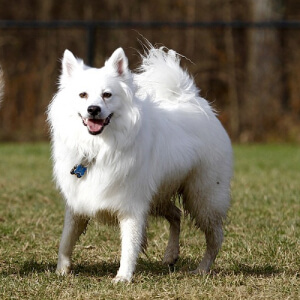
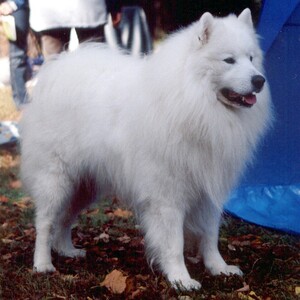
Samoyed. · Pleple2000 / Wikimedia Commons, CC BY-SA 3.0. Cropped and resized.
The Samoyed is a medium-sized, elegant spitz with an abundant Arctic coat, white, cream or white and biscuit. Its name comes from the Samoyedic peoples of northern Russia and Siberia, alongside whom it lived. The standard describes it as friendly, open, alert and lively, never shy or aggressive, and so sociable that it cannot be used as a guard dog.
Quick facts
| Common name | Samoyed (Samoiedskaïa Sabaka) |
| Scientific name | Canis lupus familiaris |
| Country of origin | Northern Russia and Siberia; patronage: Nordic countries |
| Official recognition | FCI, definitively since 26 June 1959 (group 5, Nordic sledge dogs; standard no. 212); also recognised by the AKC |
| Lifespan | 12–14 years, according to the AKC |
| Size (males) | ideally 57 cm at the withers (±3 cm); 20–30 kg according to the AKC |
| Size (females) | ideally 53 cm at the withers (±3 cm); 16–23 kg according to the AKC |
| Coat type | Arctic, abundant, double, with a ruff |
| Common colours | Pure white, cream, white and biscuit |
| Energy level | High |
| Suited to an apartment? | Only with plenty of exercise |
| Temperament | Friendly, open, alert, lively, very sociable |
| Tendency to aggression | Very low; not suitable as a guard dog |
| Good with children | Very good, according to the AKC |
| Good with other animals | Average |
| Genetic predispositions | Hip dysplasia, progressive retinal atrophy, retinal dysplasia with skeletal abnormalities, heart disease |
- Primary category:Dog breeds
- Explore this animal's categories:
History and origin
The FCI standard says the name comes from the Samoyedic peoples of northern Russia and Siberia. In the south they used black, white and brown pied dogs for herding reindeer; in the north, the dogs were white, gentle and used for hunting and pulling sledges. The dogs lived close to their owners, even slept in their tents and kept them warm.
The British zoologist Ernest Kilburn Scott spent three months among the Samoyedic peoples in 1889 and brought a brown puppy, “Sabarka”, to England, followed by a cream bitch, “Whitey Petchora”, and a snow-white male, “Musti”. These dogs and those brought back by explorers are the foundation of the Western Samoyed. The first standard was written in England in 1909.
How the breed developed
- Ancient times – The dogs of the Samoyedic peoples pull sledges and herd reindeer.
- 1889 – Ernest Kilburn Scott brings the first dogs to England.
- 1909 – The first standard, in England.
- 26 June 1959 – The FCI recognises the breed.
Breed rating
| Feature | Stars |
|---|---|
| Training and intelligence | ★★★★☆ |
| Easy to train | ★★★★☆ |
| Intelligence | ★★★★☆ |
| Independence | ★★★☆☆ |
| Stubbornness | ★★★☆☆ |
| Behaviour and temperament | ★★★★★ |
| Affectionate with family | ★★★★★ |
| Friendly with children | ★★★★★ |
| Good with other dogs | ★★★☆☆ |
| Good with cats and other animals | ★★★☆☆ |
| Loyalty | ★★★★★ |
| Tendency to be aggressive | ★☆☆☆☆ |
| Tendency to bark | ★★★★★ |
| Needs and care | ★★★★☆ |
| Shedding | ★★★★☆ |
| Needs frequent grooming | ★★★★☆ |
| Activity and lifestyle | ★★★★☆ |
| Energy level | ★★★★☆ |
| Daily exercise needs | ★★★☆☆ |
| Suited to apartment life | ★★★★☆ |
| Health and longevity | ★★★★☆ |
| Life expectancy | ★★★★☆ |
| Predisposition to genetic diseases | ★★★☆☆ |
| Working abilities and uses | ★☆☆☆☆ |
| Good sled dog | ★★★★☆ |
| Good companion dog | ★★★★★ |
Indicative rating: 5 stars means the highest level. It is based on the ratings the American Kennel Club gives the breed and on the FCI standard.
Physical characteristics
The standard describes it as a medium-sized, elegant dog with a white Arctic coat, giving an impression of strength, endurance and grace. The AKC says that at maturity the “Samoyed smile” appears: black lips turned up at the corners.
General appearance
The coat is abundant, thick, pliable and dense: the undercoat is short, soft and close, and the topcoat longer, harsher and straight. On the neck and shoulders it forms a ruff that frames the head, especially in males.
| Feature | Samoyed |
|---|---|
| Size | Medium |
| Height at the withers | males: ideally 57 cm; females: ideally 53 cm (±3 cm) |
| Weight | males: 20–30 kg; females: 16–23 kg (AKC) |
| Coat | Arctic, with a ruff |
| Colour | White, cream |
| Expression | The “Samoyed smile” |
The accepted colours are pure white, cream or white and biscuit (white with a few biscuit markings). It must never look pale brown.
Training and socialisation
The standard describes it as friendly, open, alert and lively, with a very weak hunting instinct, never shy or aggressive, and very sociable, which is why it cannot be used as a guard dog.
The AKC says it is intelligent, sociable and mischievous. A Samoyed isolated in the yard is unhappy and destructive, because the breed developed living very close to people.
Tips for effective training
- Do not isolate it. It wants to be with the family.
- Keep it on the lead. It has a strong tendency to run off and roam.
- Teach it not to bark at everything. The AKC gives it the top score for barking.
- Give it a job. It excels at sledding, agility and herding.
Activity needs and lifestyle
The AKC says it loves to join in family activities and needs daily exercise: play in a well-fenced yard or long walks on the lead. It has a strong tendency to run off and, if loose, may travel for miles.
| Activity | How often | Why it matters |
|---|---|---|
| Long walks on the lead | daily | Energy |
| Play in a fenced yard | daily | Activity |
| Sledding, agility or herding | weekly | A working dog |
Tips for a balanced life
- It copes very well with cold.
- In summer, keep it out of the heat.
- The fence must be solid.
Care and health
Coat and skin care
The AKC says the double coat sheds quite heavily all the time, and even more once or twice a year. Daily brushing removes dirt and dead hair.
Common health problems
The AKC says it is generally healthy, but the following can occur:
| Condition | Description | Common symptoms |
|---|---|---|
| Hip dysplasia | The hip joint forms incorrectly and, over time, arthritis develops | Limping, difficulty getting up or jumping, hip pain |
| Progressive retinal atrophy | The retina gradually degenerates | Has trouble seeing at night, then sees less and less well |
| Retinal dysplasia with skeletal abnormalities | Hereditary disease of the eyes and bones | Short legs, poor eyesight |
| Heart disease | Heart conditions | Tires quickly, breathes with difficulty |
Other care
- Brush its teeth often.
- Brush it every day.
- Go for regular check-ups.
Diet and nutrition
The AKC says some dogs gain weight easily, so calories and weight should be watched.
Tips for a healthy diet
The table gives a starting estimate, calculated with the formula from the Merck Veterinary Manual. The first two calorie columns show the calories per day for a healthy adult dog. The last column shows what this means in dry food with 3,500–4,000 kcal per kilogram.
| Dog's weight | Calories per day (neutered) | Calories per day (not neutered) | Dry food per day (approximate) |
|---|---|---|---|
| 16 kg | 900 kcal | 1,010 kcal | 220–290 g |
| 23 kg | 1,180 kcal | 1,320 kcal | 300–380 g |
| 30 kg | 1,440 kcal | 1,620 kcal | 360–460 g |
- Split the food into two meals a day.
- Treats count towards the daily portion.
- A dog is at the right weight when you can feel its ribs under the coat without pressing hard.
Foods to avoid
Some human foods are dangerous for dogs: chocolate, coffee, grapes and raisins, onions, garlic, xylitol (a sweetener used in chewing gum), macadamia nuts and alcohol.
Reproduction and development
Physical and emotional maturity
In dogs, sexual maturity usually comes between 6 and 12 months. Most breeds become adults at around 13–15 months.
Mating and pregnancy
Pregnancy lasts about 63 days, counted from ovulation. Mating a female on her first heat is not recommended. The FCI standard requires that only healthy dogs of typical breed appearance are used for breeding.
Caring for the puppies
In dogs, a litter has 5–6 puppies on average, and the number rises with the size of the breed. Socialisation starts in the first weeks: gentle handling, everyday noises and new people.
Interesting facts
- The “Samoyed smile”. The black lips turn up at the corners.
- A living heater. It slept in tents and kept its owners warm.
- It is not a guard dog. The standard says it is too sociable for guarding.
- Puppies like teddy bears. The AKC says the puppies look like little teddy bears.
- Sabarka, Whitey and Musti. The first dogs brought to England by Kilburn Scott.
Frequently asked questions
Where does the name come from?
From the Samoyedic peoples of northern Russia and Siberia.
How big does it get?
Males measure ideally 57 cm, females 53 cm (±3 cm).
Is it a good guard dog?
No. The standard says it is too sociable for guarding.
How long does it live?
The AKC gives 12–14 years.