Portuguese Water DogCharacteristics, history, training and care
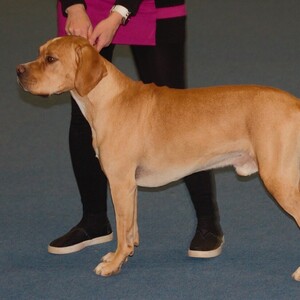
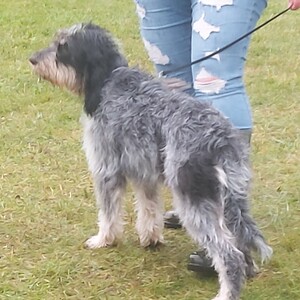
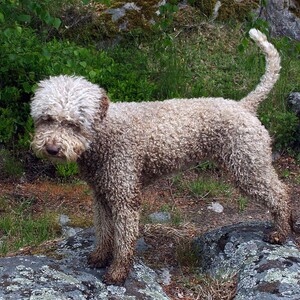
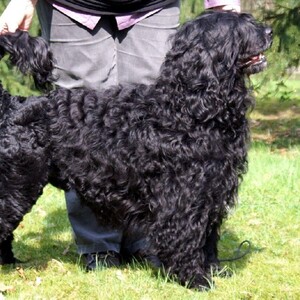
Portuguese Water Dog. · Silke Hollje-Schumacher / Wikimedia Commons, CC BY-SA 3.0. Cropped and resized.
The Portuguese Water Dog is a medium-sized dog, powerful and very muscular from swimming, with an abundant curly or wavy coat without undercoat. It was the helper of fishermen along the Portuguese coast, especially in the Algarve. The standard describes it as exceptionally intelligent, brave, resistant to fatigue and an excellent swimmer and diver.
Quick facts
| Common name | Portuguese Water Dog (Cão de Água Português) |
| Scientific name | Canis lupus familiaris |
| Country of origin | Portugal |
| Official recognition | FCI, definitively since 1 February 1955 (group 8, water dogs; standard no. 37); also recognised by the AKC |
| Lifespan | 11–13 years, according to the AKC |
| Size (males) | 50–57 cm at the withers (ideally 54 cm); 19–25 kg |
| Size (females) | 43–52 cm at the withers (ideally 46 cm); 16–22 kg |
| Coat type | Long and wavy or short and curly, without undercoat |
| Common colours | Black, brown, white; black or brown with white |
| Energy level | Very high |
| Suited to an apartment? | Yes, with a great deal of exercise |
| Temperament | Exceptionally intelligent, wilful, brave, hardy |
| Tendency to aggression | Low |
| Good with children | Very good, according to the AKC |
| Good with other animals | Good, according to the AKC |
| Genetic predispositions | Hip dysplasia, progressive retinal atrophy, GM1 gangliosidosis, juvenile cardiomyopathy |
- Primary category:Dog breeds
- Explore this animal's categories:
History and origin
The FCI standard says that in the past the Portuguese Water Dog could be found all along the Portuguese coast. Then, because fishing methods changed, it remained mainly in the Algarve, now considered its place of origin. Wikipedia says fishermen taught it to herd fish into nets and to retrieve whatever was lost in the water.
Wikipedia says that in the 1930s the breed was on the verge of disappearing when the shipowner Vasco Bensaude sought out the fishermen's dogs to rebuild it. His best-known dog was Leão (1931–1942).
How the breed developed
- Ancient times – The fishermen's dog all along the Portuguese coast.
- 1930s – Vasco Bensaude begins rebuilding the breed.
- 1 February 1955 – The FCI recognises the breed.
Breed rating
| Feature | Stars |
|---|---|
| Training and intelligence | ★★★★★ |
| Easy to train | ★★★★★ |
| Intelligence | ★★★★☆ |
| Independence | ★★★☆☆ |
| Stubbornness | ★★★☆☆ |
| Behaviour and temperament | ★★★★★ |
| Affectionate with family | ★★★★★ |
| Friendly with children | ★★★★☆ |
| Good with other dogs | ★★★☆☆ |
| Good with cats and other animals | ★★★★☆ |
| Loyalty | ★★★★★ |
| Tendency to be aggressive | ★☆☆☆☆ |
| Tendency to bark | ★★★☆☆ |
| Needs and care | ★★☆☆☆ |
| Shedding | ★★★★★ |
| Needs frequent grooming | ★★☆☆☆ |
| Activity and lifestyle | ★★★★★ |
| Energy level | ★★★★★ |
| Daily exercise needs | ★★★★★ |
| Suited to apartment life | ★★★☆☆ |
| Health and longevity | ★★★★☆ |
| Life expectancy | ★★★★☆ |
| Predisposition to genetic diseases | ★★★☆☆ |
| Working abilities and uses | ★★★★☆ |
| Good water dog | ★★★★★ |
| Good companion dog | ★★★★★ |
Indicative rating: 5 stars means the highest level. It is based on the ratings the American Kennel Club gives the breed and on the FCI standard.
Physical characteristics
The standard describes it as a harmonious, balanced, powerful and well-muscled dog, almost square, with very well-developed muscles from constant swimming.
General appearance
The abundant coat covers the whole body, without undercoat, in two varieties: long and wavy, slightly glossy, or shorter and curly, dense and dull, with cylindrical curls. It forms a topknot on the head. The AKC says it can be given a “lion clip” or a “retriever clip”.
| Feature | Portuguese Water Dog |
|---|---|
| Size | Medium |
| Height at the withers | males: 50–57 cm; females: 43–52 cm |
| Weight | males: 19–25 kg; females: 16–22 kg |
| Coat | Wavy or curly, without undercoat |
| Body | Almost square, muscular |
| Talent | Swimmer and diver |
The coat is black or brown, in various shades, or white. In black and brown dogs, white is accepted on the muzzle, topknot, neck, chest, belly, tip of the tail and lower legs.
Training and socialisation
The standard describes it as exceptionally intelligent, understanding and obeying any command easily and willingly. It is impetuous, wilful, brave, sober and resistant to fatigue, with a serious, attentive expression and remarkable sight and sense of smell.
The AKC says it responds well to obedience training, but often thinks for itself and sometimes tests its owner's will. It needs positive methods and daily physical and mental activity.
Tips for effective training
- Use positive methods. The AKC recommends them.
- Keep its mind busy. It has a great need for mental stimulation.
- Let it swim. It is an excellent swimmer and diver.
- Do not leave it alone for long. It demands attention and contact with people.
Activity needs and lifestyle
The AKC says it is an athletic, active breed that needs serious exercise every day: long walks and play sessions. It does well at obedience, tracking, agility, rally and dock diving.
| Activity | How often | Why it matters |
|---|---|---|
| Long walks | daily | Very high energy |
| Swimming | as often as possible | A water dog |
| Dog sports | weekly | Mental activity |
Tips for a balanced life
- It suits active families.
- Set aside time or budget for clipping.
- Dry its ears after swimming.
Care and health
Coat and skin care
The AKC says the dense, abundant coat is considered hypoallergenic, but it needs regular, extensive grooming. It can be given a “lion clip” (hindquarters and muzzle shaved) or a “retriever clip” (the whole body at about 2.5 cm).
Common health problems
The AKC says it is generally healthy, and responsible breeders test their dogs for:
| Condition | Description | Common symptoms |
|---|---|---|
| Hip dysplasia | The hip joint forms incorrectly and, over time, arthritis develops | Limping, difficulty getting up or jumping, hip pain |
| Progressive retinal atrophy | The retina gradually degenerates | Has trouble seeing at night, then sees less and less well |
| GM1 gangliosidosis | An inherited neurological disease, detected by a DNA test | Unsteady gait, trembling |
| Juvenile dilated cardiomyopathy | A serious heart disease in puppies | Sudden weakness, laboured breathing |
Other care
- Check the ears regularly, especially after swimming.
- Brush its teeth often.
- Ask for the parents' DNA tests.
Diet and nutrition
The AKC says some dogs gain weight easily, so calories and weight should be watched.
Tips for a healthy diet
The table gives a starting estimate, calculated with the formula from the Merck Veterinary Manual. The first two calorie columns show the calories per day for a healthy adult dog. The last column shows what this means in dry food with 3,500–4,000 kcal per kilogram.
| Dog's weight | Calories per day (neutered) | Calories per day (not neutered) | Dry food per day (approximate) |
|---|---|---|---|
| 16 kg | 900 kcal | 1,010 kcal | 220–290 g |
| 20 kg | 1,060 kcal | 1,190 kcal | 260–340 g |
| 25 kg | 1,250 kcal | 1,410 kcal | 310–400 g |
- Split the food into two meals a day.
- Treats count towards the daily portion.
- A dog is at the right weight when you can feel its ribs under the coat without pressing hard.
Foods to avoid
Some human foods are dangerous for dogs: chocolate, coffee, grapes and raisins, onions, garlic, xylitol (a sweetener used in chewing gum), macadamia nuts and alcohol.
Reproduction and development
Physical and emotional maturity
In dogs, sexual maturity usually comes between 6 and 12 months. Most breeds become adults at around 13–15 months.
Mating and pregnancy
Pregnancy lasts about 63 days, counted from ovulation. Mating a female on her first heat is not recommended. The FCI standard requires that only healthy dogs of typical breed appearance are used for breeding.
Caring for the puppies
In dogs, a litter has 5–6 puppies on average, and the number rises with the size of the breed. Socialisation starts in the first weeks: gentle handling, everyday noises and new people.
Interesting facts
- The fishermen's helper. It herded fish into nets and retrieved whatever was lost in the water.
- A diver. The standard says it is an excellent swimmer and diver.
- The “lion clip”. It is a traditional clip for the breed.
- Leão. Vasco Bensaude's best-known dog.
- At the White House. The Obama family had two dogs of this breed.
In popular culture
Bo and Sunny, the Obama family's dogs
Wikipedia says US President Barack Obama had two Portuguese Water Dogs, Bo and Sunny. Sunny was chosen for a coat considered hypoallergenic, and Bo was a gift from Senator Ted Kennedy.
Frequently asked questions
Does it shed?
Very little; the coat is considered hypoallergenic, but it needs care.
How big does it get?
Males measure 50–57 cm and weigh 19–25 kg; females measure 43–52 cm and weigh 16–22 kg.
Can it swim?
Yes, it is an excellent swimmer and diver.
How long does it live?
The AKC gives 11–13 years.