Greenland DogCharacteristics, history, training and care
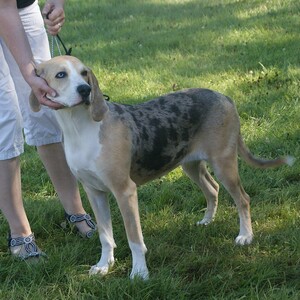
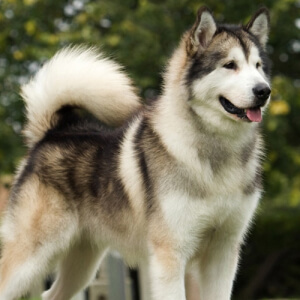
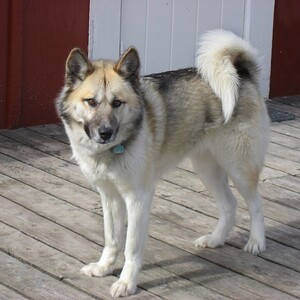
Greenland Dog. · Slaunger, Thegreenj / Wikimedia Commons, CC BY-SA 3.0. Cropped and resized.
The Greenland Dog is a very powerful polar Spitz, built for heavy sled work in Arctic conditions. The FCI standard says it is one of the oldest breeds in the world and, since ancient times, the only sled dog of the Inuit. It is energetic, mentally strong and bold, friendly with people, including strangers.
Quick facts
| Common name | Greenland Dog (Grønlandshund, Kalaallit Qimmiat) |
| Scientific name | Canis lupus familiaris |
| Country of origin | Greenland (patronage: Denmark) |
| Official recognition | FCI, definitively since 5 May 1967 (group 5, Nordic sledge dogs; standard no. 274) |
| Lifespan | No published data for the breed; large sled dogs usually live 12–14 years |
| Size (males) | at least 60 cm at the withers |
| Size (females) | at least 55 cm at the withers |
| Coat type | Double: soft, dense undercoat; dense, straight, harsh topcoat |
| Common colours | Any colour, solid or patched (no albinos or merles) |
| Energy level | Very high |
| Suited to an apartment? | No |
| Temperament | Energetic, mentally strong, bold, friendly |
| Tendency to aggression | Low towards people |
| Good with children | Good |
| Good with other animals | Poor with small animals; strong hunting instinct |
| Genetic predispositions | No breed-specific diseases are known |
- Primary category:Dog breeds
- Explore this animal's categories:
History and origin
The FCI standard says the Greenland Dog is one of the oldest breeds in the world and, since ancient times, the only sled dog of the Inuit. It was selected mainly for strength, endurance and power, but also for a pleasing appearance. Wikipedia says it descends from the dogs brought from Siberia to North America by the Thule people about 1,000 years ago.
Wikipedia says the breed is of great cultural importance to Greenland. In western Greenland, north of the Arctic Circle, and throughout the east of the island, bringing in other dogs is forbidden, and since 2017 all dogs must be microchipped and registered. The number of dogs fell from about 15,000 in 2016 to 12,000 in 2021.
How the breed developed
- About 1,000 years ago – The Thule people bring the dogs from Siberia.
- 29 July 1875 – An “esquimaux” bitch is shown at Darlington, in Britain.
- 5 May 1967 – The FCI recognises the breed.
- 2017 – All dogs in Greenland must be microchipped and registered.
- 30 March 2022 – The current FCI standard is published.
Breed rating
| Feature | Stars |
|---|---|
| Training and intelligence | ★★★☆☆ |
| Easy to train | ★★★☆☆ |
| Intelligence | ★★★★☆ |
| Independence | ★★★★★ |
| Stubbornness | ★★★★☆ |
| Behaviour and temperament | ★★★★☆ |
| Affectionate with family | ★★★★☆ |
| Friendly with children | ★★★★☆ |
| Good with other dogs | ★★★☆☆ |
| Good with cats and other animals | ★☆☆☆☆ |
| Loyalty | ★★★☆☆ |
| Tendency to be aggressive | ★☆☆☆☆ |
| Tendency to bark | ★★★★☆ |
| Needs and care | ★★★★☆ |
| Shedding | ★★★★☆ |
| Needs frequent grooming | ★★☆☆☆ |
| Activity and lifestyle | ★★★★☆ |
| Energy level | ★★★★★ |
| Daily exercise needs | ★★★★★ |
| Suited to apartment life | ★☆☆☆☆ |
| Health and longevity | ★★★★☆ |
| Life expectancy | ★★★★☆ |
| Predisposition to genetic diseases | ★★☆☆☆ |
| Working abilities and uses | ★★★★★ |
| Good sled dog | ★★★★★ |
| Good companion dog | ★★★☆☆ |
Indicative rating: 5 stars means the highest level. The breed has no AKC profile; the rating is based on the FCI standard (“energy, mental strength and boldness; friendly with people; not suitable as a guard dog”).
Physical characteristics
The standard describes it as a very powerful polar Spitz, built for endurance and heavy sled work in Arctic conditions. The body is short and rectangular (ratio 10:11). Some variation in size is accepted, as long as it does not affect working ability and harmony.
General appearance
The skull is broad and slightly domed, widest between the ears. The hair is short on the head and legs, longer on the body and longest on the underside of the tail, which makes it bushy.
| Feature | Greenland Dog |
|---|---|
| Size | Large |
| Height at the withers | males: at least 60 cm; females: at least 55 cm |
| Coat | Double, harsh, with a dense undercoat |
| Tail | Bushy |
| Body | Short, rectangular |
| Type | Polar sled Spitz |
The standard allows any colour, solid or patched, except albinos and dogs with a merle pattern, which are disqualified.
Training and socialisation
The standard says its main qualities are energy, mental strength and boldness. It is a passionate, tireless sled dog. It is friendly with people, including strangers, and, as a sled dog, it does not become closely attached to one person, so it is not suitable as a guard dog.
When hunting seals and polar bears, it shows a strong hunting instinct. It needs a firm owner with experience of sled dogs.
Tips for effective training
- Give it something to pull. It is a tireless sled dog.
- Be careful with small animals. It has a strong hunting instinct.
- Do not get it as a guard dog. The standard says it is friendly even with strangers.
- Be firm and consistent. It is independent and bold.
Activity needs and lifestyle
The standard says it is a dog for people who love outdoor life and an excellent companion on walks in the forest or mountains, where the dog can pull or carry equipment.
| Activity | How often | Why it matters |
|---|---|---|
| Long walks or running | daily | Very high energy |
| Pulling (sled, canicross, bikejoring) | several times a week | Sled dog instinct |
| Hiking with a backpack | weekly | It can carry equipment |
Tips for a balanced life
- In summer, protect it from the heat: it is made for the cold.
- The fence must be high and solid.
- It is not suitable for a flat.
Care and health
Coat and skin care
The double coat should be brushed once a week, and daily during shedding periods, when it changes its undercoat.
Common health problems
There are no published health studies for the breed and no known breed-specific diseases. As with any large, active dog, it is worth watching for:
| Condition | Description | Common symptoms |
|---|---|---|
| Hip dysplasia | The hip joint forms incorrectly and, over time, arthritis develops | Limping, difficulty getting up or jumping, hip pain |
Other care
- Check its paws after running on snow or ice.
- Trim the nails if they do not wear down on their own.
- Check the ears and teeth weekly.
Diet and nutrition
A working sled dog needs a great deal of energy. The portion increases a lot on working days and in the cold, and decreases in summer.
Tips for a healthy diet
The table gives a starting estimate, calculated with the formula from the Merck Veterinary Manual. The first two calorie columns show the calories per day for a healthy adult dog. The last column shows what this means in dry food with 3,500–4,000 kcal per kilogram.
| Dog's weight | Calories per day (neutered) | Calories per day (not neutered) | Dry food per day (approximate) |
|---|---|---|---|
| 25 kg | 1,250 kcal | 1,410 kcal | 310–400 g |
| 30 kg | 1,440 kcal | 1,620 kcal | 360–460 g |
| 35 kg | 1,610 kcal | 1,810 kcal | 400–520 g |
- Give it its food in two meals a day.
- Fresh water should always be available.
- A dog is at the right weight when you can feel its ribs under the coat without pressing hard.
Foods to avoid
Some human foods are dangerous for dogs: chocolate, coffee, grapes and raisins, onions, garlic, xylitol (a sweetener used in chewing gum), macadamia nuts and alcohol.
Reproduction and development
Physical and emotional maturity
In dogs, sexual maturity usually comes between 6 and 12 months, but in large breeds it can be delayed until about two years. The body also reaches its adult form later than in small breeds.
Mating and pregnancy
Pregnancy lasts about 63 days, counted from ovulation. Mating a female on her first heat is not recommended. The FCI standard requires that only healthy dogs of typical breed appearance are used for breeding.
Caring for the puppies
In large breeds, a litter has around 7 puppies on average. Socialisation starts in the first weeks: gentle handling, everyday noises and new people.
Interesting facts
- The dog of the Inuit. Since ancient times it has been their only sled dog.
- It came from Siberia. The Thule people brought it about 1,000 years ago.
- Protected by law. Other dogs cannot be brought into most of Greenland.
- Friends with everyone. It is friendly even with strangers.
- Fewer and fewer. There were about 12,000 dogs in Greenland in 2021.
In popular culture
Greenland's heritage
Wikipedia says the Greenland Dog is considered nationally and culturally important to Greenland. To keep it pure, importing other dogs is forbidden in most of the island, and several projects are trying to save the culture of dog sledding.
Frequently asked questions
What is the Greenland Dog?
A polar sled Spitz, one of the oldest breeds in the world.
How big does it get?
Males measure at least 60 cm and females at least 55 cm at the withers.
Is it a good guard dog?
No. The standard says it is friendly even with strangers.
Can it live in a block of flats?
No. It needs a great deal of exercise and the cold.