Norwegian LundehundCharacteristics, history, training and care
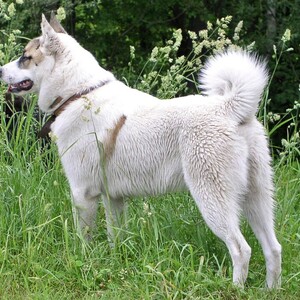
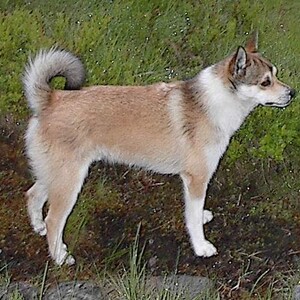
Norwegian Lundehund. · Karen Elise Dahlmo / Wikimedia Commons, CC BY-SA 3.0. Cropped and resized.
The Norwegian Lundehund is a small spitz, once used to hunt puffins on the steep cliffs of the Norwegian coast. It has a unique anatomy: extra, functional toes, a neck that can bend back until the head touches the back, ears that can close and very flexible front legs. The standard describes it as alert, energetic and lively.
Quick facts
| Common name | Norwegian Lundehund (Norsk Lundehund) |
| Scientific name | Canis lupus familiaris |
| Country of origin | Norway |
| Official recognition | FCI, definitively since 6 October 1965 (group 5, Nordic hunting dogs; standard no. 265); also recognised by the AKC |
| Lifespan | 12–15 years, according to the AKC |
| Size (males) | 35–38 cm at the withers; about 7 kg |
| Size (females) | 32–35 cm at the withers; about 6 kg |
| Coat type | Dense, harsh, with a soft undercoat |
| Common colours | Red to fawn, with white; white with dark markings |
| Energy level | Moderate to high |
| Suited to an apartment? | Yes, with daily exercise |
| Temperament | Alert, energetic, lively, sensitive |
| Tendency to aggression | Low |
| Good with children | Average |
| Good with other animals | Average |
| Genetic predispositions | Protein-losing enteropathy, patellar luxation, eye diseases |
- Primary category:Dog breeds
- Explore this animal's categories:
History and origin
The FCI standard says it is an old breed, used to hunt seabirds on the Norwegian coast; the name comes from “lunde” (puffin) and “hund” (dog). There are descriptions of dogs used to catch puffins that are more than 400 years old. Puffin meat was an important part of the winter diet, and the down was used for duvets and pillows or exported.
Modern hunting methods reduced the number of dogs, but in Måstad, on the isolated island of Værøy, people kept the tradition alive. Wikipedia says that in 1963 a distemper epidemic left only six dogs alive, and today, thanks to very careful breeding, there are about 1,500 in the world.
How the breed developed
- 1591 – The first written mention, during a visit to the island of Værøy (Wikipedia).
- Around 1900 – The breed survives only in the village of Måstad, in Lofoten.
- Second World War – Distemper leaves only two dogs alive on Værøy.
- 1963 – A new epidemic leaves only six dogs alive.
- 6 October 1965 – The FCI recognises the breed.
Breed rating
| Feature | Stars |
|---|---|
| Training and intelligence | ★★★☆☆ |
| Easy to train | ★★★☆☆ |
| Intelligence | ★★★★★ |
| Independence | ★★★★☆ |
| Stubbornness | ★★★☆☆ |
| Behaviour and temperament | ★★★★☆ |
| Affectionate with family | ★★★★★ |
| Friendly with children | ★★★☆☆ |
| Good with other dogs | ★★★☆☆ |
| Good with cats and other animals | ★★★☆☆ |
| Loyalty | ★★★★★ |
| Tendency to be aggressive | ★★☆☆☆ |
| Tendency to bark | ★★★★☆ |
| Needs and care | ★★★☆☆ |
| Shedding | ★★★☆☆ |
| Needs frequent grooming | ★★☆☆☆ |
| Activity and lifestyle | ★★★☆☆ |
| Energy level | ★★★☆☆ |
| Daily exercise needs | ★★★★☆ |
| Suited to apartment life | ★★★☆☆ |
| Health and longevity | ★★★★☆ |
| Life expectancy | ★★★★☆ |
| Predisposition to genetic diseases | ★★★☆☆ |
| Working abilities and uses | ★★★☆☆ |
| Good hunting dog | ★★★★☆ |
| Good companion dog | ★★★★☆ |
Indicative rating: 5 stars means the highest level. It is based on the ratings the American Kennel Club gives the breed and on the FCI standard.
Physical characteristics
The standard says its unique anatomy, with extra, functional toes, a neck that can bend back until the head touches the back, ears that can close and extremely flexible front legs, helps it climb almost vertical scree and enter the narrow, winding burrows of puffins.
General appearance
The head is clean-cut, of medium width and wedge-shaped. The coat is dense and harsh, with a soft undercoat, short on the head and the front of the legs and fuller on the neck, the backs of the thighs and the tail.
| Feature | Norwegian Lundehund |
|---|---|
| Size | Small |
| Height at the withers | males: 35–38 cm; females: 32–35 cm |
| Weight | males: ~7 kg; females: ~6 kg |
| Toes | Six on each foot, according to the AKC |
| Neck | Bends back until the head touches the back |
| Ears | Can close |
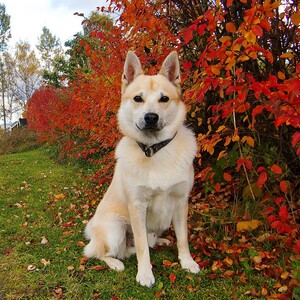
The colour is always combined with white: from red to fawn, with more or fewer black-tipped hairs, or white with dark markings. Adults usually have more black tips than young dogs.
Training and socialisation
The AKC says the Lundehund is very sensitive and can develop trust issues, so harsh methods must never be used. It is incredibly clever, affectionate and playful, and good at solving problems.
The AKC says it protects its family and may be wary of strangers. Early socialisation and puppy classes are recommended.
Tips for effective training
- Never use harsh methods. It is very sensitive.
- Earn its trust. It can become distrustful.
- Socialise it from an early age. It is wary of strangers.
- Use brain games. It is good at solving problems.
Activity needs and lifestyle
The AKC says it has a medium to high energy level and is happiest with daily exercise: a brisk 30-minute walk or a few play sessions with a ball.
| Activity | How often | Why it matters |
|---|---|---|
| Brisk walk | 30 minutes a day | Energy |
| Ball games | daily | Activity |
| Brain games | several times a week | It is very clever |
Tips for a balanced life
- It can also live in an apartment.
- The fence must be high: it is a good climber.
- Be gentle with it.
Care and health
Coat and skin care
The AKC says the double coat, harsh outside and soft underneath, is easy to look after: one brush a week. The ears should be checked regularly, and the nails trimmed often if they do not wear down naturally.
Common health problems
The AKC says it is generally healthy, but the following may occur:
| Condition | Description | Common symptoms |
|---|---|---|
| Protein-losing enteropathy | Intestinal disease in which protein is lost | Diarrhoea, weight loss, swollen belly |
| Patellar luxation | The kneecap slips out of place | Suddenly holds a hind leg up for a few steps, then uses it again |
| Eye diseases | Inherited eye conditions | Watery eyes, poor vision |
Other care
- Brush its teeth often, with dog toothpaste.
- Trim the nails often, including on the extra toes.
- Go for regular check-ups.
Diet and nutrition
The AKC says some dogs gain weight easily, so calories and weight should be watched.
Tips for a healthy diet
The table gives a starting estimate, calculated with the formula from the Merck Veterinary Manual. The first two calorie columns show the calories per day for a healthy adult dog. The last column shows what this means in dry food with 3,500–4,000 kcal per kilogram.
| Dog's weight | Calories per day (neutered) | Calories per day (not neutered) | Dry food per day (approximate) |
|---|---|---|---|
| 6 kg | 430 kcal | 480 kcal | 110–140 g |
| 6.5 kg | 460 kcal | 510 kcal | 120–150 g |
| 7 kg | 480 kcal | 540 kcal | 120–150 g |
- Give it its food in two meals a day.
- Change its food gradually; it has a sensitive gut.
- A dog is at the right weight when you can feel its ribs under the coat without pressing hard.
Foods to avoid
Some human foods are dangerous for dogs: chocolate, coffee, grapes and raisins, onions, garlic, xylitol (a sweetener used in chewing gum), macadamia nuts and alcohol.
Reproduction and development
Physical and emotional maturity
In dogs, sexual maturity usually comes between 6 and 12 months. Small breeds become adults faster than large ones, usually at around one year.
Mating and pregnancy
Pregnancy lasts about 63 days, counted from ovulation. Mating a female on her first heat is not recommended. The FCI standard requires that only healthy dogs of typical breed appearance are used for breeding.
Caring for the puppies
In small breeds, a litter has 3–4 puppies on average. The puppies are very small and fragile in the first weeks, so they must be kept warm and handled with care. Socialisation starts early: gentle handling, everyday noises and new people.
Interesting facts
- Six toes. The AKC says it has six toes on each foot.
- An acrobat's neck. It can bend its head back until it touches its back.
- Ears that close. The ears can fold forwards, backwards or close.
- Saved from six dogs. In 1963 only six dogs were still alive.
- It brought puffins back alive. The standard says it took the birds out of their burrows alive.
Frequently asked questions
What does “Lundehund” mean?
“Puffin dog”, in Norwegian.
How many toes does it have?
The AKC says it has six toes on each foot.
How big does it get?
Males measure 35–38 cm and weigh ~7 kg; females measure 32–35 cm and weigh ~6 kg.
How long does it live?
The AKC gives 12–15 years.