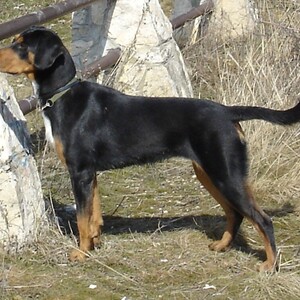
VizslaCharacteristics, history, training and care
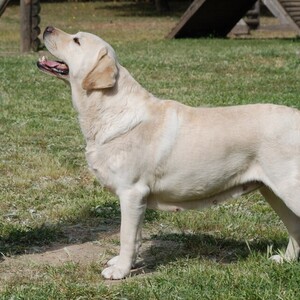
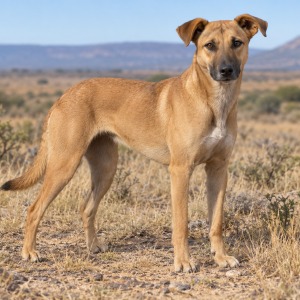
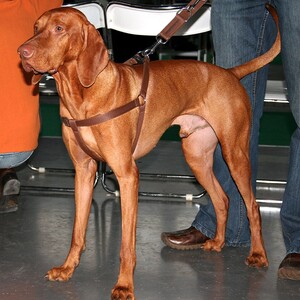
Vizsla. · Pleple2000 / Wikimedia Commons, CC BY-SA 3.0. Cropped and resized.
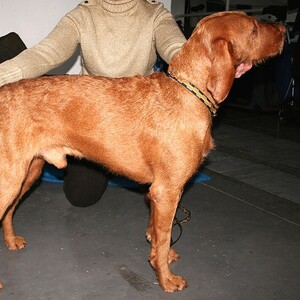
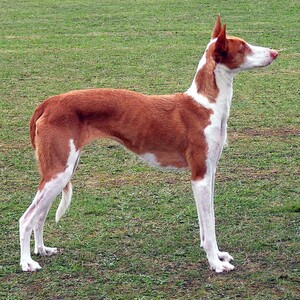
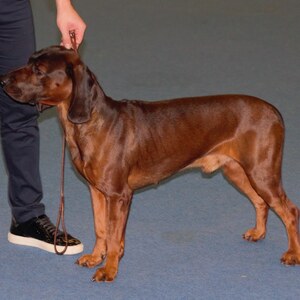
The Vizsla (Hungarian Short-haired Pointer) is an elegant, medium-sized pointing dog with a short, russet-gold coat. The FCI standard describes it as lively, friendly, even-tempered and easy to train, with an outstanding willingness to keep in contact with its owner while working; it does not tolerate harsh handling and must be neither aggressive nor shy.
Quick facts
| Common name | Vizsla (Hungarian Short-haired Pointer) |
| Scientific name | Canis lupus familiaris |
| Country of origin | Hungary |
| Official recognition | FCI, since 1936; definitively since 12 August 1954 (group 7, pointing dogs; standard no. 57); also recognised by the AKC |
| Lifespan | 12–14 years, according to the AKC |
| Size (males) | 58–64 cm at the withers; 25–27 kg according to the AKC |
| Size (females) | 54–60 cm at the withers; 20–25 kg according to the AKC |
| Coat type | Short, dense, harsh, no undercoat |
| Common colours | Russet gold, dark sandy gold |
| Energy level | Very high |
| Suited to an apartment? | Only with a great deal of exercise |
| Temperament | Lively, friendly, even-tempered, very attached to its owner |
| Tendency to aggression | Very low |
| Good with children | Very good, according to the AKC |
| Good with other animals | Good |
| Genetic predispositions | Hip dysplasia, autoimmune thyroiditis, eye diseases, epilepsy, allergies |
- Primary category:Dog breeds
- Explore this animal's categories:
History and origin
The FCI standard says the Vizsla's ancestors came to the Carpathian Basin with the nomadic Magyar tribes. Descriptions and images already appear in documents from the 14th century. From the 18th century, its importance as a hunting dog grew steadily, and at the end of the 19th century the Vizsla took part with great success in pointing dog field trials in Hungary.
The standard says other hunting breeds probably also contributed to its development. Modern breeding began in 1920, and the Short-haired Vizsla was recognised by the FCI in 1936.
How the breed developed
- The Migration Period – Its ancestors arrive with the Magyar tribes.
- 14th century – The first descriptions and images.
- Late 19th century – Success at pointing dog field trials.
- 1920 – Modern breeding begins.
- 1936 – The FCI recognises the breed.
Breed rating
| Feature | Stars |
|---|---|
| Training and intelligence | ★★★★★ |
| Easy to train | ★★★★★ |
| Intelligence | ★★★★★ |
| Independence | ★★★★☆ |
| Stubbornness | ★★★★★ |
| Behaviour and temperament | ★★★★☆ |
| Affectionate with family | ★★★★★ |
| Friendly with children | ★★★★★ |
| Good with other dogs | ★★★☆☆ |
| Good with cats and other animals | ★★★☆☆ |
| Loyalty | ★★★★★ |
| Tendency to be aggressive | ★★☆☆☆ |
| Tendency to bark | ★★★★☆ |
| Needs and care | ★★★★☆ |
| Shedding | ★★★★★ |
| Needs frequent grooming | ★★★☆☆ |
| Activity and lifestyle | ★★★★★ |
| Energy level | ★★★★★ |
| Daily exercise needs | ★★★★★ |
| Suited to apartment life | ★★★☆☆ |
| Health and longevity | ★★★★★ |
| Life expectancy | ★★★☆☆ |
| Predisposition to genetic diseases | ★★☆☆☆ |
| Working abilities and uses | ★★★☆☆ |
| Good hunting dog | ★★★★★ |
| Good companion dog | ★★★★☆ |
Indicative rating: 5 stars means the highest level. It is based on the ratings the American Kennel Club gives the breed and on the FCI standard.
Physical characteristics
The standard describes it as a medium-sized pointing dog, elegant and noble, with a short russet-gold coat and a light, dry, lean build that combines beauty and strength. The AKC says its long, silky ears frame an expression that is gentle and loving at home and intense at work.
General appearance
The coat is short and dense, harsh to the touch, finer and shorter on the head and ears, with no undercoat.
| Feature | Vizsla |
|---|---|
| Size | Large |
| Height at the withers | males: 58–64 cm; females: 54–60 cm |
| Weight | 20–27 kg (AKC) |
| Coat | Short, no undercoat |
| Colour | Russet gold |
| Type | Pointing dog |
The standard accepts various shades of russet gold and dark sandy gold (“semmelgelb”). The ears may be slightly darker; otherwise the colour is uniform.
Training and socialisation
The standard describes it as lively, friendly, even-tempered and easy to train, with an outstanding willingness to keep in contact with its owner. It does not tolerate harsh handling.
The AKC says it needs consistent, positive training, started in puppyhood. It is very intelligent, curious and sometimes manipulative; an untrained Vizsla is hard to live with and finds many creative ways to get into mischief if it does not have “a job”.
Tips for effective training
- Start training in puppyhood. An untrained Vizsla is hard to manage.
- Be positive. It does not tolerate harshness.
- Give it a job. Otherwise it will find one itself.
- Do not leave it alone for long. It is very attached to its owner.
Activity needs and lifestyle
The AKC says it was bred as an active hunting dog and needs physical and mental exercise: at least 30 minutes a day of vigorous exercise, and some need even more. As well as walks on the lead and fetch, most need to run free, in safe places.
| Activity | How often | Why it matters |
|---|---|---|
| Vigorous exercise | at least 30 minutes daily | Energy |
| Running free in a safe place | several times a week | Instinct |
| Fetch, hunting or sport | weekly | A busy mind |
Tips for a balanced life
- Suited to very active owners.
- Do not leave it alone for long.
- Clean the ears regularly.
Care and health
Coat and skin care
The AKC says the short coat, with no undercoat, needs no complicated grooming. It sheds, and a rubber brush helps. When it gets dirty, it needs a bath with lukewarm water. The ears must be kept clean.
Common health problems
The AKC says the breed is generally healthy, and responsible breeders screen their dogs for:
| Condition | Description | Common symptoms |
|---|---|---|
| Hip dysplasia | The hip joint forms incorrectly and, over time, arthritis develops | Limping, difficulty getting up or jumping, hip pain |
| Autoimmune thyroiditis | Inflammation of the thyroid | Weight gain, tiredness, thin coat |
| Eye diseases | Entropion, melanosis | Irritated, watery eyes |
| Epilepsy | Repeated seizures | Convulsions |
| Seasonal allergies | Reactions to the environment | Itching |
Other care
- Clean the ears often.
- Ask for the parents' hip and eye tests.
- Go for yearly check-ups.
Diet and nutrition
The AKC says most Vizslas are good eaters and that calorie needs vary widely from dog to dog; an active young dog may need much more food.
Tips for a healthy diet
The table gives a starting estimate, calculated with the formula from the Merck Veterinary Manual. The first two calorie columns show the calories per day for a healthy adult dog. The last column shows what this means in dry food with 3,500–4,000 kcal per kilogram.
| Dog's weight | Calories per day (neutered) | Calories per day (not neutered) | Dry food per day (approximate) |
|---|---|---|---|
| 20 kg | 1,060 kcal | 1,190 kcal | 260–340 g |
| 24 kg | 1,210 kcal | 1,370 kcal | 300–390 g |
| 27 kg | 1,330 kcal | 1,490 kcal | 330–430 g |
- Adjust the portion to its level of effort.
- Do not let it run right after a meal.
- A dog is at the right weight when you can feel its ribs without pressing hard.
Foods to avoid
Some human foods are dangerous for dogs: chocolate, coffee, grapes and raisins, onions, garlic, xylitol (a sweetener used in chewing gum), macadamia nuts and alcohol.
Reproduction and development
Physical and emotional maturity
In dogs, sexual maturity usually comes between 6 and 12 months, but in large breeds it can be delayed until about two years. The body also reaches its adult form later than in small breeds.
Mating and pregnancy
Pregnancy lasts about 63 days, counted from ovulation. Mating a female on her first heat is not recommended. The FCI standard requires that only healthy dogs of typical breed appearance are used for breeding.
Caring for the puppies
In large breeds, a litter has around 7 puppies on average. Socialisation starts in the first weeks: gentle handling, everyday noises and new people.
Interesting facts
- It came with the Magyars. Its ancestors arrived with the Magyar tribes.
- “Semmelgelb”. The “bread-roll” colour in the standard.
- No undercoat. Its short coat has no undercoat.
- Sometimes manipulative. The AKC says it is very clever.
- It keeps in contact with its owner. The standard regards this as an essential quality.
Frequently asked questions
Is it good with children?
Yes; the AKC gives it top marks.
Does it need a lot of exercise?
Yes, at least 30 minutes of vigorous exercise a day.
What colour is it?
Russet gold.
How long does it live?
The AKC gives 12–14 years.