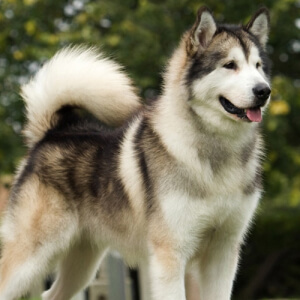
Alaskan HuskyCharacteristics, history, training and care
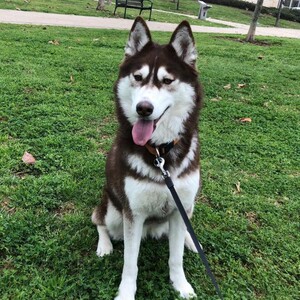
The Alaskan Husky is a medium-sized sled dog bred purely for performance. Wikipedia says it is the dog most used in sled-dog racing, from short sprints to the Iditarod and the Yukon Quest. No kennel club recognises it as a breed and it has no standard, so its appearance varies widely from one line to another.
Quick facts
| Common name | Alaskan Husky |
| Scientific name | Canis lupus familiaris |
| Country of origin | USA (Alaska) |
| Official recognition | None; it is a type of sled dog, with no standard |
| Lifespan | No published data; medium-sized dogs usually live 10–13 years |
| Size (males) | 51–66 cm at the withers; 16–34 kg (males and females, Wikipedia) |
| Size (females) | Within the same range, usually towards the lower end |
| Coat type | Usually double; denser in distance lines, shorter in sprint lines |
| Common colours | All colours and patterns |
| Energy level | Very high |
| Suited to an apartment? | No |
| Temperament | Keen to pull and run, intelligent, well balanced in the pack |
| Tendency to aggression | Low; it is chosen to work alongside many dogs and people |
| Good with children | Generally good; temperament varies by line |
| Good with other animals | Very good with other dogs; works in a pack |
| Genetic predispositions | Bronchitis linked to cold and exertion (“ski asthma”) |
- Primary category:Dog breeds
- Explore this animal's categories:
History and origin
Wikipedia says that sled-dog racing began with the arrival of European traders and settlers in Alaska. The local people's dogs were very strong and hardy, but not fast enough. So they were crossed with faster breeds, including dogs brought from Siberia, the ancestors of the Siberian Husky.
Most of today's lines carry Alaskan Malamute and Siberian Husky blood. In the second half of the 20th century, sledding became mainly a sport. Breeders then added, for speed, the blood of the Pointer, Greyhound, Saluki or German Shepherd.
A 2015 DNA study showed that the Alaskan Husky, the Siberian Husky and the Malamute are close relatives, all linked to the sled dogs of Chukotka (Siberia). Distance lines have more husky and malamute blood. Sprint lines have more Pointer and Saluki blood.
How the breed developed
- 19th century – Settlers in Alaska start racing with the local people's dogs.
- Early 20th century – Dogs brought from Siberia win the races; breeders try different crosses.
- Second half of the 20th century – Sledding becomes a sport; sighthound and hunting-dog blood is added.
- 2015 – A DNA study shows its kinship with the Siberian Husky and the Malamute.
- 2020 – The largest blood-test study on canine athletes, covering 4,804 Iditarod dogs.
Breed rating
| Feature | Stars |
|---|---|
| Training and intelligence | ★★★★☆ |
| Easy to train | ★★★★☆ |
| Intelligence | ★★★★★ |
| Independence | ★★★★☆ |
| Stubbornness | ★★★☆☆ |
| Behaviour and temperament | ★★★☆☆ |
| Affectionate with family | ★★★★☆ |
| Friendly with children | ★★★★☆ |
| Good with other dogs | ★★★★★ |
| Good with cats and other animals | ★★☆☆☆ |
| Loyalty | ★★★★☆ |
| Tendency to be aggressive | ★☆☆☆☆ |
| Tendency to bark | ★★★☆☆ |
| Needs and care | ★★★☆☆ |
| Shedding | ★★★★☆ |
| Needs frequent grooming | ★★☆☆☆ |
| Activity and lifestyle | ★★★★☆ |
| Energy level | ★★★★★ |
| Daily exercise needs | ★★★★★ |
| Suited to apartment life | ★☆☆☆☆ |
| Health and longevity | ★★★☆☆ |
| Life expectancy | ★★★★☆ |
| Predisposition to genetic diseases | ★★☆☆☆ |
| Working abilities and uses | ★★★★☆ |
| Good sled dog | ★★★★★ |
| Good companion dog | ★★★☆☆ |
Indicative rating: 5 stars means the highest level. The Alaskan Husky has no standard and no kennel club profile; the rating is based on Wikipedia and varies a lot from one line to another.
Physical characteristics
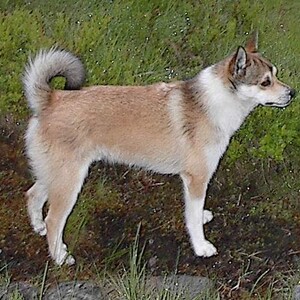
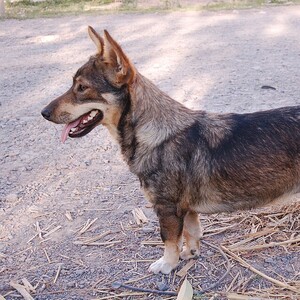
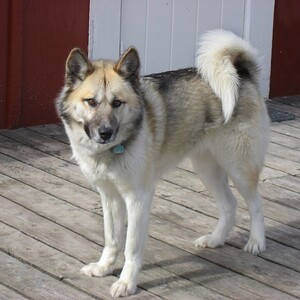
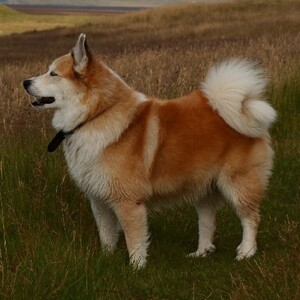
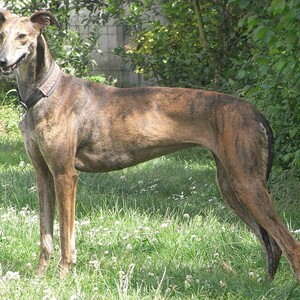
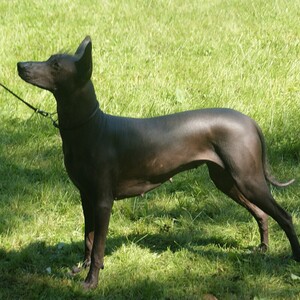
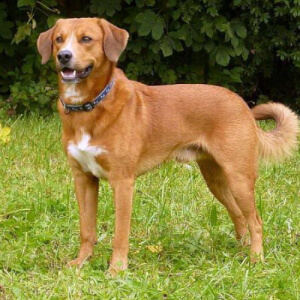
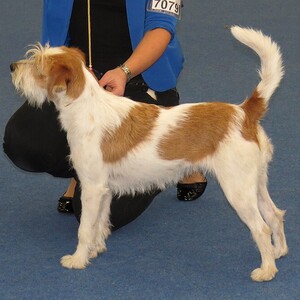
Wikipedia says it is generally taller than the Siberian Husky and lighter than the Alaskan Malamute. As a cross selected over many generations, its appearance varies widely. Some lines have pointed ears and a curled tail, like a spitz. Others look like hunting dogs or sighthounds, with drop ears and a tucked-up waist.
General appearance
Breeders choose dogs for how well they pull the sled, and tough feet are highly prized. In long races the dogs often wear coats and booties to keep warm and protect their feet from the ice.
| Feature | Alaskan Husky |
|---|---|
| Size | Medium |
| Height at the withers | 51–66 cm |
| Weight | 16–34 kg |
| Coat | Usually double; density varies by line |
| Ears | Erect or drop, depending on the line |
| Colour | Any colour and pattern |
All colours and patterns are found, as looks do not matter in breeding.
Training and socialisation
Wikipedia says Alaskan Huskies are chosen for intelligence and the ability to solve problems on their own. The lead dog must read the trail without the musher (the sled driver) touching it. For this it needs instinct and experience.
A sled dog must be well balanced. It stays close to other dogs in harness and is handled often by people. In races it runs past spectators and other teams. A family husky needs the same socialisation and reward-based training.
Tips for effective training
- Give it a job. It is bred to pull and run.
- Use rewards. It learns quickly.
- Keep it on the lead in open areas. Its urge to run is very strong.
- Socialise it with other dogs. It is used to working in a team.
Activity needs and lifestyle
It is an athlete. Wikipedia says sprint teams reach 45 km/h. A distance team finished a 1,510 km race in 8 days and 3 hours, including rests. Such a dog needs running or pulling every day, for example canicross (running attached to its owner) or bikejoring (pulling a bicycle).
| Activity | How often | Why it matters |
|---|---|---|
| Running or pulling | daily | Burns off energy |
| Canicross, bikejoring or sledding | several times a week | Satisfies its urge to pull |
| Brain games | daily | Keeps its mind busy |
Tips for a balanced life
- For very active owners.
- A yard with a secure fence.
- Portions matched to its workload.
Care and health
Coat and skin care
The coat should be brushed once a week, and more often when it is shedding. Sprint lines have a shorter coat, so they lose heat more easily.
Common health problems
It is bred for performance, and Wikipedia says its stamina far exceeds that of an ordinary dog. A 2020 study of 4,804 dogs trained for the Iditarod found that training improves their blood results, on average up to the age of 6.6 years. Problems to watch for are:
| Condition | Description | Common symptoms |
|---|---|---|
| “Ski asthma” | Inflammation of the airways after long exertion in very cold air | Coughing, laboured breathing, tires quickly |
| Foot injuries | Ice and rough ground cut the pads | Limping, frequent licking of the feet |
| Hip dysplasia | The hip joint forms incorrectly and, over time, arthritis develops | Limping, difficulty getting up or jumping, hip pain |
Other care
- Check its feet after every run.
- Use booties on ice or salted roads.
- Go for yearly check-ups.
Diet and nutrition
Wikipedia says that during long efforts its body quickly switches to fat and protein for energy. A sled dog needs plenty of high-fat food. A family husky, however, eats much less, depending on how active it is.
Tips for a healthy diet
The table gives a starting estimate, calculated with the formula from the Merck Veterinary Manual. The first two calorie columns show the calories per day for a healthy adult dog. The last column shows what this means in dry food with 3,500–4,000 kcal per kilogram.
| Dog's weight | Calories per day (neutered) | Calories per day (not neutered) | Dry food per day (approximate) |
|---|---|---|---|
| 16 kg | 900 kcal | 1,010 kcal | 220–290 g |
| 25 kg | 1,250 kcal | 1,410 kcal | 310–400 g |
| 34 kg | 1,580 kcal | 1,770 kcal | 400–510 g |
- A good appetite: breeders select for it.
- Increase the portion only during training periods.
- A dog is at the right weight when you can feel its ribs under the coat without pressing hard.
Foods to avoid
Some human foods are dangerous for dogs: chocolate, coffee, grapes and raisins, onions, garlic, xylitol (a sweetener used in chewing gum), macadamia nuts and alcohol.
Reproduction and development
Physical and emotional maturity
In dogs, sexual maturity usually comes between 6 and 12 months. Most breeds become adults at around 13–15 months.
Mating and pregnancy
Pregnancy lasts about 63 days, counted from ovulation. Mating a female on her first heat is not recommended. Only healthy dogs of typical breed appearance should be used for breeding.
Caring for the puppies
In dogs, a litter has 5–6 puppies on average, and the number rises with the size of the breed. Socialisation starts in the first weeks: gentle handling, everyday noises and new people.
Interesting facts
- No standard. All that matters is how well it pulls the sled.
- 45 km/h. The speed of sprint teams.
- 1,510 km in 8 days. The record of a distance team, including rests.
- Related to sighthounds. Sprint lines have Pointer and Saluki blood.
- A mascot. It is the mascot of Louis E. Dieruff High School in Allentown, USA.
Frequently asked questions
Is it the same dog as the Siberian Husky?
No; the Siberian Husky has a standard, while the Alaskan Husky is a cross chosen only for performance.
Can it be a family dog?
Yes, if it gets plenty of hard exercise every day, such as canicross.
What races does it run?
Sprints and long-distance races such as the Iditarod, the Yukon Quest and the Finnmarksløpet.
What sports suit it?
Canicross, bikejoring and, in winter, sledding.