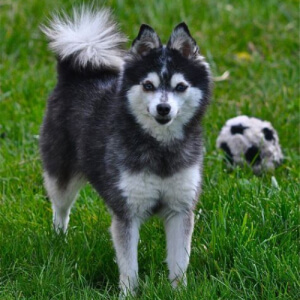
Alaskan Klee KaiCharacteristics, history, training and care
The Alaskan Klee Kai is a small spitz-type dog, created in Alaska in the 1970s. It was meant to look like a Siberian Husky or an Alaskan Malamute, but at companion size. Its name means “small dog”. Wikipedia describes it as energetic, curious, agile and intelligent, but reserved with strangers.
Quick facts
| Common name | Alaskan Klee Kai (Miniature Husky) |
| Scientific name | Canis lupus familiaris |
| Country of origin | United States (Alaska) |
| Official recognition | Not recognised by the FCI; it has the standard of the American breed club (AKKAOA, 1993) |
| Lifespan | 13–16 years (AKC) |
| Size (males) | Toy up to 33 cm; Miniature 33–38 cm; Standard 38–43 cm |
| Size (females) | The same three sizes; generally 2.7–11 kg (AKC) |
| Coat type | Double, with a dense undercoat |
| Common colours | Red and white, black and white, grey and white |
| Energy level | High |
| Suited to an apartment? | Yes, with daily exercise |
| Temperament | Curious, agile, intelligent, reserved with strangers |
| Tendency to aggression | Low; can be fearful of strangers |
| Good with children | Average; better with older, gentle children |
| Good with other animals | Very good with other dogs (AKC) |
| Genetic predispositions | Juvenile cataracts, liver disease, factor VII deficiency, heart problems |
- Primary category:Dog breeds
- Explore this animal's categories:
History and origin
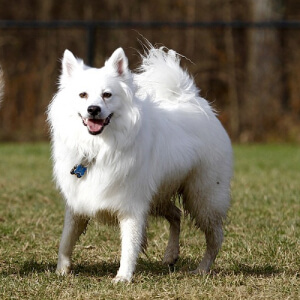
According to Wikipedia, the breed was created in Alaska by Linda Spurlin in the 1970s. She used Alaskan Huskies, a little Siberian Husky, somewhat more American Eskimo Dog and a few Schipperkes. The aim was a small dog that looked like the big huskies.
The name Klee Kai comes from the Athabaskan languages of Alaska's native peoples and means “small dog”. The first standard of the breed club, the AKKAOA, appeared in 1993 and also set weight limits. Newer versions only require the weight to be in proportion to the height.
How the breed developed
- 1970s – Linda Spurlin begins creating the breed in Alaska.
- 1993 – The first standard of the AKKAOA club.
- Today – Three sizes: Toy, Miniature and Standard.
Breed rating
| Feature | Stars |
|---|---|
| Training and intelligence | ★★★★☆ |
| Easy to train | ★★★☆☆ |
| Intelligence | ★★★★☆ |
| Independence | ★★★★☆ |
| Stubbornness | ★★★★☆ |
| Behaviour and temperament | ★★★☆☆ |
| Affectionate with family | ★★★☆☆ |
| Friendly with children | ★★★☆☆ |
| Good with other dogs | ★★★★★ |
| Good with cats and other animals | ★★★☆☆ |
| Loyalty | ★★★★☆ |
| Tendency to be aggressive | ★★☆☆☆ |
| Tendency to bark | ★★★☆☆ |
| Needs and care | ★★★☆☆ |
| Shedding | ★★★☆☆ |
| Needs frequent grooming | ★★★☆☆ |
| Activity and lifestyle | ★★★★☆ |
| Energy level | ★★★★☆ |
| Daily exercise needs | ★★★★☆ |
| Suited to apartment life | ★★★★☆ |
| Health and longevity | ★★★★☆ |
| Life expectancy | ★★★★☆ |
| Predisposition to genetic diseases | ★★★☆☆ |
| Working abilities and uses | ★★★★☆ |
| Good agility dog | ★★★☆☆ |
| Good companion dog | ★★★★☆ |
Indicative rating: 5 stars means the highest level. The breed is not recognised by the FCI; the rating is based on the AKC profile (other dogs 5 out of 5, openness to strangers 1 out of 5) and on Wikipedia.
Physical characteristics
It looks like a miniature husky, with a facial mask, erect ears and a bushy tail. According to Wikipedia, although it is small, it has thick bones and can cope with high jumps. There are three sizes, set by height at the withers.
General appearance
The coat is double, with a dense undercoat that keeps it warm. The facial mask must be clearly visible. Solid colours, without white, can exclude a dog from shows and from breeding.
| Feature | Alaskan Klee Kai |
|---|---|
| Size | Small |
| Toy | up to 33 cm; under 4.5 kg |
| Miniature | 33–38 cm; 4.5–6.8 kg |
| Standard | 38–43 cm; 6.8–9 kg |
| Coat | Double, with a dense undercoat |
| Colour | Red, black or grey, with white |
The standard accepts any shade of red and white, black and white, and grey and white, with a facial mask.
Training and socialisation
According to Wikipedia, it is so intelligent that it can become stubborn. It responds best to varied, reward-based training. It does very well at agility, where its small size helps it move easily.
Its AKC profile gives it only 1 star out of 5 for openness to strangers. That is why it needs a lot of socialisation from an early age, with new people, places and noises.
Tips for effective training
- Socialise it a lot from an early age. It is reserved with strangers.
- Vary the exercises. It gets bored and becomes stubborn.
- Use rewards. It learns quickly.
- Try agility. It is agile and jumps well.
Activity needs and lifestyle
It has a husky's energy in a small body. It needs walks and play every day, plus activities for the mind. Without them it gets bored and may become noisy or destructive.
| Activity | How often | Why it matters |
|---|---|---|
| Walks | daily | Fitness |
| Agility or brain games | several times a week | A busy mind |
| Play | daily | Energy |
Tips for a balanced life
- Also suitable for a flat, with exercise.
- A secure fence, as it is agile.
- Patience with visitors.
Care and health
Coat and skin care
The double coat is brushed once a week and much more often during the moult, when the undercoat comes out in large amounts. Its AKC profile gives it 3 stars out of 5 for shedding and for grooming.
Common health problems
According to Wikipedia, the breed is young and is thought to be fairly healthy. However, not enough time has passed to know how often inherited diseases occur. The known problems are:
| Condition | Description | Common symptoms |
|---|---|---|
| Juvenile cataracts | The lens of the eye becomes cloudy at a young age | A white spot in the eye, bumps into things |
| Factor VII deficiency | The blood clots less easily | Prolonged bleeding after injuries or surgery |
| Liver disease | The liver works less well | Tiredness, vomiting, yellow skin and eyes |
Other care
- Ask for the parents' blood and eye tests.
- Tell the vet about factor VII deficiency before any surgery.
- Go for yearly check-ups.
Diet and nutrition
A small, energetic dog needs good-quality food in portions suited to its size.
Tips for a healthy diet
The table gives a starting estimate, calculated with the formula from the Merck Veterinary Manual. The first two calorie columns show the calories per day for a healthy adult dog. The last column shows what this means in dry food with 3,500–4,000 kcal per kilogram.
| Dog's weight | Calories per day (neutered) | Calories per day (not neutered) | Dry food per day (approximate) |
|---|---|---|---|
| 4 kg | 320 kcal | 360 kcal | 80–103 g |
| 7 kg | 480 kcal | 540 kcal | 120–150 g |
| 9 kg | 580 kcal | 650 kcal | 140–190 g |
- Split the food into two meals a day.
- Choose the portion by size: Toy, Miniature or Standard.
- A dog is at the right weight when you can feel its ribs under the coat without pressing hard.
Foods to avoid
Some human foods are dangerous for dogs: chocolate, coffee, grapes and raisins, onions, garlic, xylitol (a sweetener used in chewing gum), macadamia nuts and alcohol.
Reproduction and development
Physical and emotional maturity
In dogs, sexual maturity usually comes between 6 and 12 months. Small breeds become adults faster than large ones, usually at around one year.
Mating and pregnancy
Pregnancy lasts about 63 days, counted from ovulation. Mating a female on her first heat is not recommended. Only healthy dogs of typical breed appearance should be used for breeding.
Caring for the puppies
In small breeds, a litter has 3–4 puppies on average. The puppies are very small and fragile in the first weeks, so they must be kept warm and handled with care. Socialisation starts early: gentle handling, everyday noises and new people.
Interesting facts
- “Small dog”. That is what Klee Kai means in the Athabaskan languages.
- Three sizes. Toy, Miniature and Standard.
- Created by one woman. Linda Spurlin, in Alaska.
- Thick bones. It copes with high jumps, although it is small.
- A husky mask. The face must have the typical mask.
Frequently asked questions
Is it a small Siberian Husky?
No; it is a separate breed, created from several breeds to look like huskies.
How big does it get?
Between 33 and 43 cm at the withers, depending on size (Toy, Miniature or Standard).
Does it get on with strangers?
It is reserved with strangers; it needs socialisation from an early age.
Does it shed a lot?
Yes, especially during the moult, when the undercoat falls out.