Norwegian ElkhoundCharacteristics, history, training and care
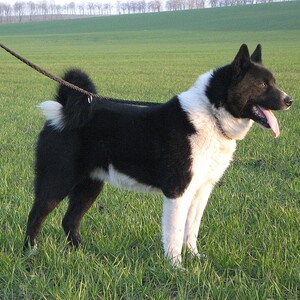
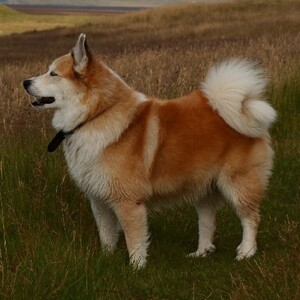
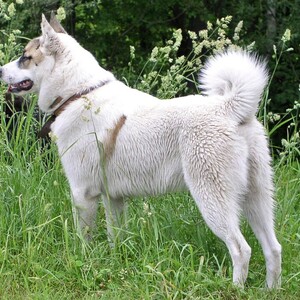
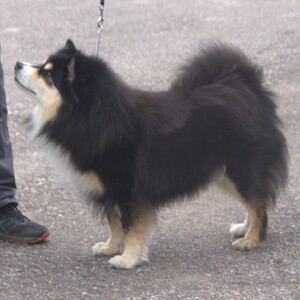
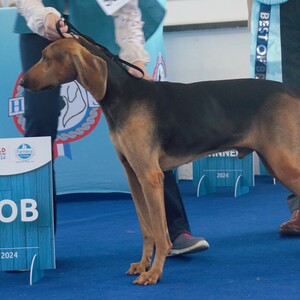
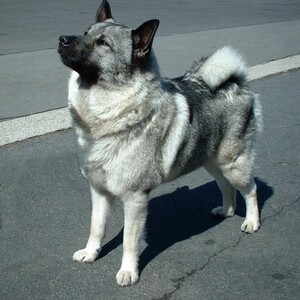
Norwegian Elkhound. · Sannse / Wikimedia Commons, CC BY-SA 3.0. Cropped and resized.
The Norwegian Elkhound (Grey) is a typical spitz, compact and short-bodied, with a dense silver-grey coat and a tail curled tightly over the back. It is used to hunt moose, which it tracks and holds at bay by barking. Wikipedia says it is the national dog of Norway; the standard describes it as fearless, energetic and brave.
Quick facts
| Common name | Norwegian Elkhound (Norsk Elghund Grå) |
| Scientific name | Canis lupus familiaris |
| Country of origin | Norway |
| Official recognition | FCI, definitively since 3 April 1963 (group 5, Nordic hunting dogs; standard no. 242); also recognised by the AKC |
| Lifespan | 12–15 years, according to the AKC |
| Size (males) | ideally 52 cm at the withers; about 25 kg according to the AKC |
| Size (females) | ideally 49 cm at the withers; about 22 kg according to the AKC |
| Coat type | Medium length, dense, harsh, abundant, with a soft undercoat |
| Common colours | Grey, in various shades |
| Energy level | High |
| Suited to an apartment? | Not really |
| Temperament | Fearless, energetic, brave, independent |
| Tendency to aggression | Low; a very good watchdog |
| Good with children | Average |
| Good with other animals | Average; hunting instinct |
| Genetic predispositions | Hip dysplasia; rarely, progressive retinal atrophy |
- Primary category:Dog breeds
- Explore this animal's categories:
History and origin
The AKC says this ancient breed was the companion of the Vikings, a herding dog, guardian and friend to man. Wikipedia says it was used as a hunter, guard, herder and defender, and is known for the courage with which it tracks moose and other large animals, such as bears or wolves.
Wikipedia says it was first shown at a dog show in Norway in 1877. The FCI keeps it separate from the Black Norwegian Elkhound, which is a distinct breed.
How the breed developed
- Viking age – The companion of the Vikings, according to the AKC.
- 1877 – The first dog show with Elkhounds, in Norway.
- 3 April 1963 – The FCI recognises the breed.
- 9 August 1999 – The current FCI standard is published.
Breed rating
| Feature | Stars |
|---|---|
| Training and intelligence | ★★★★☆ |
| Easy to train | ★★★★☆ |
| Intelligence | ★★★★★ |
| Independence | ★★★★☆ |
| Stubbornness | ★★★★☆ |
| Behaviour and temperament | ★★★★☆ |
| Affectionate with family | ★★★★★ |
| Friendly with children | ★★★☆☆ |
| Good with other dogs | ★★★☆☆ |
| Good with cats and other animals | ★★☆☆☆ |
| Loyalty | ★★★★★ |
| Tendency to be aggressive | ★★☆☆☆ |
| Tendency to bark | ★★★★☆ |
| Needs and care | ★★★☆☆ |
| Shedding | ★★★☆☆ |
| Needs frequent grooming | ★★☆☆☆ |
| Activity and lifestyle | ★★★★☆ |
| Energy level | ★★★★☆ |
| Daily exercise needs | ★★★★☆ |
| Suited to apartment life | ★★★☆☆ |
| Health and longevity | ★★★★☆ |
| Life expectancy | ★★★★☆ |
| Predisposition to genetic diseases | ★★☆☆☆ |
| Working abilities and uses | ★★★★☆ |
| Good hunting dog | ★★★★★ |
| Good companion dog | ★★★★☆ |
Indicative rating: 5 stars means the highest level. It is based on the ratings the American Kennel Club gives the breed and on the FCI standard.
Physical characteristics
The standard describes it as a typical spitz, with a compact, short body. The AKC says it is a hardy dog of about 52 cm, with a dense silver-grey coat, a deep chest, sturdy legs and muscular thighs, “built for an honest day's work”.
General appearance
The head is wedge-shaped, fairly broad between the ears, with a black nose. The eyes are dark brown, and the ears mobile and erect. The outer coat is of medium length, dense, harsh and abundant, without curls; the undercoat is soft.
| Feature | Norwegian Elkhound |
|---|---|
| Size | Medium |
| Height at the withers | males: ideally 52 cm; females: ideally 49 cm |
| Weight | males: ~25 kg; females: ~22 kg (AKC) |
| Coat | Dense, harsh, grey |
| Ears | Erect, mobile |
| Tail | Curled tightly over the back |
The colour is grey, in various shades, produced by the black tips of the hairs. It is lighter on the chest, belly, legs and under the tail, and in the “harness mark”, a lighter band about 5 cm wide.
Training and socialisation
The AKC says it learns very quickly, being highly intelligent, but once it has learned something it seems to ask: “Haven't we done this 12 times already?”. As a hunter that makes its own decisions, it is independent and loves the forest and freedom.
The AKC says it is an excellent watchdog and hunting dog, but also a sensitive, friendly family member that wants to be with its people.
Tips for effective training
- Do not repeat things too often. It gets bored quickly.
- Keep it on the lead. It loves freedom and the forest.
- Be consistent. It is independent.
- Watch the food. The AKC says it puts on “pitiful faces” to get food.
Activity needs and lifestyle
The AKC says that in Norway it tracks moose far ahead of the hunter and must be able to trot for many kilometres, even for several days in a row. It needs plenty of exercise every day.
| Activity | How often | Why it matters |
|---|---|---|
| Long walks or hikes | daily | Great stamina |
| Search games | several times a week | Hunting instinct |
| Play in a fenced yard | daily | Energy |
Tips for a balanced life
- It copes very well with cold.
- The fence must be solid.
- In summer, give it shade.
Care and health
Coat and skin care
The AKC says it has a “two-layer” coat. Breeders warn future owners that during the shedding season they will find “tumbleweeds” of silver undercoat around the house. A slicker brush helps a lot.
Common health problems
The AKC says it is, on the whole, a very healthy breed, with an average lifespan of 12–14 years. Problems that may occur:
| Condition | Description | Common symptoms |
|---|---|---|
| Hip dysplasia | The hip joint forms incorrectly and, over time, arthritis develops | Limping, difficulty getting up or jumping, hip pain |
| Progressive retinal atrophy | The retina gradually degenerates (very rare cases) | Poor sight at night, then increasingly poor sight |
Other care
- Brush it often during the shedding season.
- Check for ticks after outings in the woods.
- Trim the nails regularly.
Diet and nutrition
The AKC says most Elkhounds are not fussy eaters and “put on pitiful faces” to soften their owners' hearts. Portions should be measured so that they do not gain weight.
Tips for a healthy diet
The table gives a starting estimate, calculated with the formula from the Merck Veterinary Manual. The first two calorie columns show the calories per day for a healthy adult dog. The last column shows what this means in dry food with 3,500–4,000 kcal per kilogram.
| Dog's weight | Calories per day (neutered) | Calories per day (not neutered) | Dry food per day (approximate) |
|---|---|---|---|
| 20 kg | 1,060 kcal | 1,190 kcal | 260–340 g |
| 22 kg | 1,140 kcal | 1,280 kcal | 280–370 g |
| 25 kg | 1,250 kcal | 1,410 kcal | 310–400 g |
- Give it its food in two meals a day.
- Do not give in to pleading looks.
- A dog is at the right weight when you can feel its ribs under the coat without pressing hard.
Foods to avoid
Some human foods are dangerous for dogs: chocolate, coffee, grapes and raisins, onions, garlic, xylitol (a sweetener used in chewing gum), macadamia nuts and alcohol.
Reproduction and development
Physical and emotional maturity
In dogs, sexual maturity usually comes between 6 and 12 months. Most breeds become adults at around 13–15 months.
Mating and pregnancy
Pregnancy lasts about 63 days, counted from ovulation. Mating a female on her first heat is not recommended. The FCI standard requires that only healthy dogs of typical breed appearance are used for breeding.
Caring for the puppies
In dogs, a litter has 5–6 puppies on average, and the number rises with the size of the breed. Socialisation starts in the first weeks: gentle handling, everyday noises and new people.
Interesting facts
- Norway's national dog. Wikipedia calls it the national dog of Norway.
- The “harness mark”. It has a lighter band about 5 cm wide.
- It hunts for days. It can track moose for several days in a row.
- Silver “tumbleweeds”. The AKC says shedding fills the house with undercoat.
- The Vikings' companion. The AKC says it accompanied the Vikings.
Frequently asked questions
What does it hunt?
Mainly moose, which it holds at bay by barking until the hunter arrives.
How big does it get?
Males ideally measure 52 cm and females 49 cm.
How does it differ from the Black Elkhound?
They are separate breeds: one is grey, the other black.
How long does it live?
The AKC gives 12–15 years.